
Suspension failures cost your customers trust. Most buyers focus on price. But the real risk is hidden in how a stabilizer link is made, not what it costs.
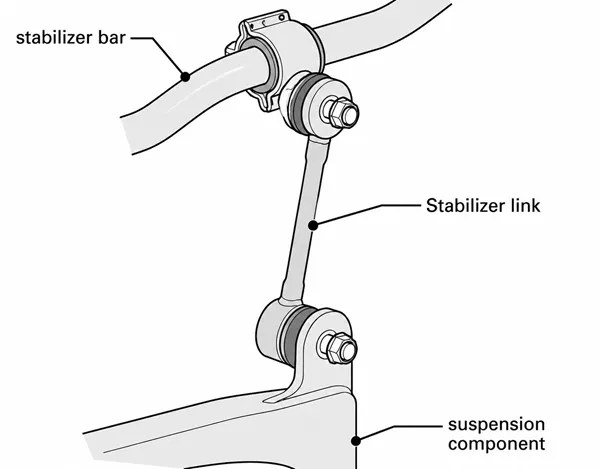
A stabilizer link connects the stabilizer bar to the suspension arm or strut. It transfers lateral force between the left and right wheels during cornering to reduce body roll. When it fails, handling becomes unstable and tire wear increases.1 The part is simple in concept but critical in execution.
I have spoken with hundreds of procurement managers over the years. Almost all of them ask the same opening question: "What is the load rating on your stabilizer links?" That is a reasonable question. But it is rarely the most important one. The more useful questions are about consistency, material sourcing, and how the part behaves after 100,000 kilometers on real roads. This article walks through those questions and explains why they should drive your supplier evaluation.
Does a Stabilizer Link's Job Change Depending on the Vehicle?
Many buyers treat stabilizer links as a commodity. One spec fits all. That assumption leads to warranty claims.
The function of a stabilizer link stays the same across vehicle types: transfer lateral load and reduce body roll. But the physical demands change significantly.2 A link on a compact passenger car operates under very different stress levels compared to one on a heavy-duty truck running on unpaved roads.
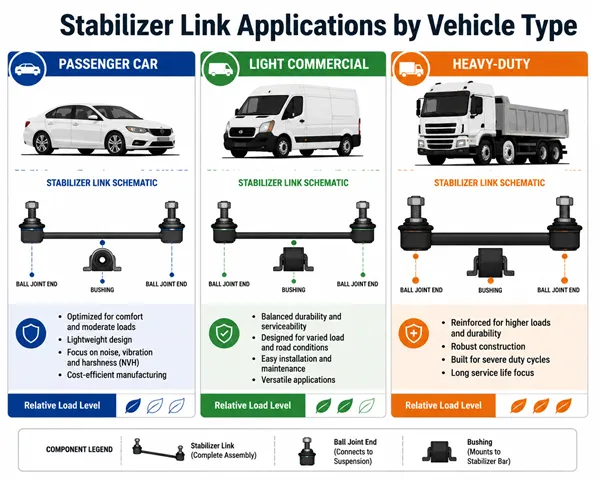
From a manufacturing perspective, this distinction shapes everything — material grade, forging specification, ball joint geometry, and rubber or polyurethane bushing compound.
How Do Application Requirements Differ?
| Application Type | Key Stress Factor | Critical Design Priority |
|---|---|---|
| Passenger Car | Moderate lateral load, comfort-focused | Low noise, smooth articulation range |
| SUV / Crossover | Higher load, mixed road conditions | Balance of stiffness and articulation |
| Light Commercial Vehicle | Frequent load changes, start-stop | Fatigue resistance under cyclic stress |
| Heavy-Duty Truck | Extreme lateral and vertical load | High pull-out force, robust end fittings |
A supplier who sends you the same product specification sheet regardless of your vehicle parc is not paying attention to your market. When I review an inquiry from a buyer in Southeast Asia focused on light trucks, I look at road conditions, typical load cycles, and ambient temperature range. These factors directly influence which material grade and joint design makes sense. If a supplier does not ask those questions, that is a signal worth noting.
For buyers in markets with poor road infrastructure — parts of Africa, Latin America, or South Asia — this application-specific thinking matters even more. A part designed to OE spec for a Japanese domestic market passenger car may not last six months in those operating conditions.3 The geometry may be identical, but the fatigue resistance and sealing durability need to be different.
Why Is Manufacturing Process Control More Important Than a Single Spec Number?
Procurement managers often compare stabilizer links by bar diameter or ball stud hardness. Those numbers matter. But a single spec number tells you nothing about batch-to-batch consistency.
The function of a stabilizer link depends on consistent execution across every unit in every production batch. A part that passes a pull-out force test on a sample but varies by 15% across a shipment is not a quality product. That variation is a manufacturing process problem, not a design problem.
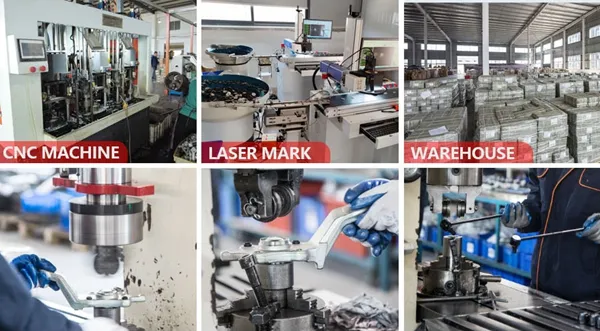
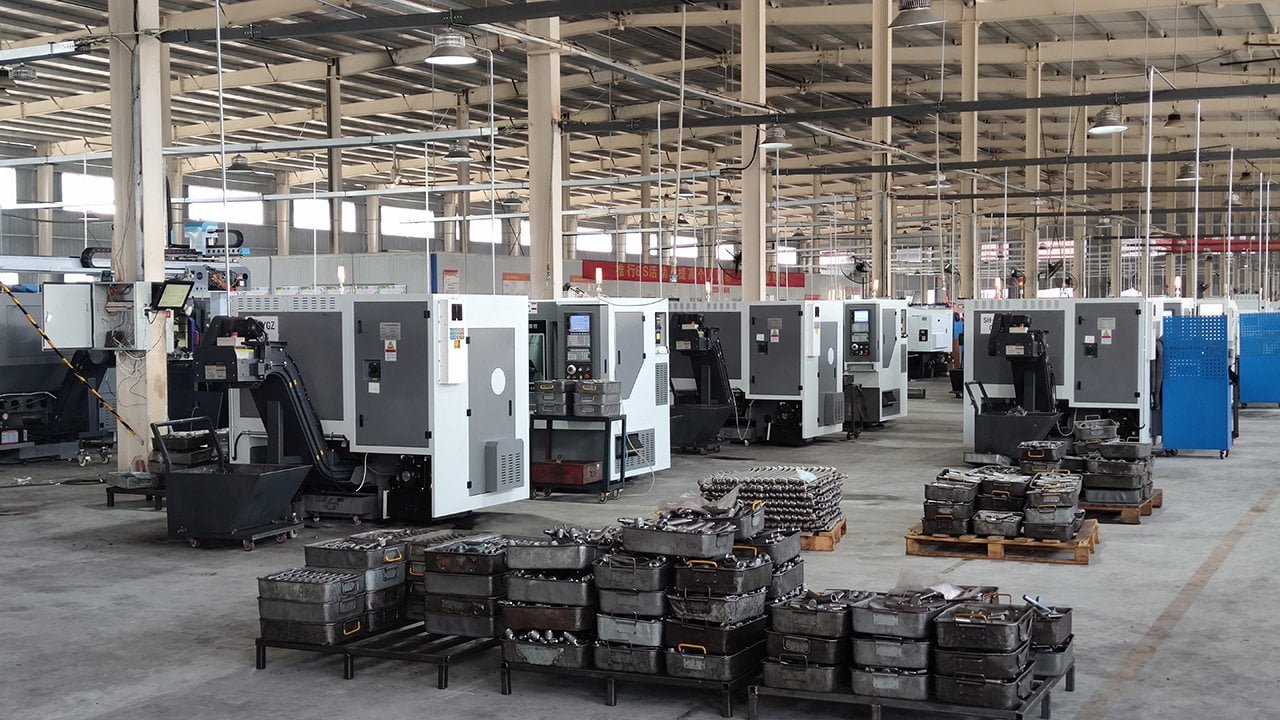
From my experience running production across 20 lines, the most common source of quality inconsistency is not the design drawing — it is process control at the raw material and assembly stages.
What Manufacturing Processes Define a Stabilizer Link's Quality?
Forging vs. Casting for End Fittings
Forged end fittings have a denser grain structure than cast ones. This improves fatigue resistance under repeated stress cycles.4 For heavy-duty or off-road applications, forging is not a premium option — it is the correct choice. If a supplier offers you a cast end fitting at a lower price for a truck application, you should ask for their fatigue test data before accepting.
Welding Quality
On tubular stabilizer link bodies, weld quality determines structural integrity under combined bending and torsion loads. Inconsistent weld penetration creates stress concentration points.5 These are the failure locations you see in warranty returns. A well-controlled welding process includes defined parameters, regular operator qualification, and visual inspection on every unit.
Ball Joint Assembly and Preload
The ball joint stud preload controls how the joint moves and wears over time.6 Too loose, and you get early play. Too tight, and articulation resistance causes premature fatigue in the link body. This is set during assembly and requires calibrated tooling and a defined torque specification. At GDST, our molds are developed to OE dimensional tolerances with ±0.2mm control. That is not a marketing number — it is the difference between a joint that seats correctly and one that introduces misalignment stress from day one.
Surface Treatment
Salt spray resistance is directly tied to coating process control, not just coating type. A zinc-plated part that passes 72-hour salt spray testing is different from one that passes 500 hours.7 In coastal or high-humidity markets, that gap translates directly into corrosion-related warranty returns within the first year of service.
How Do You Verify a Supplier's Quality Claims Beyond Their Certificate?
A common question I hear from procurement managers is: "You say you have IATF 16949 — so does every supplier we talk to. What does it actually mean for us?"
IATF 16949 certification means a supplier operates under a structured quality management system with documented processes, internal audits, and corrective action procedures. It does not guarantee product quality on its own.8 What it does is create a framework where quality problems must be tracked and resolved systematically, which reduces the risk of repeated defects.
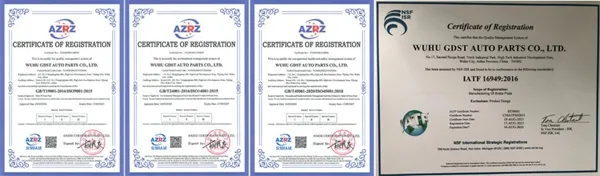
The real question is how a supplier uses their quality system. Here is how I explain it to buyers who visit our facility.
What Evidence Should You Ask For?
Raw Material Traceability
Ask for material inspection reports from named steel mills. At GDST, our steel comes from Baosteel, Shagang, and Yuanli. Every batch comes with a mill certificate, and our QC team runs independent chemical composition tests on incoming material. This matters because the mechanical properties of the finished part — tensile strength, fatigue resistance — are only predictable if the raw material composition is controlled and verified.
If a supplier cannot tell you where their steel comes from or cannot provide mill certificates, you have no baseline for predicting long-term performance. This is especially important for buyers placing large-volume orders where even a 2% defect rate becomes a significant financial and reputational problem.
Specific Test Data for Your Application
Ask for test reports that match your vehicle and market conditions. Relevant tests include:
| Test Type | What It Verifies |
|---|---|
| Pull-out Force Test | Joint retention under axial load |
| Fatigue Test | Cyclic load endurance over a defined number of cycles |
| Salt Spray Test | Corrosion resistance of surface treatment |
| Torque Test | Rotational resistance of the ball joint |
| High/Low Temperature Test | Performance across ambient temperature range |
| Ozone Resistance Test | Durability of rubber boots and bushings |
A supplier should be able to show you test data for the specific part number you are evaluating, not a generic certificate for a different product category.
Pre-Shipment Inspection Process
Ask how they handle final inspection before a shipment leaves the factory. At our facility, every shipment goes through 100% final inspection: random product sampling, quantity verification, packaging condition check, shipping mark and label verification, and pallet inspection. This step exists specifically to catch problems before they reach your warehouse or your customers.
What Does "Safe Failure" Mean and Why Should Buyers Care?
This is a concept that rarely comes up in product catalogs but comes up regularly in after-sales conversations.
A quality stabilizer link is designed to wear gradually and give warning signs before it fails completely.9 It should not fracture without warning or cause a sudden loss of vehicle control. This predictable degradation pattern is what separates a well-engineered part from one that is merely cheap.
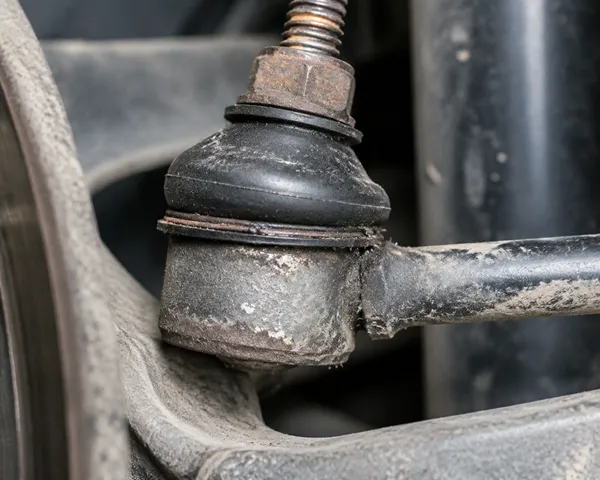
In the aftermarket, safe failure matters for two reasons. First, it protects the end-user. A vehicle owner who hears a clunk from the suspension has time to visit a workshop before a serious safety event occurs.10 Second, it protects your brand. A catastrophic failure leads to a warranty claim, a safety complaint, and potential liability exposure. A gradual wear-out that follows expected service life is a maintenance item, not a quality crisis.
How Does Manufacturing Influence Failure Mode?
The failure mode of a stabilizer link is shaped during design and process control.
Ball Joint Boot Integrity The rubber boot seals the ball joint against dirt and moisture. When the boot tears, contamination enters the joint and accelerates wear. Boot compound selection, bonding quality, and articulation range compatibility all determine how long the seal lasts. For markets with heavy dust or mud exposure, this is a critical specification point.
Stud Material and Heat Treatment The ball stud must resist both surface wear and fatigue fracture. The heat treatment process defines case hardness and core toughness.11 A stud that is too hard throughout may be brittle under impact loads. A stud with insufficient surface hardness wears too fast. Getting this balance right requires controlled heat treatment with defined soak times, quench parameters, and hardness verification on each batch.
End Fitting Geometry The angle and wall thickness of the end fittings determine where stress concentrates under load. A fitting that is too thin in a high-stress zone will crack before the expected service life. This is a design decision, but it only produces consistent results if the manufacturing process holds dimensional tolerances across production batches.
Buyers who evaluate stabilizer links only on initial price often discover the real cost in warranty returns after twelve to eighteen months. By that point, the relationship with the end customer has already taken a hit.
Conclusion
Stabilizer link function is simple. Consistent, safe, application-matched performance is not. Ask better questions of your suppliers — about materials, process control, and test data — and you reduce risk for your business and your customers.
"BAD SWAY BAR LINK SOUND! - YouTube",
A source could explain that a broken or worn stabilizer link disconnects the stabilizer bar from the suspension, reducing its ability to counteract body roll during turns. This can lead to a feeling of instability, excessive lean, and changes in suspension geometry that may contribute to abnormal tire wear. Evidence role: mechanism; source type: education. Supports: The source should explain how a failed stabilizer link degrades vehicle handling and can lead to secondary issues like increased tire wear.. ↩"Design Considerations for High-Speed Trucks on Passenger Vehicles", https://railroads.dot.gov/elibrary/design-considerations-high-speed-trucks-passenger-vehicles. A paper on vehicle dynamics could show that the forces on suspension components, including stabilizer links, are directly related to the vehicle's mass and suspension geometry. Heavy-duty trucks, with their higher mass and center of gravity, will subject these parts to significantly greater forces than a compact passenger car under similar dynamic conditions. Evidence role: mechanism; source type: paper. Supports: The source should detail how factors like vehicle mass, track width, and center of gravity height influence the lateral load transfer during cornering, thereby affecting the forces experienced by the stabilizer bar and links.. ↩
"THE IMPACT OF PAVEMENT ROUGHNESS ON VEHICLE ...", https://www.eng.auburn.edu/research/centers/ncat/files/technical-reports/rep15-02.pdf. Research could demonstrate that vehicles operating on roads with poor surface quality (e.g., higher International Roughness Index values) experience significantly higher dynamic loads on their suspension systems, leading to accelerated fatigue and reduced component lifespan compared to vehicles operating on well-maintained roads. Evidence role: general_support; source type: research. Supports: The source should provide evidence that road surface quality is a major factor in the fatigue life of suspension components.. Scope note: The source may discuss suspension components in general rather than stabilizer links specifically, but the principle would be directly applicable. ↩
"Grain size effects on the fatigue response of nanocrystalline materials", https://dspace.mit.edu/handle/1721.1/16635. A materials engineering resource could explain that the forging process refines the grain structure of the metal and aligns it with the part's shape, eliminating the porosity and potential internal defects common in casting. This results in superior tensile strength, impact toughness, and fatigue resistance. Evidence role: mechanism; source type: education. Supports: The source should explain the metallurgical differences between forging and casting and how they affect mechanical properties.. ↩
"Stress Concentration Factors for Non-Load-Carrying Welded ... - PMC", https://pmc.ncbi.nlm.nih.gov/articles/PMC10856285/. A source on mechanical failure or welding engineering could explain that incomplete weld penetration, undercut, or porosity creates geometric discontinuities that act as stress concentrators. Under cyclic loading, these points can become sites for fatigue crack initiation, leading to premature failure of the component well below the material's nominal strength. Evidence role: mechanism; source type: paper. Supports: The source should explain how geometric discontinuities in welds act as stress risers.. ↩
"Bolted joint - Wikipedia", https://en.wikipedia.org/wiki/Bolted_joint. An engineering guide could describe how preload in a ball joint is a compressive force applied during assembly to eliminate free play. Proper preload ensures smooth articulation while preventing looseness (which causes impact loading and rapid wear), whereas excessive preload can increase friction and lead to premature fatigue. Evidence role: mechanism; source type: education. Supports: The source should define ball joint preload and its role in joint performance and longevity.. ↩
"Salt spray test - Wikipedia", https://en.wikipedia.org/wiki/Salt_spray_test. A source from a standards organization like ASTM International could explain that tests like ASTM B117 provide an accelerated corrosion environment to assess the relative performance of coatings. While not a direct predictor of real-world service life, the number of hours a coating withstands the test before showing corrosion is a standardized metric for comparing its quality and durability against another. Evidence role: definition; source type: institution. Supports: The source should explain the purpose and methodology of standardized salt spray testing for evaluating corrosion resistance.. ↩
"IATF 16949 - Wikipedia", https://en.wikipedia.org/wiki/IATF_16949. The International Automotive Task Force (IATF) or a related quality assurance body could state that IATF 16949 is a process-oriented standard for a Quality Management System. It ensures that an organization has documented, repeatable processes for design, development, production, and service, with a focus on defect prevention and continuous improvement, but it is not a certification of an individual product's performance. Evidence role: definition; source type: institution. Supports: The source should clarify the scope and purpose of the IATF 16949 standard.. ↩
"Fail-safe - Wikipedia", https://en.wikipedia.org/wiki/Fail-safe. A source on engineering design principles could define a fail-safe system as one that, in the event of a component failure, defaults to a state that minimizes harm to people or equipment. In mechanical parts, this often involves designing for 'graceful degradation,' where the part wears out in a predictable, detectable manner (e.g., by becoming noisy or loose) rather than fracturing suddenly. Evidence role: definition; source type: encyclopedia. Supports: The source should define the 'fail-safe' design principle.. ↩
"How To Find Suspension Noises 101 - EricTheCarGuy - YouTube",
. An automotive repair manual or technical service bulletin could identify a clunking or rattling sound, especially when driving over bumps or during turns at low speed, as a classic symptom of worn or failed stabilizer bar links, indicating that the joints have developed excessive play. Evidence role: case_reference; source type: other. Supports: The source should identify a clunking noise as a primary symptom of a worn stabilizer link.. ↩"Case-hardening - Wikipedia", https://en.wikipedia.org/wiki/Case-hardening. A source on metallurgy or heat treatment could explain that case hardening processes, such as carburizing or induction hardening, create a component with two distinct regions: a very hard, wear-resistant outer layer (the case) and a softer, more ductile inner region (the core). This composite structure provides an optimal balance of surface durability and resistance to brittle fracture under impact loads. Evidence role: mechanism; source type: paper. Supports: The source should explain the metallurgical process of case hardening and its effect on material properties.. ↩