
The cost to repair a drag link can be difficult to judge because the first quote you receive may not tell the whole story. A mistaken component name, incomplete inspection, or excluded alignment can turn an attractive estimate into an expensive repeat repair. You need to confirm the failed part and compare the complete scope of work.
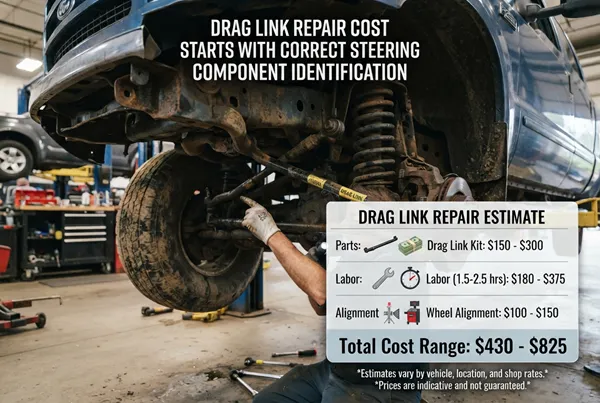
The cost to repair a drag link includes more than the replacement part. Your total may include diagnosis, the drag link itself, installation labor, inspection of connected steering parts, wheel alignment, taxes, and additional repairs. Because vehicle designs and labor rates vary, you should get a vehicle-specific written quote from a qualified repair professional.

Before you decide whether a quote is reasonable, you should answer three questions: Which component actually failed? What services does the estimate include? What vehicle and local labor conditions affect the price? I use those questions when customers ask us to help identify a steering part or understand a replacement inquiry.
How Do You Confirm the Cost to Repair a Drag Link Is for the Correct Part?
Steering components sit close together and can produce similar complaints when they wear. This creates a common problem: you may request a drag link price when the technician, parts seller, or vehicle catalog uses a different component name. If the part is identified incorrectly, every price comparison that follows becomes unreliable.
The first step in evaluating the cost to repair a drag link is confirming the exact component through an in-person inspection and vehicle-specific parts information. A drag link is not automatically the same as a tie rod, center link, rack end, pitman arm, or complete linkage assembly, even when sellers use overlapping terms.

Understand What the Drag Link Does
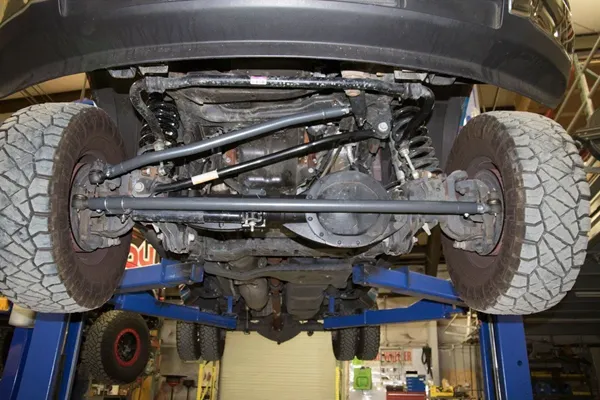
A drag link transfers steering movement through the steering linkage.1 Its exact position and connections depend on the vehicle design. It may connect the pitman arm to a steering arm, or it may form part of a linkage that includes a center link and other joints.2
Vehicle terminology is not perfectly consistent. Some catalogs use drag link, center link, or steering link differently. Heavy-duty trucks, off-road vehicles, and older recirculating-ball steering systems can also have layouts that differ from modern passenger cars.
That is why I never recommend comparing prices from the component name alone. In customer inquiries, I have seen buyers present a photo described as a drag link while the vehicle catalog listed it as a center link or tie rod assembly. The issue was not dishonesty. The parties were simply discussing different parts.
Check the Vehicle and Part Details
Before accepting a quotation, you should confirm:
- The vehicle identification number, when appropriate
- Make, model, production year, and trim
- Engine or chassis details that affect fitment
- Two-wheel-drive or four-wheel-drive configuration
- Left-hand-drive or right-hand-drive configuration
- OE reference number or verified aftermarket cross-reference
- Installation position
- Whether the quote covers one component or a complete assembly
A photo can support identification, but it should not replace a proper catalog and vehicle check. Two parts may look nearly identical while using different lengths, tapers, threads, or joint angles.3
Do Not Diagnose from Symptoms Alone
Loose steering, vibration, uneven tire wear, or knocking may justify an inspection, but these symptoms do not prove that the drag link has failed.4 Connected components can create similar complaints.
| Component | General function | Why it may be confused |
|---|---|---|
| Drag link | Transfers steering movement through the linkage | Its name varies across vehicle designs and catalogs |
| Tie rod | Connects steering linkage to the wheel or knuckle | Worn joints can cause similar steering symptoms |
| Center link | Connects parts of a conventional steering system | Some catalogs use overlapping terminology |
| Pitman arm | Transfers motion from the steering box | It connects directly to parts of the linkage |
| Idler arm | Supports the steering linkage | Wear may allow unwanted linkage movement |
You should ask a qualified technician to identify the source of play or damage on the vehicle. As a parts manufacturer, I can explain component differences and review part information. However, parts knowledge and customer communication cannot replace a hands-on inspection.
What Does the Cost to Repair a Drag Link Include?
A quote may look complete because it has one final number. However, that number may cover only the part and basic installation. Diagnostic time, alignment, taxes, shop supplies, or related steering work may appear later. You need an itemized estimate before you can compare one repair provider with another.
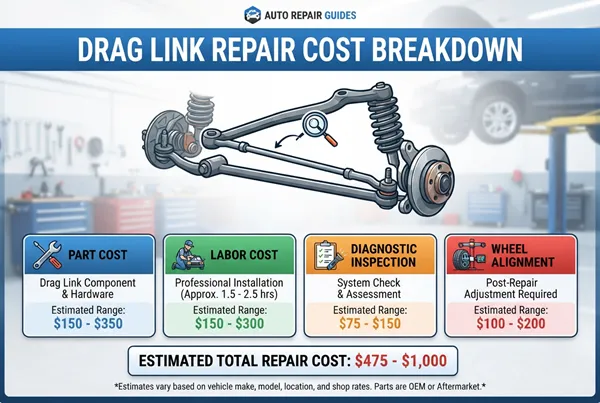
A complete drag link repair cost may include diagnosis, the replacement component, removal and installation labor, fasteners or related hardware, steering-system inspection, alignment when required, and warranty coverage. You should compare quotes line by line because one estimate may include services that another estimate excludes.

Replacement Part
The part price depends on the vehicle application, product design, brand, material specification, distribution channel, and local availability. A common application with several stocked alternatives may have different purchasing conditions from a specialized truck or low-volume imported vehicle.
You should also check whether the estimate includes:
- A single drag link or a complete assembly
- New nuts, pins, clamps, or adjustment sleeves
- An original equipment, branded aftermarket, or other replacement part
- Special-order charges or shipping
- A written part warranty
- Labor coverage if the replacement part develops a verified defect
A lower part price does not automatically mean that the product is unsafe. A higher price also does not guarantee correct fitment or consistent manufacturing quality. You should evaluate the supplier, application data, specifications, warranty terms, and traceability together.
Diagnosis and Installation Labor
Labor can vary significantly by region and workshop. Access to the linkage also matters. A technician may complete a straightforward replacement quickly on one vehicle but need more time on another because of corrosion, seized threads, restricted access, or additional disassembly.
You should ask whether the quoted labor covers:
- Initial steering inspection
- Confirmation of the failed component
- Removal of the old part
- Installation and adjustment
- Tightening fasteners to the required specifications
- A final steering and road-safety check
Any labor time or hourly rate should be verified in your local market. Published figures from another country, city, vehicle class, or calendar year may not reflect your actual repair.
Alignment and Connected Components
A wheel alignment may be required after steering linkage work, depending on the vehicle and the adjustment disturbed during replacement.5 You should ask the technician directly instead of assuming that alignment is always included or never necessary.
The inspection may also identify wear in connected tie rods, arms, joints, bushings, or steering hardware. Additional work should be supported by inspection findings. You should not approve replacement solely because components are nearby.
> A complete quote should explain both the work being recommended and the evidence supporting that recommendation.
For vehicle owners, the final bill includes retail parts and repair services. For wholesalers and distributors, the unit cost is only a procurement figure. Wholesale packaging, order volume, shipping terms, tooling, and private labeling should never be presented as a vehicle owner’s total repair cost.
Why Does the Cost to Repair a Drag Link Vary by Vehicle and Location?
You may see very different quotes for what appears to be the same repair. That does not automatically mean that one provider is overcharging. The vehicles, components, labor markets, and included services may be different. Still, a large difference deserves a clear explanation from each repair provider.
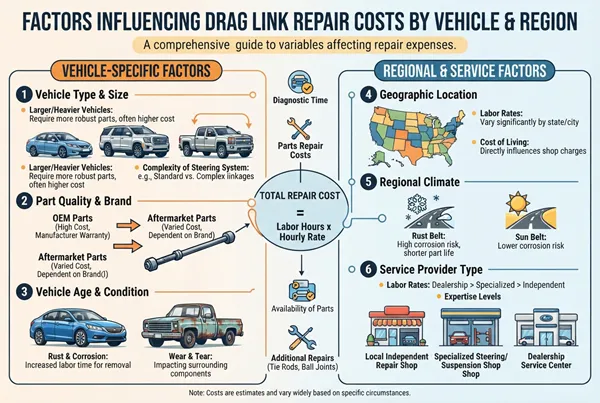
The cost to repair a drag link varies according to steering design, vehicle class, part availability, labor rate, corrosion, diagnostic time, alignment requirements, and related wear. No single average applies to every vehicle. Any numerical estimate should name the location, currency, vehicle application, quote date, and included services.

Vehicle Design and Class
Passenger cars, SUVs, off-road vehicles, light trucks, and heavy-duty trucks do not use one standard drag link. A larger commercial application may use heavier materials and larger joints. An off-road vehicle may have modified suspension or steering geometry. Some passenger vehicles may not use a serviceable component commonly described as a drag link at all.
Specialized designs can affect:
- Component size and material requirements
- Access during removal and installation
- Adjustment procedures
- Required workshop equipment
- Part availability
- Labor time
- Alignment procedures
Modified vehicles need particular care. A lifted suspension, altered steering setup, or non-standard wheel and tire package can change the parts required and the checks needed after installation. You should use a technician who understands that configuration.
Region and Parts Availability
Local labor rates differ between cities and countries.6 Taxes, import duties, freight, and distribution markups also affect the retail part price.7 A component that is readily available in one market may require international shipping in another.
This is why I would not give you one universal price range without current external evidence for your market and vehicle. A useful numerical estimate should state:
| Quote detail | What you should verify |
|---|---|
| Market | Country and city or region |
| Currency | Currency and whether taxes are included |
| Vehicle | Exact model, year, chassis, and configuration |
| Part scope | Individual component or assembly |
| Labor scope | Diagnosis, installation, and additional work |
| Alignment | Included, excluded, or not required |
| Date | Current quote date |
| Warranty | Part and labor terms |
Condition Discovered During Repair
Older fasteners may be corroded or seized. Tapered joints may require additional removal time. A previous repair may have used incorrect hardware. The inspection may also reveal movement in another linkage component.
These findings can increase the final cost, but the repair provider should explain them before proceeding whenever possible. Photos, measurements, visible joint movement, or a direct demonstration on the raised vehicle can help you understand the recommendation.
I once discussed a customer inquiry in which the original question focused only on the drag link price. After the vehicle and assembly were clarified, the more important issue was whether the estimate included the connected hardware and follow-up alignment. The initial part-to-part comparison had hidden the real difference between the quotes.
How Can You Decide Whether a Drag Link Repair Quote Is Reasonable?
A low total may exclude important work, while a high total may include services that your vehicle does not need. The final number alone cannot show value. You need enough detail to understand the diagnosis, component choice, labor scope, and responsibility if a fitment or workmanship problem occurs.
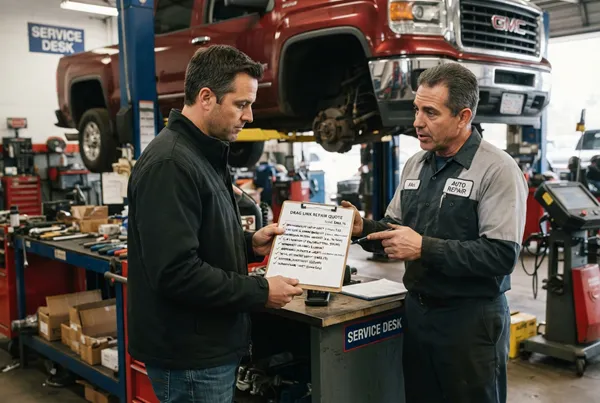
To judge the cost to repair a drag link, request a written, itemized quote and ask what inspection supports the replacement. Confirm the exact part, brand, fitment reference, labor, hardware, alignment, taxes, and warranties. If the explanation remains unclear, seek a second in-person opinion from a qualified technician.

Use a Practical Quote Checklist
Ask these questions before authorizing the work:
- Which exact steering component has failed?
- What inspection result supports that conclusion?
- Can the technician show me the wear or movement?
- What is the part number and brand?
- Does the quote include all required hardware?
- Were the tie rods, pitman arm, idler arm, and related joints checked?
- Is wheel alignment required for this vehicle?
- Is alignment included in the written total?
- Are taxes and shop charges included?
- What warranty applies to the part?
- What warranty applies to the installation?
- Will the workshop contact me before performing additional work?
You should compare identical scopes. One quote for a single component cannot be compared fairly with another quote for a complete steering assembly, alignment, and extended labor coverage.
Review Quality Without Relying on Price Alone
You can look for application accuracy, clear product identification, manufacturing consistency, and documented quality controls. For business buyers, supplier evaluation may also cover batch traceability, inspection records, production capacity, and change-control procedures.
GDST manufactures steering and suspension parts under quality management systems stated as IATF 16949 and ISO 9001. Buyers should still request and verify current certificates, scopes, product specifications, test requirements, and inspection documents. A management-system certificate is useful supplier evidence, but it is not a guarantee that every part fits every application.
For wholesalers and distributors, I recommend reviewing:
- Approved drawings or reference samples
- Material and dimensional requirements
- Fitment and catalog data
- Batch inspection arrangements
- Packaging and labeling controls
- Warranty and claim procedures
- Production and delivery capacity
- Pre-shipment inspection terms
These procurement checks support a wholesale purchasing decision. They do not determine the retail labor needed to repair an individual vehicle.
Frequently Asked Questions
Can You Drive with a Worn Drag Link?
You should not decide this from symptoms or online advice alone. A steering fault can affect vehicle control, but the level of risk depends on the actual component and condition. Arrange an inspection by a qualified technician and follow that professional’s advice about whether the vehicle should be driven or transported.
Does Drag Link Replacement Always Require Wheel Alignment?
Not always, because steering designs and repair procedures differ. However, replacement may disturb steering geometry or adjustment. You should ask the technician whether alignment is required for your specific vehicle and confirm whether it is included in the quote.
How Long Does Drag Link Replacement Take?
The time depends on vehicle design, workshop access, corrosion, seized hardware, and related repairs. A local technician can provide a useful estimate only after identifying the correct component and inspecting the vehicle. You should confirm whether diagnostic and alignment time are included.
Can You Replace Only the Drag Link?
You may be able to replace only the failed drag link when the connected components pass inspection. However, some applications use assemblies, and other worn joints may require attention. A qualified technician should inspect each component and explain any recommendation for additional replacement.
Is an Aftermarket Drag Link a Reasonable Choice?
An aftermarket drag link can be suitable when it has verified fitment, appropriate specifications, consistent manufacturing quality, and clear warranty support. You should evaluate the product and supplier rather than relying only on price or brand category. Professional installation and application confirmation remain important.
Conclusion
The cost to repair a drag link becomes easier to evaluate when you stop treating the part price as the complete answer. First, confirm that the failed component is actually the drag link. Then review diagnosis, parts, labor, hardware, alignment, taxes, related work, and warranty as separate items. You should verify every numerical estimate for your vehicle and local market with a qualified repair professional. For aftermarket brands, importers, wholesalers, and distributors seeking drag link manufacturing support, contact GDST to discuss verified applications, specifications, quality documents, packaging, and OEM/ODM requirements.
"What Is Steering Linkage? | UTI", https://www.uti.edu/blog/diesel/steering-linkage. Automotive steering references describe the drag link as a linkage member that transmits steering motion from the steering gear or pitman arm toward the steering arm or associated linkage. Evidence role: definition; source type: education. Supports: An automotive engineering or technical source should define the drag link and explain its role in transmitting steering motion.. Scope note: The precise connection points and terminology vary with steering-system design. ↩
"What Is Steering Linkage? | UTI", https://www.uti.edu/blog/diesel/steering-linkage. Technical descriptions of conventional steering systems show that a drag link may connect a pitman arm to a steering arm or operate within a multi-member linkage containing additional links and joints. Evidence role: mechanism; source type: education. Supports: A technical source should illustrate how drag links are connected in different conventional steering-linkage arrangements.. Scope note: Such diagrams describe representative layouts and do not establish the configuration of every vehicle. ↩
"Style synthesis and analysis of car designs for ...", https://www.academia.edu/15130777/Style_synthesis_and_analysis_of_car_designs_for_style_quantification_based_on_product_appearance_similarities. Steering-linkage fitment depends on specified dimensions and interfaces, including component length, thread form, tapered-stud geometry, and joint orientation, so visual resemblance alone is insufficient to establish interchangeability. Evidence role: mechanism; source type: other. Supports: A technical standard or engineering reference should show that steering-joint fitment depends on dimensions such as length, thread specification, and tapered-stud geometry.. Scope note: A general dimensional reference cannot confirm compatibility between two specific part numbers. ↩
"Car Wobbles When Turning? Diagnose & Fix Steering Issues ...", https://phdns.latahcountyid.gov/article/car-wobbles-when-turning-diagnose-fix-steering-issues-now. Vehicle inspection guidance treats steering looseness, vibration, abnormal tire wear, and knocking as signs requiring further examination because each can arise from more than one steering, suspension, wheel, or tire condition. Evidence role: general_support; source type: government. Supports: A vehicle-safety or inspection source should indicate that these symptoms can arise from multiple steering, suspension, wheel, or tire faults.. Scope note: The presence or absence of these symptoms cannot identify the failed component without inspection. ↩
"Suspension, Steering, Alignment and Brakes Level 3", https://catalog.delta.edu/preview_course_nopop.php?catoid=15&coid=32026. Steering and alignment references explain that replacing or adjusting linkage components can alter toe or steering-wheel position, making an alignment check necessary when alignment-related settings have been disturbed. Evidence role: mechanism; source type: education. Supports: A technical source should explain how alteration of steering-linkage length or adjustment can change toe or steering-wheel position and necessitate alignment checks.. Scope note: Whether a full alignment is required depends on the vehicle design, service procedure, and component replaced. ↩
"Automotive Service Technicians and Mechanics", https://www.bls.gov/oes/2023/may/oes493023.htm. Government occupational data report geographic differences in the wages of automotive service technicians and mechanics, supporting the conclusion that the labor component of repair prices can vary by location. Evidence role: statistic; source type: government. Supports: Government labor data should show geographic variation in wages or labor costs for automotive service technicians and mechanics.. Scope note: Technician wage data are not identical to customer-facing shop labor rates, which also include overhead and other business costs. ↩
"[PDF] Trade Costs in the Developing World - Open Knowledge Repository", https://openknowledge.worldbank.org/bitstreams/bcfd7eb4-5293-5cf2-8a47-6e903bd6934f/download. International trade research identifies tariffs, taxes, transport expenses, and distribution margins as components that can raise the landed and retail prices of imported goods, including vehicle parts. Evidence role: mechanism; source type: institution. Supports: An international economic institution should explain how tariffs, freight expenses, taxes, and distribution costs contribute to landed and retail prices.. Scope note: The degree of cost pass-through varies by market structure, exchange rates, contracts, and seller pricing decisions. ↩