
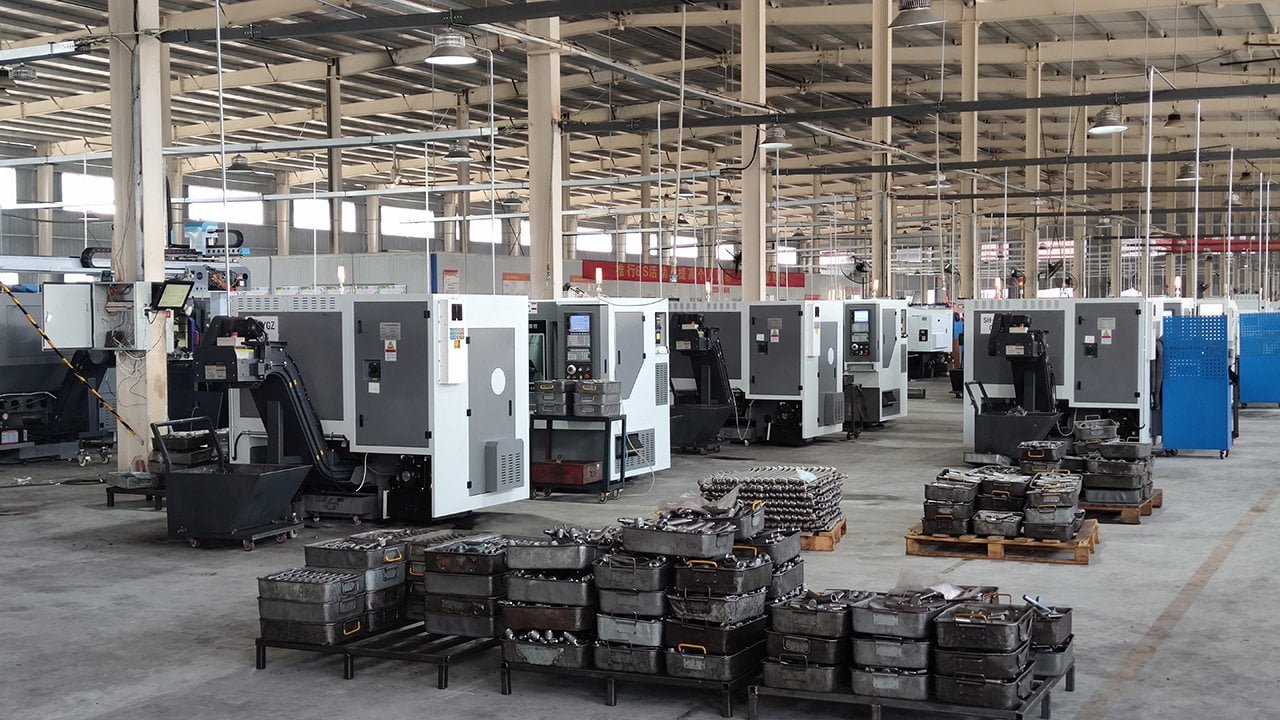
Choosing the wrong supplier costs more than the part itself1. It risks your brand's reputation and profits. We help you see the real factors that matter in your procurement decision.
The true importance of a stabilizer link isn't its function, but managing your procurement risk2. For professional buyers, the goal is to assess how a supplier's materials, manufacturing, and quality control translate into predictable performance, lower warranty claims, and reduced supply chain risk.
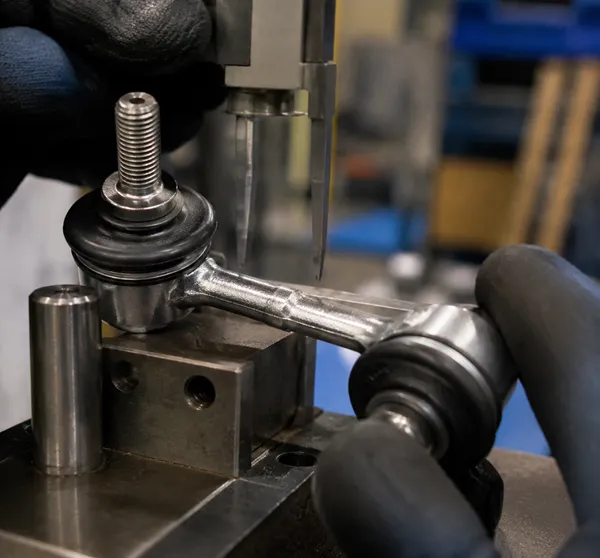
After more than 20 years of manufacturing suspension parts, I have spoken with hundreds of procurement managers. I see them facing the same challenges over and over. They are trying to find reliable parts for their market, but they are often looking at the wrong things. The goal is not just to buy a part; it is to build a reliable supply chain that protects your business. Let's look at how to do that by asking better questions.
Is 'High Quality' the Right Question to Ask About Stabilizer Links?
You demand "high quality" but still get parts that fail in the field. This inconsistency hurts customer trust and leaves you with inventory you can't rely on. It's time for a new approach.
Instead of asking for "high quality," you should ask if the stabilizer link is "fit for purpose." A part designed for a lightweight European passenger car will not survive on a heavy-duty truck operating on rough roads.3 Matching the product's specifications to the vehicle's application is key.
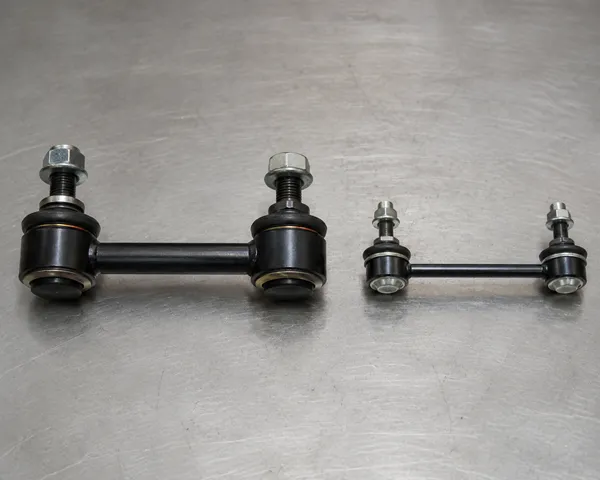
In our factory, we see this issue all the time. A buyer wants to simplify their inventory by ordering one type of stabilizer link for a wide range of vehicles. This is a risky strategy.4 The demands placed on a stabilizer link vary dramatically. A procurement manager's most critical task is to match the product's engineering to the end-user's reality.
Matching Product Specs to Market Needs
We engineer parts differently based on their intended use. For example, a stabilizer link for a luxury sedan focuses on minimizing noise and vibration5. A link for an off-road SUV needs a much more durable dust boot and higher resistance to impact. A buyer who doesn't understand this difference might choose a part based on price, only to face failures later. Here is a simple breakdown of how requirements change.
| Vehicle Type | Key Engineering Focus | Why It Matters for Your Business |
|---|---|---|
| Passenger Car | Noise reduction, precise fitment, corrosion resistance. | Reduces comfort-related complaints and ensures easy installation for mechanics. |
| SUV / Off-Road | High-strength materials, durable dust cover, high angular movement. | Prevents premature failure on rough terrain, reducing warranty claims from adventurous drivers. |
| Light/Heavy Truck | Maximum load capacity, robust welding, fatigue resistance. | Ensures safety and longevity under constant heavy loads, protecting your brand in commercial markets. |
When you evaluate a supplier, ask them to show you how their designs and materials address these different needs. A reliable partner will be able to explain their process, not just offer a generic "one-size-fits-all" solution.
How Can You Verify a Supplier's Quality Claims?
Every supplier brochure says "OE quality6." But these are just words. Making a large purchase based on claims alone is a gamble that can lead to expensive product failures and unhappy customers.
You must move beyond generic claims by asking for manufacturing evidence. Request material inspection reports for the steel used, ask for dimensional tolerance data, and inquire about their specific fatigue and salt spray testing7. This turns a sales pitch into an evidence-based evaluation of their capability.
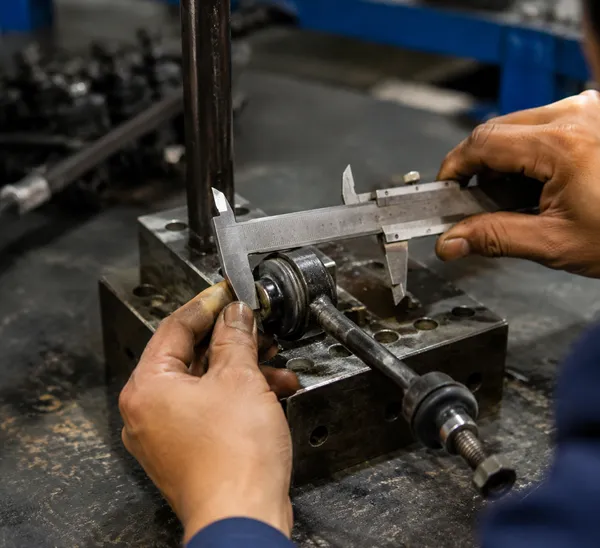
A frequent question I get from buyers is, "How do I know your quality is stable?" My answer is always the same: "Don't take my word for it. Let's look at the data." A transparent manufacturing partner should welcome this discussion. It shows you are a serious buyer who understands risk. Your job is to verify, not just trust. This is how you separate professional manufacturers from trading companies or workshops that just assemble parts.
From Claims to Evidence: Questions for Your Supplier
Instead of asking "Is this good quality?", start asking questions that reveal the process behind the product. This gives you a much clearer picture of the supplier's consistency and technical ability.
- "Can you provide the material inspection report for this batch of steel?"
- Why it matters: We only use steel from top mills like Baosteel8. Each batch comes with a report that proves its chemical composition. This is the foundation of the part's strength. A supplier who cannot provide this is a risk.
- "What are the dimensional tolerances for your molds compared to the OE part?"
- Why it matters: We develop our molds strictly based on OE specifications, controlling dimensions within ±0.2 mm9. This ensures proper fitment, which saves mechanics time and prevents installation errors that can lead to returns.
- "What specific tests do you perform to simulate conditions in my market?"
- Why it matters: We conduct salt spray testing for markets with harsh winters, fatigue testing to simulate millions of cycles, and pull-out force testing to ensure the ball stud won't fail under load. The test results directly predict the part's real-world performance and your future warranty rate.
Asking these questions helps you understand if a supplier's quality is a marketing slogan or an engineered outcome.
Are You Focusing on Unit Price or Total Cost of Ownership?
That low unit price looks great on a spreadsheet. But soon, the costs of warranty claims, reverse logistics, and damage to your brand's reputation start adding up, quickly erasing those initial savings.
The cheapest stabilizer link is rarely the most profitable one. A low upfront price often leads to a much higher total cost of ownership10. The real decision is not about comparing unit prices, but about comparing your upfront investment against your total long-term business risk.
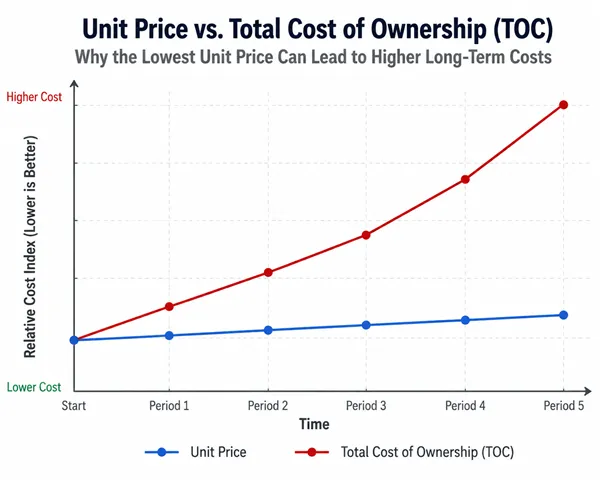
I have analyzed countless after-sales reports over my career. The pattern is always clear. Parts that fail prematurely are almost always linked to a sourcing decision based purely on the lowest bid. A procurement manager who is rewarded for saving 5% on unit cost might be costing the company 20% in hidden expenses down the line11. A smart buyer understands that paying a little more for a part from a factory with verified processes and materials is an investment in risk reduction.
The Hidden Costs of a Low Price Tag
Let's break down the real financial impact. When you choose a supplier, you are choosing a partner whose performance directly affects your bottom line. A lower unit price often means compromises in materials, manufacturing processes, or quality control. These compromises create costs that you will have to pay later.
Here is a comparison based on what we see from market feedback:
| Cost Factor | Scenario A: "Lowest Price" Supplier | Scenario B: "Smart Investment" Supplier |
|---|---|---|
| Unit Price | $5.00 | $6.00 |
| Warranty Rate12 | 3-5% | <0.5% |
| Cost of Claims | High costs for replacement parts, shipping, and labor. | Minimal costs. |
| Brand Reputation | Negative reviews, loss of customer trust. | Positive reputation for reliability and durability. |
| Inventory Risk | Unpredictable failures lead to excess stock or stockouts. | Stable performance allows for lean inventory management. |
| Total Cost | The initial savings are lost to high after-sales costs. | The slightly higher price is an investment that protects profits. |
The decision is clear. Focusing only on the initial price is a short-term game that often leads to long-term losses. Your goal should be to find a manufacturing partner who helps you lower your total cost of ownership and build a stronger, more profitable brand.
Conclusion
Judge stabilizer links not on function, but on procurement risk. Shift from price to total cost, from generic quality to "fit for purpose," and from claims to verifiable evidence.
"Calculating Financial Business Risk to Identify Supply Chain ...", https://scm.mit.edu/news-and-events/calculating-financial-business-risk-to-identify-supply-chain-vulnerabilities/. Research on the 'total cost of quality' (TCOQ) demonstrates that expenses related to failures, such as warranty claims, recalls, and brand damage, can significantly surpass the initial purchase price of a component. Evidence role: general_support; source type: paper. Supports: The claim that poor supplier quality leads to significant hidden costs, including reputational damage, that far outweigh initial price savings.. ↩
"Supply Chain Risk Management (SCRM) - NCUA", https://ncua.gov/regulation-supervision/regulatory-compliance-resources/cybersecurity-resources/supply-chain-risk-management-scrm. Modern procurement practices emphasize a shift from transactional purchasing to strategic sourcing, where managing supply chain risks—including quality, delivery, and supplier viability—is a primary objective. Evidence role: general_support; source type: education. Supports: The claim that modern procurement strategy prioritizes risk management, including supply chain stability and quality assurance, over simply securing the lowest unit cost.. ↩
"[PDF] Introduction to Formula SAE Suspension and Frame Design", https://racing.byu.edu/0000018a-6be7-df21-a5fe-fbef2f9d0001/intro-to-frame-and-suspension-design. Automotive engineering principles dictate that suspension components for heavy-duty vehicles must be designed to withstand significantly higher static and dynamic loads, material fatigue, and environmental stresses compared to those for passenger cars. Evidence role: mechanism; source type: paper. Supports: The claim that suspension components are engineered with vastly different specifications for different vehicle classes due to variations in load, stress, and operating conditions.. ↩
"The Future of Risk Analysis, Risk Engineering, and Risk Management", https://info.engineering.vanderbilt.edu/the-future-of-engineering-risk-management-and-analysis. Case studies in supply chain management highlight the risks of aggressive part standardization, where using a single component across diverse applications can lead to premature failures when the part is not 'fit for purpose' in all contexts. Evidence role: case_reference; source type: paper. Supports: The claim that part standardization, while beneficial for inventory, introduces significant risk if engineering and application-specific requirements are overlooked.. Scope note: The source would provide general principles on the risks of part consolidation, not specific data on stabilizer links. ↩
"How noise control uses sound-dampening materials, rubber seals ...", https://www.instagram.com/reel/DN7w6udDSnH/?hl=en. In the design of suspension systems for luxury vehicles, significant engineering effort is dedicated to minimizing Noise, Vibration, and Harshness (NVH) to meet consumer expectations for comfort and refinement. This often involves specific material choices and designs for components like bushings and links. Evidence role: mechanism; source type: paper. Supports: The claim that Noise, Vibration, and Harshness (NVH) is a primary engineering consideration for suspension components in luxury vehicles.. ↩
"AUTO INSURERS REQUIRING USE OF AFTERMARKET PARTS", https://www.cga.ct.gov/2009/rpt/2009-R-0398.htm. Industry analyses note that terms such as 'OE quality' or 'OE equivalent' are not legally defined or standardized in many markets, leading to potential confusion for buyers, as the claim may not be independently verified. Evidence role: definition; source type: institution. Supports: The claim that terms like 'OE quality' are not formally regulated and can be used ambiguously in marketing.. ↩
"Salt spray test - Wikipedia", https://en.wikipedia.org/wiki/Salt_spray_test. International standards, such as ASTM B117 for salt spray testing and various SAE protocols for fatigue life analysis, are widely used in the automotive industry to simulate real-world conditions and validate the corrosion resistance and structural durability of components. Evidence role: definition; source type: government. Supports: The claim that salt spray and fatigue testing are standard, recognized methods for evaluating component quality.. ↩
"List of steel producers - Wikipedia", https://en.wikipedia.org/wiki/List_of_steel_producers. Industry reports and market analyses consistently list Baosteel Group as one of the world's largest steel producers and a key supplier of advanced high-strength steels to the global automotive industry. Evidence role: general_support; source type: other. Supports: The claim that Baosteel is recognized as a major, high-quality steel producer for the automotive sector.. Scope note: Such sources confirm Baosteel's market position and scale, which is an indicator of its status, but do not constitute a direct endorsement of quality over all other mills. ↩
"Geometric dimensioning and tolerancing - Wikipedia", https://en.wikipedia.org/wiki/Geometric_dimensioning_and_tolerancing. Engineering principles of Geometric Dimensioning and Tolerancing (GD&T) emphasize that controlling dimensional variations, often to sub-millimeter levels, is essential for ensuring correct assembly, fitment, and interchangeability of mechanical components like those in a vehicle's suspension. Evidence role: general_support; source type: education. Supports: The claim that tight dimensional tolerances are critical for the proper fit and function of interchangeable automotive parts.. Scope note: The source would explain the principle's importance rather than validating the specific ±0.2 mm value for this exact part. ↩
"Total Cost of Ownership | CIPS", https://www.cips.org/intelligence-hub/finance/total-cost-of-ownership. The Total Cost of Ownership (TCO) is a procurement and management accounting concept that analyzes the full lifetime costs of an asset, including acquisition, operation, maintenance, and end-of-life expenses, rather than focusing solely on the initial purchase price. Evidence role: definition; source type: paper. Supports: The claim that Total Cost of Ownership (TCO) is a critical metric that includes not just the purchase price but also post-purchase costs like maintenance, failure, and disposal.. ↩
"Reducing the Costs of Poor Quality: A Manufacturing Case Study", https://scholarworks.waldenu.edu/dissertations/5329/. Studies on the 'cost of poor quality' (COPQ) have found that failure costs, including warranties, repairs, and lost sales, can amount to 15-40% of total revenue, illustrating how small savings on component prices can lead to disproportionately large downstream expenses. Evidence role: statistic; source type: paper. Supports: The claim that hidden costs from poor quality can be a large multiple of any initial price savings.. Scope note: The source would provide a general range for COPQ across industries, not a specific validation of the 5%-to-20% ratio for this exact scenario. ↩
"Analysis of Automotive Warranty Data in the Mileage Domain - HBK", https://www.hbkworld.com/en/knowledge/resource-center/articles/analysis-of-automotive-warranty-data-in-the-mileage-domain. Industry analysis of the automotive aftermarket often reveals a significant disparity in product return and warranty claim rates, with some components showing failure rates well above 3%, while premium or OEM-certified parts typically maintain rates below 1%. Evidence role: statistic; source type: research. Supports: The claim that there is a wide variance in warranty rates between low-cost and high-quality suppliers in the automotive aftermarket.. Scope note: The source would provide general industry data on warranty rate variance, which supports the plausibility of the figures but may not match the exact 3-5% and <0.5% numbers. ↩