Choosing a shock absorber supplier can expose your business to hidden risks if you compare factories mainly by price, size, or sample appearance. Leakage, abnormal noise, and unstable damping often appear after mass production begins. You can reduce that risk by matching verifiable manufacturing controls to your market, warranty expectations, and product requirements.
To choose a shock absorber supplier, first define your target vehicles, SKU mix, quality expectations, warranty terms, customization needs, and delivery plan. Then verify an evidence chain covering certification, material control, welding, oil-seal assembly, performance testing, traceability, and claim handling. A low quote or approved sample alone cannot prove mass-production reliability.
The goal is not to find a supplier that looks impressive in a presentation. You need a partner whose production system fits your actual procurement task. The following framework helps you investigate that fit without treating any single certificate, machine, or factory claim as a guarantee.
How Should You Define Requirements Before Choosing a Shock Absorber Supplier?
Supplier comparisons become unreliable when your requirements are unclear. One factory may quote an economy specification, while another quotes a premium private-label product. The prices may look comparable, but the underlying materials, tests, packaging, warranty exposure, and service responsibilities can be very different.
A shock absorber supplier should be evaluated against a written procurement brief. Your brief should define the sales market, vehicle applications, initial SKU list, desired ride characteristics, warranty tolerance, branding needs, order quantities, documentation requirements, and delivery schedule. This gives every candidate the same commercial and technical reference point.
Start with your market rather than the factory
You should first clarify where and how the shock absorbers will be sold. A product intended for a price-sensitive aftermarket program may have different commercial requirements from a premium private-label range. Road conditions, temperature range, vehicle age, installation practices, and customer expectations can also affect your specification.
During buyer inquiries, we often hear a broad opening question such as, “What is your best price for shock absorbers?” The more useful follow-up questions are:
- Which countries or regions will receive the products?
- Which passenger cars, trucks, or light commercial vehicles are involved?
- Which OE references or application numbers are required?
- What warranty will your company offer to downstream customers?
- Which failure complaints create the greatest risk for you?
- Do you need neutral packaging or private-label customization?
- How many pieces are required per SKU and per shipment?
These questions are not sales formalities. They prevent you from comparing products built around different assumptions.
Build a controlled SKU list
A broad catalog does not automatically mean that every application is equally mature. You should divide your required references into practical groups:
- High-volume SKUs: Your core applications deserve the most detailed technical and capacity review.
- Medium-volume SKUs: These products affect container consolidation and inventory coverage.
- Long-tail SKUs: You should confirm minimum order quantities, tooling status, and production frequency.
- Custom or modified SKUs: These require documented approval criteria and version control.
You should also confirm whether quoted references are active production models or merely entries in a catalog. Ask for application cross-references, drawings where appropriate, dimensional checkpoints, and packaging details.
Create a comparable request for quotation
| Requirement | What you should define | Why it matters |
|---|---|---|
| Application scope | Vehicle models, years, OE references | Reduces fitment errors |
| Product position | Economy, standard, premium, or heavy-duty | Makes quotations more comparable |
| Warranty expectation | Period, mileage basis, exclusions, evidence needed | Clarifies risk allocation |
| Branding | Color, label, laser mark, carton, barcode | Affects approval and lead time |
| Order structure | Quantity per SKU and total order | Tests commercial feasibility |
| Quality documents | Certificates, inspection records, test reports | Supports verification |
| Delivery | Target date and shipment plan | Reveals capacity and material risks |
A clear brief does not guarantee a good supplier decision. However, it makes misleading comparisons much easier to detect.
What Quality Evidence Should a Shock Absorber Supplier Provide?
Certificates and photographs can create confidence without proving that your exact products are controlled. This gap becomes dangerous when documents are outdated, reports refer to unrelated models, or test equipment is not connected to routine production decisions.
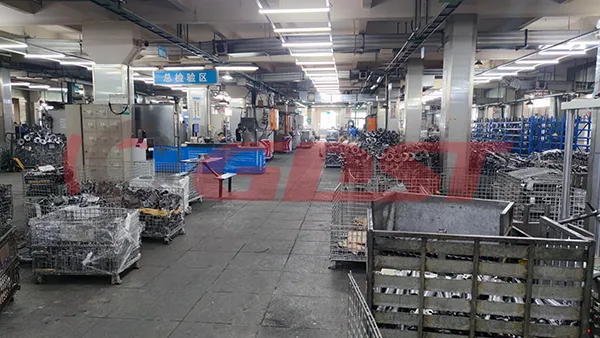
A qualified shock absorber supplier should provide a connected chain of evidence. You should examine system certificates, product specifications, incoming-material controls, process instructions, inspection records, test methods, equipment calibration status, traceability, and corrective-action procedures. Each item should relate to the shock absorbers and production batches you intend to purchase.
Understand what certifications can prove
Documents such as IATF 16949, ISO 9001, ISO 14001, and ISO 45001 can indicate that a supplier has established management systems within a defined scope. They do not independently prove that a particular shock absorber will meet your durability, fitment, or damping requirements.
You should verify:
- The certificate number and issuing body
- The legal company and manufacturing-site names
- The scope of certification
- The issue and expiration dates
- Whether the certification body offers online verification
- Whether the products and processes you are buying fall within the stated scope
If a certificate is commercially important in your market, you may also request confirmation through an independent audit or qualified certification professional.
Follow the evidence through critical processes
A useful evaluation follows the product through production instead of focusing on one laboratory photograph.
Incoming materials: Ask how steel tubes, piston rods, seals, fluid, valves, brackets, and other components are approved. A supplier should be able to explain specifications, supplier controls, lot identification, and nonconforming-material handling.
Welding: Poor control can contribute to dimensional variation or structural concerns.1 You should review welding instructions, fixture control, operator or process qualification where applicable, inspection criteria, and records. Visual inspection alone may not address every risk.
Oil-seal assembly: Seal brand claims are not enough. The seal must match the rod finish, dimensions, fluid, assembly method, and operating conditions. Ask how the supplier prevents seal damage, contamination, incorrect seating, and mixed components.
Final performance inspection: A damping dynamometer can measure defined performance characteristics, but the machine itself is not proof of consistency. You should ask which parameters are measured, at what speeds, against which tolerances, and how failed units are segregated.
Request product-specific documents
Your evidence package may include:
- Approved product drawings or controlled specifications
- Material or component inspection records
- Damping-force criteria and test records
- Dimensional inspection plans
- Coating or corrosion-test documentation where relevant
- Equipment calibration or verification records
- Batch identification and production dates
- Nonconformance and corrective-action procedures
External test reports can add confidence when their sample identity, method, laboratory competence, and acceptance criteria are clear. Application-specific conclusions should still be reviewed by qualified engineering or testing professionals.
How Can You Verify a Shock Absorber Supplier’s Mass-Production Consistency?
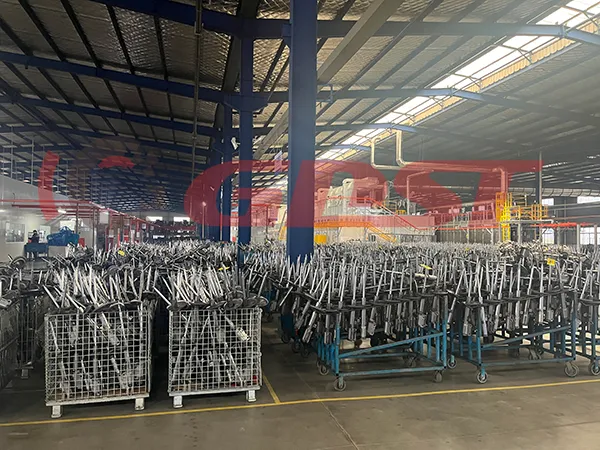
A good sample can hide an unstable production process.2 The sample may receive extra attention, use specially selected components, or be made by experienced operators. If the supplier cannot reproduce it across batches, your approved sample may have little value after the first container ships.
You should verify whether the shock absorber supplier controls the transition from sample approval to routine production. Focus on specification version control, process consistency, inspection frequency, traceability, change management, and batch approval. The objective is to confirm that every order follows the same approved requirements rather than relying on memory or informal instructions.
Connect the sample to a controlled specification
Before approving a sample, you should record what approval actually means. A visual signature on one unit is usually insufficient. The approval package should identify relevant characteristics such as:
- Product reference and application
- Key dimensions and mounting orientation
- Damping-force requirements and tolerances
- Color, surface finish, and marking
- Labels, barcodes, and packaging
- Approved components or material specifications
- Revision number and approval date
- Any agreed test or validation requirements
This controlled record helps prevent disputes if a later batch differs from the original sample.3
Ask how production variation is detected
No manufacturing process is completely free from variation.4 Your supplier should explain how variation is measured and managed.
Useful questions include:
- Which characteristics receive 100% inspection?
- Which characteristics use sampling, and what sampling plan applies?
- How are damping test limits defined?
- How are fixtures, gauges, and test benches verified?
- How are rejected units identified and isolated?
- Can records be traced to a production date, line, or component lot?
- Who authorizes rework or deviation?
- How are process or component changes communicated to you?
At GDST Auto Parts, for example, we describe our own process as including checks for damping-force consistency and structural dimensions. However, a buyer should still verify the applicable records, tolerances, model coverage, and audit evidence instead of accepting a general statement as universal proof.
Use a staged approval process
You can reduce the sample-to-production gap through staged approval:
| Stage | Main purpose | Evidence to review |
|---|---|---|
| Technical review | Confirm application and specification | Cross-reference, drawing, requirements |
| Sample evaluation | Check initial conformity | Measurements, performance data, packaging |
| Pilot or pre-production review | Test process repeatability | Batch records, inspection results |
| Mass-production approval | Release the order | Signed specification and control plan |
| Pre-shipment verification | Confirm batch status | Inspection report and traceability |
| Post-delivery review | Monitor field feedback | Claim data and corrective actions |
The appropriate depth depends on your order value, market risk, and technical requirements. Independent laboratory testing, pre-shipment inspection, or factory auditing may be appropriate for higher-risk projects.
How Should You Assess a Shock Absorber Supplier’s Accountability and Delivery?
Some suppliers communicate quickly before receiving an order but become vague when you ask about claims, production changes, or delays. This creates risk because supplier capability includes communication and corrective action, not only machines, prices, and samples.
A dependable shock absorber supplier should define who approves customized products, how production is scheduled, what traceability remains after shipment, and how abnormal products are investigated. You should also compare stated capacity with your SKU complexity, minimum quantities, material lead times, and realistic delivery schedule.
Clarify warranty responsibility before ordering
A warranty promise is useful only when the process behind it is clear. You should ask what information is required for a claim and how both sides will distinguish manufacturing defects from fitment errors, installation damage, accident damage, or application mismatch.
A practical claim process may request:
- Product and batch identification
- Vehicle application and installation date
- Mileage or service history where available
- Photographs or video
- Failure description, such as leakage or abnormal noise
- Returned samples when technically justified
- Investigation timing and responsible contacts
- Corrective-action and compensation procedures
You should negotiate these points in the purchase agreement. Legal and warranty obligations vary by market, so qualified legal and technical advice may be needed.
Test customization control
Private-label work introduces more opportunities for error. Body color, laser marking, labels, barcodes, cartons, inserts, and pallet marks must all follow approved versions.5
Ask whether the supplier uses:
- Signed artwork and color references
- Barcode verification
- Packaging samples or digital proofs
- Revision-controlled specifications
- First-article approval
- Mass-production release authorization
- Controls for obsolete labels and packaging
Customization capability should not be measured only by the number of options offered. It should be measured by the supplier’s ability to reproduce the approved option without mixing versions.
Evaluate capacity in context
A large factory is not automatically the best match. You should examine how its production model handles your order. A supplier may have substantial total output but still face constraints involving specific components, low-volume SKUs, custom packaging, or seasonal demand.
For context, GDST operates 11 production lines and states a monthly capacity of 200,000 pieces, with a standard production cycle of approximately 50–60 days and a usual MOQ of 100 pieces per SKU. These are our operating parameters, not universal qualification thresholds. You should verify any supplier’s claimed capacity against current workloads, material availability, SKU count, and customization complexity.
A realistic delivery plan should explain the timeline, not simply promise a shipment date.
Frequently Asked Questions
Is the lowest-priced shock absorber supplier usually the best choice?
No. The lowest quote may reflect different materials, inspections, packaging, specifications, or warranty responsibilities. You should normalize each quotation against the same technical and commercial requirements. You should then compare total procurement risk, including claims, delays, inconsistent batches, and fitment errors.
Does IATF 16949 guarantee shock absorber quality?
No. IATF 16949 provides evidence of an automotive quality-management framework within its certified scope. It does not guarantee that every product meets your application requirements. You should verify the certificate and connect it to product-specific controls, inspection records, test methods, traceability, and independent evaluation where appropriate.
How many samples should you test before placing an order?
There is no universal quantity.6 The appropriate sample plan depends on the number of SKUs, order value, application risk, customization, and validation method. You should prioritize high-volume and safety-critical applications and use qualified technical professionals to define testing and acceptance criteria.
What should you check during a shock absorber factory audit?
You should examine document control, incoming inspection, component storage, welding, seal assembly, cleanliness, testing, calibration, traceability, nonconforming-product control, packaging, and corrective-action procedures. You should also compare written procedures with actual shop-floor practices and product-specific records.
How can you reduce private-label packaging errors?
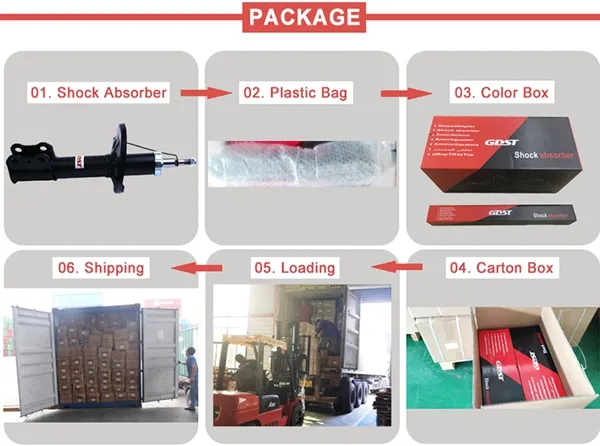
You should approve controlled artwork, colors, labels, barcodes, markings, and carton specifications before mass production. Request a first-article or packaging proof, assign revision numbers, and confirm how obsolete materials are removed. Pre-shipment inspection should include SKU-to-package matching.
Conclusion
Choosing a shock absorber supplier is a risk-management decision rather than a competition for the lowest price, largest facility, or best-looking sample. You should define your procurement task, follow a product-specific evidence chain, verify mass-production controls, and agree on accountability before ordering. Certifications and testing equipment support evaluation, but neither replaces careful document review, auditing, and qualified technical assessment. If you are evaluating a new suspension program, contact our team to discuss your SKU list, quality requirements, customization plan, and verification documents.
"Ninth International Conference on Computer Technology in ...", https://nvlpubs.nist.gov/nistpubs/Legacy/SP/nistspecialpublication949.pdf. Welding research identifies heat input, restraint, joint geometry, and process variability as contributors to distortion, residual stress, dimensional error, and weld defects, each of which can affect the structural performance of a welded component. Evidence role: mechanism; source type: paper. Supports: Welding research should document how heat input, fixturing, process parameters, and weld defects influence distortion, dimensional accuracy, residual stress, or fatigue performance.. Scope note: General welding evidence establishes the mechanism but does not quantify the risk for a particular shock-absorber design or weld procedure. ↩
"6. Process or Product Monitoring and Control", https://www.itl.nist.gov/div898/handbook/toolaids/pff/pmc.pdf. Statistical process-control guidance distinguishes individual product conformity from process stability and capability, which require data across repeated production and cannot be inferred from a single acceptable sample. Evidence role: general_support; source type: government. Supports: Statistical process-control guidance should explain that process stability and capability must be evaluated from process data collected over time rather than inferred from an isolated conforming sample.. ↩
"6.5 Configuration Management", https://www.nasa.gov/reference/6-5-configuration-management/. Configuration-management guidance uses approved baselines, revision identification, and documented change control to preserve an authoritative record of product requirements and to identify departures in later versions or production batches. Evidence role: mechanism; source type: government. Supports: Configuration-management guidance should explain how approved baselines, revision identification, and change records preserve agreement on product requirements.. Scope note: Such controls make differences easier to identify and resolve, but they cannot by themselves prevent commercial disputes. ↩
"6. Process or Product Monitoring and Control", https://www.itl.nist.gov/div898/handbook/toolaids/pff/pmc.pdf. Statistical quality-control literature treats variation as inherent in production processes and uses process data to distinguish routine common-cause variation from special causes requiring investigation. Evidence role: expert_consensus; source type: government. Supports: A statistical engineering source should describe inherent and assignable variation in production processes and the role of monitoring in distinguishing them.. ↩
"Small Entity Compliance Guide: Current Good ...", https://www.fda.gov/regulatory-information/search-fda-guidance-documents/small-entity-compliance-guide-current-good-manufacturing-practice-manufacturing-packaging-labeling. Configuration-management principles require product-related information to be identified, approved, versioned, and controlled through change, providing a basis for controlling artwork, markings, labels, and packaging specifications. Evidence role: general_support; source type: institution. Supports: Configuration-management guidance should support identification, approval, status accounting, and control of product-related documents and versions.. Scope note: The cited principles apply broadly to controlled product information and may not prescribe the article's specific private-label packaging workflow. ↩
"6.2.2. What kinds of Lot Acceptance Sampling Plans (LASPs ...", https://www.itl.nist.gov/div898/handbook/pmc/section2/pmc22.htm. Acceptance-sampling guidance determines sample size from factors such as lot size, inspection level, acceptable quality criteria, and producer and consumer risks; it therefore does not prescribe one sample quantity for all procurement decisions. Evidence role: expert_consensus; source type: government. Supports: Acceptance-sampling guidance should show that sample size is determined by the lot, inspection level, acceptance criterion, and producer and consumer risks rather than by a universal number.. Scope note: General acceptance-sampling plans address lot disposition and do not replace engineering validation for safety-critical or application-specific performance. ↩