
When I discuss OEM vs Aftermarket Strut Mounts with automotive buyers, I often hear the same concern: a lower price may increase noise, fitment problems, or warranty claims. The label alone does not solve that problem. I look at specifications, manufacturing control, inspection evidence, and supplier support before recommending a sourcing decision.
OEM and aftermarket strut mounts can both be suitable choices, but neither label automatically proves quality, service life, or safety. I evaluate the actual product design, fitment data, material control, validation documents, production consistency, and warranty support. The best option is the one that meets the intended vehicle requirements while controlling total purchasing and after-sales risk.
I have found that buyers usually reach this decision because they are balancing several pressures at once. They need competitive pricing, reliable supply, stable product performance, and fewer customer complaints. In the sections below, I will explain how I compare the two sourcing routes from a procurement and supplier-evaluation perspective.
What Does OEM vs Aftermarket Strut Mounts Really Mean?
The OEM and aftermarket labels can appear to offer a simple choice, but I do not treat them as complete quality descriptions. OEM usually refers to parts supplied through the original vehicle manufacturer or an approved original-equipment channel. Aftermarket refers to replacement parts produced for the independent repair and replacement market.
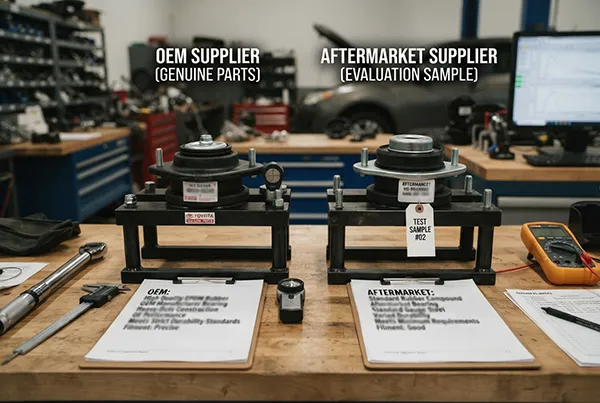
OEM strut mounts normally follow the vehicle manufacturer’s specified design and supply system, while aftermarket strut mounts are produced by independent manufacturers for replacement applications. However, I do not assume that OEM parts are always superior or that aftermarket parts are automatically inferior. I compare the specific design, materials, processes, evidence, and supplier controls.
The label is only the starting point
In procurement discussions, I often see buyers use “OEM” as a shortcut for low risk. That assumption can be understandable, especially when the part is associated with a familiar vehicle manufacturer. However, the label does not eliminate the need to verify the correct application, revision, installation method, or supply documentation.
I also avoid treating “aftermarket” as a synonym for cheap or unreliable. The aftermarket includes many different product levels.1 One supplier may use carefully controlled rubber compounds, accurate molds, and documented inspections. Another supplier may focus mainly on price and basic catalog matching. Both products may be described as aftermarket, but their quality risks can be very different.
What a strut mount does
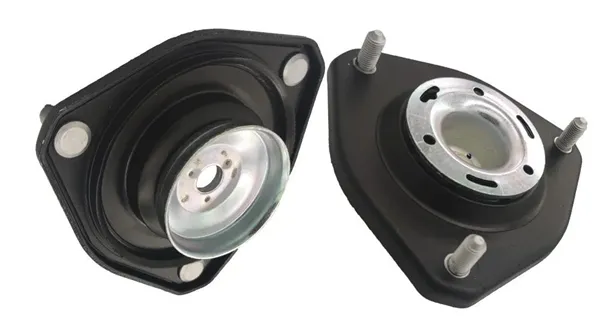
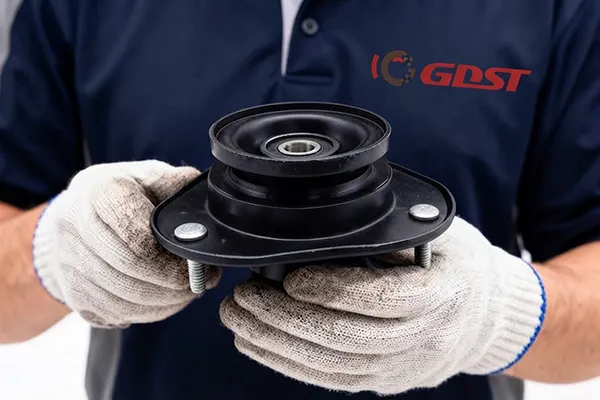
A strut mount connects the suspension strut assembly to the vehicle body. Depending on the application, it may also support the upper portion of the strut and allow the strut to rotate during steering. Some designs include a bearing or integrated bearing function.
The mount can influence:
- Noise, vibration, and harshness
- Steering movement and return behavior
- Correct suspension geometry
- Installation alignment
- Rubber isolation performance
- Long-term durability under road loads
I do not use a catalog match as proof that all of these functions will perform equally. A replacement part may have the correct external dimensions but still differ in rubber hardness, internal reinforcement, bearing movement, or bonding quality.
Why the buying channel matters
An OEM part may provide a clear vehicle-specific reference and established distribution path. An aftermarket supplier may offer broader coverage, private-label packaging, flexible minimum order quantities, and more competitive commercial terms. Neither route is automatically right for every brand or market.
I recommend that buyers define their priority first:
- Original replacement positioning
- Competitive aftermarket pricing
- Extended vehicle coverage
- Private-label development
- Stable supply and production flexibility
- Lower warranty and complaint exposure
This definition helps me compare suppliers on business fit rather than relying on a single product label.
How Should I Compare OEM vs Aftermarket Strut Mounts on Quality?
A direct comparison becomes more useful when I separate product characteristics from marketing language. I examine design data, raw materials, production steps, inspection plans, and available test evidence. I also ask how the supplier controls consistency from one batch to the next.
I compare OEM and aftermarket strut mounts through measurable factors such as fitment accuracy, rubber and metal material control, bearing or assembly quality, dimensional consistency, validation testing, packaging, and after-sales procedures. I treat supplier-level certifications as useful management evidence, but I do not treat them as product-specific proof by themselves.
Fitment is necessary, but it is not sufficient
Fitment information should be the first filter. I ask the supplier to confirm the vehicle application, OE reference numbers where appropriate, production drawings, mounting points, dimensions, and any left-hand or right-hand differences. I also check whether the product is intended for a specific suspension configuration.
However, I have seen customer discussions where the catalog application appeared correct, but the complaint focused on installation difficulty or noise after installation. This does not automatically prove that the part design was wrong. Installation conditions, related suspension parts, vehicle condition, and incorrect application can also contribute.2 Still, the complaint tells me that a catalog match is not the end of the evaluation.
Material and process control
A strut mount combines metal components, elastomeric material, and sometimes a bearing or other moving element. I therefore ask how the supplier controls each part of the assembly.
Important questions include:
- What steel specification applies to the metal components?
- Does each material batch have an inspection report?
- How does the supplier control rubber formulation and hardness?
- How are molds developed and maintained?
- How does the supplier manage vulcanization or bonding?
- How are bearing movement and assembly torque checked?
- How does the supplier control dimensional tolerances?
- How are nonconforming parts identified and isolated?
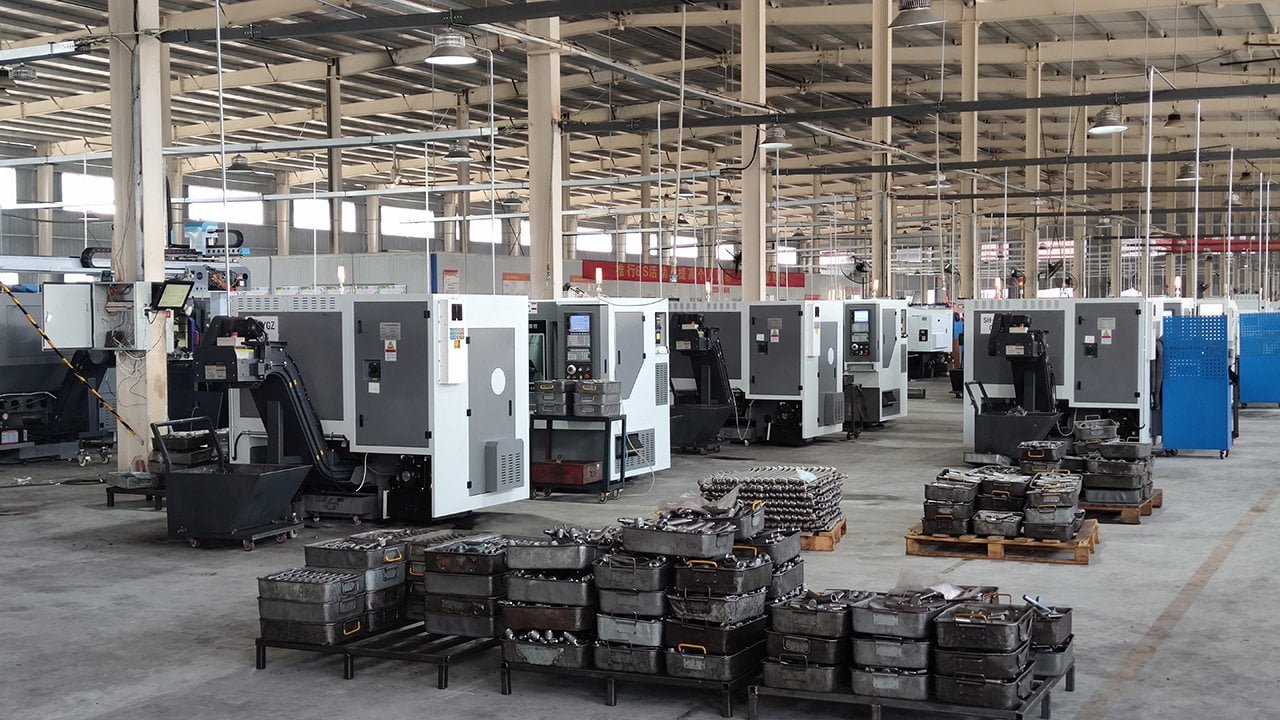
At GDST Auto Parts, I would normally connect these questions to the customer’s drawings, samples, or technical requirements. Our manufacturing capabilities include casting, forging, welding, CNC machining, assembly, and surface treatment. The correct process depends on the product design and approved specification.
Useful evidence for procurement
I do not ask for documents simply to create a larger paperwork file. I ask for evidence that supports a specific purchasing decision.
| Evaluation area | Evidence I would request | Why it matters |
|---|---|---|
| Application | Fitment list, drawings, sample approval | Confirms intended vehicle coverage |
| Materials | Material reports and incoming inspection records | Supports raw material consistency |
| Dimensions | Inspection reports and control plans | Helps reduce installation variation |
| Rubber or elastomer | Applicable specification and hardness records | Supports repeatable isolation characteristics |
| Assembly | Process instructions and inspection points | Shows how components are controlled |
| Validation | Relevant product-specific test reports | Connects claims to the actual part |
| Final inspection | Sampling plan or 100% inspection records | Shows shipment release controls |
| Warranty | Complaint analysis and corrective action process | Reduces repeat issues and response delays |
I also recommend that buyers verify whether a stated test method is actually relevant to the strut mount design. A general automotive quality certification can demonstrate a management system, but it does not automatically establish the service life of one specific part number.3
Do not compare price alone
A lower unit price may become expensive if it creates returns, replacement freight, customer dissatisfaction, or lost distributor confidence.4 I prefer to calculate a broader landed-risk picture that includes:
- Unit purchase price
- Tooling or development cost
- Testing and sample approval
- Packaging and labeling
- Freight and inventory cost
- Expected inspection cost
- Warranty administration
- Potential customer complaint exposure
I cannot calculate a genuine total cost without the buyer’s data. However, I can use this framework to prevent a narrow price comparison from controlling the entire decision.
Which Supplier Checks Matter Most When Buying Aftermarket Strut Mounts?
Supplier evaluation becomes critical because aftermarket quality varies between manufacturers. I look beyond a product catalog and ask whether the supplier can repeat the approved design across production batches. I also check communication speed, technical responsiveness, and the ability to investigate complaints.
When I evaluate an aftermarket strut mount supplier, I check engineering support, production capability, raw material control, process inspection, final inspection, documentation, packaging, capacity, and warranty handling. I also verify every certificate, test report, and performance statement directly with the supplier.
Production capability should match the buyer’s needs
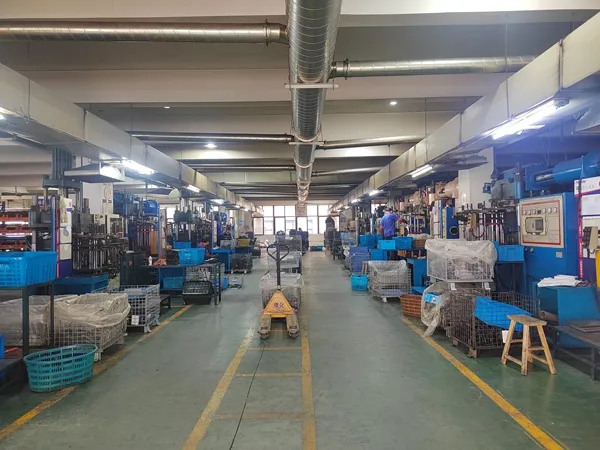
A supplier may have a good sample but lack the capacity or process discipline for stable mass production. I ask how the supplier manages the transition from prototype or sample approval to regular orders.
For example, I would examine:
- Number and type of production lines
- Internal tooling and mold capabilities
- Manufacturing process flow
- QC staffing and experience
- Production capacity by product family
- Batch identification and traceability
- Packaging and pallet procedures
- Change-control procedures
- Contingency planning for material or equipment issues
GDST Auto Parts operates 20 production lines and supports OEM/ODM programs for international aftermarket customers. I present this as a manufacturing capability, not as automatic proof that every strut mount will perform in every vehicle. The buyer still needs to approve the relevant drawings, samples, specifications, and evidence.
Quality management is helpful, but product evidence still matters
I consider IATF 16949 and ISO 9001 certification useful when I assess a supplier’s quality management framework. These systems can support documented procedures, corrective action, process control, and internal accountability.
However, I do not tell buyers that a supplier-level certificate proves the performance of a particular strut mount. I ask for product-specific information as well. Depending on the application, this may include:5
- Dimensional inspection
- Hardness or material checks
- Pull-out or compression testing
- Fatigue testing
- Torque and angle testing
- Temperature exposure
- Ozone resistance testing
- Salt spray evaluation for relevant metal surfaces
- Bearing or rotation inspection where applicable
The appropriate test plan should come from the product requirements and customer specification. I recommend that buyers confirm the test method, sample condition, acceptance criteria, and report traceability with the supplier.
Complaint handling reveals supplier maturity
I have participated in customer conversations where the first questions were simple:
- Why is the mount making noise?
- How long should the part last?
- Does it fit the listed vehicle?
- Can the supplier replace the affected quantity?
- What changed between two batches?
These questions are not unusual, but the supplier’s response matters. I look for a structured process that records the complaint, identifies the batch, reviews inspection data, examines samples, and provides a corrective-action response.
I do not treat one complaint as proof of a universal product problem. I treat it as information that may reveal an application issue, installation issue, isolated defect, packaging damage, or broader process variation. A professional supplier should investigate rather than dismiss the concern.
A practical supplier scorecard
I often recommend a weighted scorecard rather than an informal impression.
| Category | Suggested focus |
|---|---|
| Technical fit | Drawings, samples, vehicle coverage |
| Product quality | Materials, process control, inspection |
| Documentation | Reports, traceability, change control |
| Capacity | Lines, lead time, production stability |
| Commercial terms | Price, MOQ, payment, packaging |
| Service | Communication and technical support |
| Risk control | Warranty, corrective action, continuity planning |
The exact weighting should reflect the buyer’s market. A premium brand may give more weight to documentation and complaint prevention. A high-volume wholesaler may emphasize continuity, capacity, and consistent batch performance.
Is OEM or Aftermarket Better for Your Distribution Strategy?
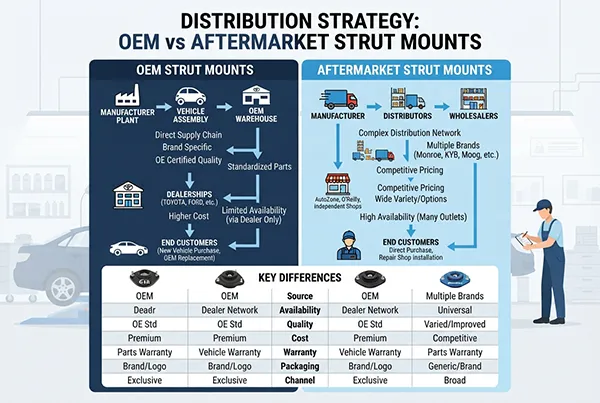
The right choice depends on the brand position, customer expectations, application range, and tolerance for supply risk.6 I do not recommend choosing OEM or aftermarket strut mounts in isolation from the rest of the procurement strategy.
OEM sourcing may suit buyers who prioritize original-channel positioning and established vehicle references. Aftermarket sourcing may suit buyers who need broader coverage, private labeling, flexible development, or competitive pricing. I choose between them by comparing verified product capability, total risk, supply stability, and market expectations.
When OEM sourcing may be appropriate
I see OEM sourcing as potentially suitable when the buyer wants to preserve an original replacement position or satisfy customers who specifically request the vehicle manufacturer’s channel. This route may also simplify certain fitment conversations because the original reference is already established.
Still, I ask buyers to confirm:
- Authorized distribution status
- Genuine packaging and traceability
- Applicable part-number revisions
- Availability and lead-time stability
- Market restrictions
- Pricing and margin structure
- Return and warranty terms
OEM sourcing can create commercial limitations if supply is restricted, pricing is high, or the buyer needs custom packaging and broader applications.
When aftermarket sourcing may be appropriate
Aftermarket sourcing can be useful for brands, importers, and distributors that need a wider catalog or a private-label program. Independent manufacturers may offer custom packaging, sample-based development, engineering changes, and production for Japanese, Korean, American, and European applications.
I would consider aftermarket sourcing when the supplier can demonstrate:
- Accurate application data
- Repeatable production
- Controlled materials and processes
- Appropriate product testing
- Clear packaging and labeling
- Stable lead times
- Responsive complaint management
A buyer should not assume that every aftermarket supplier can meet these requirements. I would verify them during supplier qualification and sample approval.
My recommended decision process
I use the following sequence when helping buyers compare sourcing options:
- Define the target market and vehicle applications.
- Set minimum technical and documentation requirements.
- Request drawings, samples, fitment data, and commercial terms.
- Review material, process, and inspection controls.
- Ask for relevant product-specific test evidence.
- Approve samples under documented criteria.
- Confirm packaging, labeling, and traceability.
- Agree on warranty and complaint procedures.
- Monitor early production batches.
- Review supplier performance regularly.
This process helps me move the discussion away from “Which label is better?” and toward “Which verified supply solution fits the business?”
Frequently Asked Questions
Are OEM strut mounts always better than aftermarket strut mounts?
No. I do not treat the OEM label as automatic proof of superior service life or performance. OEM parts may offer a clear original-equipment reference, but aftermarket products can also be well engineered and consistently manufactured. I compare the specific part, evidence, supplier controls, and intended application.
Can an aftermarket strut mount have the same fitment as an OEM part?
Yes, an aftermarket strut mount can be designed for the same vehicle application. However, I do not consider catalog fitment alone complete proof of quality. I also check dimensions, materials, rubber characteristics, bearing function where applicable, production consistency, and installation feedback.
What documents should I request from an aftermarket supplier?
I usually request drawings, fitment data, sample approval records, material inspection reports, process controls, dimensional inspection records, relevant test reports, final inspection procedures, packaging details, and warranty processes. I also verify that the documents apply to the specific strut mount part number.
How can I reduce noise complaints after sourcing strut mounts?
I start by confirming the application and installation requirements. I then review design dimensions, rubber and bearing characteristics, assembly controls, and related suspension components. I also ask the supplier to investigate complaint samples and batch information rather than assuming that noise has one universal cause.
Do ISO 9001 and IATF 16949 prove strut mount performance?
No. I view these certifications as evidence of a quality management framework, subject to certificate verification. They do not replace product-specific testing, sample approval, inspection records, or technical evaluation for the individual strut mount.
Conclusion
When I compare OEM vs Aftermarket Strut Mounts, I focus on verified capability rather than the label alone. OEM sourcing may support original-channel positioning, while aftermarket sourcing may provide broader applications, customization, and commercial flexibility. In both cases, I review fitment, materials, production controls, product-specific evidence, batch consistency, and warranty response. If you are selecting a manufacturing partner for private-label or OEM/ODM strut mounts, I recommend discussing your drawings, samples, target vehicles, testing requirements, and packaging needs with the GDST Auto Parts team before placing a production order.
"Archived: Automotive Safety Awareness Campaign Warns ...", https://www.ice.gov/news/releases/automotive-safety-awareness-campaign-warns-consumers-about-counterfeit-airbags. Market and regulatory analyses report variation among independent replacement parts in specification control, conformity documentation, traceability, and manufacturing oversight. Evidence role: general_support; source type: government. Supports: A government or institutional market analysis should document variation in aftermarket component specifications, conformity, traceability, or quality controls.. Scope note: Evidence about aftermarket parts generally may not measure variation specifically among strut mounts or justify ranking every supplier. ↩
"TSB-23-33-002", https://static.nhtsa.gov/odi/tsbs/2023/MC-10232641-0001.pdf. Suspension-diagnostic guidance identifies installation conditions, neighboring suspension components, vehicle condition, and application errors as possible contributors to noise complaints involving upper strut assemblies. Evidence role: mechanism; source type: education. Supports: Automotive service and diagnostic sources should identify installation errors, adjacent suspension faults, vehicle condition, and application mismatch as possible contributors to suspension noise.. Scope note: These are alternative possible causes, not proof that any particular complaint was unrelated to a defective mount. ↩
"IATF 16949", https://en.wikipedia.org/wiki/IATF_16949. Certification authorities distinguish management-system certification from product conformity or performance certification; consequently, a supplier certificate alone does not establish the service life of a specified component. Evidence role: expert_consensus; source type: institution. Supports: Accreditation and standards authorities should distinguish certification of a management system from certification or testing of a product's performance.. Scope note: The statement concerns the evidentiary scope of certification and does not assess whether a particular supplier's manufacturing system is effective. ↩
"Cost of Poor Quality Analysis for Automobile Industry", https://ui.adsabs.harvard.edu/abs/2013JIEIC..94..373T/abstract. Quality-cost research identifies warranty processing, returns, replacement logistics, and related customer effects as potential components of the cost of poor quality. Evidence role: general_support; source type: research. Supports: Quality-cost and automotive supply-chain research should document how defects generate warranty, return, logistics, administrative, and customer-retention costs.. Scope note: The cited research may not quantify the costs for strut mounts or establish that a lower-priced product will necessarily incur higher total costs. ↩
"Rubber Fatigue Revisited: A State-of-the-Art Review ... - PMC", https://pmc.ncbi.nlm.nih.gov/articles/PMC11991106/. Automotive validation guidance identifies dimensional, mechanical, environmental, corrosion, and durability testing as potentially relevant evidence for suspension components when tied to defined requirements. Evidence role: general_support; source type: research. Supports: Automotive testing literature or standards should identify relevant mechanical, dimensional, environmental, corrosion, and fatigue evaluations for suspension components.. Scope note: No single test set applies to every strut mount; the appropriate methods and acceptance criteria depend on design, vehicle application, and customer specifications. ↩
"Supplier Selection for Automotive Industry Using Multi ...", https://www.academia.edu/127022274/Supplier_Selection_for_Automotive_Industry_Using_Multi_Criteria_Decision_Making_Techniques. Strategic-sourcing research supports multi-criteria supplier evaluation in which quality, cost, delivery reliability, technical suitability, customer requirements, and continuity risk are assessed together. Evidence role: general_support; source type: paper. Supports: Procurement research should support evaluating suppliers through multiple criteria, including quality, cost, delivery reliability, technical fit, customer requirements, and supply risk.. Scope note: The framework supports the decision method but does not determine which sourcing route is best for a particular buyer or market. ↩