
Introduction
When comparing Upper and Lower Tie Rod Ends, many people focus only on their appearance. However, the real differences are in design, load requirements, and vehicle application. Choosing the wrong part may lead to fitment problems, steering issues, and unnecessary replacement costs.1

What Is the Difference Between Upper and Lower Tie Rod End?
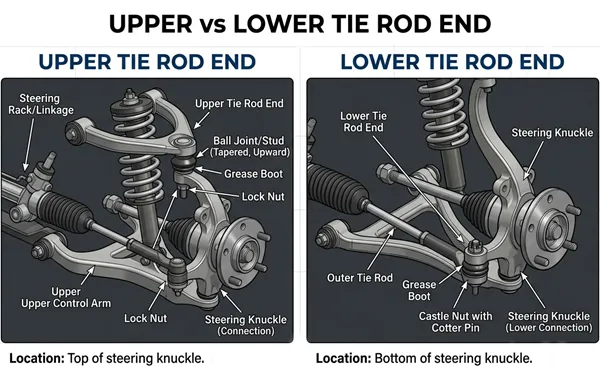
Upper and Lower Tie Rod Ends mainly differ in their installation position, design structure, and working conditions. The Upper Tie Rod End is designed for specific steering linkage movement and positioning, while the Lower Tie Rod End usually requires stronger construction to handle higher operational stress. Although both parts transfer steering movement, they are not interchangeable2 and must match the correct vehicle application and OE specifications.
Upper vs Lower Tie Rod End: Key Differences Explained
Before looking at each difference in detail, the table below provides a quick comparison:
| Comparison | Upper Tie Rod End | Lower Tie Rod End |
|---|---|---|
| Installation Position | Located in the upper section of the steering linkage system | Located in the lower section of the steering linkage system |
| Main Function | Supports steering movement and linkage connection | Provides steering control under higher operating forces |
| Load Condition | Focuses on accurate movement and positioning | Requires higher durability against impact and repeated loads |
| Design Priority | Precision fitment and smooth articulation | Strength, fatigue resistance, and long-term reliability |
| Key Selection Factor | Correct application and OE matching | Structural strength and performance testing |

The table gives you a quick overview, but the actual differences come from how these parts work under real driving conditions.
Difference 1: Installation Position and Vehicle Application
The first difference between Upper and Lower Tie Rod Ends is their installation location and how they connect with the steering system.
An Upper Tie Rod End is designed for a specific position within the steering linkage. Its main role is to transfer steering movement while maintaining proper connection and alignment between related components.
A Lower Tie Rod End works in a different position and may experience more complex operating conditions. Depending on the vehicle design, it can be exposed to additional forces caused by road impacts, steering input, and vehicle movement.
From our more than 20 years of working with suspension and steering parts, many aftermarket fitment issues are not caused by poor-quality products. In many cases, the problem comes from selecting a similar-looking part without checking OE numbers, dimensions, or vehicle application data.
For Tie Rod Ends, accurate matching is just as important as manufacturing quality.
Difference 2: Load Capacity and Working Conditions
Upper and Lower Tie Rod Ends may experience different stress conditions during vehicle operation.
Upper Tie Rod Ends usually focus on:
- Precise steering movement
- Proper linkage positioning
- Smooth articulation
Lower Tie Rod Ends often require:3
- Higher impact resistance
- Better fatigue performance
- Stronger structural design
However, a Lower Tie Rod End is not always automatically stronger than an Upper Tie Rod End. The final design depends on the vehicle manufacturer’s engineering requirements.
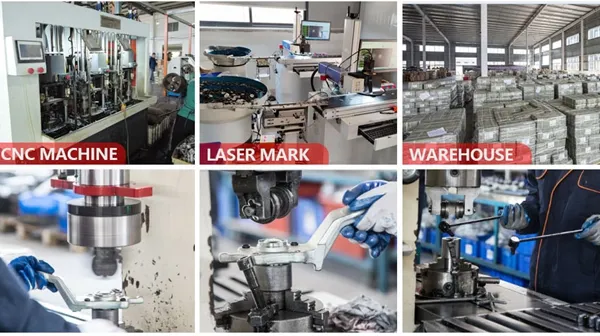
A reliable Tie Rod End needs the right balance between strength and flexibility. This is why manufacturing processes such as forging, casting, CNC machining, and durability testing are important for steering components.

Difference 3: Design Structure and Manufacturing Requirements
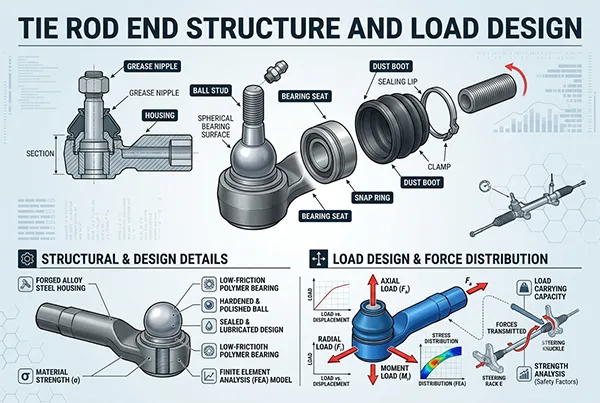
The internal structure of a Tie Rod End directly affects its performance and service life.
Ball Stud Design
The ball stud is one of the most critical parts because it controls movement between connected steering components.
Important factors include:
- Accurate dimensions
- Proper hardness
- Surface treatment
- Correct articulation angle
Even small dimensional differences can affect installation accuracy and steering performance.4
This is why OE-based development is important. At GDST Auto Parts, molds are developed according to OE specifications, with dimensional tolerances controlled within ±0.2 mm to support reliable fitment.
Housing and Material Quality
The housing must provide enough strength while maintaining smooth movement.
Key factors include:
- Steel material quality
- Machining accuracy
- Assembly control
- Environmental resistance
Testing methods such as torque testing, fatigue testing, pull-out testing, and salt spray testing help verify long-term performance.5

Difference 4: Bad Tie Rod End Symptoms and Replacement Considerations
Understanding common failure signs can help you identify possible Tie Rod End problems.
Common bad Tie Rod End symptoms include:
- Loose steering feeling
- Steering wheel vibration
- Knocking or clunking noise
- Uneven tire wear
- Poor wheel alignment
However, these symptoms are not always caused by the Tie Rod End itself. Other steering and suspension parts, such as rack ends, ball joints, or control arms, may create similar issues.
Proper diagnosis is important. Replacing the wrong component can increase costs and lead to unnecessary returns or customer complaints.
When checking a Tie Rod End, always consider the complete application information instead of relying on one symptom alone.
Are Upper and Lower Tie Rod Ends Interchangeable?
In most cases, Upper and Lower Tie Rod Ends are not interchangeable.
Even when two parts look similar, they may have differences in:
- Thread specifications
- Ball stud dimensions
- Mounting angles
- Load requirements
- Vehicle compatibility
Before selecting a replacement Tie Rod End, always confirm:
- OE number
- Vehicle model and year
- Technical drawings
- Application catalog information
Proper identification helps ensure correct installation and reliable steering performance.
How to Choose the Right Tie Rod End Supplier?
Choosing a Tie Rod End supplier is not only about price. Consistent quality, manufacturing capability, and supply reliability are also important.
A reliable supplier should have:
Wide Vehicle Application Coverage
Different markets require different vehicle applications, including Japanese, Korean, American, and European vehicles, as well as passenger cars, SUVs, and trucks.
Strong Manufacturing and Quality Control
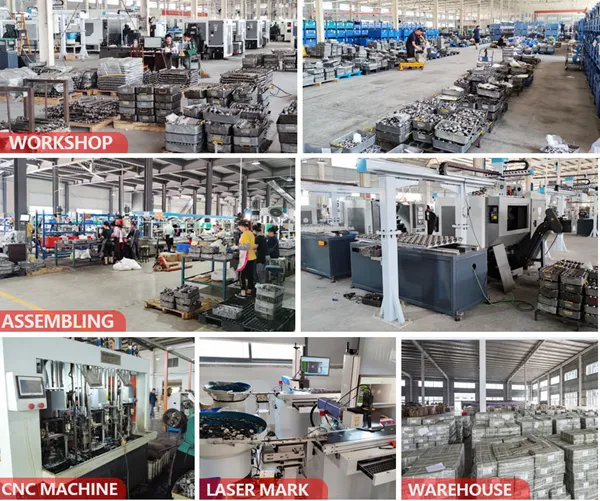
A professional manufacturer should control the complete production process, from raw materials to final inspection.
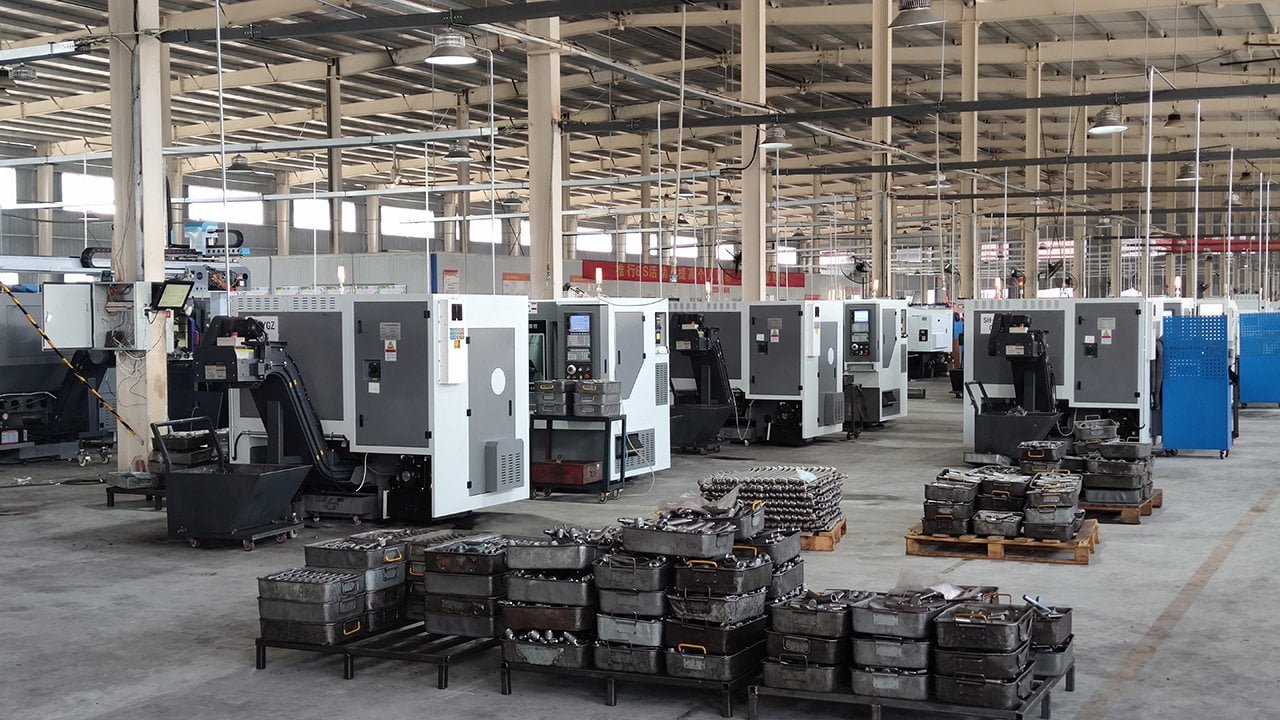
GDST Auto Parts has more than 20 years of OEM/ODM manufacturing experience, supported by 20 production lines and quality management systems including IATF16949 and ISO9001.
Strict inspection procedures covering material testing, dimensional checks, durability testing, and final inspection help maintain stable product performance.

Frequently Asked Questions
What is the main difference between Upper and Lower Tie Rod Ends?
The main differences are their installation position, design requirements, and working conditions. Both support steering movement but are designed for different vehicle applications.
Can Upper and Lower Tie Rod Ends be replaced with each other?
Usually not. Similar appearance does not mean identical specifications. Always confirm OE references and vehicle compatibility before replacement.
What are the common signs of a bad Tie Rod End?
Common signs include loose steering, vibration, abnormal noise, uneven tire wear, and alignment problems.
What should you check before purchasing Tie Rod Ends?
Check vehicle application data, OE references, technical specifications, manufacturing capability, and quality control standards.
Conclusion
Upper and Lower Tie Rod Ends may look similar, but their differences in design, load conditions, and application requirements are important. Understanding these differences helps you select the correct part, reduce fitment issues, and improve steering system reliability.
Looking for a reliable Tie Rod End manufacturer? Contact GDST Auto Parts to discuss your application requirements and helps global partners develop aftermarket Tie Rod End for your market.
".02 Steering, Alignment, and Suspension.", https://regs.maryland.gov/us/md/exec/comar/11.14.04.02. Government vehicle safety and inspection guidance describes tie rod ends as steering-linkage components whose looseness, wear, or improper installation can affect steering control and necessitate repair or replacement; this supports the claim that selecting the wrong part can create fitment and steering problems, although it does not quantify replacement costs directly. Evidence role: general_support; source type: government. Supports: Official vehicle inspection or safety guidance should support that worn, loose, or improperly installed steering linkage components such as tie rod ends can impair steering control and require correction.. Scope note: Support is contextual rather than a direct study of purchasing the wrong replacement part. ↩
"Steering Gear Tie Rod / Tie Rod End", https://static.nhtsa.gov/odi/tsbs/2012/SB-10045359-4258.pdf. Automotive service and training references describe tie rod ends as application-specific parts defined by thread size, taper, stud geometry, and steering-linkage fitment, supporting the statement that visually similar parts are not necessarily interchangeable. Evidence role: general_support; source type: education. Supports: Automotive training or service references should show that tie rod ends are specified by application-specific dimensions, thread form, taper, and articulation geometry, making substitution inappropriate without exact matching.. ↩
"Design, Fatigue, and Strength Analysis of a Tie Rod Hydraulic ...", https://openprairie.sdstate.edu/jur/vol11/iss1/7/. Mechanical and durability studies of steering joints identify repeated loading, impact events, and structural fatigue as key design considerations, supporting the article’s emphasis on impact resistance, fatigue performance, and structural strength for certain tie rod end applications. Evidence role: mechanism; source type: paper. Supports: Mechanical design and fatigue studies should support that steering-joint components are designed for repeated loads, impact tolerance, and structural integrity under service conditions.. Scope note: Such sources usually address steering joints broadly and may not isolate 'lower' tie rod ends in all architectures. ↩
"Design Approach for the Vehicle's Steering Linkage Fitted on Rigid Axle", https://www.academia.edu/30683778/Design_Approach_for_the_Vehicles_Steering_Linkage_Fitted_on_Rigid_Axle. Mechanical-fit and manufacturing-tolerance literature indicates that dimensional variation in threaded, tapered, and articulating steering components can alter assembly accuracy and functional performance, supporting the claim that small dimensional differences matter in tie rod end installation. Evidence role: mechanism; source type: paper. Supports: Manufacturing and mechanical-fit studies should support that dimensional tolerances in threaded, tapered, and articulating steering components influence assembly fit and operational behavior.. Scope note: The source may support tolerance effects generally rather than specifying a single universal threshold for 'small' differences. ↩
"Study of the corrosion fatigue resistance of steel grades for ...", https://www.osti.gov/etdeweb/servlets/purl/20671829. Component-testing literature and standards for steering joints commonly evaluate articulation torque, fatigue durability, retention or pull-out strength, and corrosion resistance, supporting the use of these tests to assess long-term performance. Evidence role: general_support; source type: research. Supports: Testing references should show that mechanical durability, retention strength, torque characteristics, and corrosion resistance are commonly evaluated for steering-joint components using these methods or close equivalents.. Scope note: Long-term field performance cannot be proved by laboratory tests alone; the tests provide indirect but relevant evidence. ↩