
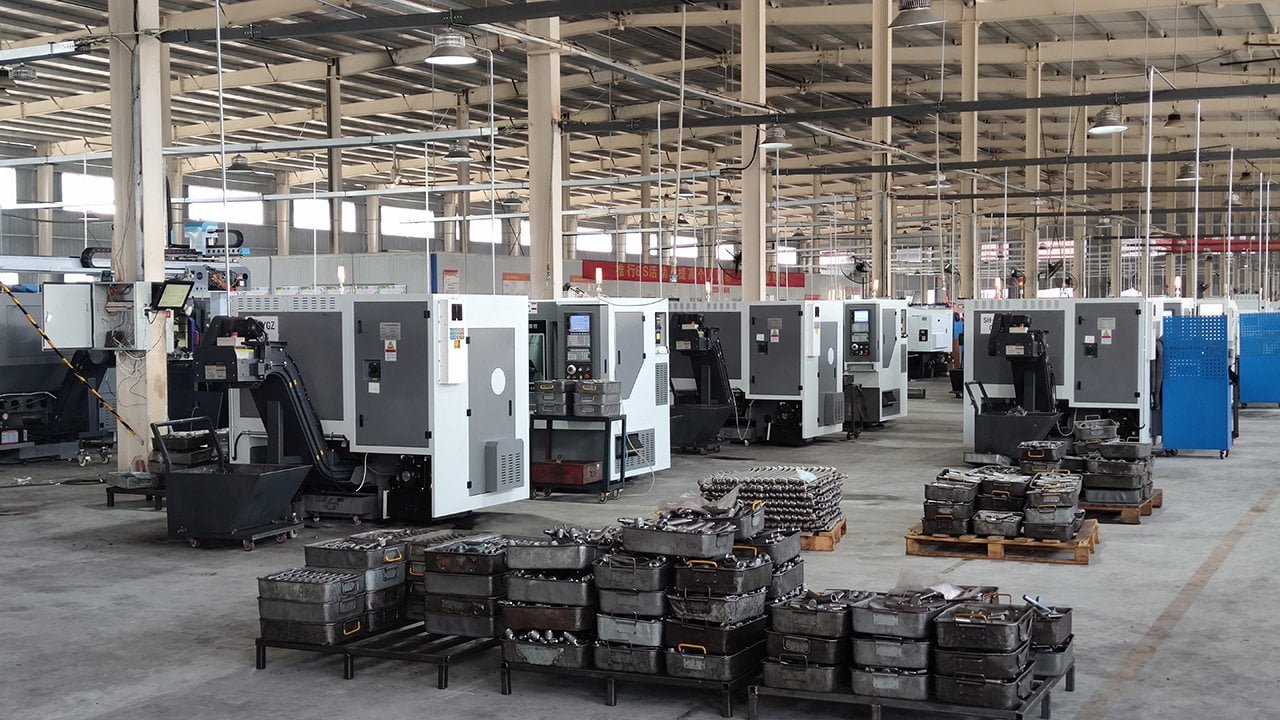
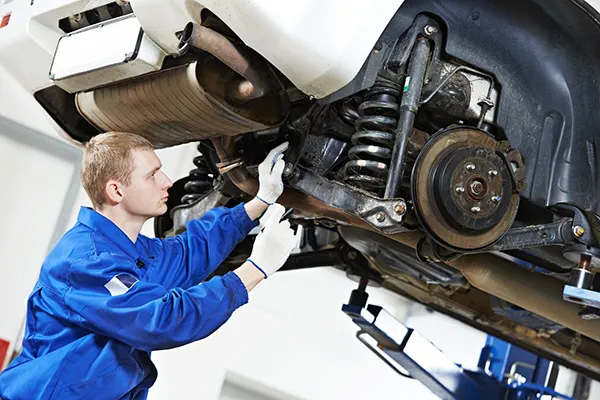

To fix strut mount noise, first identify where the sound comes from and inspect the strut mount, bearing, and related suspension components. Loose hardware can sometimes be tightened, but worn rubber parts or damaged bearings usually require strut mount replacement. Replacing a damaged mount with a properly fitted, high-quality part is the most reliable long-term solution.
Introduction
Hearing a knocking, popping, or squeaking sound from your vehicle’s suspension can be frustrating. Many drivers notice these noises when turning or driving over bumps but are unsure what is causing them. Knowing how to fix strut mount noise helps you avoid unnecessary repairs and find the right solution faster.
What Does a Bad Strut Mount Sound Like?
A bad strut mount usually creates noises that change depending on driving conditions. The sound may be easy to ignore at first, but it often becomes louder as the component wears further.
Common bad strut mount sounds include:
| Noise Type | When You May Hear It | Possible Cause |
|---|---|---|
| Clunking or knocking | Driving over bumps or rough roads | Worn rubber mount or excessive movement |
| Popping sound | Turning the steering wheel at low speed | Damaged strut mount bearing |
| Squeaking noise | Slow driving or suspension movement | Rubber wear or friction |
| Grinding or rough feeling | Steering operation | Bearing-related issues |
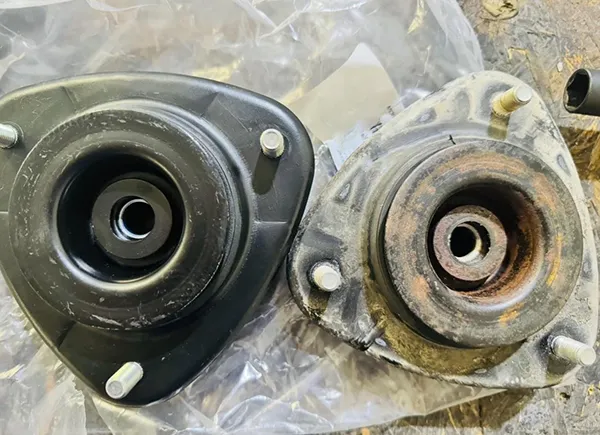

One common sign is strut mount noise when turning. If you hear a popping or clicking sound while rotating the steering wheel, the bearing inside the mount may not be moving smoothly.
However, remember that suspension noises can have multiple causes. A worn ball joint, tie rod end, stabilizer link, or other suspension component may create similar symptoms. Proper diagnosis is important before replacing parts.
What Causes Strut Mount Noise?
There are several reasons why a strut mount starts making noise. Understanding the cause helps you choose the correct repair method.
1. Worn Rubber Components
The rubber part inside the strut mount absorbs vibration between the suspension system and the vehicle body.
Over time, heat, road conditions, and repeated loading can cause the rubber to:
- Become harder
- Develop cracks
- Lose its ability to absorb vibration
When this happens, you may notice more impact noise from the front suspension.
2. Damaged Strut Mount Bearing
Many upper strut mounts include a bearing that allows smooth steering movement.
When the bearing becomes worn, you may experience:
- Popping noises when turning
- Uneven steering feel
- Squeaking sounds
- Increased resistance during steering
A damaged bearing usually cannot be repaired effectively and often requires replacing the complete strut mount assembly.
3. Loose Hardware or Incorrect Installation
Sometimes the noise is not caused by a failed mount itself.
Possible installation-related problems include:
- Loose mounting bolts
- Incorrect tightening torque
- Improper fitment
- Damaged installation components
This is why checking the installation condition should always be part of the diagnosis process.
4. Other Suspension Problems
Not every suspension noise comes from a strut mount.
Before replacing the part, you should also check:
- Ball joints
- Tie rod ends
- Stabilizer links
- Control arm bushings
A correct diagnosis saves time and prevents replacing a good component unnecessarily.
How to Diagnose Strut Mount Noise Before Fixing It
Before searching for a replacement, you should confirm that the strut mount is actually the source of the noise.
Step 1: Pay Attention to When the Noise Happens
The driving situation can provide useful clues.
| Noise Condition | What It May Indicate |
|---|---|
| Noise when turning | Possible strut mount bearing issue |
| Noise over bumps | Possible worn rubber mount |
| Noise at low speed | Suspension movement-related problem |
| Noise during braking | Could involve other suspension parts |
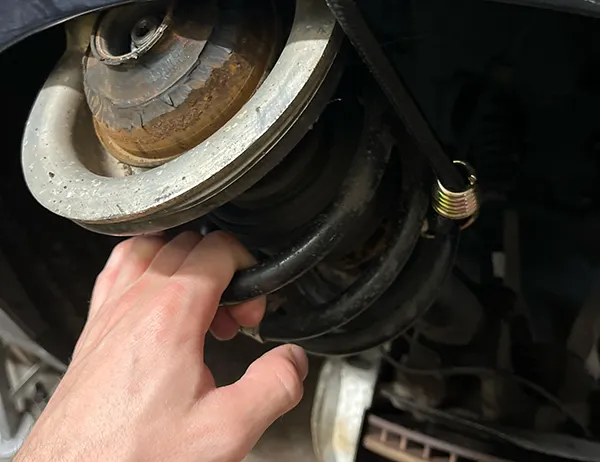

Step 2: Perform a Visual Inspection
Look for visible signs of damage:
- Cracked rubber
- Rust or corrosion
- Abnormal movement
- Loose connections
If the mount shows physical damage, replacement is usually recommended.
Step 3: Check Related Suspension Components
A professional inspection should not focus on only one part.
For example, worn steering and suspension parts can transfer noise through the same area, making it difficult to identify the exact source.
From suspension parts manufacturing experience, accurate fitment and consistent material quality play an important role in reducing repeated noise problems after replacement.
How to Fix Strut Mount Noise?
Now we get to the main question: how to fix strut mount noise?
The right solution depends on what is causing the noise.
Solution 1: Tighten Loose Components
If the noise is caused by loose mounting hardware, tightening the bolts may solve the problem.
This situation can happen after:
- Incorrect installation
- Improper tightening procedure
- Long-term vibration
However, tightening will not fix a damaged rubber mount or worn bearing.1
Solution 2: Lubricate Certain Components (Temporary Solution)
In some cases, lubrication may reduce minor squeaking caused by friction.
However, this is usually only a temporary solution.
Lubrication cannot repair:
- Cracked rubber
- Worn bearings
- Excessive component movement
If the mount is physically damaged, replacement is the correct repair method.
Solution 3: Replace the Damaged Strut Mount (Most Effective Fix)
When a strut mount is worn or damaged, replacing it is usually the best long-term solution.
You should consider replacement if you notice:
- Continuous knocking noise
- Damaged rubber
- Steering-related popping sounds
- Excessive movement in the mount
- Reduced driving comfort
When choosing a replacement strut mount, quality matters. A properly designed part should provide:
| Important Factor | Why It Matters |
|---|---|
| Accurate fitment | Prevents installation problems |
| Durable rubber material | Improves vibration absorption |
| Reliable bearing performance | Reduces steering noise |
| Strong manufacturing control | Ensures consistent quality |
Professional manufacturers usually use processes such as material inspection, dimensional checks, fatigue testing, and performance testing to improve product reliability.
How Much Does It Cost to Fix a Strut Mount?
The cost of fixing a strut mount depends on several factors:
| Factor | Impact on Cost |
|---|---|
| Vehicle model | Different vehicles require different parts |
| Labor time | Some designs require more suspension work |
| Part quality | Premium parts may provide longer service life |
| Replacement method | Individual parts or complete assembly replacement |
In many cases, replacing a worn strut mount together with related suspension inspection can prevent future repair costs.2
How to Choose a Reliable Replacement Strut Mount?
When replacing a strut mount, focus on quality rather than only price.
A reliable replacement should have:
- Correct vehicle application
- Stable material quality
- Proper dimensional accuracy
- Good durability testing
For suspension components, small differences in rubber quality, bearing performance, or manufacturing tolerance can affect noise levels and service life.
A professional suspension parts manufacturer typically uses strict quality systems, including material inspection, dimensional control, and durability testing, to ensure consistent performance.3
Frequently Asked Questions
Why does my strut mount make noise when turning?
A strut mount may make noise when turning because the internal bearing is worn or cannot rotate smoothly. A popping or clicking sound during steering is a common sign of a possible bearing problem.
Can a bad strut mount cause vibration?
Yes. A worn strut mount can contribute to vibration by reducing the suspension system’s ability to absorb road impacts. However, wheel, tire, and other suspension issues can also cause vibration.
Should strut mounts be replaced in pairs?
In many cases, replacing strut mounts on both sides of the same axle is recommended because both sides usually experience similar wear. This can help maintain balanced suspension performance.
How do I know if my strut mount needs replacing?
Common signs include:
- Knocking noises
- Popping sounds while turning
- Visible rubber damage
- Poor steering feel
- Increased suspension vibration
A proper inspection can confirm whether replacement is necessary.
Conclusion
[Strut mount](https://gdstauto.com/strut-mount/ noise is usually caused by wear, damaged bearings, loose installation, or related suspension problems. To fix it, first identify the source, then repair or replace the damaged component. Choosing a reliable replacement part helps restore smooth, quiet, and safe driving performance.
"Most Common Strut Installation Mistakes!",
Professional repair manuals (e.g., Haynes, Chilton) and ASE-certified technician consensus indicate that a physically damaged rubber mount or worn bearing requires replacement, not tightening. Evidence role: expert_consensus; source type: other. Supports: Repair limitation that tightening does not restore function of damaged components.. Scope note: General consensus; some minor movement may be reduced but structural damage persists. ↩"Suspension Repair Cost Guide 2026 - Aurora", https://www.tunetechautomotive.org/blog/a-comprehensive-guide-to-suspension-systems-and-repairs. Fleet maintenance studies (e.g., from the U.S. Department of Transportation) indicate that proactive replacement of worn suspension components, including strut mounts, reduces overall repair frequency and costs. Evidence role: general_support; source type: research. Supports: Preventive replacement of strut mounts reduces subsequent repair needs.. Scope note: Savings depend on vehicle usage and maintenance schedule; not a guarantee. ↩
"How Automotive Quality Control Works and Why It's So ...", https://www.carparts.com/blog/how-automotive-quality-control-works-and-why-its-so-important/?srsltid=AfmBOoob777RI3okGqeUa9ELRZVRZv_0SJt1RHh2U0QiBJZDYppFWdCQ. IATF 16949 requires quality management systems for automotive production, including incoming material inspection, in-process dimensional control, and product durability validation (IATF, 2016). Evidence role: mechanism; source type: institution. Supports: Typical quality systems in suspension component manufacturing.. Scope note: Specific practices vary; this is a general standard requirement. ↩