
Most procurement managers I talk to are not asking "what is a good sway bar link1?" They already know the product. What they are really asking is: "How do I know the supplier in front of me will not become a problem six months from now?"
Choosing a reliable sway bar link supplier is a risk assessment process. You are evaluating a supplier's manufacturing system, material traceability, and verifiable quality controls. The goal is to find a long-term partner who can protect your supply chain and reduce warranty claims2, not just someone who ships parts on time.
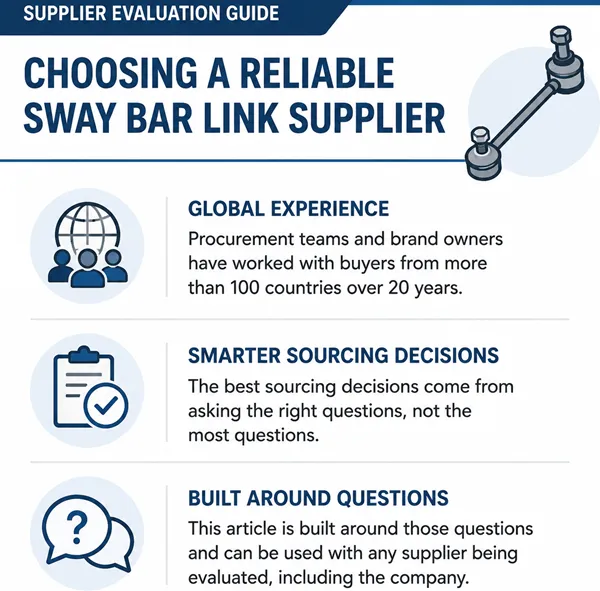
I have worked with procurement teams and brand owners from more than 100 countries over the past 20 years. The buyers who make the best sourcing decisions are not the ones who ask the most questions. They are the ones who ask the right questions. This article is built around those questions, so you can use them with any supplier you are evaluating, including us.
Are You Looking for a System or a Slogan?
The word "reliable" appears on nearly every supplier's website. But reliability is not a feature. It is the output of a consistent system that runs every day across every production batch.
A reliable supplier can show you exactly how their system works, from raw material sourcing to final inspection. If a supplier cannot walk you through their process step by step, the word "reliable" on their homepage means nothing.
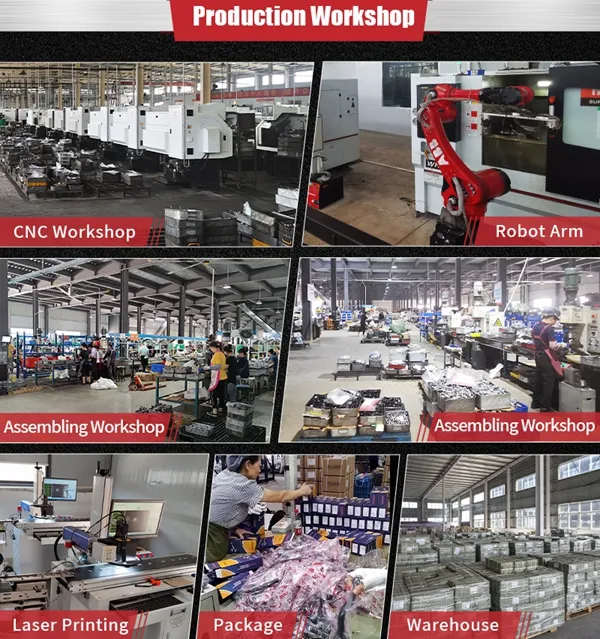
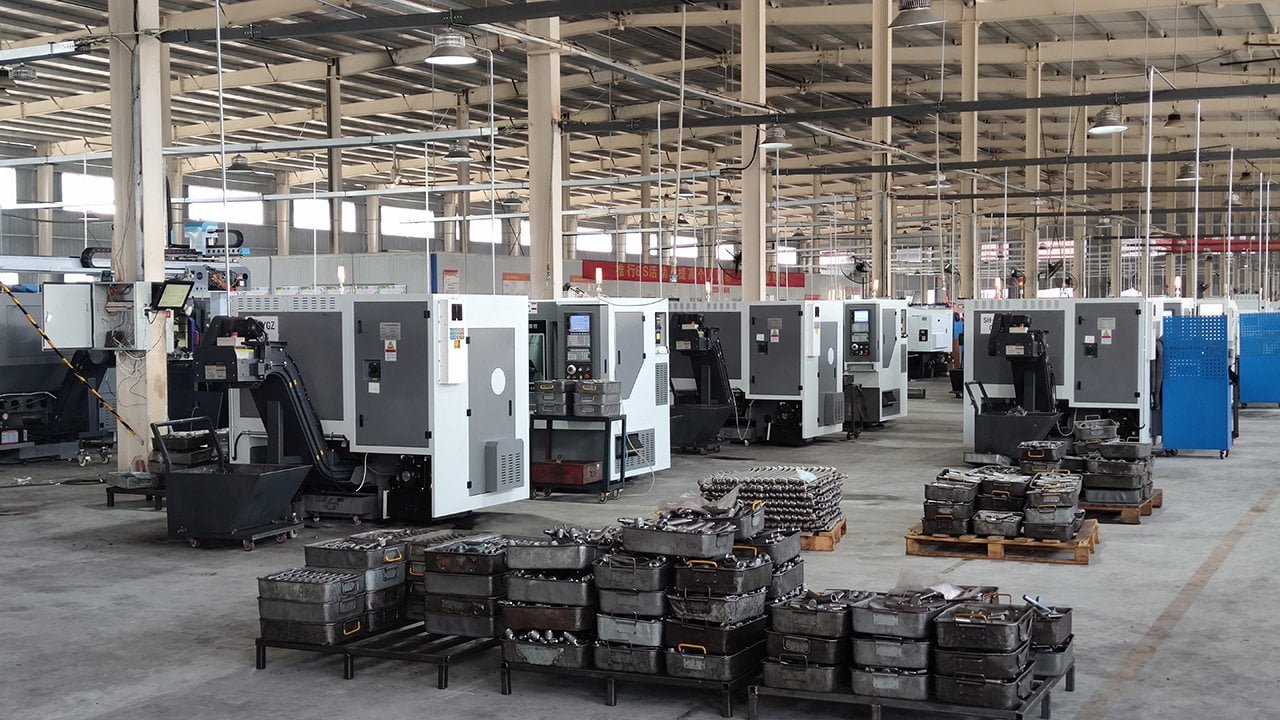
When I walk buyers through our own factory, I do not start with finished products. I start with raw material sourcing. We source steel from manufacturers like Baosteel, Shagang, and Yuanli, and every batch comes with a material inspection report. Our QC team also runs random chemical composition tests on incoming materials. This is one small part of the system, but it matters because it is the foundation everything else is built on.
Here is the practical shift I am suggesting. Stop asking a supplier, "Are you reliable?" and start asking, "Show me your system for ensuring consistency across batches."
Ask them specifically:
- How do you source raw materials, and can you provide mill reports?
- What process controls are in place during production, not just at the end?
- How do you handle a batch that fails an in-process inspection?
The last question is the most revealing. Every factory has failures at some point. A mature operation has a clear, documented process for handling them3. A supplier who hesitates on that question is telling you something important.
IATF 16949 certification4 is worth mentioning here, but not in a checklist way. What this certification actually means for you as a buyer is that the supplier's quality management system has been independently audited and verified. It means their process controls, corrective action procedures, and documentation standards meet an internationally recognized benchmark. It reduces your risk because it means the supplier is not running quality control based on informal habits. It is built into their operating procedures.
| Question to Ask | What a Strong Answer Looks Like |
|---|---|
| Where does your steel come from? | Named steel mills, material reports available per batch |
| What happens when a batch fails inspection? | Documented corrective action process, not just "we fix it" |
| Do you hold IATF 16949 certification? | Yes, with a valid certificate and scope that covers your product |
| How do you control dimensional accuracy? | Specific tolerance data, e.g. ±0.2 mm, benchmarked against OE specs |
How Do You Turn Marketing Claims into Verifiable Evidence?
"OE quality." "Durable." "Precise fitment." These phrases appear in almost every supplier catalog. By themselves, they are not useful to a professional buyer. They are starting points for a deeper question: "What is the evidence behind this claim?"
Every quality claim a supplier makes should be backed by a specific, verifiable data point. Ask for test reports, dimensional tolerance records, and material certifications rather than accepting descriptive language. A supplier who cannot produce this evidence is asking you to trust their word, not their system.
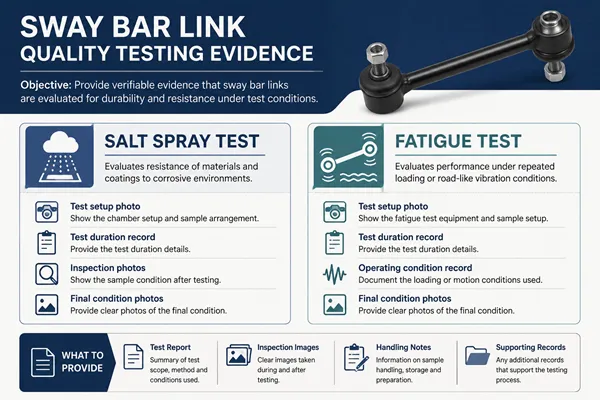
I often see buyers from markets with strong warranty claim environments ask about durability in very general terms. They ask, "Are your parts strong?" and the supplier says, "Yes, very strong." This exchange gives the buyer nothing useful. Here is how to reframe those questions into something verifiable.
"Precise fitment" → Ask: What are your dimensional tolerances5, and how do you verify them against OE specifications? We develop all our molds based on OE specifications and control dimensional tolerances within ±0.2 mm. That is a measurable, auditable number.
"Durable" → Ask: Can you provide fatigue test reports, pull-out force test data, and salt spray test results6? At our facility, testing includes high and low temperature testing, ozone resistance7, compression force, torque, angle, and hardness testing. Each of these tests maps to a real-world failure mode. If a supplier cannot show you these reports, you do not know what you are actually buying.
"OE quality" → Ask: What is your process for benchmarking your product against original equipment specifications8? This goes beyond visual similarity. It means dimensional accuracy, material grade, and performance under load and temperature variation.
| Marketing Claim | Better Question to Ask | What to Look For |
|---|---|---|
| "OE quality" | How do you benchmark against OE specs? | Mold development process, dimensional data |
| "Precise fitment" | What are your dimensional tolerances? | Specific numbers, e.g. ±0.2 mm |
| "Durable" | Can I see your fatigue and pull-out force test reports? | Actual test data, not just test capability claims |
| "Reliable" | Walk me through your QC process from raw material to shipment | Documented multi-stage process |
One more thing on evidence. A supplier who welcomes your scrutiny is a better sign than one who provides smooth answers. The suppliers I have seen earn the most long-term trust from buyers are the ones who say, "Here is the report. Here is how we conducted the test. Here is what we do when a result is borderline." That level of transparency is a strong signal of operational maturity.
Does This Supplier Actually Fit Your Business Model?
This is the question most buyers skip, and it creates problems later. A supplier who is a good fit for a high-volume wholesaler in a price-sensitive market may be a poor fit for a brand owner building a premium private-label product line9. "Best supplier" is not a universal category. It depends entirely on what your business actually needs.
The right supplier for your business is the one whose capabilities, flexibility, and experience align with your specific business model and target market. Evaluate them against your requirements, not against a generic quality score.
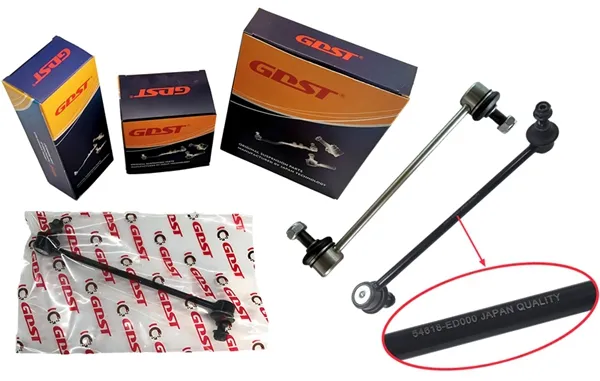
We work with three main types of buyers, and the questions each group prioritizes are genuinely different.
Brand owners who sell under their own label care deeply about packaging customization, branding consistency, and product documentation. They need a supplier who has an in-house design team, understands label and packaging compliance across different markets, and can maintain brand standards across production runs. When we work with this type of buyer, the conversation quickly moves to packaging specifications, product labeling requirements, and how we handle private label consistency across large orders.
Wholesalers in competitive markets, particularly in regions like South America, Southeast Asia, and the Middle East, are often balancing quality against landed cost10. Their buyers are price-sensitive, but warranty claims are still a real concern. For this group, the conversation centers on which product configurations offer the best cost-to-durability ratio, and whether the supplier can hold pricing stable over a longer contract period.
Importers who are building or expanding their product range often need coverage breadth. They need a supplier who can cover a wide range of vehicle applications, including Japanese, Korean, American, and European vehicles, across passenger cars, SUVs, and trucks. A manufacturer running 20 production lines with established OEM/ODM processes11 is better positioned to support this than a smaller operation focused on a narrow product segment.
| Buyer Type | Primary Concern | Questions to Ask a Supplier |
|---|---|---|
| Brand owner | Private label capability and packaging consistency | Do you have an in-house design team? How do you maintain label standards across batches? |
| Wholesaler | Cost-to-quality balance and price stability | What is your MOQ structure? Can you hold pricing across a 12-month agreement? |
| Importer/distributor | Vehicle coverage breadth and catalog depth | What vehicle applications do you cover? How quickly can you add new references? |
The point is not that one type of buyer is more important than another. The point is that a supplier who cannot demonstrate experience in serving your specific business model is a higher-risk partner, even if their quality is strong. Ask directly: "How many customers with a similar business model to mine do you currently supply?" Their answer, and how they answer it, tells you whether this is a relationship they understand how to manage.
Are You Asking Trust-Based or Verification-Based Questions?
There is a category of questions that buyers ask because they feel polite or professional. "Do you have good quality control?" "Are you able to meet our delivery timelines?" "Can you guarantee consistent quality?" These are trust-based questions. They invite a yes or no answer, and every supplier will say yes.
Verification-based questions require a supplier to describe their process, not just confirm their capability. A mature supplier welcomes these questions. A supplier who becomes vague or defensive when asked to explain their system is showing you something important about how they operate.
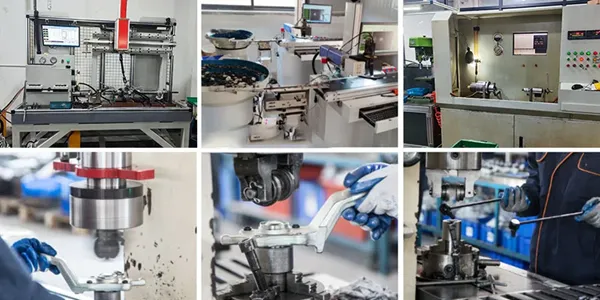
I want to give you a direct comparison so the difference is clear.
Trust-based: "Do you have quality control?" Verification-based: "What is your process when a product fails an in-process inspection? Who makes the decision to reject a batch, and what happens to it?"
Trust-based: "Can you ensure material consistency?" Verification-based: "How do you verify the chemical composition of incoming steel? Do you run your own tests, or do you rely only on the mill report?"
Trust-based: "Do you do final inspection before shipment?" Verification-based: "Walk me through your pre-shipment inspection process. What specifically does your QC team check, and what is the sample rate?"
For reference, our own pre-shipment process includes random product inspection12, quantity verification, packaging condition check, shipping marks and labeling check, and pallet inspection. That level of detail is what a verification-based answer looks like. If a supplier cannot give you the same level of detail about their own process, you are working with a gap in your supply chain risk picture.
| Trust-Based Question | Verification-Based Version |
|---|---|
| "Is your quality good?" | "What tests do you run, and can I see recent test reports?" |
| "Can you guarantee fitment?" | "What are your dimensional tolerances and how are they verified?" |
| "Do you have QC?" | "What is your process when a batch fails in-process inspection?" |
| "Are your materials high quality?" | "Who are your steel suppliers and can I see a material report?" |
| "Do you inspect before shipment?" | "What does your pre-shipment checklist cover, and what is your sample rate?" |
One pattern I have noticed over many years of working with experienced procurement teams is this: the buyers who ask verification-based questions consistently end up with fewer supply chain problems. Not because the questions themselves solve anything, but because they select for suppliers who have actually built real systems. A supplier who can answer these questions clearly has thought through their process. A supplier who cannot has not.
Conclusion
Choosing a reliable sway bar link supplier means assessing their system, demanding verifiable evidence, and matching their capabilities to your specific business needs.
"ELI5: What a sway bar does for a car and what would happen without it", https://www.reddit.com/r/explainlikeimfive/comments/1669cc/eli5_what_a_sway_bar_does_for_a_car_and_what/. A sway bar link, also known as a stabilizer link, is a component of the automotive suspension system that connects the sway bar (or anti-roll bar) to a suspension member, such as a control arm. Its function is to control body roll during cornering, which improves vehicle handling and stability. Evidence role: definition; source type: encyclopedia. Supports: The source should define what a sway bar link (or stabilizer link) is and explain its role in a vehicle's suspension system.. ↩
"Guide to Automobile Service Contracts, Extended Warranties and ...", https://www.insurance.ca.gov/01-consumers/105-type/95-guides/01-auto/servcontextwar.cfm. Studies on warranty management in the automotive industry show that claims processing and fulfillment represent a significant operational cost, with poor product quality being a primary driver. Reducing part failure rates through better sourcing directly lowers these costs and improves profitability. Evidence role: statistic; source type: research. Supports: The source should provide data or analysis on the financial impact of warranty claims for automotive parts distributors or manufacturers.. Scope note: The source may provide general industry data rather than specific figures for sway bar links. ↩
"Corrective and Preventive Action (CAPA) Plans - IU Research", https://research.iu.edu/compliance/human-subjects/guidance/corrective-preventive-action-plans.html. Formal quality management systems, such as ISO 9001, require organizations to establish a documented procedure for controlling non-conforming products. This includes identifying, segregating, and determining the disposition of faulty items, as well as implementing corrective actions to prevent recurrence. Evidence role: definition; source type: institution. Supports: The source should define the standard process for managing non-conforming products within a quality management system like ISO 9001 or IATF 16949.. ↩
"International Automotive Task Force - Wikipedia", https://en.wikipedia.org/wiki/International_Automotive_Task_Force. IATF 16949:2016 is a global technical specification and quality management standard for the automotive industry. Developed by the International Automotive Task Force (IATF), it outlines the requirements for a quality management system for organizations involved in the design, development, production, and, when relevant, installation and service of automotive products. Evidence role: definition; source type: institution. Supports: The source should be from an official or educational body that defines the IATF 16949 standard and its purpose.. ↩
"Dimensional Tolerance - an overview | ScienceDirect Topics", https://www.sciencedirect.com/topics/engineering/dimensional-tolerance. Dimensional tolerance is the permissible limit of variation in a physical dimension of a part. It is a critical concept in mechanical engineering that ensures parts will fit and function correctly when assembled, allowing for interchangeability. Tighter tolerances, while often more costly to achieve, can be essential for high-performance or safety-critical applications. Evidence role: definition; source type: education. Supports: The source should define dimensional tolerance and explain its importance in manufacturing.. ↩
"Salt spray test - Wikipedia", https://en.wikipedia.org/wiki/Salt_spray_test. Fatigue testing evaluates a component's durability under cyclic loading, simulating its lifespan in service. Pull-out force tests measure the strength of joints, such as a ball stud in its housing. Salt spray tests assess corrosion resistance by exposing the part to an accelerated corrosive environment, mimicking road salt exposure. Evidence role: mechanism; source type: education. Supports: The source should explain what fatigue, pull-out force, and salt spray tests are and what they measure.. Scope note: The source may explain these tests generally rather than specifically for sway bar links. ↩
"Ozone Testing Services - Element Materials Technology", https://www.element.com/materials-testing-services/ozone-testing-services. Ozone in the atmosphere can degrade elastomeric components, such as the rubber dust boots on sway bar links, leading to cracking and premature failure. Ozone resistance testing (per standards like ASTM D1171) evaluates a material's ability to withstand this degradation. Similarly, high and low temperature tests ensure components perform reliably across a range of operating climates. Evidence role: mechanism; source type: research. Supports: The source should explain why environmental tests like ozone and temperature cycling are performed on automotive components.. ↩
"What is Automotive Benchmarking? - Shoplogix", https://shoplogix.com/automotive-benchmarking/. In the automotive aftermarket, benchmarking against OE specifications is a form of reverse engineering where a new part is designed and tested to meet or exceed the performance, dimensional accuracy, material composition, and durability of the original part it is intended to replace. This process is crucial for ensuring proper fitment and function. Evidence role: definition; source type: education. Supports: The source should define the process of benchmarking aftermarket parts against Original Equipment (OE) parts.. ↩
"Private label - Wikipedia", https://en.wikipedia.org/wiki/Private_label. A private-label product is manufactured by a contract or third-party manufacturer but sold under a retailer's or brand owner's brand name. The brand owner specifies everything about the product, including its packaging and branding, which requires a supplier with strong customization and quality consistency capabilities. Evidence role: definition; source type: encyclopedia. Supports: The source should define 'private label' products and the relationship between the brand owner and the manufacturer.. ↩
"What is Landed Cost? Meaning, Formula & Calculation | DHL US", https://www.dhl.com/discover/en-us/global-logistics-advice/essential-guides/landed-cost-meaning-formula-calculation. The total landed cost is the complete price of a product once it has arrived at the buyer's doorstep. It includes the original price of the product, plus all transportation fees (both inland and ocean), customs, duties, taxes, insurance, and any other charges incurred during shipment. Evidence role: definition; source type: encyclopedia. Supports: The source should define 'landed cost' and its components.. ↩
"Original design manufacturer", https://en.wikipedia.org/wiki/Original_design_manufacturer. OEM (Original Equipment Manufacturer) refers to a company that produces parts or equipment that may be marketed by another manufacturer. ODM (Original Design Manufacturer) refers to a company that designs and manufactures a product, as specified, that is eventually rebranded by another firm for sale. A supplier with both capabilities can serve a wider range of customer needs. Evidence role: definition; source type: encyclopedia. Supports: The source should define and differentiate between OEM and ODM manufacturing models.. ↩
"6.2.1. What is Acceptance Sampling?", https://www.itl.nist.gov/div898/handbook/pmc/section2/pmc21.htm. Random product inspection is a form of acceptance sampling, a statistical method used in quality control to determine whether to accept or reject a production lot. By inspecting a randomly selected sample of items, a buyer can infer the quality of the entire batch based on a predetermined number of acceptable defects, often defined by an Acceptance Quality Limit (AQL). Evidence role: definition; source type: education. Supports: The source should explain the principle of statistical sampling for quality inspection.. ↩