
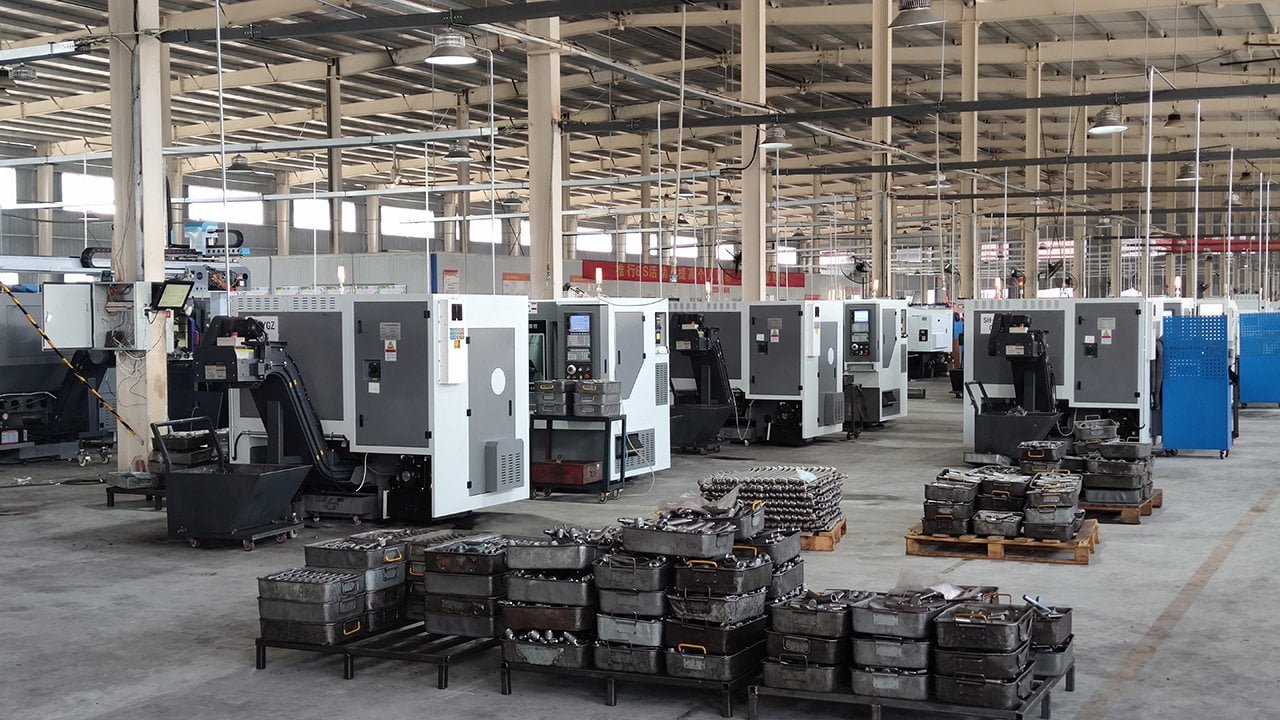
Tired of warranty claims from poor-quality control arms? Worried about inconsistent batches eroding your brand's reputation? The risk is real, but it's avoidable if you know what to look for.
Choose a partner who proves production consistency, not just a good sample. Look for verifiable quality control from raw materials, OE-spec molds, and in-process testing to reduce your long-term aftermarket risk.
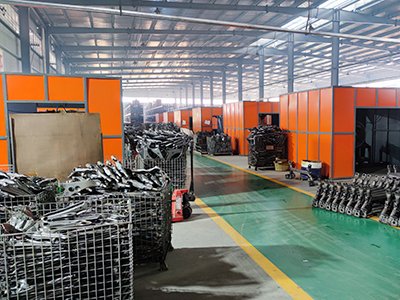

Over my 20 years in this business, I've spoken with hundreds of buyers. They come to our factory in China, we have coffee, and we talk. At first, the conversation is always about price, samples, and lead times. But the real discussion, the one that builds a long-term partnership, is about managing risk. I want to share what we've learned on the factory floor, to help you look beyond the initial quote and find a partner who protects your business. Let's start with the most common mistake I see.
Are You Focusing Too Much on the Sample and Price?
A perfect sample arrives, the price looks great. But then, the first mass-produced container arrives, and the fitment problems and warranty claims begin. Does this sound familiar to you?
A good sample only proves a factory can make one good part. The real challenge is making 10,000 identical, reliable parts1. You should focus on the manufacturer's process for ensuring batch-to-batch consistency2, as this is where your long-term risk truly lies.
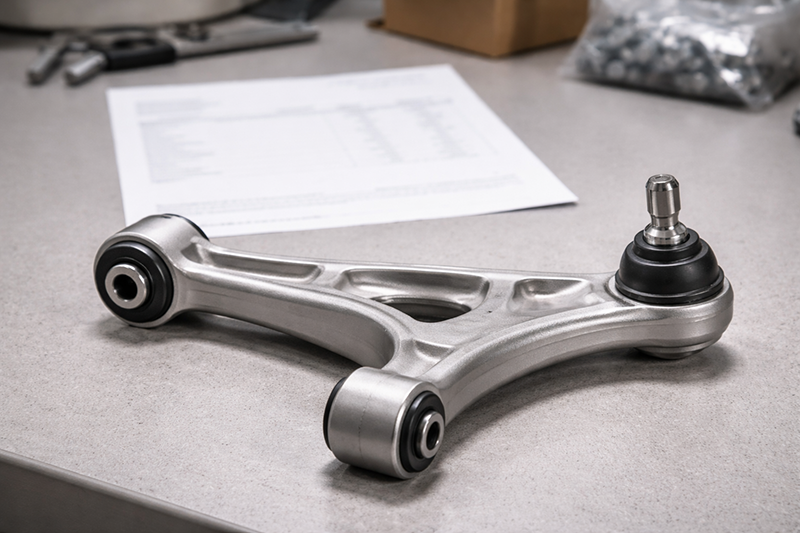

In my experience, buyers who get burned often fall into the "sample trap." They approve a perfect, or "golden," sample that was likely made with extra care by the factory's best technicians. They sign the contract based on that sample and a competitive price. The first order might even be okay. But the real problems often appear in the second or third shipment. This is when production shortcuts can start to appear, and quality becomes inconsistent. The unit price that seemed so attractive at first now leads to much bigger hidden costs. A cheap part that fails early doesn't just cost you a replacement; it costs you much more.
The True Cost of a "Cheap" Control Arm
The unit price is only one part of the equation. A low price from an unreliable supplier often hides significant expenses that appear later. These costs directly impact your profitability and brand reputation.
| Hidden Cost of a Cheap Part | How It Impacts Your Business |
|---|---|
| Premature Wear & Failure | Increases warranty claims and eats into your profit margins.3 |
| Poor Fitment | Wastes mechanics' time, leads to customer complaints, and damages your brand. |
| Inconsistent Batches | Creates chaos in your inventory and makes quality unpredictable. |
| Delayed Delivery | Causes stock-outs and results in lost sales opportunities. |
A slightly higher unit price from a reliable manufacturing partner often leads to a much lower total cost of ownership4. It protects your brand and ensures your customers are satisfied, which is the foundation of a sustainable business.
How Do You Verify Quality Beyond Certificates?
You received the ISO 9001 and IATF 16949 certificates from a potential supplier. Everything looks official and impressive. But does a piece of paper guarantee every single control arm will perform in the real world?
Certificates like IATF 16949 prove a quality management system exists. They don't guarantee product performance.5 You must verify the application of that system by asking about material control, dimensional checks, and performance testing.
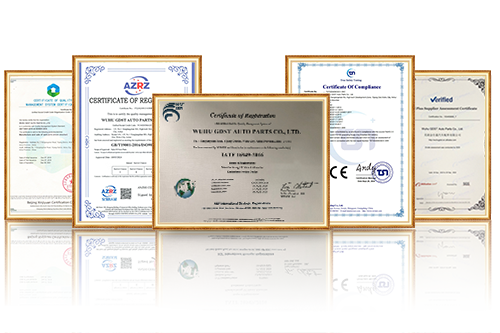

Certificates are a good starting point. An IATF 16949 certification tells me a factory has organized processes and understands the importance of documentation. It shows they are capable of meeting the strict demands of the automotive industry. However, a certificate is only as good as the work happening on the factory floor every single day. The real proof of quality is found in the practical, hands-on checks that happen throughout the manufacturing process. These are the details you need to ask about.
Practical QC Checks You Should Ask About
As a manufacturer, we live and breathe quality control. These checks are not just for show; they are essential for producing a reliable product. You should ask any potential supplier to explain their process for these items.
-
Raw Material Control: We source our steel from top Chinese mills like Baosteel. Every batch arrives with a material inspection report6. More importantly, our own QC team conducts random chemical composition tests7 to verify the steel's integrity. This prevents weak or brittle parts from ever entering production.
-
Dimensional Control: Poor fitment is one of the biggest complaints in the aftermarket. That's why our molds are developed from original OE specifications. We control critical dimensional tolerances8 within ±0.2 mm during machining. This ensures the control arm installs correctly the first time.
-
Performance Testing: We run a series of tests to simulate a vehicle's life and ensure durability.
| Test Type | Why It Matters for Your Business |
|---|---|
| Fatigue Testing9 | Simulates millions of cycles to ensure the part won't fail prematurely. |
| Salt Spray Testing10 | Checks corrosion resistance, which is critical for harsh weather markets. |
| Pull-out & Compression Test | Confirms that ball joints and bushings are securely installed. |
| Hardness Testing11 | Verifies the strength and durability of the metal after heat treatment. |
You don't need to be a QC expert. But asking about these specific tests shows a supplier that you are a serious, knowledgeable buyer who understands what creates a quality product.
What Questions Should You Ask a Potential Manufacturing Partner?
You're ready to move beyond just the price and certificates. You want to assess a factory's real capability to be your long-term partner. How do you start the conversation to get meaningful answers?
Ask direct, process-oriented questions. Instead of "Is your quality good?", ask "How do you verify the chemical composition of your raw steel?". Specific questions demand specific, verifiable answers and show you understand manufacturing.
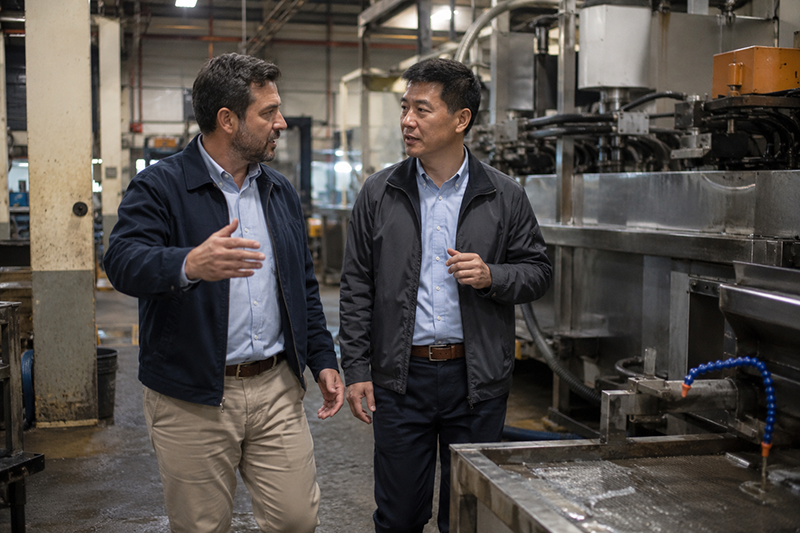

I have sat in countless meetings with buyers from all over the world. The most successful partnerships always start with the right questions. The buyers who build strong, reliable supply chains are the ones who dig deeper into our processes. They want to understand how we guarantee quality, not just that we promise it. Based on my experience, you should focus your questions on five key areas. These questions will help you separate a simple assembler from a true manufacturing partner.
Key Questions for Your Supplier Checklist
Use these questions as a guide during your next factory audit or video call. A supplier who can answer them with confidence and provide documentation is a partner you can trust.
-
Raw Material Verification:
- "Can you show me a material inspection report for your last batch of steel?"
- "What is your procedure if a random chemical composition test fails?"
-
Fitment Accuracy Control:
- "How are your molds developed and maintained? Are they based on OE samples?"
- "What are the key dimensional tolerances you control, and what tools do you use to measure them?"
-
In-Process Testing:
- "Which performance tests, like fatigue or salt spray, do you conduct in-house?"
- "Can I see the testing records for a recent production run of a part similar to mine?"
-
Batch Consistency Monitoring:
- "How do you ensure the 10th order I place will have the same quality as the first?"
- "What is your traceability process? Can you trace a finished part back to its raw material batch12?"
-
Final Inspection Protocol:
- "What does your final inspection before shipment include?"
- "How do you verify quantities, packaging, shipping marks, and pallet conditions to prevent issues on arrival?"
A supplier who welcomes these questions is a supplier who is confident in their processes. This is the foundation for a strong, long-term relationship.
Conclusion
Finding the right manufacturing partner isn't about one transaction. It’s about building a stable supply chain that protects your brand, reduces your risks, and ensures long-term profitability for your business.
"[PDF] A state-of-the-art survey of methodologies for representing ...", https://nvlpubs.nist.gov/nistpubs/Legacy/IR/nistir5391.pdf. A neutral manufacturing-quality source describes statistical process control and process capability as methods for reducing variation in repeated production, supporting the point that consistent high-volume output requires controlled processes rather than a single approved sample. Evidence role: general_support; source type: government. Supports: The source should explain that mass production quality depends on controlling process variation and maintaining process capability, rather than relying on a single conforming sample.. Scope note: This would support the general manufacturing principle, not prove that any specific control arm supplier can or cannot produce 10,000 reliable parts. ↩
"Audit the production process for identification and traceability",
. Automotive quality-management standards emphasize controlled production processes, documented conformity, and traceability, providing contextual support for treating batch-to-batch consistency as a core quality-risk factor. Evidence role: expert_consensus; source type: institution. Supports: The source should show that automotive quality management systems emphasize consistent processes, production controls, and traceability to reduce variation and manage quality risk.. Scope note: Standards establish expected quality-management practices but do not quantify the specific financial risk for the aftermarket control arm business discussed in the article. ↩"[PDF] Optimizing Warranty Policies for Remanufactured Products", https://scholar.afit.edu/cgi/viewcontent.cgi?article=4010&context=facpub. Warranty-management and cost-of-quality literature identifies warranty claims as an external failure cost arising from product defects or premature failures, supporting the statement that early part failure can reduce profitability through replacement and service obligations. Evidence role: mechanism; source type: paper. Supports: The source should show that product failures generate warranty expenses and other failure costs that affect profitability.. Scope note: Such literature typically supports the financial mechanism broadly and may not isolate aftermarket suspension control arms. ↩
"Reliability based total cost of ownership approach using Cuckoo ...", https://www.academia.edu/28442305/Supplier_selection_Reliability_based_total_cost_of_ownership_approach_using_Cuckoo_search. Total-cost-of-ownership research in purchasing treats supplier cost as more than unit price, incorporating downstream quality, failure, logistics, and service costs; this supports the article’s claim that a nominally higher unit price can be economically preferable when it reduces later failure-related costs. Evidence role: mechanism; source type: paper. Supports: The source should explain that total cost of ownership includes acquisition price plus downstream costs such as quality failures, warranty claims, inspection, delays, and service costs.. Scope note: The evidence would support the purchasing principle generally and may not provide control-arm-specific cost calculations. ↩
"IATF 16949 - Wikipedia", https://en.wikipedia.org/wiki/IATF_16949. IATF 16949 is defined as an automotive quality-management-system standard focused on process requirements, continual improvement, defect prevention, and supply-chain variation reduction; this supports distinguishing system certification from direct proof of each product’s field performance. Evidence role: definition; source type: institution. Supports: The source should define IATF 16949 as an automotive quality management system standard and clarify that management system certification concerns processes rather than guaranteed performance of each individual product.. Scope note: The standard’s scope supports the distinction, but it does not evaluate the product quality of any particular certified factory. ↩
"Mill test report - Wikipedia", https://en.wikipedia.org/wiki/Mill_test_report. Standards and technical references on material inspection certificates describe mill or material test reports as documents recording batch-specific chemical and mechanical properties, supporting their use as evidence in raw-material verification. Evidence role: definition; source type: institution. Supports: The source should describe material test reports or inspection certificates as documents that record chemical composition, mechanical properties, heat numbers, or conformity for metal batches.. Scope note: A report documents declared or tested material characteristics, but it does not by itself prove that every downstream manufacturing step was performed correctly. ↩
"[PDF] Material Overview • ANSI", https://www.purdue.edu/bidc/wp-content/uploads/2021/08/ISOGrade.pdf. Materials-science references explain that alloying elements and carbon content influence steel strength, hardness, ductility, and brittleness, supporting the use of chemical composition testing to verify that incoming steel is suitable for safety-relevant components. Evidence role: mechanism; source type: education. Supports: The source should explain that steel composition influences mechanical properties such as strength, hardness, ductility, and brittleness, making composition verification relevant to quality control.. Scope note: This supports the material-science mechanism but does not demonstrate the sampling plan or test accuracy of the factory described in the article. ↩
"[PDF] Geometric Dimensioning and Tolerancing", https://www-eng.lbl.gov/~matthewjohnson/Drafting%20&%20Design/METROLOGY/Dimensioning%20and%20Tolerancing%20Handbook/81314_05.pdf. Mechanical-engineering references describe dimensional tolerances as limits on allowable variation that enable manufactured parts to assemble and function interchangeably, supporting the article’s claim that controlling critical dimensions is central to fitment. Evidence role: mechanism; source type: education. Supports: The source should explain that dimensional tolerances define acceptable variation and are used to ensure parts fit and function in assemblies.. Scope note: The source would support the engineering principle, not the specific ±0.2 mm tolerance stated for this manufacturer. ↩
"[PDF] cyclic stress-strain behavior and fatigue resistance", https://fcp.mechse.illinois.edu/files/reports/FCP_Report009.pdf. Engineering materials sources define fatigue as progressive damage caused by repeated cyclic loading and describe fatigue tests as a method for evaluating durability under such conditions, supporting the relevance of fatigue testing for suspension components. Evidence role: mechanism; source type: education. Supports: The source should explain that fatigue failure results from repeated cyclic stresses and that fatigue testing evaluates durability under repeated loading.. Scope note: The citation would explain the testing principle but would not verify the number of cycles or acceptance criteria used by any specific factory. ↩
"Salt spray test - Wikipedia", https://en.wikipedia.org/wiki/Salt_spray_test. Standard corrosion-test references describe salt spray testing, such as ASTM B117, as a controlled exposure method for evaluating the corrosion behavior of coated or metallic specimens, supporting its use as a corrosion-resistance screen for components exposed to salt-rich environments. Evidence role: definition; source type: institution. Supports: The source should define salt spray testing as a standardized corrosion exposure method and ideally connect salt exposure to corrosion risk for vehicles or metal components.. Scope note: Salt spray results are commonly used for comparative screening and quality control, but they do not perfectly predict real-world service life in every climate. ↩
"[PDF] PROPERTIES, IDENTIFICATION, AND HEAT TREATMENT OF ...", https://uhv.cheme.cmu.edu/procedures/machining/ch2.pdf. Materials-engineering references explain that heat treatment alters steel microstructure and hardness, and that hardness measurements are commonly used as a quality-control indicator of achieved mechanical condition after treatment. Evidence role: mechanism; source type: education. Supports: The source should explain that heat treatment changes steel microstructure and hardness, and that hardness tests are commonly used to assess whether treatment targets were achieved.. Scope note: Hardness is an indirect indicator and does not alone establish full durability, fatigue life, or field performance. ↩
"Clause 8.5.2 Identification and traceability | David Barker Consulting", https://davidbarker.consulting/iso9001/8-5-2-identification-and-traceability/. Quality-management standards such as ISO 9001 require organizations to identify outputs and maintain traceability where necessary to ensure conformity, supporting the article’s emphasis on linking finished parts to raw-material batches for quality control. Evidence role: expert_consensus; source type: institution. Supports: The source should show that quality-management standards require or encourage identification and traceability where needed to verify conformity and manage nonconforming products.. Scope note: The standard supports traceability as a management-system practice but does not prove that a specific supplier’s traceability records are accurate or complete. ↩