Sourcing ball joints at scale is one of the riskiest decisions in aftermarket procurement. One bad batch can trigger a wave of warranty claims, damage your brand1, and cost far more than the savings you made on unit price.
The short answer: high-quality ball joints are not a fixed standard. They are a match between your specific vehicle application, your target market's performance expectations, and your supplier's ability to prove—not just claim—that their manufacturing and quality control processes are consistent and verifiable.
After 20 years of manufacturing ball joints for aftermarket brands, importers, and distributors across 100+ countries, I have seen two types of buyers walk through the sourcing process. The first type asks: "What is your quality level?" The second type asks: "How do you prove it?" The second type almost always makes better purchasing decisions. The rest of this article is written for the second type—or for anyone who wants to start thinking that way.
Does the Material Grade Actually Tell You Anything?
Procurement managers often ask us about material specs first. It makes sense. It feels like solid ground. But here is the problem: two suppliers can both list 40Cr steel on their spec sheet and deliver completely different products in the field2.
Material grade is a starting point, not a quality guarantee. What matters more is what happens to that material after it arrives at the factory—specifically the forging process, the heat treatment precision, and whether those steps are controlled and tested with data.
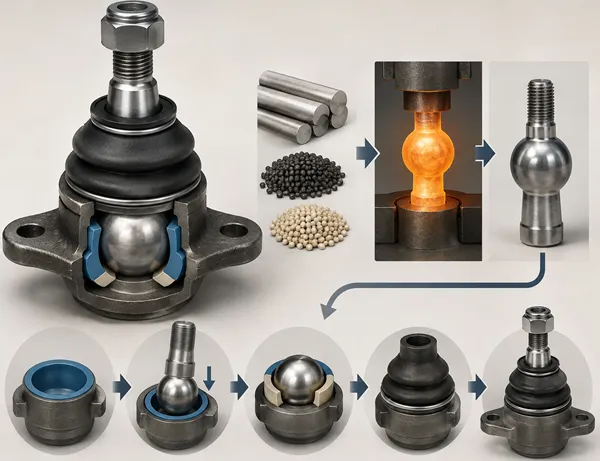
Let me break down why this matters so much in practice.
Material vs. Process: What Should You Actually Be Comparing?
When we receive inquiries from new buyers, they usually send us a request asking for "high-strength material" or "OE-grade steel." These are reasonable requests. But when we ask those same buyers what manufacturing process data they want, many of them go quiet. That gap is exactly where quality problems hide.
Here is a simple way to understand the difference:
| Factor | What a Spec Sheet Shows | What Actually Affects Performance |
|---|---|---|
| Steel grade | Material name (e.g., 40Cr) | Forging temperature control, pressure consistency |
| Heat treatment | "Quenched and tempered" | Actual hardness range achieved, batch-to-batch variation |
| Surface coating | "Zinc plated" | Salt spray test hours, adhesion quality, coating thickness |
| Ball stud | Diameter listed | Pull-out force3 test results, fatigue cycle test data |
A forging process done at the wrong temperature produces a part that looks identical on paper but fails earlier under load.4 Heat treatment that is inconsistent across a batch creates variance5—some parts in your shipment perform well, others do not. Neither issue shows up on a standard spec sheet. They only show up in process documentation or in your customers' warranty claims six months later.
The right question to ask any supplier is not "what steel do you use?" It is "can you show me your heat treatment records for the last three batches?" A supplier who can answer that question with actual data is a supplier who controls their process. A supplier who responds with a general quality statement does not.
For heavy-duty truck applications specifically, this process discipline becomes even more critical. The load and stress on a ball joint in a medium-duty truck is in a completely different category from a passenger car6. The same material grade will not perform the same way if the forging and heat treatment process is optimized only for lighter vehicle applications. Always confirm that your supplier has specific production experience—and test data—for your vehicle category.
How Do You Know a Supplier's Quality Is Consistent?
This is the question I hear most often from procurement managers who have been burned before. They found a supplier with good samples, placed a large order, and then found the second or third batch was not the same. Sample quality and mass production quality are two different things entirely.
Consistent quality in ball joint manufacturing comes from documented process control, not from a good sample. The right way to evaluate a supplier is to ask for evidence of how they monitor quality across every production batch—not just what their best parts look like.
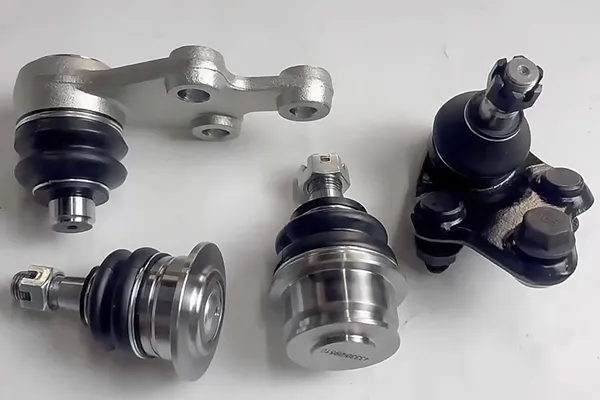
From our experience working with brands across North America, Europe, and Southeast Asia, the buyers who avoid this problem are the ones who treat their supplier audit as a process audit, not a product audit.
What Does Real Quality Control Evidence Look Like?
There is a practical difference between a supplier who says "we have strict quality control" and one who can show you what that means in their daily operations. Here is how to tell them apart.
Certifications: what they actually force a manufacturer to do
Most buyers have heard of IATF 16949. Many treat it as a checkbox. But what this certification actually requires is a documented system for controlling every step of production7—from raw material receiving to final shipment. A factory holding a valid IATF 16949 certificate must maintain records of nonconformances, corrective actions, and process parameters. It does not guarantee zero defects, but it does mean that when a problem happens, there is a traceable system to find it and fix it. Ask to see their certificate and ask when their last third-party audit was.
Raw material traceability
We source steel from suppliers including Baosteel, Shagang, and Yuanli. Every batch comes with a material inspection report, and our QC team runs random chemical composition checks. This is what raw material traceability looks like. If a supplier cannot tell you where their steel comes from or cannot produce batch-specific material reports, that is a gap in their process control.
Testing coverage by application
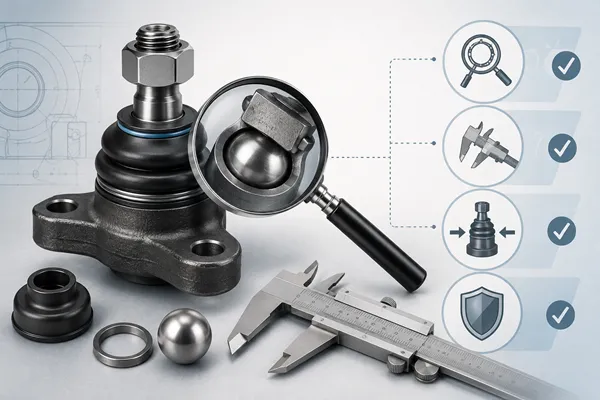
Reliable quality testing for ball joints includes pull-out force, compression force, torque, angle, fatigue cycles, high and low temperature performance, ozone resistance, and salt spray hours. Not every test applies equally to every product—a ball joint for a passenger car in a mild climate has different test priorities than one for an off-road vehicle in a market with extreme temperatures. Ask which tests apply to your specific application and ask for the test data, not just a list of tests the supplier claims to perform.
| Test Type | What It Verifies | Why It Matters for Buyers |
|---|---|---|
| Pull-out force | Stud retention under axial load | Direct safety factor, critical for warranty claims |
| Fatigue testing | Long-term durability under cycling load | Predicts real-world service life8 |
| Salt spray testing9 | Corrosion resistance of surface coating | Market-specific—critical in high-humidity or coastal markets |
| Torque testing | Rotation resistance of the joint | Affects steering feel and handling feedback |
| High/low temperature | Performance across operating temperature range | Critical for extreme climate markets |
Pre-shipment inspection
Ask what happens before your goods are packed. A serious supplier runs 100% final inspection before shipment, which should include random product checks, quantity verification, packaging condition review, and labeling accuracy. If a supplier cannot describe their pre-shipment inspection process in specific terms, you are taking on risk that should be theirs.
Is a Lower Unit Price Actually Cheaper?
This is the question that drives most procurement decisions, and it is also the question that leads to the most expensive mistakes. I am not going to tell you that price does not matter. Of course it does. But the real question is what you are measuring when you compare prices.
The unit price of a ball joint is not the total cost of that ball joint. The total cost includes the risk of warranty claims, the cost of inconsistent supply affecting your inventory, and the long-term damage to your brand reputation10 if field failures become a pattern.
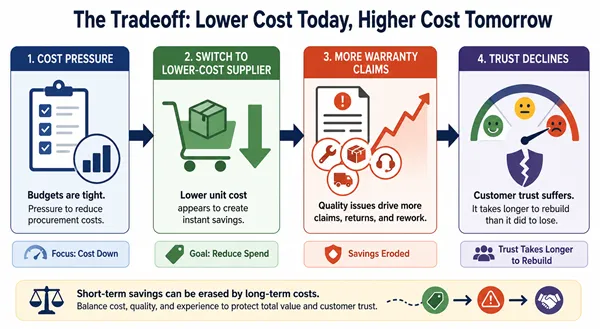
I have had direct conversations with distributors who switched to a lower-cost supplier to improve their margins by a few percent per unit. Within two years, the warranty claim volume had erased those savings and then some. Rebuilding customer trust took even longer.
The Hidden Costs That Do Not Appear on a Price Comparison Sheet
When you are evaluating two suppliers on price alone, you are comparing a number you can see against risks you cannot see yet. Here is a framework that makes those risks more visible.
Supply chain stability
A supplier with 20 production lines running standardized procedures can absorb demand spikes and maintain delivery schedules more reliably than a smaller operation. Late shipments mean stockouts. Stockouts mean lost sales. The cost of a stockout is almost never calculated into the unit price comparison.11
Batch-to-batch consistency
The most damaging quality problem in high-volume procurement is not a dramatic failure in one batch. It is gradual variance across batches—parts that are slightly out of spec12, or just below the threshold where customers return them, but close enough that your brand's reputation for reliability starts to erode. This is a process control problem, and it is invisible until the market tells you about it.
Warranty and after-sales exposure
Ball joint failures in the field—especially for safety-critical applications like trucks and SUVs—generate warranty claims that are expensive to process and even more expensive in terms of customer relationships. A supplier who can demonstrate low field failure rates across their existing customer base is worth paying more for. Ask if they have any data on this. A supplier who has been supplying the same brands for multiple years without a product recall conversation has a track record. That track record has value.
| Cost Factor | Lower Unit Price Supplier | Stable Quality Supplier |
|---|---|---|
| Unit price | Lower | Slightly higher |
| Warranty claim rate | Unpredictable | Consistently low |
| Supply reliability | Variable | Stable |
| Brand reputation risk | Higher | Lower |
| Long-term margin impact | Often negative | Positive |
The goal of smart procurement is not the lowest price. It is the best margin over time, with the lowest supply chain risk. Those two things are not always in conflict, but they are rarely the same number as the unit price on the quotation sheet.
Conclusion
Choosing high-quality ball joints means matching your application needs with a supplier who proves their process—not just their price. Ask for data, not claims. That is the only reliable filter.
"[PDF] Motor Vehicle Safety Defects And Recalls | NHTSA", https://www.nhtsa.gov/sites/nhtsa.gov/files/documents/mvdefectsandrecalls_808795.pdf. Research on the cost of poor quality in the automotive industry indicates that expenses related to recalls and warranty claims, including logistics, replacement parts, labor, and brand damage, often significantly exceed the initial cost of the components. Evidence role: case_reference; source type: research. Supports: The claim that a single defective batch of components can result in warranty and brand reputation costs that far outweigh production savings.. ↩
"The Effect of the Microstructure Formed in the Forging–Healing ...", https://pmc.ncbi.nlm.nih.gov/articles/PMC10419628/. Metallurgical studies show that the mechanical properties of steel alloys like 40Cr, such as hardness and tensile strength, are critically dependent on the parameters of the forging and heat treatment processes, which can lead to significant performance differences in finished parts despite having the same raw material specification. Evidence role: mechanism; source type: paper. Supports: The claim that identical steel grades can yield different final products based on manufacturing processes.. ↩
"[PDF] Ford Motor Company - nhtsa", https://static.nhtsa.gov/odi/inv/2004/INRL-EA04024-20260P.pdf. Automotive engineering standards, such as SAE J491, define test procedures for ball joints that include measuring pull-out and push-out forces to ensure the ball stud is adequately retained within the housing under specified axial loads, which is a critical safety parameter. Evidence role: definition; source type: other. Supports: The definition and purpose of the pull-out force test for ball joints.. Scope note: The source may describe a suite of tests, with pull-out force being one of several key evaluations. ↩
"Forging - Wikipedia", https://en.wikipedia.org/wiki/Forging. Engineering resources on metal forging explain that processing steel outside its optimal temperature range can lead to undesirable microstructures, internal voids, or surface cracks, which compromise the component's load-bearing capacity and fatigue life, often without visible external flaws. Evidence role: mechanism; source type: education. Supports: The claim that improper forging temperatures lead to premature failure in steel components.. ↩
"Real-time Statistical Process Control (SPC) - Data Science Institute", https://agdatascience.tennessee.edu/research-real-time-statistical-process-control/. Literature on industrial heat treatment confirms that variations in furnace temperature, soaking time, and quenching medium can result in a non-uniform distribution of mechanical properties, such as hardness and toughness, across a single batch of steel components. Evidence role: mechanism; source type: paper. Supports: The claim that inconsistent heat treatment is a source of quality variance in a production batch.. ↩
"[PDF] BALL JOINT WEAR 2", https://www.mshp.dps.missouri.gov/MSHPWeb/Publications/OtherPublications/documents/ballJointTolerances.pdf. Data from transportation agencies and vehicle engineering standards show that the gross vehicle weight and maximum axle loads for medium-duty trucks are several times higher than for typical passenger cars, resulting in proportionally greater static and dynamic forces on suspension components like ball joints. Evidence role: statistic; source type: government. Supports: The claim that truck ball joints experience significantly higher loads than those in passenger cars.. ↩
"IATF 16949 - Wikipedia", https://en.wikipedia.org/wiki/IATF_16949. The International Automotive Task Force (IATF) specifies that the IATF 16949:2016 standard requires organizations to establish, implement, maintain, and continually improve a quality management system, including documented processes for all stages of production and service provision to ensure conformity and manage risk. Evidence role: definition; source type: institution. Supports: The claim that IATF 16949 mandates a documented system for controlling production processes.. ↩
"Fundamentals of Fatigue Life Prediction - Interface", https://www.interfaceforce.com/?p=64125. In materials science and mechanical engineering, fatigue testing subjects a component to repeated cyclic loads to generate data (often plotted as an S-N curve) that is used to predict its expected life before failure under similar real-world service conditions. Evidence role: mechanism; source type: education. Supports: The claim that fatigue testing is a method for predicting the service life of a component.. ↩
"Salt spray test - Wikipedia", https://en.wikipedia.org/wiki/Salt_spray_test. Industry standards like ASTM B117 describe the salt spray (or salt fog) test, which is an accelerated corrosion test used to evaluate the relative corrosion resistance of coated materials when exposed to a salt-laden environment. Evidence role: definition; source type: other. Supports: The purpose of salt spray testing for evaluating corrosion resistance.. Scope note: The source will note that this is a comparative, accelerated test and does not perfectly replicate real-world corrosion performance. ↩
"Total Cost of Ownership (TCO) in Procurement - CADDi", https://us.caddi.com/resources/insights/total-cost-ownership. The principle of Total Cost of Ownership (TCO) in procurement and supply chain management posits that the cost of an asset includes not only the initial purchase price but also all direct and indirect costs incurred throughout its lifecycle, such as maintenance, warranty, downtime, and disposal costs. Evidence role: definition; source type: education. Supports: The claim that the total cost of a product includes more than just its purchase price.. ↩
"Calculating the Cost of Stockouts - SDI Inc", https://www.sdi.com/resources/blog/calculating-the-cost-of-stockouts/. Supply chain management research defines the cost of a stockout as the sum of potential financial losses incurred when a company cannot fulfill customer demand, including lost sales, the potential loss of future sales from the customer, and costs associated with emergency shipments or production changes. Evidence role: definition; source type: research. Supports: The claim that stockouts have significant costs that are often not included in simple price comparisons.. ↩
"[PDF] 1 Distinguishing between Common Cause Variation and Special ...", https://dr.lib.iastate.edu/server/api/core/bitstreams/fae9428c-5f41-458a-89b5-90b3428062f8/content. Quality management principles, particularly those developed by W. Edwards Deming, emphasize that reducing 'common cause' variation inherent in a process is fundamental to achieving consistent quality, arguing that this gradual, systemic variance can be more damaging over time than isolated 'special cause' failures. Evidence role: expert_consensus; source type: education. Supports: The claim that controlling gradual process variation is a critical, and often overlooked, aspect of quality management.. ↩