
When you compare upper vs lower ball joints, a similar appearance can make the purchasing decision seem simple. However, choosing the wrong part can create fitment problems, premature wear, warranty claims, and inventory risk. You need to match the ball joint to the vehicle’s suspension design and verified OE specification before you approve a product.
Upper and lower ball joints are not automatically interchangeable. Their role, load behavior, mounting method, and dimensions depend on the vehicle’s suspension design. To select the correct part, verify the vehicle application, suspension layout, OE number, technical drawing, and required product specifications. Appearance, price, or material thickness alone cannot prove that a ball joint is suitable.
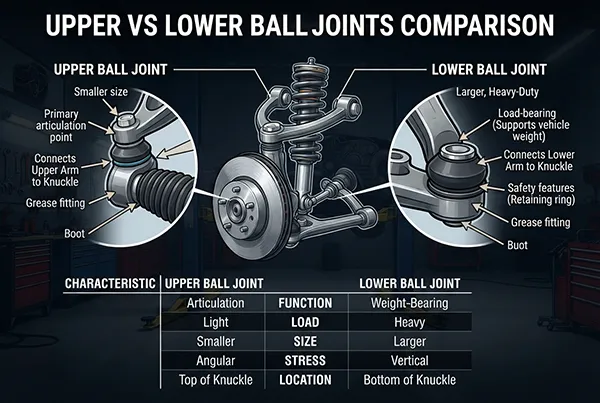
Many buyers begin with the question, “What is the difference between upper and lower ball joints?” That question is useful, but it does not go far enough. From my experience in ball-joint manufacturing and customer quality feedback, the more practical question is: Which ball joint matches this vehicle’s suspension structure and OE specification?
What Is the Difference Between Upper vs Lower Ball Joints?
The problem is that “upper” and “lower” describe position, not a universal design standard. The same label can represent different structural duties on different vehicles. If you treat the position as the only selection factor, you may approve a part that looks correct but does not perform correctly.
In general, an upper ball joint connects the upper control arm to the steering knuckle, while a lower ball joint connects the lower control arm to the knuckle. However, the exact load distribution and suspension arrangement vary by vehicle.
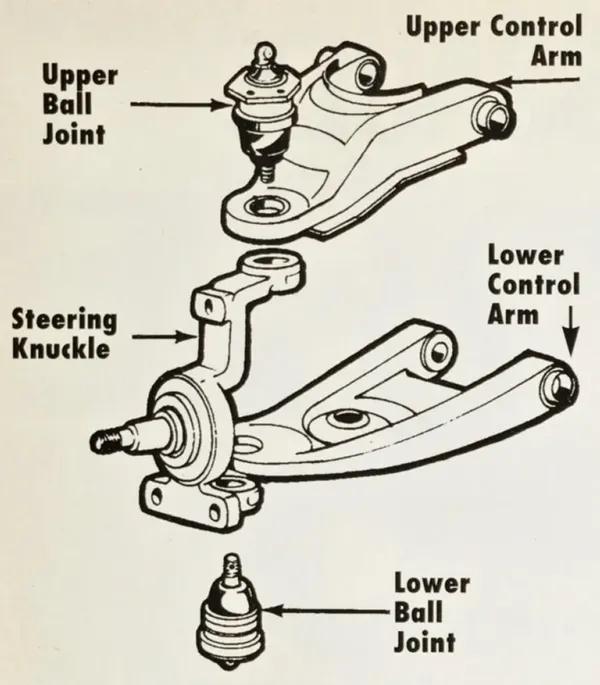
The upper-versus-lower distinction usually relates to the vehicle’s suspension geometry, mounting position, and intended load path. The lower ball joint may carry a significant portion of the vehicle and braking load in some designs. In other applications, the suspension may use different arrangements, such as a strut-based system, where one ball joint has a different function or where no conventional upper ball joint is used1.
Position Does Not Define the Entire Function
A ball joint allows controlled movement between the control arm and steering knuckle.2 It must support movement in several directions while helping maintain accurate wheel location. That requires a specific relationship between:
- Stud angle and taper
- Ball and socket geometry
- Housing shape
- Mounting hole pattern
- Control-arm design
- Steering-knuckle dimensions
- Suspension travel
- Vehicle load requirements
These details are application-specific. A lower ball joint for a heavy-duty truck may have a larger housing, stronger materials, or a different stud design than a passenger-car component. Even two lower ball joints can differ substantially between vehicle models.
In my manufacturing work, I have seen products that appeared almost identical until we compared the technical drawings. A small difference in stud taper, thread length, or mounting height can affect installation and steering geometry. A part can fit into a package or appear close to the OE component while still being unsuitable for the intended application.
Why Similar Appearance Can Mislead Buyers
Visual inspection is useful, but it is only an initial check. A buyer should not approve an upper or lower ball joint based only on:
- Similar housing size
- Matching bolt holes
- Similar material thickness
- A comparable dust boot
- Lower unit price
- A product photograph
- A general vehicle description
The component may require a specific hardness, heat-treatment condition, sealing system, or fatigue performance.3 The supplier should provide reliable product data and fitment evidence instead of asking you to judge interchangeability from photographs.
Can Upper and Lower Ball Joints Be Interchanged?
You should assume that upper and lower ball joints cannot be interchanged unless reliable vehicle-specific evidence confirms it. Some vehicles may use similar or shared components, but that is a design fact for a particular application, not a general rule for all suspension systems.
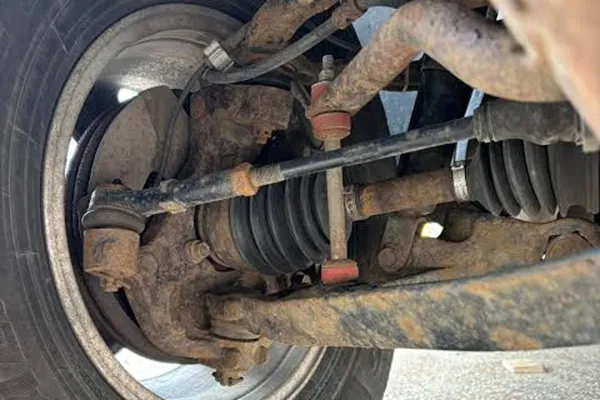
Interchanging the parts without verification creates a direct procurement and quality risk. The component may install incorrectly, alter suspension geometry, limit movement, or fail to meet the vehicle’s required load and durability conditions.
The Main Risks of Unverified Interchangeability
A ball joint can be unsuitable even when the dimensions seem close. Potential problems include:
- Incorrect stud taper: The stud may not seat correctly in the steering knuckle.
- Wrong mounting height: The suspension angle and wheel alignment may change.
- Insufficient articulation: The joint may bind during suspension movement.
- Incorrect load capacity: The joint may not be designed for the application’s forces.
- Poor sealing compatibility: The dust boot may not protect the joint through the required movement range.
- Thread or fastener mismatch: The part may require a different nut, bolt, or retention method.
- Inconsistent batch performance: A product that passes a basic dimensional check may still fail durability or fatigue requirements.
Load behavior deserves special attention. Ball joints experience a combination of vertical loads, cornering forces, braking forces, vibration, and repeated articulation. The balance changes according to the vehicle’s weight, suspension layout, drive configuration, steering geometry, and operating environment.
Material Thickness Is Not a Sufficient Test
A thicker housing does not automatically mean that a ball joint is better or stronger.4 Performance depends on the complete design and manufacturing process. Relevant factors may include steel grade, forging or casting method, heat treatment, machining accuracy, surface condition, stud hardness, socket fit, lubrication, and sealing.
At our factory, material batches are supported by inspection reports, and our QC team conducts random chemical composition tests. These controls help confirm manufacturing consistency. They do not prove that a product fits every vehicle or that a thicker component is appropriate for a specific suspension.
The same principle applies to price. A low-priced part may have a different specification, testing scope, packaging standard, or expected service requirement. A high-priced part is not automatically correct either. Your purchasing decision should connect the price to documented fitment, product requirements, quality controls, and supply reliability.
What Buyers Should Request From a Supplier
Before you approve a cross-reference or replacement, ask the supplier for:
- OE number and verified cross-reference information
- Vehicle make, model, year, engine, and axle details
- Suspension layout and mounting position
- Product drawing with critical dimensions and tolerances
- Material and heat-treatment information
- Applicable load, torque, fatigue, and articulation requirements
- Inspection and test records
- Packaging and labeling details
- Traceability information for production batches
You should also compare the supplier’s data with a trusted OE catalog, technical database, original drawing, or qualified engineering review.
How Should You Verify Upper vs Lower Ball Joints Before Buying?
The safest method is to create a documented fitment path before purchasing or stocking the product. Start with the complete vehicle application, then confirm the suspension structure, OE number, drawing, and product requirements. This process reduces the chance that a visually similar component enters your inventory.
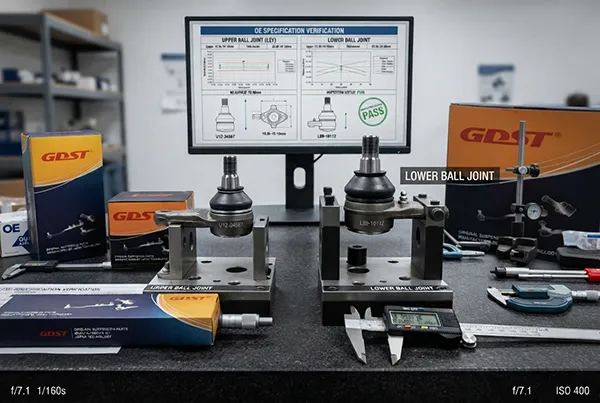
A short verification process can prevent expensive problems later. Warranty returns, incorrect catalog data, urgent replacement shipments, and customer complaints often cost more than the time required to verify the part before approval.
Step 1: Confirm the Full Vehicle Application
Do not rely only on a broad description such as “Toyota SUV” or “Ford pickup.” Record the details that can change fitment:
- Make and model
- Production year or production range
- Engine and drivetrain
- Front or rear suspension position
- Left or right side, if relevant
- Two-wheel drive or four-wheel drive
- Passenger, light-duty, medium-duty, or heavy-duty use
- Market or regional version
A vehicle name may cover several suspension configurations.5 The same model can use different ball joints across production years or markets.
Step 2: Identify the Suspension Layout
You need to determine whether the vehicle uses a double-wishbone, multi-link, strut-based, or another suspension design. Then identify whether the requested component is an upper joint, lower joint, integrated control-arm joint, or another related part.
This step matters because the names used in catalogs are not always consistent. One supplier may list a joint by its control-arm position, while another may describe it by its steering-knuckle position. You should compare the actual design and OE reference instead of relying on terminology alone.
Step 3: Match the OE Number and Critical Dimensions
The OE number is an important starting point, but it should not be treated as the only evidence. You should also compare the critical dimensions shown in the drawing.
| Verification point | Why it matters |
|---|---|
| Stud taper | Confirms proper seating in the knuckle |
| Stud diameter and length | Supports correct fit and fastener engagement |
| Mounting hole spacing | Confirms control-arm or knuckle attachment |
| Housing diameter and height | Helps confirm clearance and load-related design |
| Articulation angle | Reduces the risk of binding during travel |
| Thread specification | Confirms nut and retention compatibility |
| Dust-boot dimensions | Supports correct sealing and movement |
| Grease or lubrication requirements | Helps maintain intended joint performance |
Do not use a ±0.2 mm dimensional tolerance as a universal rule for every feature or vehicle. In our production work, molds and machined features are controlled according to the applicable drawing and product requirements. The correct tolerance depends on the component and its function.
Step 4: Review Quality and Testing Requirements
A professional supplier should explain how the product is controlled from raw material to shipment. Useful evidence may include:
- Material inspection reports
- Dimensional inspection records
- Hardness testing
- Torque testing
- Angle testing
- Pull-out and compression testing
- Fatigue testing
- Salt spray testing
- Ozone resistance testing
- High- and low-temperature testing
- Final inspection and packaging records
These tests provide evidence of manufacturing discipline. They are not a substitute for correct fitment. A ball joint can pass a factory test and still be the wrong part for a vehicle if the application data was incorrect.6
I have also learned from customer quality feedback that packaging and labeling deserve the same attention as the component itself. A correctly manufactured part can still create a supply-chain problem if the OE reference, application label, quantity, or shipping mark is wrong.
Step 5: Approve Samples Before Mass Production
For private-label or customized projects, request samples before confirming mass production. Compare the sample with the OE part or approved drawing, and document any differences.
Your sample approval should cover:
- Physical dimensions
- Mounting method
- Stud taper and thread
- Boot design
- Surface treatment
- Marking and traceability
- Packaging
- Fitment evidence
- Required test documentation
For complex or safety-related applications, a qualified automotive engineer or other professional should evaluate the part and the vehicle-specific requirements. Supplier experience supports the decision, but it should not replace independent technical verification where the application requires it.
What Should You Ask a Ball Joint Manufacturer?
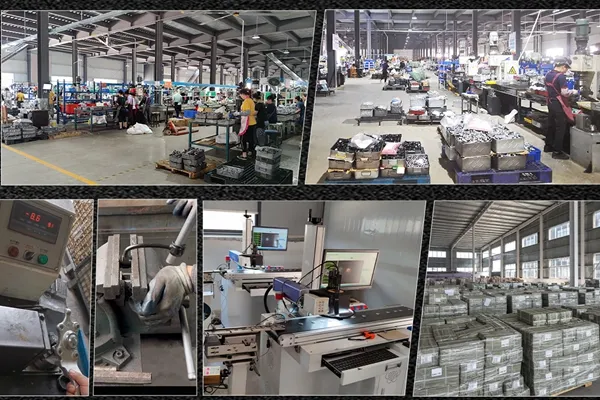
You should ask questions that reveal both product capability and application control. A supplier with casting, forging, welding, CNC machining, assembly, and surface-treatment capability may offer useful flexibility, but you still need evidence for the specific ball joint you plan to purchase.
Ask the manufacturer:
- Can you produce from an OE sample, drawing, or technical requirement?
- Which vehicle applications and OE numbers are supported?
- How do you control critical dimensions?
- Which material inspection documents are available?
- What testing is performed for this product family?
- How are production batches identified?
- What is the minimum order quantity?
- What lead time can the factory support?
- Can you provide private-label packaging and customized labels?
- How do you manage engineering changes?
- Can you provide current certification documents for review?
GDST Auto Parts has more than 20 years of OEM and ODM manufacturing experience and supplies suspension and steering parts to customers in more than 100 countries. Our product range includes ball joints, tie rod ends, rack ends, stabilizer links, center links, drag links, idler arms, and pitman arms.
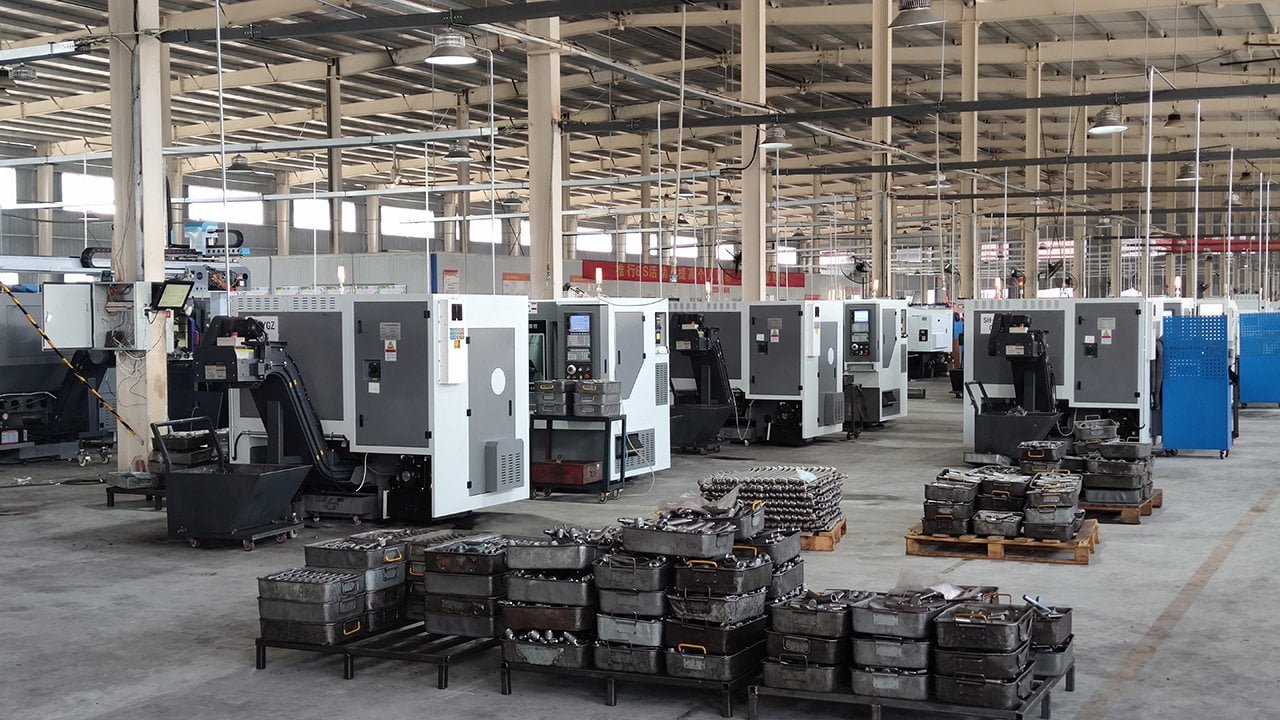
Our factory operates 20 production lines, and QC staff monitor production processes from raw material procurement through final inspection. We work with steel materials from established Chinese manufacturers, including Baosteel, Shagang, and Yuanli, and we maintain material inspection and product testing procedures.
Our quality systems are certified under IATF 16949 and ISO 9001. Buyers should review current certification documents, scope, and validity during supplier qualification. These certifications indicate a quality-management framework; they do not guarantee that every part is suitable for every vehicle.
Frequently Asked Questions
Are upper and lower ball joints the same part?
No. Upper and lower ball joints may have different positions, mounting methods, dimensions, and load conditions. The relationship varies by suspension design. You should use the vehicle application, OE number, technical drawing, and fitment data to determine whether a particular part is correct.
Is the lower ball joint always under more load?
Not always. Some suspension designs place a larger share of vehicle, braking, or cornering loads through the lower joint, but the exact load path depends on the vehicle’s geometry and structure. You should avoid applying one general load rule to every application.
Can I identify the correct ball joint by measuring it?
Measurements can help compare a sample with a drawing, but dimensions alone do not prove interchangeability. You also need to verify stud taper, articulation, material requirements, load behavior, mounting method, and OE application information.
What information should I send to a manufacturer?
Send the OE number, vehicle make and model, production year, engine, drivetrain, suspension position, sample or drawing, required quantity, packaging needs, and market requirements. Clear information helps the manufacturer evaluate the application and prepare a more reliable quotation.
Do I need professional evaluation before approving a ball joint?
For application-specific or safety-critical decisions, professional evaluation is recommended. A manufacturer can provide drawings, inspection information, and test records, but a qualified professional should assess the complete vehicle and technical requirements when the fitment is uncertain.
Conclusion
When you evaluate upper vs lower ball joints, focus on verified application data rather than position, appearance, price, or material thickness. The correct part depends on the vehicle’s suspension structure, OE specification, dimensions, load requirements, and testing needs. I recommend that you confirm the vehicle details, suspension layout, OE number, technical drawing, and supplier quality records before purchasing or stocking a part. Contact GDST Auto Parts to discuss OEM/ODM ball-joint manufacturing, fitment documentation, quality requirements, and customized supply solutions for your aftermarket business.
"MacPherson strut", https://en.wikipedia.org/wiki/MacPherson_strut. In a MacPherson strut suspension, the strut provides the upper structural location for the steering assembly, while a lower ball joint connects the lower control arm to the steering knuckle; consequently, the arrangement does not correspond to a conventional pair of upper and lower ball joints. Evidence role: definition; source type: encyclopedia. Supports: The source should describe MacPherson strut architecture and identify how the strut and lower ball joint constrain the steering knuckle.. Scope note: The statement describes the common MacPherson arrangement and does not cover every manufacturer-specific variation. ↩
"Control arm", https://en.wikipedia.org/wiki/Control_arm. A ball joint is a spherical joint used in automotive suspension and steering systems to permit angular movement between connected components while maintaining their mechanical connection. Evidence role: definition; source type: education. Supports: The source should define a ball joint as a joint that permits angular movement between suspension or steering components while maintaining their connection.. Scope note: The definition supports the general function but does not establish the design requirements of a particular vehicle application. ↩
"Characterization and Failure Analysis of an Automotive ...", https://www.academia.edu/86760381/Characterization_and_Failure_Analysis_of_an_Automotive_Ball_Joint. Studies of suspension-joint durability identify material properties, heat treatment, surface condition, lubrication, sealing, and cyclic loading as factors that influence wear, fatigue, and service life. Evidence role: mechanism; source type: paper. Supports: The source should connect material properties, heat treatment, sealing, and cyclic loading with ball-joint durability or failure behavior.. Scope note: The cited factors are relevant to durability but cannot by themselves demonstrate compliance of a specific ball-joint product. ↩
"Influence of thickness and strength on plastic instability ... - PMC", https://pmc.ncbi.nlm.nih.gov/articles/PMC11224355/. Mechanical strength is determined by the interaction of material properties, geometry, load paths, manufacturing condition, and stress concentrations; therefore, greater local thickness alone is not proof of superior component performance. Evidence role: general_support; source type: education. Supports: The source should explain that component strength depends on material properties, geometry, loading, manufacturing, and stress concentration rather than one thickness measurement.. Scope note: This general design principle does not assess the strength of any particular ball-joint housing. ↩
"Vehicle Stats by State, Vehicle Type and Model Year", https://www.bts.gov/browse-statistical-products-and-data/surveys/vius/vehicle-stats-state-vehicle-type-and-model-year. Vehicle specifications are commonly differentiated by model year, trim, drivetrain, engine, and market, and these distinctions can include changes to suspension architecture and component application. Evidence role: historical_context; source type: government. Supports: The source should show that vehicle specifications and suspension equipment can vary by model year, trim, drivetrain, or market.. Scope note: General vehicle-specification records establish the possibility of variation but do not identify the correct ball joint without vehicle-specific records. ↩
"Conformity Assessment of Medical Devices - PMC - NIH", https://pmc.ncbi.nlm.nih.gov/articles/PMC12821529/. Conformity testing evaluates a product against specified test criteria, whereas application conformity additionally requires that the product specifications and interfaces correspond to the intended vehicle and use. Evidence role: general_support; source type: institution. Supports: The source should distinguish conformity to manufacturing or test criteria from conformity to the requirements of a particular application.. Scope note: This quality principle supports the distinction conceptually and is not direct evidence of a failure in a specific ball-joint supply chain. ↩