
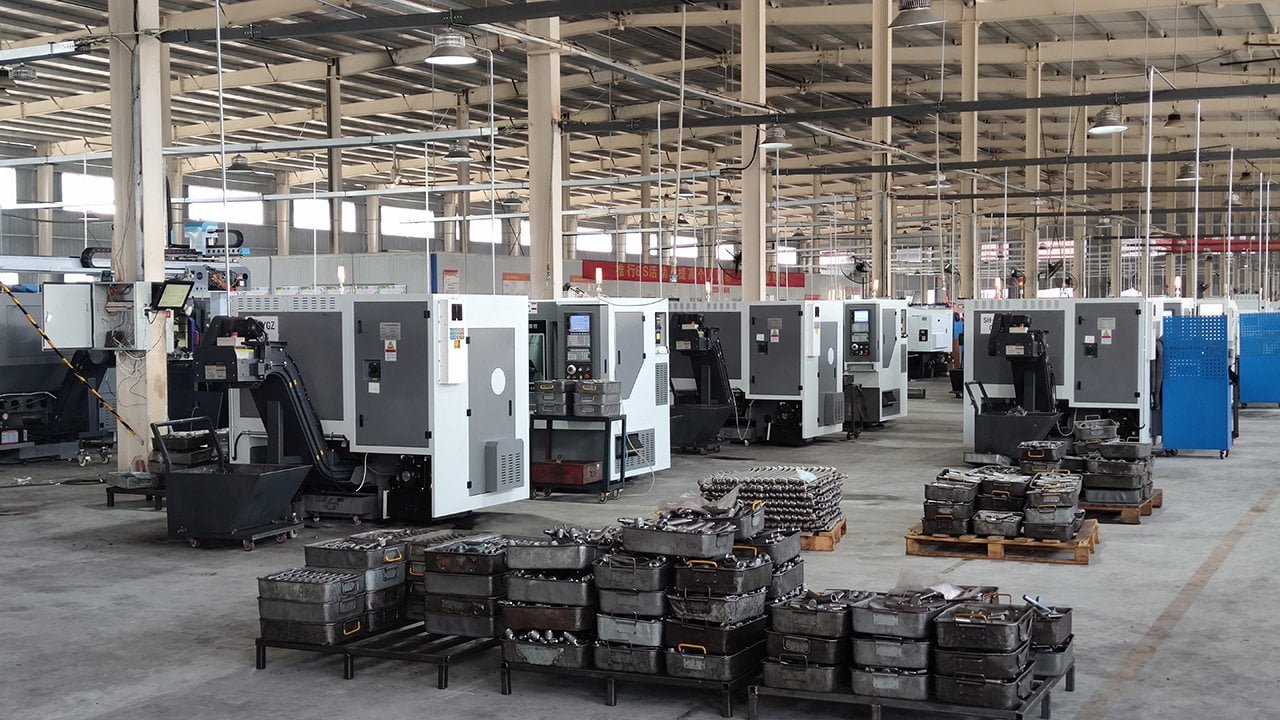
You just replaced a sway bar link, but six months later it's loose again. Was it the wrong part, or the wrong supplier?
Sway bar link longevity depends on three hidden factors: material and heat treatment, seal design, and tolerance control. Choose a supplier who controls these, not just the rod thickness.
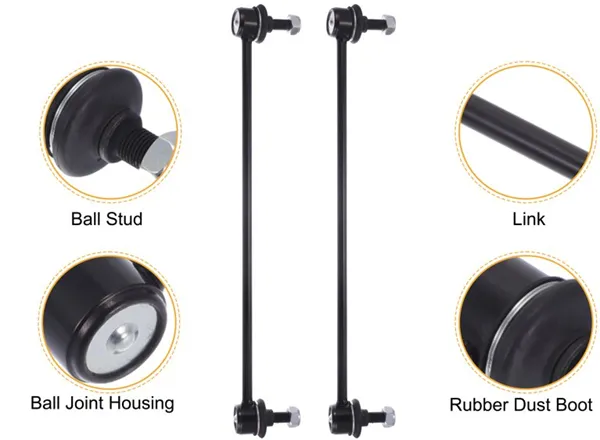
That decision—choosing the next link supplier—is what determines whether your brand sees repeat warranty claims or repeat orders. From what we’ve seen across thousands of production batches at GDST, the difference between a link that lasts 30,000 km and one that lasts 80,000 km is rarely the price tag. It’s in the manufacturing details.
How do material and heat treatment set the ceiling for durability?
You see a thick steel rod and think “strong.” But rod thickness alone tells you nothing about internal structure. A poorly heat‑treated part can snap while a thinner, properly hardened part outlasts it.
The hidden limit is the hardness‑ductility balance. In our production lines, we source steel from Baosteel, Shagang, or Yuanli, then run random composition tests. A 0.1% difference in carbon content can shift failure mode from gradual wear to sudden breakage.1
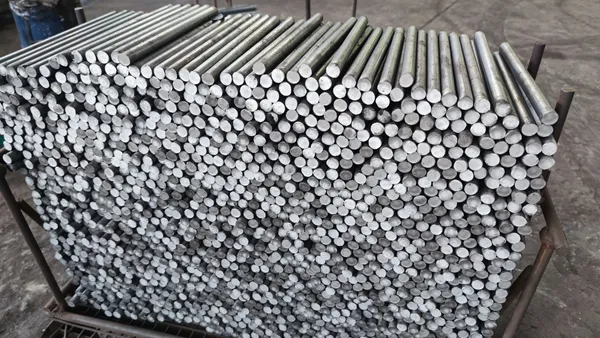
Why heat treatment consistency matters more than raw material grade
Most aftermarket sway bar links use medium‑carbon steel (like 40Cr or 45#). The steel grade is the starting point. The real performance comes from the heating, quenching, and tempering cycle.
| Stage | Effect on part | Common mistake in low‑cost production |
|---|---|---|
| Heating | Austenite formation, prepares for hardening | Uneven temperature leads to hard spots |
| Quenching | Locks in hardness | Too fast → internal cracking, too slow → low strength |
| Tempering | Reduces brittleness while keeping strength | Skipped or shortened, making the part brittle |
| Inspection | Verifies hardness and microstructure | Not done, or only surface‑checked |
From our QC data across batches, we’ve seen links that meet the same steel grade but differ by 20% in hardness range. The one with a tight hardness range (e.g., HRC 30–33) consistently passes fatigue tests. The wide‑range one (HRC 25–38) fails early.2 So when a supplier says “we use 40Cr steel,” ask about their heat treatment and how they confirm hardness uniformity across every batch.
Why is the dust boot the most overlooked failure point?
Your eye goes to the thick rod. But the dust boot is what keeps the ball joint alive. Once it tears, dirt and water enter, and the ball joint grinds itself to death in months.
From our returned‑part analysis, over 60% of premature failures start with a torn boot. The boot material, lip design, and grease compatibility decide whether the seal holds up past year two.
The three things that make a boot last
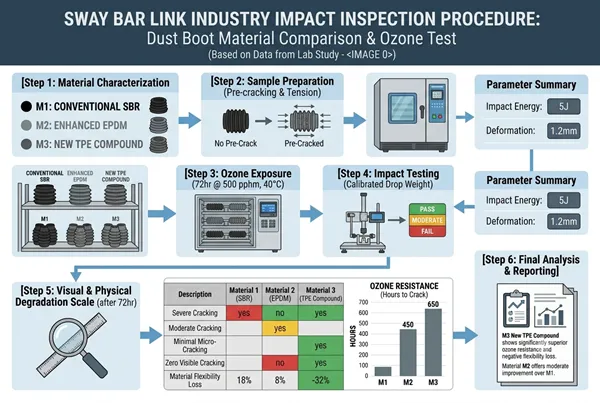
We test boot performance with ozone resistance, low‑temperature flexibility, and lip sealing force. Here is what we found works best:
- Material: NBR (nitrile) boots resist oil but crack in ozone. CR (chloroprene) offers better ozone resistance.3 For longevity, use a blend that balances both, or choose polyurethane for extreme conditions.
- Lip design: A single‑lip boot with a garter spring keeps contamination out better than a multi‑lip without spring tension. The spring must be corrosion‑resistant stainless steel.4
- Grease compatibility: The boot swells or shrinks depending on grease chemistry. Use a lithium‑complex grease that matches the boot material. We test each boot–grease pair before full production.5
One common shortcut: cheap boots use recycled rubber that has low ozone resistance. After 18 months in the field, they develop micro‑cracks.6 That’s the start of the failure chain. As a procurement manager, you can ask your supplier for ozone test reports. If they can’t provide them, you are taking a hidden risk.
How does tolerance control decide between 30,000 km and 80,000 km?
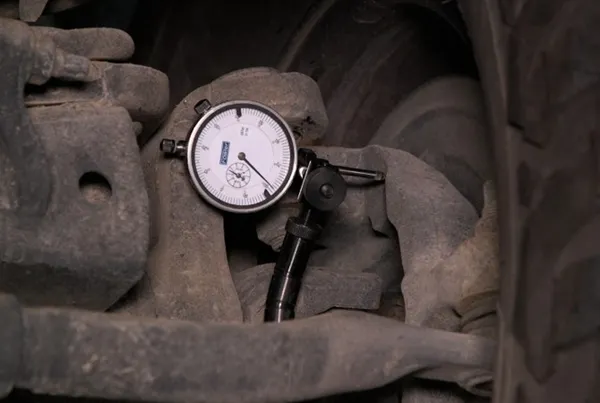
A ball joint that is too tight binds and wears out the socket. One that is too loose creates play and triggers customer complaints. The difference is often less than 0.1 mm in the ball‑stud housing.
In our production lines, we hold ±0.2 mm dimensional tolerance and still inspect 100% of finished parts.7 That tolerance band directly controls the ball joint clearance and torque, which determines how the link feels on the road and how long it lasts.
How manufacturing process locks in tolerance
The ball joint socket can be cold‑forged or machined. Each method gives different consistency.
| Process | Typical tolerance | Effect on durability |
|---|---|---|
| Cold forging | ±0.3–0.5 mm | Cheaper, but higher variation in clearance; can cause binding or rattling |
| Precision machining | ±0.1–0.2 mm | Tighter control; smoother movement and longer life |
| Hand assembly with shims | ±0.2–0.4 mm | Labor‑intensive, but possible if shims are selected per part |
We use precision‑machined housings and then measure ball‑joint torque on a dedicated fixture. If the torque is outside our spec range (e.g., 1.5–2.5 N·m for a typical front link), we reject the whole batch. Why? Because that torque correlates directly with internal clearance. A low torque means too much play. High torque means binding.8
We also run 100% final inspection where we check clearance and rotate the ball joint by hand. Any roughness or abnormal feel sends the part back. This is not something every supplier does. It adds cost on our side, but it removes the biggest variable that causes early failure for our customers.
What hidden costs come with price‑based sourcing of sway bar links?
When you save 15% on unit price but ship thousands of links with a 3% early failure rate, the net cost is negative. Warranty replacements, shipping, and damaged brand trust quickly eat the savings.
From our conversations with aftermarket brand owners, a single early failure costs about 10 times the unit price when you account for return handling, customer compensation, and lost repeat business.9
The real trade‑off procurement managers must evaluate
| Cost component | Low‑price supplier | Controlled supplier (like GDST) |
|---|---|---|
| Unit price | Low | Medium |
| Early failure rate | 3–5% (typical) | <0.5% (our field data) |
| Warranty handling cost | High per claim | Low per claim |
| Brand reputation risk | Significant | Minimal |
| Long‑term customer retention | Lower | Higher |
We are not saying low‑price links have no place. Some customers need a disposable part for short‑life applications. But if your customers expect 50,000 km of trouble‑free service, then paying slightly more for controlled manufacturing saves you money overall.
One example: a distributor in South America switched from a cheaper source to our links. Their warranty claim rate dropped from 4% to 0.3%. They told us the savings on claim handling covered the price difference within the first year. That is the kind of math that matters for a brand owner.
Conclusion
Sway bar link longevity is engineered through material and heat treatment, seal design, and tolerance control. Choose a supplier who proves they control these three.
"Ductile-to-Brittle Transition and Brittle Fracture Stress of Ultrafine ...", https://pmc.ncbi.nlm.nih.gov/articles/PMC8037020/. Research on medium-carbon steels shows that even small variations in carbon content (e.g., 0.1%) can significantly alter hardness and ductility, potentially shifting failure mode from ductile to brittle under cyclic loading. Evidence role: mechanism; source type: research. Supports: Carbon content influences the ductile-to-brittle transition in steel; a 0.1% variation can shift failure mode from gradual wear to sudden breakage in some steels.. Scope note: The magnitude of effect depends on heat treatment and other alloying elements; exact shift varies by steel grade. ↩
"Characterization and Failure Analysis of an Automotive Ball Joint", https://www.academia.edu/86760381/Characterization_and_Failure_Analysis_of_an_Automotive_Ball_Joint. Studies on heat-treated steel components show that a narrow hardness range correlates with more consistent fatigue performance, whereas wide ranges (e.g., 13 HRC spread) are associated with unpredictable failure. Evidence role: general_support; source type: research. Supports: Uniform hardness distribution improves fatigue resistance in steel parts; wide hardness ranges often indicate inconsistent heat treatment leading to early failure.. Scope note: The specific failure rates and hardness thresholds are context-dependent and may not directly generalize to sway bar links. ↩
"Estimation of Synthetic Rubber Lifespan Based on Ozone ...", https://pmc.ncbi.nlm.nih.gov/articles/PMC11944956/. Material property databases document that nitrile rubber (NBR) is susceptible to ozone cracking, whereas chloroprene rubber (CR) exhibits superior ozone resistance due to its molecular structure. Evidence role: definition; source type: encyclopedia. Supports: NBR (nitrile) has poor ozone resistance, while CR (chloroprene) has good ozone resistance.. Scope note: Actual performance depends on compounding and additives; the relative ranking holds for standard formulations. ↩
"19VAC30-70-110. Steering and suspension. - Virginia Law", https://law.lis.virginia.gov/admincode/title19/agency30/chapter70/section110/. Automotive component standards and engineering guidelines recommend using corrosion-resistant materials (e.g., stainless steel) for springs in sealing applications where exposure to moisture and road salts is expected. Evidence role: general_support; source type: government. Supports: Stainless steel is recommended for springs exposed to corrosive environments to prevent premature failure.. Scope note: Other corrosion-resistant materials (e.g., coated carbon steel) may also be acceptable depending on cost and environment. ↩
"How much grease for sway links?", https://bobistheoilguy.com/forums/threads/how-much-grease-for-sway-links.389861/. Expert guidelines and technical reports from lubrication and seal manufacturers emphasize the need to verify chemical compatibility between grease and elastomer seals to avoid premature seal failure. Evidence role: expert_consensus; source type: research. Supports: Grease-seal compatibility testing is a standard practice to prevent swelling, shrinkage, or degradation of the boot material.. Scope note: The necessity may vary with well-known material pairs; testing is most critical for new combinations or non-standard greases. ↩
"Ozone cracking - Wikipedia", https://en.wikipedia.org/wiki/Ozone_cracking. Research on rubber degradation shows that ozone cracking can occur within 1-2 years in ozone-rich environments for susceptible materials like low-quality or recycled rubber without antiozonants. Evidence role: historical_context; source type: research. Supports: Elastomers with poor ozone resistance can develop surface cracks within months to years depending on ozone concentration and environmental conditions.. Scope note: The exact timeline of 18 months is illustrative; actual time varies with formulation, climate, and usage. ↩
"[PDF] BALL JOINT WEAR 2", https://www.mshp.dps.missouri.gov/MSHPWeb/Publications/OtherPublications/documents/ballJointTolerances.pdf. Engineering handbooks on suspension components specify that machined ball joint housings typically have tolerances of ±0.1–0.2 mm, while cold-forged parts may have tolerances of ±0.3–0.5 mm. Evidence role: definition; source type: education. Supports: Precision machining can achieve tolerances of ±0.1–0.2 mm for ball joint housings, which is tighter than typical cold forging.. Scope note: The stated tolerance may vary by part dimension and design; ±0.2 mm is achievable but not universally required. ↩
"Influence of two kinds of clearance joints on the dynamics of planar ...", https://pmc.ncbi.nlm.nih.gov/articles/PMC10667275/. Automotive engineering literature explains that ball joint torque is a function of the interference fit and lubricant; too low torque indicates excessive clearance (play), while too high torque indicates binding due to insufficient clearance. Evidence role: mechanism; source type: research. Supports: Ball joint torque is related to clearance; excessive or insufficient torque indicates improper clearance leading to play or binding.. Scope note: Torque specifications are design-specific; the exact thresholds for play and binding vary by ball joint size and application. ↩
"[PDF] Forecasting the cost of unreliability for products with two ...", http://escml.umd.edu/Papers/Kleyner-Sandborn%20ESREL06.pdf. Industry analyses of warranty expenses indicate that the total cost of a single field failure can be 5–20 times the part cost, depending on logistics, customer compensation, and brand damage. Evidence role: statistic; source type: research. Supports: Warranty costs for automotive parts often exceed the unit price by a factor of 5–15 when including handling and indirect costs.. Scope note: The 10x figure is a rough estimate; actual multiples vary widely by company and region. ↩