The wrong ball joint supplier can shut down your entire product line. One bad batch. One failed inspection. One missed shipment. Your customers notice before you do.
The best ball joint manufacturers combine precision forging or casting, strict dimensional control, and certified quality systems like IATF169491. They serve the global aftermarket with OEM-level fitment, private label options, and stable supply chains across Japanese, Korean, American, and European vehicle applications.
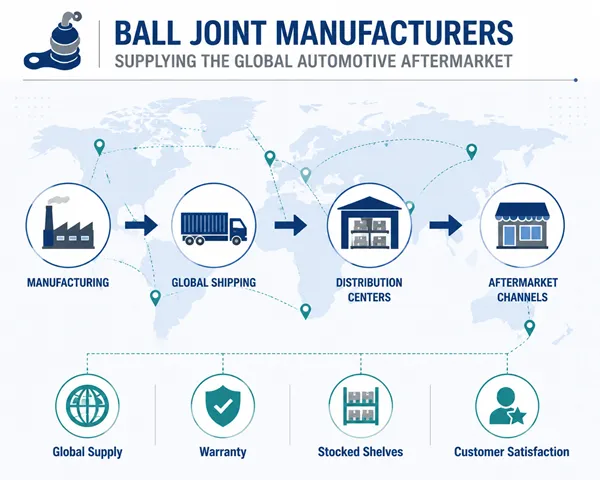
Finding the right manufacturer is not just about price. It is about who can keep your shelves stocked, your customers satisfied, and your warranty claims near zero. I have worked in this industry long enough to know that the difference between a great supplier and a bad one shows up months after you place the first order. Let me walk you through what really matters when you are looking at ball joint manufacturers around the world.
What Does a Reliable Ball Joint Manufacturer Actually Look Like?
Most suppliers say the same things. Good quality. Competitive price. On-time delivery. But what does that actually mean when you are standing inside a factory?
A reliable ball joint manufacturer runs standardized production lines, sources steel from traceable mills, and has a dedicated QC team that checks every stage from raw material to finished product. They hold certifications like IATF16949 and ISO90012, and they can back up every claim with documentation.
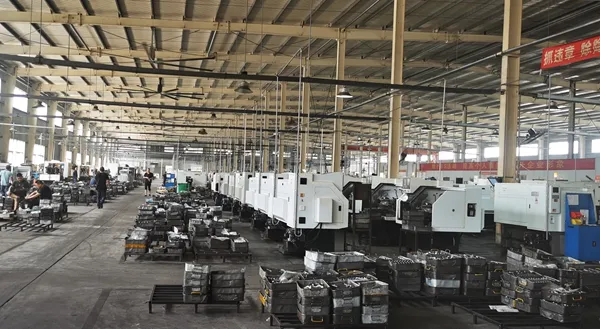
Let me break down what you should actually look for when you visit or evaluate a ball joint manufacturer.
Production Capability
The number of production lines matters. A factory with only a few lines will struggle to handle large orders or rush requests. At our facility, we run 20 modern production lines. This gives us the flexibility to handle multiple orders at the same time without pushing back delivery dates.
The manufacturing process for ball joints involves several steps. Casting or forging forms the base shape. CNC machining brings it to exact dimensions. Surface treatment protects against corrosion. Assembly brings all components together. Each step needs its own quality check. If any step is skipped or rushed, the final product fails in the field.
Steel Material Traceability
Ball joints carry load. They connect the wheel to the suspension. If the steel is weak or inconsistent, the joint fails. We source all steel from major Chinese mills including Baosteel, Shagang, and Yuanli. Every batch comes with a material inspection report. Our QC team also runs random chemical composition tests internally. This is not standard practice at every factory. Ask your supplier if they can show you these records.
| Factor | What to Ask |
|---|---|
| Steel source | Which mills do you buy from? |
| Batch traceability | Can you provide material inspection reports? |
| In-house testing | Do you test chemical composition internally? |
| Certifications | Are you IATF16949 and ISO9001 certified? |
| QC experience | How many years of experience does your QC team have? |
Where Are Most Ball Joint Manufacturers Located?
You have probably already noticed that most ball joint manufacturers are either in China, Taiwan, or a handful of other manufacturing hubs. But the location alone tells you very little.
Most ball joint manufacturers for the global aftermarket are based in China, Taiwan, South Korea, and parts of Europe.3 Chinese manufacturers dominate in volume and price competitiveness4, while some European and Korean suppliers focus on OE supply. China-based aftermarket manufacturers increasingly match OE quality standards.
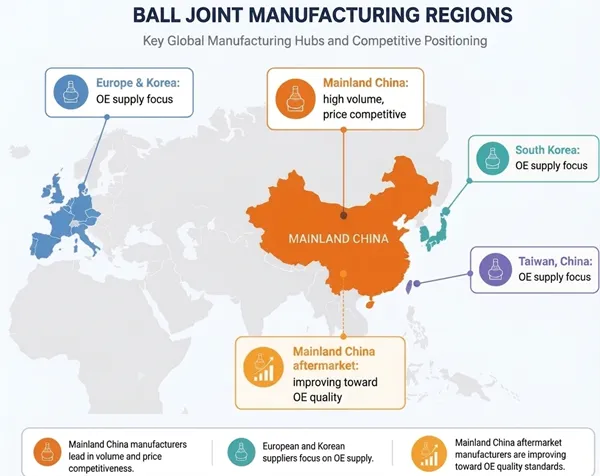
The real question is not where they are located. The real question is what quality system they operate under and what markets they serve.
China-Based Manufacturers
China produces the largest volume of aftermarket ball joints in the world. The range of quality is wide. Some factories operate with modern equipment, experienced engineers, and certified quality systems. Others cut corners on materials and skip testing. The price difference between the two can look small on paper. But the difference in product performance is significant.
I have seen importers switch to a cheaper Chinese supplier to save a few cents per piece, then deal with warranty claims that cost them ten times more. The lesson is always the same. Evaluate the factory, not just the price.
Manufacturers in China who serve serious aftermarket brands typically hold IATF16949 certification. They run fatigue tests, salt spray tests, torque tests, and pull-out force tests. They have labs inside the factory, not just certificates on the wall.
Taiwanese Manufacturers
Taiwan has a strong tradition in precision parts manufacturing. Some well-known aftermarket brands source from Taiwanese suppliers. Production volumes are generally smaller. Lead times can be longer. Pricing tends to be higher than Chinese factories at a similar quality level. For buyers who need very specific fitments or specialty applications, Taiwanese manufacturers are worth exploring.
European and Korean Manufacturers
These suppliers often focus on OE supply or premium aftermarket segments. Pricing is significantly higher. For large-volume aftermarket procurement, these suppliers are rarely competitive. But they can be relevant if your market positions itself at the high end and your customers are willing to pay the premium.
| Region | Strength | Typical Use Case |
|---|---|---|
| China | Volume, price, range | Global aftermarket, private label |
| Taiwan | Precision, reliability | Specialty fitments, niche brands |
| South Korea | OE alignment | Premium aftermarket, OE replacement |
| Europe | OE quality | High-end aftermarket, European vehicle focus |
What Manufacturing Processes Do Ball Joint Manufacturers Use?
The way a ball joint is made directly affects how long it lasts. Two ball joints can look identical and perform very differently depending on how they were produced.
Ball joints are made through forging or casting, followed by CNC machining, heat treatment, surface finishing, and final assembly. Forged ball joints generally offer higher strength and fatigue resistance.5 Casting works well for complex geometries. CNC machining ensures dimensional accuracy within tight tolerances.6
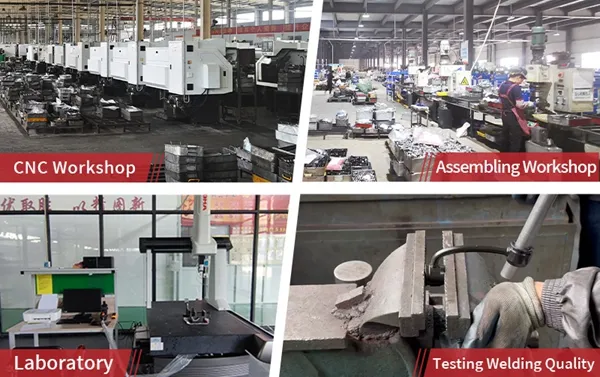
Understanding the manufacturing process helps you ask better questions and make better sourcing decisions.
Forging vs. Casting
Forging compresses metal under high pressure. This aligns the grain structure of the steel and creates a denser, stronger part.7 Forged ball joint housings and studs handle stress better over time. They are the preferred choice for heavy-duty and off-road applications.
Casting pours molten metal into a mold. It allows for more complex shapes and is often more cost-effective for certain designs. The key is that the casting must be done with the right alloy and proper process controls. A poorly cast ball joint will have internal voids and weak spots that you cannot see from the outside.8
At our factory, we use both processes depending on the application. Heavy-duty truck ball joints typically use forged components. Passenger car applications can use either, depending on the original OE specification.
CNC Machining and Dimensional Tolerances
After forming, every ball joint goes through CNC machining. This is where the part reaches its final dimensions. The stud diameter, taper angle, thread pitch, and housing bore all need to hit exact targets. We control dimensional tolerances within ±0.2 mm, which aligns with OE mold specifications.
Why does this matter to you? Because a ball joint that is even slightly out of spec will not install correctly. Your customers will notice the loose fit or the difficult installation. And they will blame your brand, not the factory.
Surface Treatment and Corrosion Protection
A ball joint lives under the vehicle. It is exposed to road salt, moisture, mud, and temperature changes. The surface treatment is what stands between the metal and the environment. Common treatments include zinc plating, black oxide coating, and grease sealing with quality grease compounds.
We test every batch through salt spray testing to confirm the coating holds up under simulated corrosion conditions. This step is often skipped at lower-tier factories. Ask your supplier for their salt spray test results.
| Process Stage | Purpose | Quality Check |
|---|---|---|
| Forging / Casting | Shape the base component | Visual and dimensional inspection |
| CNC Machining | Achieve final tolerances | Coordinate measuring machine (CMM) |
| Heat Treatment | Increase hardness and fatigue life | Hardness testing |
| Surface Treatment | Corrosion protection | Salt spray testing |
| Assembly | Join all components | Torque and angle testing |
| Final Inspection | 100% outgoing quality check | Pull-out force, visual, dimensional |
How Do Ball Joint Manufacturers Handle OEM and ODM Orders?
Many buyers come to manufacturers with a brand already built. They need parts that fit their catalog, carry their label, and arrive in their packaging. This is where OEM and ODM capability becomes critical.
Ball joint manufacturers with true OEM/ODM capability can produce parts based on your samples, drawings, or technical specs. They support private label packaging, custom branding, and catalog development. The best ones have in-house design teams and mold development capability to match exact OE fitment requirements.
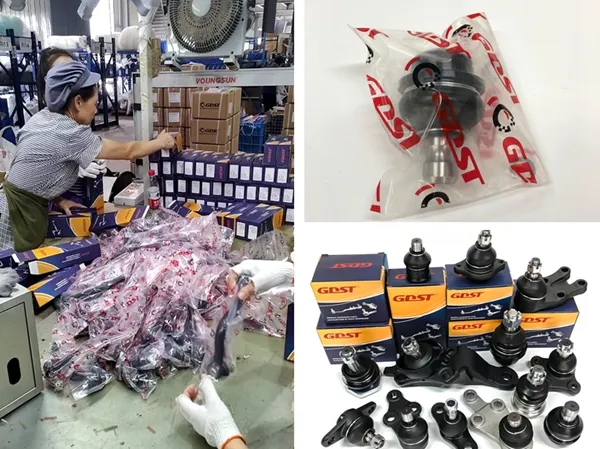
I have worked with buyers who come with nothing more than a sample and a target price. I have also worked with buyers who arrive with full engineering drawings and specific material requirements. Both situations are workable when the manufacturer has the right setup.
Sample-Based Development
If you have an existing part you want to replicate or improve, a capable manufacturer will measure it, reverse-engineer the specifications, develop a mold, and produce samples for your approval. This process takes time. Rush it, and the fitment will suffer. At our factory, we develop molds to OE specifications and verify every dimension before moving to production.
The approval process involves sending samples to you for test fitment on actual vehicles. You or your technical team confirms the fit, finish, and function. Only after your approval do we proceed to mass production.
Drawing-Based or Spec-Based Orders
Some buyers have engineering drawings from a previous supplier or from internal development. We can work directly from your drawings. If there are questions about material specifications or tolerance requirements, our engineering team will review and confirm before production starts.
Private Label and Packaging
For brands that sell under their own name, we support full private label solutions. This includes custom box design, barcode labeling, catalog number printing, and pallet arrangement. Our in-house design team can produce packaging artwork based on your brand guidelines. We also do contract packaging for customers who supply their own packaging materials.
| ODM Service | What We Provide |
|---|---|
| Sample matching | Reverse engineering and mold development |
| Drawing-based production | Engineering review and spec confirmation |
| Private label packaging | Custom box, label, barcode, catalog number |
| Mold development | OE-spec mold design and dimensional verification |
| Vehicle coverage expansion | New application development on request |
What Quality Tests Should Ball Joint Manufacturers Run?
Quality claims are easy to make. The tests behind those claims are what matter. If your supplier cannot tell you exactly what they test and show you the results, that is a problem.
Reliable ball joint manufacturers run a full battery of tests including pull-out force, compression force, torque testing, angle testing, hardness testing, salt spray testing, ozone resistance testing, and fatigue testing9. These tests confirm that the part meets performance standards under real-world conditions.
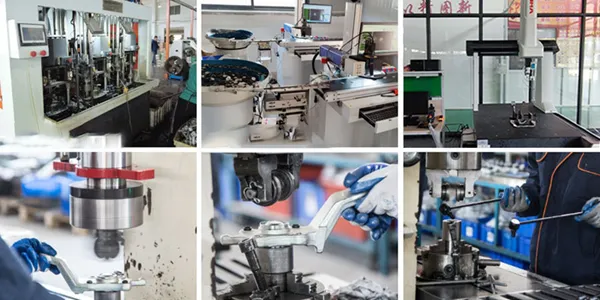
I want to walk you through each test and explain why it matters to your business.
Pull-Out and Compression Force Testing
This test measures how much force is needed to pull the ball stud out of the housing. It directly reflects the structural integrity of the joint. A ball joint with low pull-out force will fail prematurely under load. This is especially critical for heavy-duty and off-road applications where the suspension sees extreme stress.
Compression force testing measures the resistance to axial load. Both tests are run on samples from each production batch at our facility.
Torque and Angle Testing
Torque testing measures the resistance to rotation of the ball stud within the housing. Too little torque means the joint is loose. Too much torque means the steering feels stiff and the joint wears faster. The target range varies by application and matches OE specifications.
Angle testing confirms that the stud can move through the required range of motion without binding. This is important for vehicles with aggressive suspension geometry, including trucks and SUVs.
Salt Spray and Ozone Resistance Testing
Salt spray testing simulates exposure to road salt and moisture over time.10 A part that fails salt spray testing early will rust and seize in the field. This generates warranty claims and damages your brand reputation.
Ozone resistance testing focuses on the rubber boot11 that protects the grease inside the ball joint. If the boot cracks from ozone exposure, the grease escapes and the joint fails. We test boots to confirm they hold up under ozone conditions relevant to real-world use.
Fatigue Testing
Fatigue testing runs the ball joint through repeated cycles of load and movement.12 It simulates years of road use in a compressed timeframe. A part that passes fatigue testing will last through normal service life. This test is the most meaningful predictor of long-term field performance.
| Test Type | What It Measures | Why It Matters |
|---|---|---|
| Pull-out force | Structural integrity | Prevents premature failure under load |
| Compression force | Axial load resistance | Critical for heavy-duty applications |
| Torque testing | Rotation resistance | Affects steering feel and wear rate |
| Angle testing | Range of motion | Ensures correct function in suspension |
| Salt spray testing | Corrosion resistance | Reduces rust-related warranty claims |
| Ozone resistance | Boot durability | Prevents grease loss and joint failure |
| Fatigue testing | Long-term durability | Predicts real-world service life |
| Hardness testing | Material consistency | Confirms correct heat treatment |
Conclusion
Choosing the right ball joint manufacturer comes down to production capability, material traceability, quality testing, and OEM/ODM flexibility. The right partner protects your brand and keeps your customers coming back.
"IATF 16949 - Wikipedia", https://en.wikipedia.org/wiki/IATF_16949. The International Automotive Task Force (IATF) 16949 is a technical specification for quality management systems in the automotive sector, building on ISO 9001 and incorporating specific requirements for automotive suppliers regarding continuous improvement, defect prevention, and the reduction of variation and waste in the supply chain. Evidence role: definition; source type: institution. Supports: The source should define IATF 16949 and explain its role as the global quality management system standard for the automotive industry.. ↩
"ISO 9000 family - Wikipedia", https://en.wikipedia.org/wiki/ISO_9000_family. ISO 9001 is an international standard that specifies requirements for a quality management system (QMS). Organizations use the standard to demonstrate the ability to consistently provide products and services that meet customer and regulatory requirements. Evidence role: definition; source type: institution. Supports: The source should define the ISO 9001 standard and its general applicability to quality management in manufacturing.. ↩
"List of countries by motor vehicle production - Wikipedia", https://en.wikipedia.org/wiki/List_of_countries_by_motor_vehicle_production. Market analysis reports on the global automotive parts industry often identify the Asia-Pacific region, particularly China, as the dominant manufacturing hub in terms of volume and growth, with established centers also present in Europe and other parts of Asia. Evidence role: statistic; source type: research. Supports: The source should provide data or analysis on the key manufacturing regions for automotive aftermarket components.. Scope note: The source may discuss general auto parts rather than specifically ball joints, but the regional trends are likely to be similar. ↩
"[PDF] China's Growing Role in U.S. Automotive Supply Chains", https://www.usitc.gov/publications/332/working_papers/id-19-060_chinese_auto_parts_final_080519-compliant_0.pdf. Studies on the global automotive supply chain indicate that China is the largest producer of automotive components by volume, a position driven by lower labor costs, economies of scale, and extensive government support for the manufacturing sector. Evidence role: statistic; source type: research. Supports: The source should provide data showing China's significant share of the global automotive parts market and analysis of its cost advantages.. ↩
"[PDF] effect of forging surface on fatigue behavoir of steels: a literature ...", https://www.nrc.gov/docs/ML1516/ML15161A221.pdf. Metallurgical studies demonstrate that the forging process produces a refined grain structure and aligns the grain flow with the component's shape, which enhances mechanical properties such as tensile strength, impact toughness, and fatigue resistance compared to casting. Evidence role: mechanism; source type: paper. Supports: The source should explain why forging results in superior strength and fatigue life compared to casting.. ↩
"Computer numerical control - Wikipedia", https://en.wikipedia.org/wiki/Computer_numerical_control. Computer Numerical Control (CNC) machining is an automated manufacturing process that uses pre-programmed computer software to control the movement of factory tools and machinery. It enables the production of parts with extremely high precision and tight tolerances, which is critical for components requiring exact fitment. Evidence role: definition; source type: education. Supports: The source should define CNC machining and explain its importance for achieving high precision and repeatability in manufacturing.. ↩
"Forging - Wikipedia", https://en.wikipedia.org/wiki/Forging. In the forging process, the metal's grain structure is deformed to follow the contour of the part, a phenomenon known as grain flow. This directional alignment of grains eliminates internal voids and provides superior strength and toughness, particularly in response to impact and fatigue stresses. Evidence role: mechanism; source type: education. Supports: The source should explain the concept of grain flow in forging and how it contributes to the mechanical strength of the final product.. ↩
"17 Types of Casting Defects: Understanding Their Causes and ...", https://www.rapiddirect.com/blog/17-types-of-casting-defects/. Common defects in metal casting include gas porosity and shrinkage cavities, which are internal voids that can act as stress concentrators, significantly reducing the component's strength, ductility, and fatigue life. These defects are often not visible on the surface and require non-destructive testing methods for detection. Evidence role: definition; source type: paper. Supports: The source should describe common defects found in metal castings, such as porosity, shrinkage cavities, and inclusions.. ↩
"Suspension Damage: What To Look For - Universal Technical Institute", https://www.uti.edu/blog/collision/suspension-damage. Automotive industry standards, such as those from SAE International, specify a range of performance tests for suspension components like ball joints. These often include tests for rotational torque, axial and radial movement, pull-out and push-out strength, and durability through fatigue and environmental exposure testing. Evidence role: general_support; source type: institution. Supports: The source should describe the typical performance and durability tests required for automotive suspension components.. Scope note: A specific standard may not list every single test mentioned, but it will validate the types of tests performed. ↩
"Salt spray test", https://en.wikipedia.org/wiki/Salt_spray_test. ASTM B117 is a standard test method for operating a salt spray (fog) apparatus. It provides a controlled corrosive environment used to evaluate the relative corrosion resistance of coated and uncoated metallic specimens when exposed to a salt spray climate over an extended period. Evidence role: definition; source type: institution. Supports: The source should be the official standard or a description of it, explaining its purpose and procedure.. ↩
"Ozone cracking", https://en.wikipedia.org/wiki/Ozone_cracking. Standard test methods like ASTM D1149 are used to assess the resistance of vulcanized rubber to cracking when exposed to a controlled atmosphere containing a specific concentration of ozone. This is critical for predicting the service life of rubber components, such as boots and seals, that are exposed to the environment. Evidence role: definition; source type: institution. Supports: The source should describe the standard test method for evaluating the ozone resistance of rubber.. ↩
"Fatigue (material) - Wikipedia", https://en.wikipedia.org/wiki/Fatigue_(material). Fatigue testing is a form of mechanical testing that involves subjecting a material or component to repeated cyclic loading to determine its fatigue life or the number of cycles it can withstand before failure. This process is essential for predicting the long-term durability and reliability of components under real-world service conditions. Evidence role: definition; source type: education. Supports: The source should define fatigue testing and its purpose in mechanical engineering.. ↩