
Can a bad control arm cause tire wear? Yes. Because the control arm dictates the wheel’s position, a worn bushing or ball joint allows the wheel to tilt or wobble. This shifts your Camber and Toe angles, forcing the tire to drag or lean rather than roll flat, leading to rapid, uneven tread destruction.
If you’ve noticed your tires wearing unevenly or prematurely, the cause might not be your tires themselves. In fact, a bad control arm can be the culprit. In this article, we’ll explore how a bad control arm can cause tire wear and what you can do to fix it. Let’s dive right in.
How Does a Control Arm Affect Tire Wear
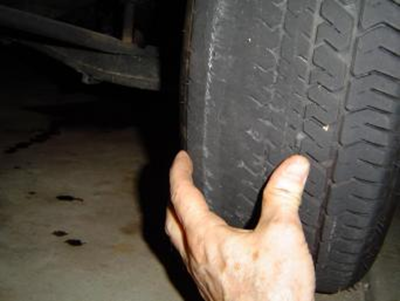
The control arm plays a vital role in keeping your vehicle’s wheels properly aligned. It connects the wheel hub to the car’s frame and allows the wheels to move up and down while maintaining the correct angles for safe handling.
When a control arm is damaged or worn out, it can throw off these angles, particularly the camber and toe alignment. This causes the tires to make uneven contact with the road, leading to irregular tire wear.
- Negative Camber (inward tilt) or Positive Camber (outward tilt) caused by a damaged control arm can cause the inner or outer edges of the tire to wear down much faster than the rest of the tire.
- Toe misalignment, where the tires point inwards or outwards, can cause excessive friction, leading to tire feathering and quicker wear.
Simply put, if the control arm isn’t functioning properly, it messes with the angles of the wheels, and that leads directly to uneven tire wear. This can shorten the lifespan of your tires and affect the handling of your car.
How a Bad Control Arm Eats Your Tires
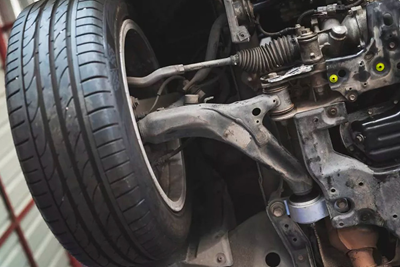
A failing control arm doesn’t just make noise—it messes with your wheel geometry. When the arm’s bushings or ball joints wear out, your tires stop sitting flat on the road. Here’s how that “bad posture” destroys your rubber:
1. Camber Misalignment (The Tilted Tire)
When a control arm loses its grip, the wheel tilts too far inward or outward.
- Inner Edge Wear: Usually caused by Negative Camber (tilting in).
- Outer Edge Wear: Caused by Positive Camber (tilting out).
2. Toe Misalignment (The Dragging Tire)
If the control arm is loose, your tires might point toward each other (Toe-in) or away (Toe-out). Instead of rolling smoothly, the tire “scuffs” sideways across the pavement.
- The Result: Feathering. Your tread blocks develop sharp edges that you can feel with your hand.
3. Caster & Stability (The Shaking Tire)
While Caster issues mostly affect steering “feel” and straight-line stability, extreme cases lead to inconsistent contact with the road, contributing to irregular wear patterns like Cupping.
At-a-Glance Summary
| Tire Symptom | Likely Alignment Culprit | What’s Happening? |
| Inside Edge Wear | Negative Camber | Wheel tilts in; inner tread takes all the heat. |
| Outside Edge Wear | Positive Camber | Wheel tilts out; outer shoulder wears bald. |
| Feathering | Toe Misalignment | The tire is dragging sideways like a pencil eraser. |
| Cupping | Suspension Instability | Tire “hops” and creates scooped-out bald spots. |
Symptoms of Tire Wear Caused by a Bad Control Arm

Uneven tire wear due to a bad control arm doesn’t happen without other signs. If your vehicle is showing any of the following symptoms, it’s time to take a closer look at the suspension system.
- Steering Wheel Vibrations: If you feel vibrations or wobbling through the steering wheel, it could indicate alignment issues caused by a bad control arm.
- Pulling to One Side: A bad control arm can cause the vehicle to pull to one side when driving straight. This can lead to uneven tire wear because one tire is working harder than the other.
- Uneven Tire Wear: This is the most obvious symptom. If the tread on your tires wears more on one side or if you notice bald spots, it’s a clear sign that your control arm or alignment needs attention.
- Clunking or Knocking Noises: If you hear a clunking noise when turning or going over bumps, it could mean the control arm bushings or ball joints are worn out, affecting the vehicle’s alignment and tire wear.
If any of these symptoms sound familiar, it’s time to schedule an inspection. Overlooking these issues could lead to more serious damage down the line and result in higher repair costs.
For a deeper dive into why control arms wear out, check out our article on What Causes Control Arms to Go Bad?.
Can You Prevent Tire Wear Caused by a Bad Control Arm?
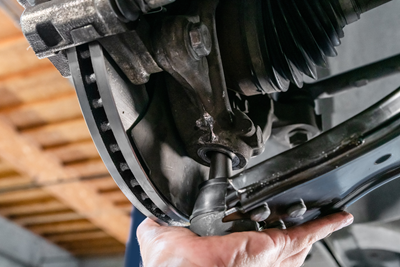
While you can’t always prevent a control arm from wearing out, there are steps you can take to reduce the risk of excessive tire wear caused by a bad control arm:
- Regular Inspections: One of the best ways to avoid control arm and tire wear issues is through regular vehicle inspections. By catching problems early, you can prevent further damage and keep your suspension system functioning properly.
- Wheel Alignment: Maintaining proper wheel alignment is crucial to keeping your tires in good shape. Even if your control arms are in good condition, misalignment can still cause uneven tire wear. Getting a wheel alignment every 12,000 miles (or as recommended by your vehicle’s manufacturer) can prevent many issues.
- Proper Driving Habits: Avoiding potholes, curbs, and rough roads can help reduce the strain on your suspension system. When your control arms and other suspension components are under less stress, they’re less likely to wear out prematurely.
To learn more about how to choose high-quality parts that will last longer, read our guide on How to Choose a Reliable Control Arm Manufacturer.
Need to replace your control arm? We offer high-quality control arms at factory-direct prices.
How to Fix Tire Wear Issues Caused by a Bad Control Arm
If you discover that your control arm is causing uneven tire wear, the best solution is to replace the damaged part and restore proper alignment. Here’s what the repair process typically involves:
- Inspection: A mechanic will inspect your control arm and other suspension components to determine if they’re damaged or worn out. They’ll also check for signs of alignment problems.
- Control Arm Replacement: If the control arm is faulty, it will need to be replaced. In many cases, the ball joints and bushings also need to be replaced along with the control arm to ensure everything functions properly.
- Alignment: After replacing the control arm, the vehicle will need a wheel alignment. This will ensure that the camber, caster, and toe angles are correctly adjusted to prevent further tire wear.
- Follow-Up Inspection: After the repair, it’s a good idea to have a follow-up inspection to make sure everything is aligned correctly and that the new control arm is functioning as it should.
For a better understanding of the costs involved, check out our article on How Much Does Control Arm Replacement Cost?.
Conclusion
A bad control arm can significantly impact your vehicle’s alignment, leading to uneven tire wear and potentially unsafe driving conditions. Regular maintenance and timely repairs can help prevent these issues and save you money on unnecessary tire replacements.
If you’re experiencing issues with tire wear or suspect a problem with your control arm, contact the GDST team today. We offer expert diagnosis, top-quality replacement parts, and unbeatable service to get you back on the road safely.
For a complete overview of suspension control arms, check our Complete Control Arm Guide.
Related Control Arm Guides
- How to Replace a Control Arm?
- Function of a Control Arm in a Car
- Where Is the Control Arm Located?
- What Causes Control Arms to Go Bad?
- Can You Drive with a Bad Control Arm?
- Symptoms of a Bad Control Arm
FAQ
Surprisingly fast. If the bushing is completely torn, you can see noticeable “inner cord” wear in as little as 500 to 1,000 miles. It’s like dragging your tire across a cheese grater instead of letting it roll.
Absolutely. Putting new tires on a car with bad control arms is like putting a fresh coat of paint on a crumbling wall. The “bad geometry” will start carving into that expensive new rubber the second you leave the parking lot.
While shocks are the usual suspect for cupping, an extremely loose control arm ball joint allows the wheel to vibrate and “hop” at high speeds. This inconsistent contact with the road creates those weird, scooped-out bald spots.
If you catch it early and fix the control arm immediately, a tire rotation might help “even out” the wear over time. But if the steel belts are showing or the “feathering” is deep, that tire is a safety hazard and needs to go.