
Wishbone Control Arms Manufacturer for Global Aftermarket Supply

- MOQ
- 50pcs/Per Model
- Price
- $10-$30
- Warranty
- 1 Year From Receipt of Goods
- Delivery Time
- 45-55 Days
- Customization
-
- Customized Logo
- Customized Packaging
- ODM/Sample Development
ISO9001 Certified
Fast Delivery
OEM/ODM
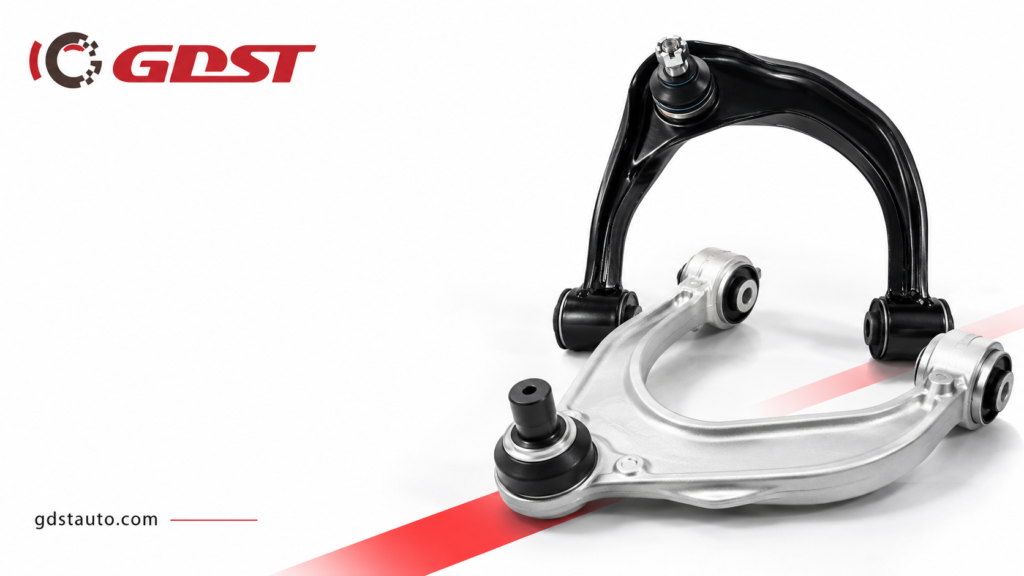
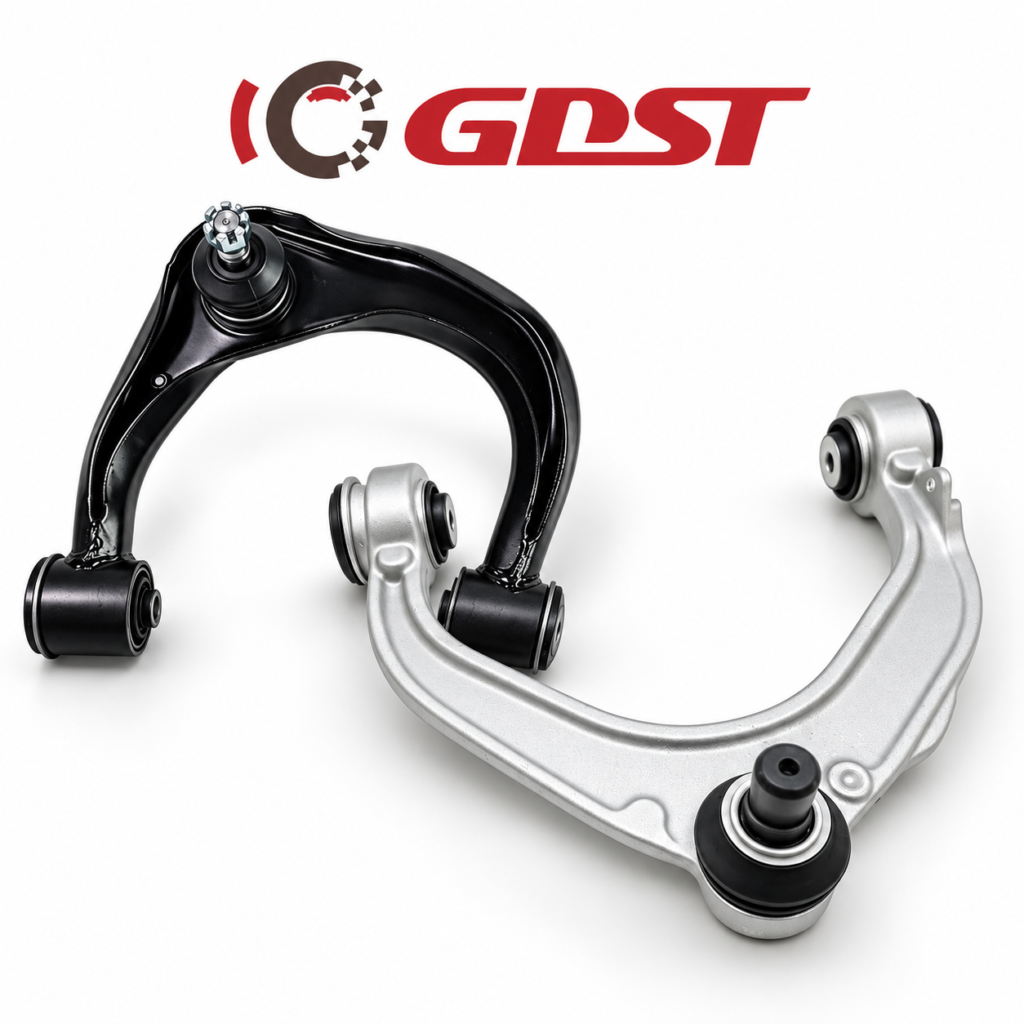
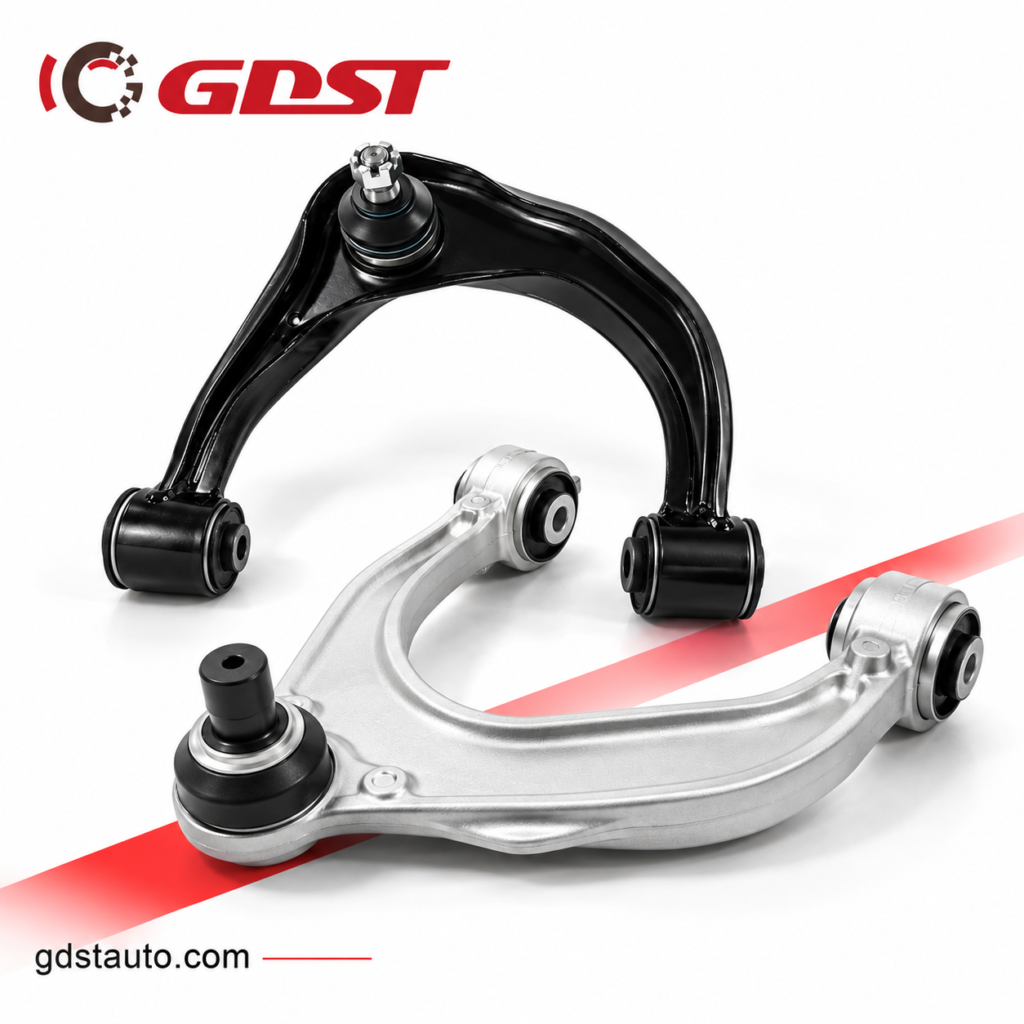
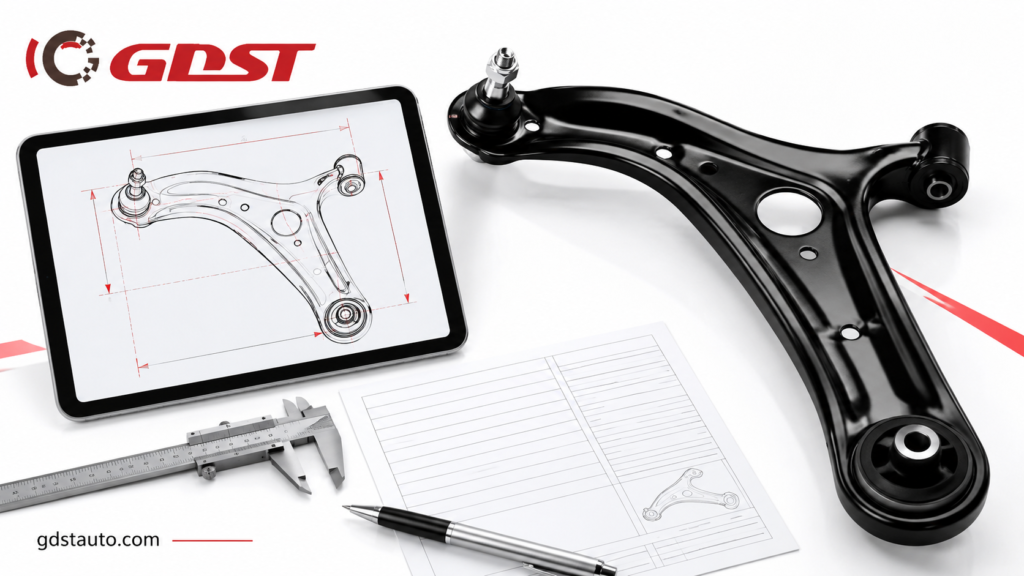
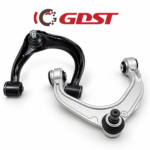
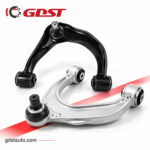
Our broader control arm range covers different arm geometries, installation positions, material options, and assembly configurations. For buyers sourcing wishbone control arms, we support product identification through OE/OEM reference numbers, vehicle information, technical drawings, and product photographs.
From part identification and dimensional requirements to outgoing inspection and packaging checks, our approach focuses on confirming the requirements of the specific product rather than treating every control arm as an interchangeable component.
|
Car Brand |
OEM NO. |
|
NISSAN |
54524-VW100 |
|
NISSAN |
54500-VW000 |
|
NISSAN |
54525-2S686 |
|
MITSUBISHI |
MB175545 |
|
MITSUBISHI |
MB527161 |
|
MITSUBISHI |
4010A013 |
|
MAZDA |
GJ6A-34-250B |
|
TOYOTA |
48068-0K040 |
|
TOYOTA |
48067-29075 |
|
SUZUKI |
45200-60A00 |
Aftermarket Wishbone Control Arms for Different Vehicle Applications
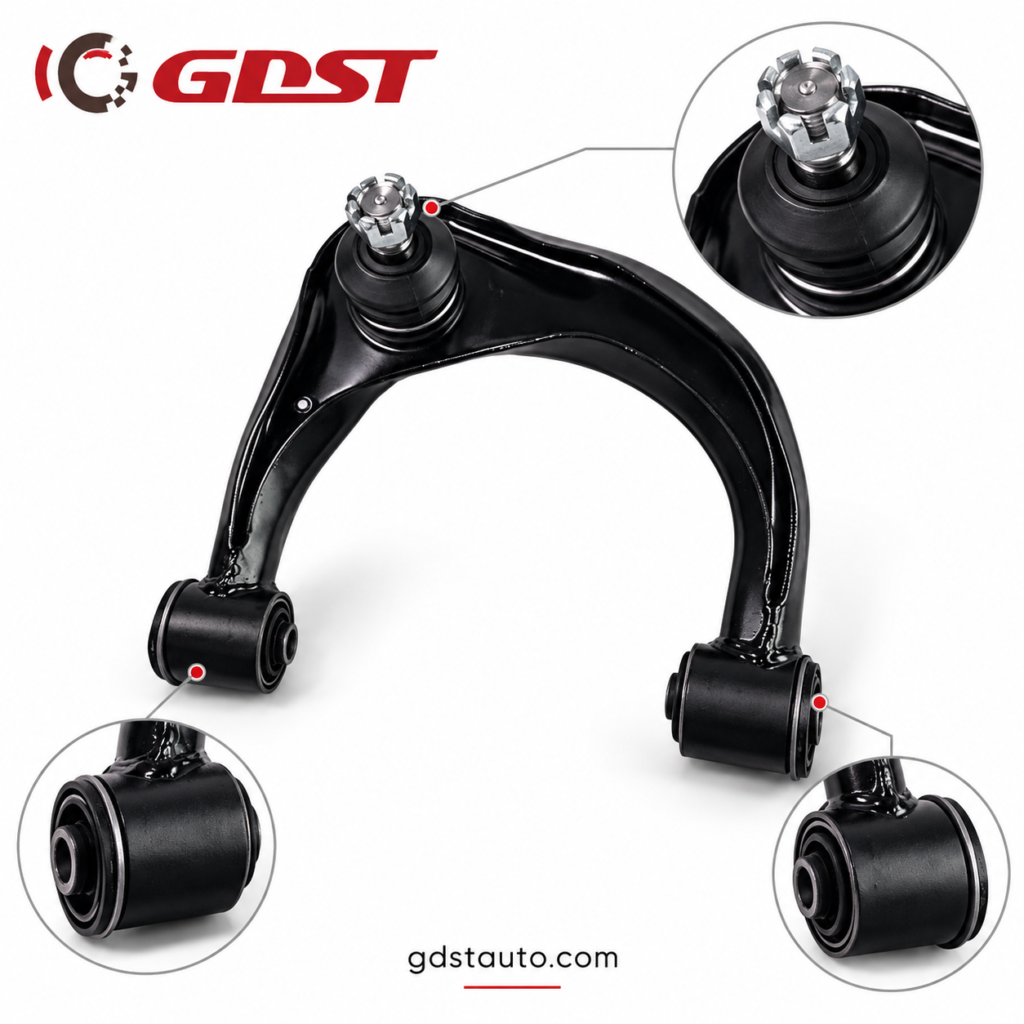
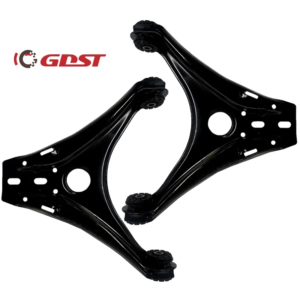
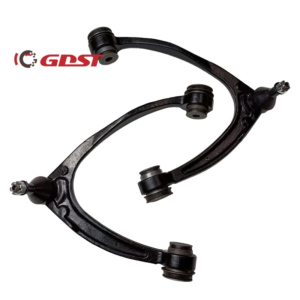
A wishbone control arm is a type of suspension control arm commonly characterized by an A-shaped or forked layout. It connects the vehicle structure to the wheel carrier or steering knuckle and helps control wheel movement throughout suspension travel.
The terms wishbone, control arm, suspension arm, and track control arm may overlap in automotive catalogs, although the precise component design and application vary by vehicle.
For aftermarket sourcing, the correct product must be identified by its intended installation position, mounting geometry, joint configuration, and applicable OE/OEM reference.
GDST’s broader control arm offering includes different product geometries and assembly configurations. The availability of a particular wishbone control arm should be confirmed against the requested part reference and vehicle application.
Product Types and Assembly Configurations
|
Product category |
Typical configuration |
Information to confirm |
|
Upper wishbone control arms |
Upper suspension position |
Vehicle application, mounting geometry, and OE reference |
|
Lower wishbone control arms |
Lower suspension position |
Installation position, mounting interfaces, and OE reference |
|
Front control arms |
Front suspension application |
Left/right side and applicable vehicle variant |
|
Rear control arms |
Rear suspension application |
Rear suspension layout and mounting interfaces |
|
Steel control arms |
Steel construction according to the product design |
Material specification and applicable manufacturing process |
|
Aluminum control arms |
Aluminum construction where specified |
Material grade, geometry, and application requirements |
|
Control arms with bushings |
Arm supplied with specified bushing configuration |
Bushing dimensions, material, and included components |
|
Complete control arm assemblies |
Arm supplied with selected joints or hardware |
Ball joint, bushings, fasteners, and packaging contents |
Not every material or assembly configuration is available for every vehicle application. Please confirm the requested configuration before ordering.
Double Wishbone Control Arms: Understanding Upper and Lower Applications
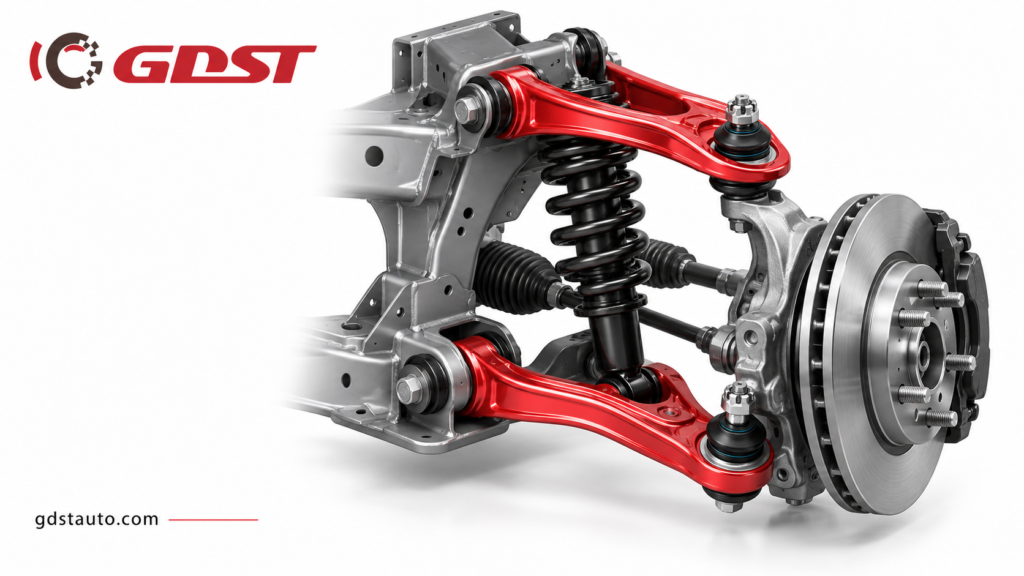
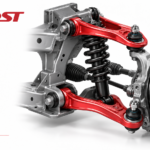
A double-wishbone suspension system uses upper and lower suspension arms to locate the wheel and control its movement. The geometry and joint constraints of the suspension influence its kinematic response to steering inputs and road-induced wheel movement [1][2].
The term double wishbone describes the suspension architecture rather than one universal component design. Upper and lower arms can differ in shape, mounting interfaces, dimensions, and included joints.
For aftermarket sourcing, this distinction matters because a component’s suitability cannot be established by its general appearance alone. Its mounting geometry and relationship to the surrounding suspension components must match the intended vehicle application.
- Upper or lower installation position.
- Front or rear suspension application.
- Left-hand or right-hand side, where applicable.
- Vehicle make, model, production year, and relevant variant.
- OE/OEM reference number or verified cross-reference.
- Mounting geometry and component configuration.
A visually similar arm is not necessarily interchangeable with the original component. Fitment should be established through the applicable part reference and technical information.
Send Your OE/OEM Number to begin a part identification enquiry.
Lower Control Arm Wishbone: Confirm the Correct Replacement
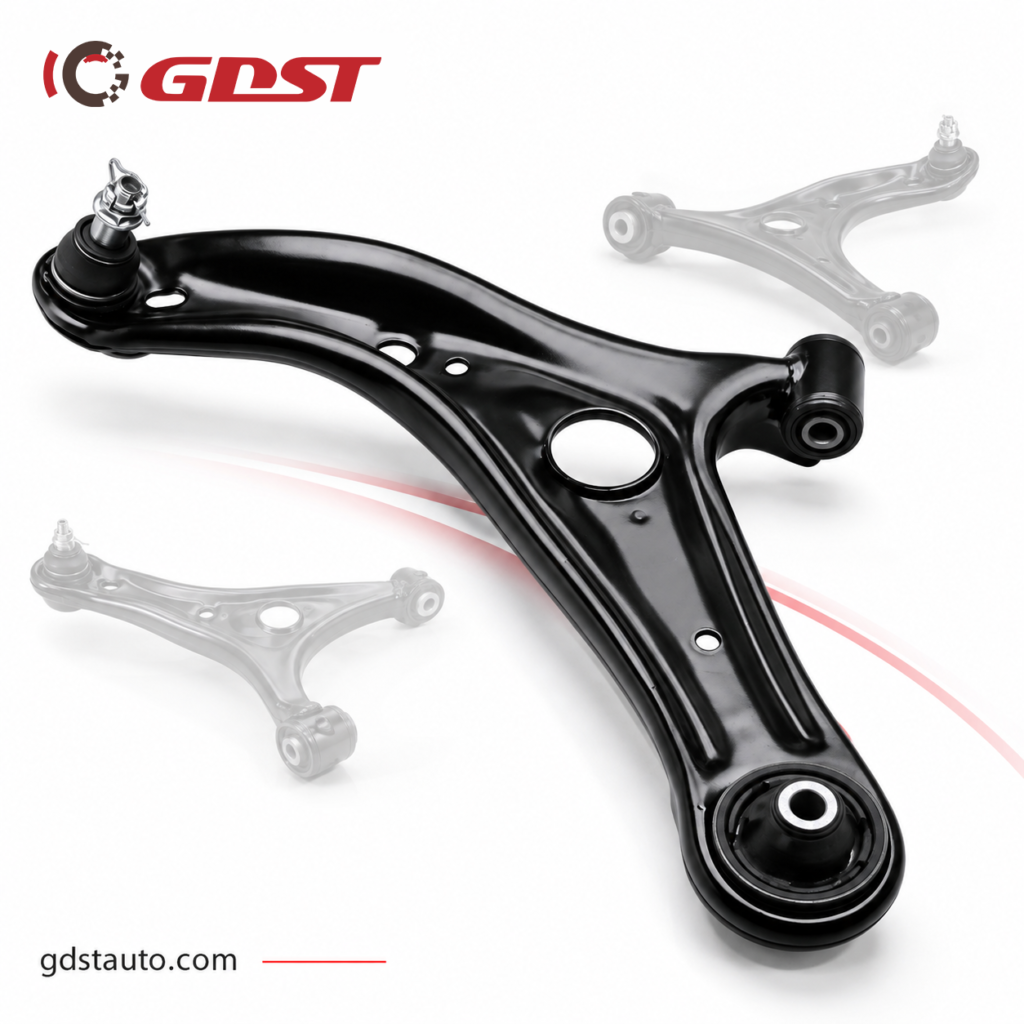
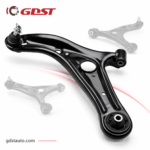
Lower control arm wishbones are application-specific components. Their shape, mounting interfaces, bushing dimensions, and joint configuration depend on the vehicle’s suspension design.
For distributors and importers, accurate identification helps prevent mismatches when introducing new SKUs, comparing suppliers, or maintaining an aftermarket product catalog.
To identify a lower wishbone control arm, provide as much of the following information as possible:
- OE/OEM reference number.
- Vehicle make, model, and production year.
- Engine, trim, and drivetrain details where relevant.
- Front or rear installation position.
- Left-hand or right-hand side.
- Upper or lower position.
- Product photographs or technical drawings.
- Known mounting dimensions and joint specifications.
If the original part number is unavailable, photographs and dimensional information can help start the identification process. Final fitment should be confirmed against the appropriate product reference and controlled technical information.
Wishbone Control Arm Specifications and Fitment Information
There is no single set of dimensions that applies to every wishbone control arm. Geometry, material properties, and other design variables can influence structural response and fatigue-life predictions, making product-specific engineering requirements important [6].
The following fields should be maintained for each SKU and checked against the applicable drawing or verified reference data.
|
Specification field |
Information to record |
Purpose |
|
Product reference |
GDST SKU or supplier part number |
Identifies the specific product |
|
OE/OEM reference |
Original equipment number or verified cross-reference |
Supports identification and catalog matching |
|
Vehicle application |
Make, model, year, engine, and relevant variant |
Helps establish compatibility |
|
Installation position |
Front/rear, upper/lower, left/right where applicable |
Prevents position and side mismatches |
|
Arm material |
Specified steel, aluminum, or other applicable material |
Defines the product’s material requirements |
|
Mounting geometry |
Pivot locations, hole positions, and drawing-defined dimensions |
Supports fitment verification |
|
Ball joint |
Thread, taper, mounting arrangement, and inclusion status |
Confirms joint configuration |
|
Bushings |
Inner/outer dimensions, position, and inclusion status |
Confirms the mounting interface |
|
Overall dimensions |
Drawing-defined length, height, center distance, and other critical dimensions |
Supports dimensional verification |
|
Surface treatment |
Specified coating or corrosion-protection process |
Defines the required surface finish |
|
Packaging |
Product identification, labels, shipping marks, and packaging configuration |
Supports distribution and order identification |
|
Quality documentation |
Applicable inspection records and material documentation |
Supports supplier qualification |
Manufacturing and assembly variations can influence vehicle dynamic behavior, so critical dimensions and tolerances should be defined according to the relevant design rather than assumed to be universal [7].
Actual dimensions, units, tolerances, and component configurations must be confirmed for the specific SKU. Values from one inspection report must not be applied to another control arm without verification.
Dimensional Inspection: A Model-Specific Example
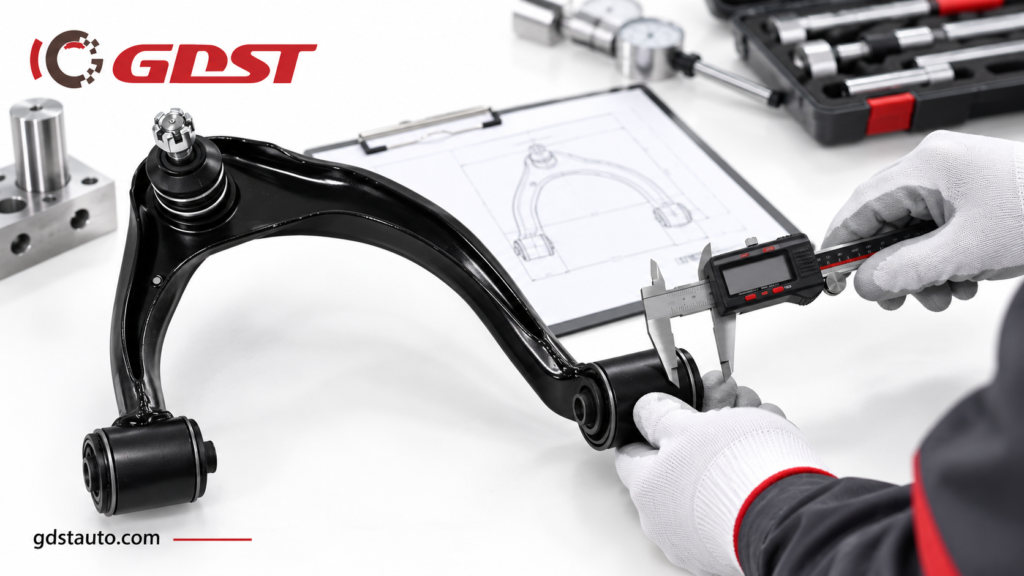
Dimensional inspection helps verify that a control arm meets its specified geometry and component requirements.
An outgoing inspection record for control arm model (48068/9-B1010) includes the following bushing dimensions and center-distance requirements.
|
Inspection characteristic |
Requirement recorded |
|
Small-to-large bushing center distance |
295 ± 1.5 |
|
Small bushing inner diameter |
φ12.2 ± 0.2 |
|
Small bushing outer diameter |
φ64 ± 0.2 |
|
Large bushing inner diameter |
φ17 ± 0.2 |
|
Large bushing outer diameter |
φ62.4 ± 0.3 |
Technical note: These values are transcribed from one model-specific outgoing inspection record. The source sheet does not explicitly print the measurement unit for these dimensions. The unit, drawing revision, and applicability must be confirmed before the values are used for fitment decisions or published as a technical specification.
The example demonstrates why control arm dimensions should be managed by individual product reference rather than presented as universal specifications. Research into suspension dimensional variation also supports identifying critical tolerances according to their influence on the relevant suspension design and vehicle behavior [7].
Materials, Bushings, Ball Joints, and Assembly Options
Control arm construction varies with the vehicle application and engineering requirements of the component.
Arm construction: Depending on the design, control arms may use stamped steel, forged steel, or forged aluminum construction. The appropriate material and process must be established for the relevant application.
Bushings: Bushings connect the arm to its mounting structure and permit controlled movement. Their material, stiffness, and geometry depend on the vehicle and product design.
Ball joints: Where used, ball joints connect the arm to the steering knuckle or wheel carrier and allow the required articulation. The joint’s mounting method and configuration are application-specific.
Research on suspension bushings has shown that bushing stiffness and nonlinear characteristics influence predicted ball-joint travel, while dynamic stiffness can vary with loading frequency and amplitude [3][4]. These findings help explain why the correct bushing configuration matters when identifying a complete control arm assembly.
Complete assemblies: Some control arms are supplied with bushings, ball joints, or mounting hardware already installed. Others may be supplied in a different configuration.
For each quotation, GDST should confirm whether the requested product is a bare arm or a complete assembly, and list the components included in the supply.
This helps distributors maintain accurate catalog descriptions and reduces confusion between visually similar but differently configured parts.
Outgoing Quality Inspection for Control Arms
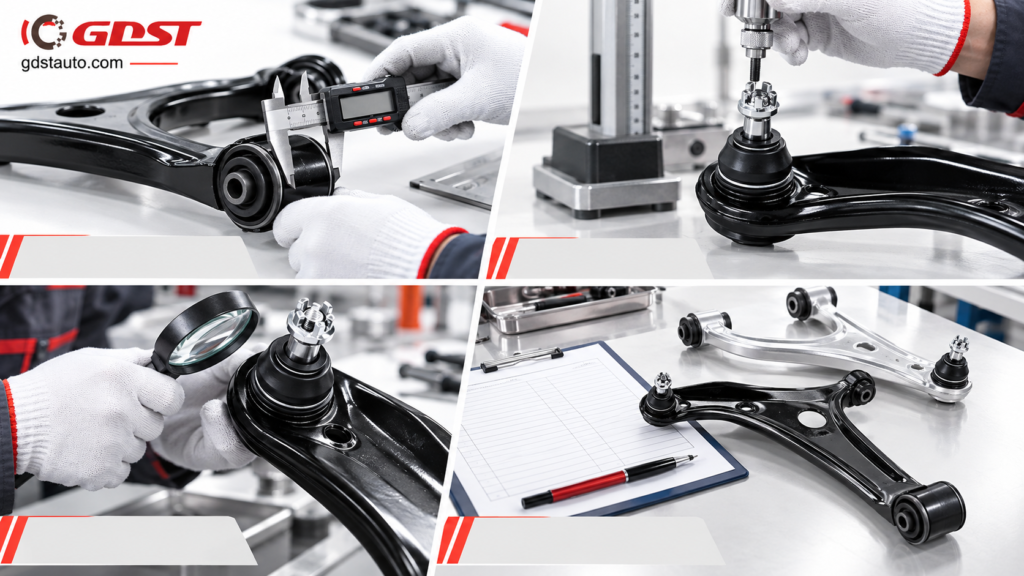
Outgoing inspection records for selected control arm models include checks covering appearance, assembly, dimensions, fastening interfaces, torque, surface treatment, and packaging.
The specific inspection plan depends on the product design and applicable requirements.
|
Inspection category |
Example of recorded requirement |
Inspection method or record |
|
Appearance |
No impact damage, rust, or other visible defects |
Visual inspection |
|
Dust boot assembly |
Correct installation and no visible damage |
Assembly and visual check |
|
Surface treatment |
Black electrophoretic coating for the specified models |
Surface-treatment check |
|
Thread or ball-joint size |
Examples include M16 × 1.5 and M12 × 1.25 |
Specified thread or dimensional measurement |
|
Bushing dimensions |
Model-specific inner and outer diameters |
Appropriate dimensional measuring equipment |
|
Mounting geometry |
Drawing-defined center distances, height, and overall length |
Dimensional inspection |
|
Torque |
A recorded requirement of 2–7 N·m for the relevant models |
Torque meter |
|
Packaging |
Marking, labels, shipping marks, and packaging condition |
Packaging instruction and final check |
In the supplied examples, the listed inspection items are recorded as acceptable, and the reports conclude that the respective batches passed inspection and were approved for dispatch.
These are examples of checks recorded for specific control arm models. They should not be interpreted as proof that every SKU uses an identical inspection plan or that all products have undergone unlisted fatigue, corrosion, or vehicle-level tests.
Fatigue assessment is a separate engineering activity. Published research on a steel lower control arm demonstrates how component-level fatigue simulations can be evaluated against durability tests, including crack locations and fatigue-cycle predictions [5]. This supports the importance of appropriate durability validation, but it does not establish that GDST’s products have undergone the same tests.
Request Quality Information to discuss the inspection and documentation requirements applicable to your target products.
Material Documentation and Traceability
Material documentation and finished-product inspection provide different types of quality evidence.
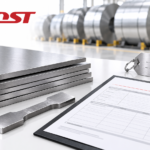
For applicable products, material records may include the steel grade, supplier certificate number, coil or heat identification, chemical composition, tensile properties, and bend-test results. These records can help buyers review material specifications and traceability when the documentation is available and linked to the relevant production batch.
The supplied raw-material certificate identifies SAPH400-P hot-rolled pickled steel sheet and records mechanical properties and bend-test results for the documented material batch. However, the available certificate does not establish a traceable connection to the four control arm models shown in the supplied outgoing inspection reports.
Accordingly, the certificate should not be presented as proof that all GDST wishbone control arms use SAPH400-P steel.
For supplier qualification or a specific sourcing project, buyers can request confirmation of the available material documentation and the applicable inspection records for the selected SKU.
Manufacturing, Assembly, and Quality Requirements
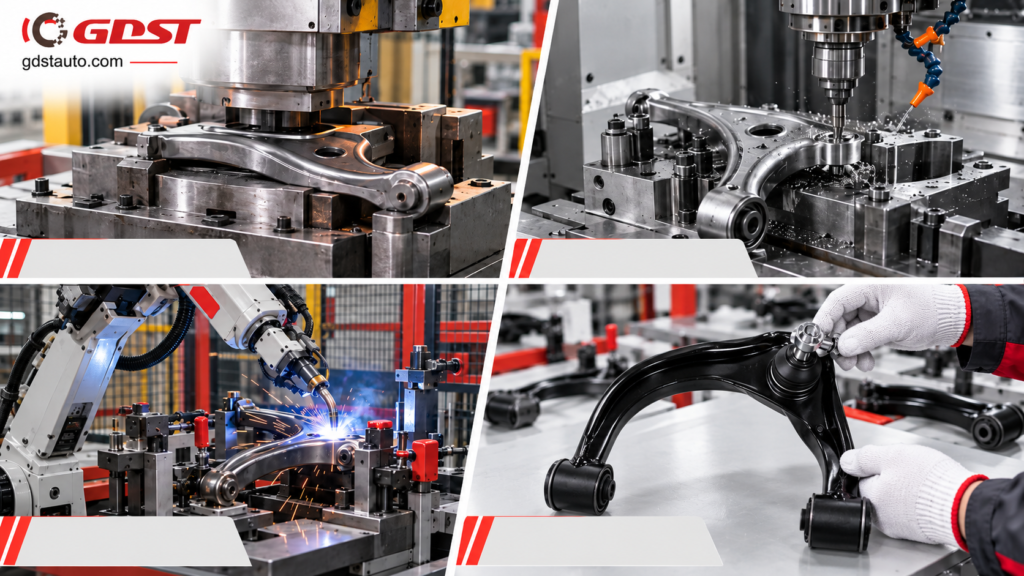
Consistent product quality depends on controlling the manufacturing process and verifying the characteristics that matter for each design.
For control arms, relevant requirements may include:
- Material and incoming-component verification.
- Forming, machining, or welding requirements where applicable.
- Mounting-interface and dimensional checks.
- Bushing and ball-joint assembly verification.
- Surface-treatment inspection.
- Final appearance and packaging checks.
The appropriate durability assessment also depends on product construction. Research on lower control arms shows how fatigue-life predictions can be evaluated using component-level models and experimental durability results [5][6]. Studies of suspension dimensional variation further support identifying the critical tolerances relevant to the design [7].
These publications explain engineering methods and general relationships; they do not independently verify the performance of GDST products.
Any specific claim about fatigue life, corrosion-test duration, load capacity, or other performance results should be supported by the applicable product test method and report.
GDST can discuss the product-specific inspection requirements needed for your aftermarket sourcing program and confirm which supporting records are available.
OEM and Private-Label Wishbone Control Arm Supply
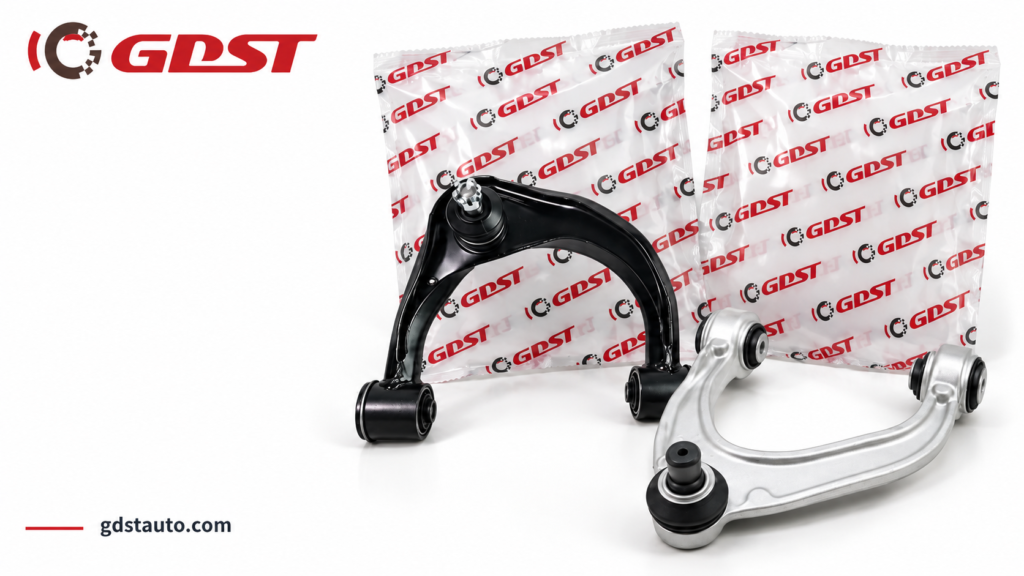
For aftermarket brands and distributors, sourcing involves more than selecting a component. Accurate product identification, packaging, labeling, and consistent order requirements also matter.
GDST’s broader control arm offering lists OEM-related services, including customized branding and packaging options. The availability and commercial terms of these services should be confirmed for the requested product and order.
Potential requirements to discuss include:
- Product identification and reference management.
- Private-label branding and packaging.
- New product development based on an agreed reference, drawing, or sample.
- Packaging and labeling requirements for export shipments.
- Agreed inspection criteria and documentation.
- Product configuration and included components.
For a new product project, provide the available OE/OEM reference, technical drawing or sample, target application, expected quantity, and packaging requirements.
B2B Sourcing Information for Wishbone Control Arms
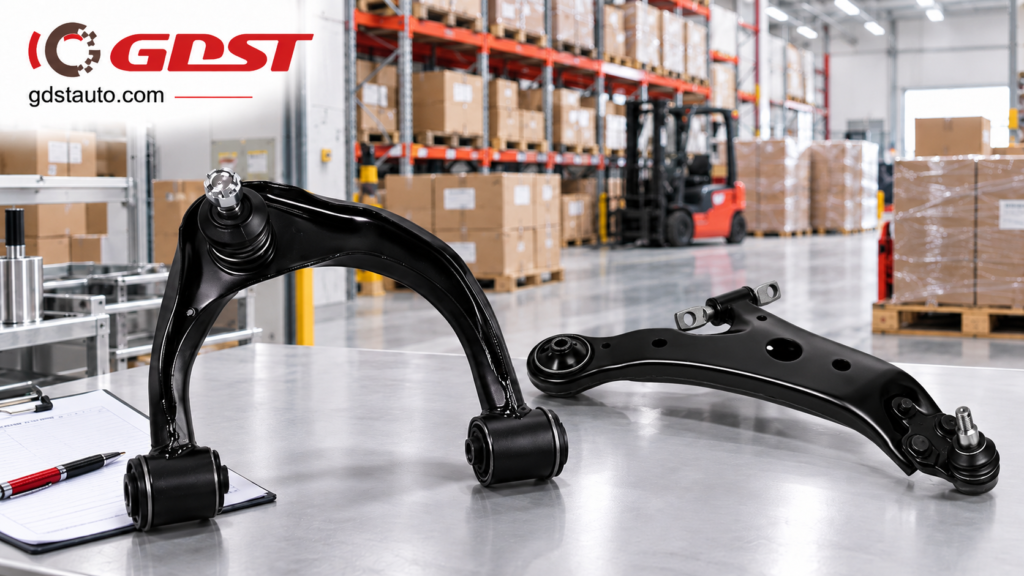
GDST’s broader control arm page has published general sourcing information, including a model range of 3,000+, an MOQ of 50 pieces per model, a standard lead time of 45 days, and a one-year warranty.
These figures relate to the broader control arm program and must be reconfirmed for the specific wishbone product, order quantity, production schedule, and applicable warranty terms.
|
Commercial item |
Information to confirm |
|
Product availability |
Whether the requested wishbone SKU is available or requires development |
|
MOQ |
Minimum quantity for the specific model |
|
Lead time |
Production schedule based on quantity and current capacity |
|
Product configuration |
Arm, bushings, ball joint, and hardware included |
|
Inspection documentation |
Applicable dimensional and material records |
|
Private-label requirements |
Packaging, artwork, labeling, and minimum order conditions |
|
Warranty |
Applicable terms, coverage, and conditions |
For a more accurate quotation, provide the part references, expected order quantity, target market, and any special product or packaging requirements.
Frequently Asked Questions About Wishbone Control Arms
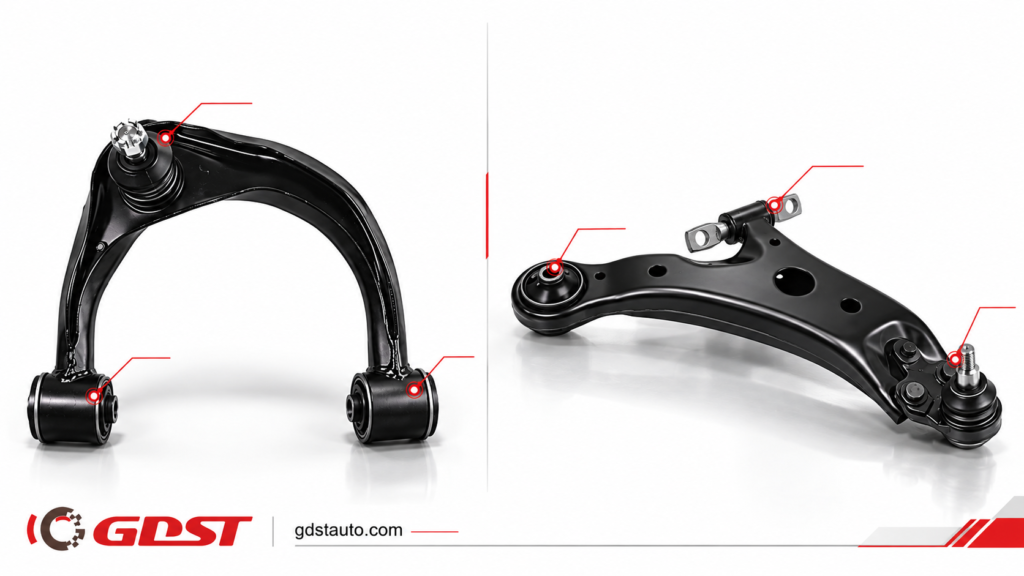
Are a wishbone and a control arm the same thing?
A wishbone is generally a type of suspension control arm characterized by an A-shaped or forked layout. Control arm is the broader term, and not every control arm has a wishbone shape.
What is a double wishbone control arm?
The term generally refers to a control arm used in a double-wishbone suspension system. That system uses upper and lower arms to locate the wheel. The exact component design depends on the vehicle application.
What is the difference between an upper and a lower wishbone?
Upper and lower arms occupy different positions in the suspension assembly and can have different geometries, mounting interfaces, and component configurations. The correct part must be confirmed using the vehicle application and OE/OEM reference.
Can one control arm’s dimensions be used for another model?
No. Dimensions and tolerances are model-specific. A similar-looking component may have different mounting distances, bushing dimensions, or joint interfaces.
Do control arms come with bushings and ball joints?
That depends on the part number and supply configuration. Confirm whether the quoted product is a bare arm or a complete assembly and identify which bushings, ball joints, and mounting hardware are included.
Can GDST provide dimensional inspection records?
Applicable inspection documentation should be confirmed for the requested SKU and order. Available records may cover selected dimensions, thread requirements, assembly checks, surface treatment, torque, and packaging.
Does a material certificate prove the performance of a finished control arm?
No. A material certificate records properties of the specified raw material. Finished-product performance requires the relevant component inspection or performance-test evidence.
Does black electrophoretic coating establish a specific corrosion-test rating?
Not by itself. A coating description does not establish a particular salt-spray duration or corrosion-resistance result. Any numerical corrosion claim must be supported by the applicable test report.
What information is needed to identify a lower wishbone control arm?
Provide an OE/OEM reference number whenever possible. If unavailable, supply the vehicle make, model, year, relevant variant, installation position, and clear product photographs or technical drawings.
What are the MOQ and lead time for GDST control arms?
The broader control arm page has published an MOQ of 50 pieces per model and a standard lead time of 45 days. Confirm current terms for the requested wishbone SKU, order quantity, and production schedule.
Request a Wishbone Control Arm Quotation
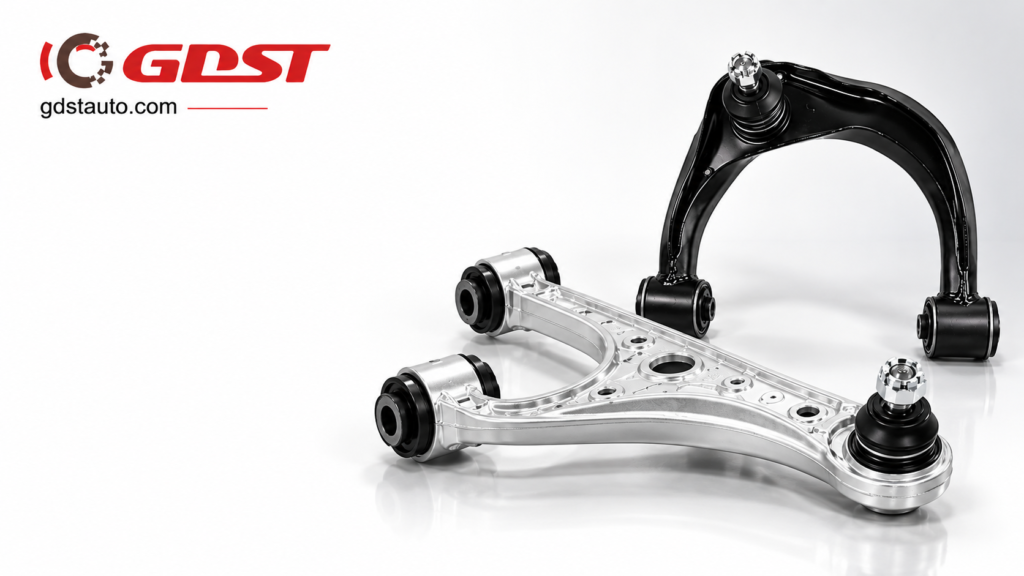
Looking for a wishbone control arm supplier for your aftermarket catalog?
Send GDST your OE/OEM references, vehicle applications, estimated quantities, product photographs, or technical drawings. Include any dimensional, assembly, packaging, or inspection requirements that matter to your sourcing program.
Our team can review the available information, confirm the applicable product configuration, and discuss quotation and supply requirements.
Technical References
[1] Reddy, K. V., Kodati, M., Chatra, K., & Bandyopadhyay, S. (2016). A comprehensive kinematic analysis of the double wishbone and MacPherson strut suspension systems. Mechanism and Machine Theory, 105, 441–470. Read the paper
[2] De-Juan, A., et al. (2010). Kinematic design of double-wishbone suspension systems using a multiobjective optimisation approach. Vehicle System Dynamics, 48(7), 793–813. Read the paper
[3] Yang, X. (2011). Effects of bushings characteristics on suspension ball joint travels. Vehicle System Dynamics, 49(1–2), 181–197. Read the paper
[4] Chen, H., Lu, C., & Liu, Z. (2025). Parameter identification and NVH characteristic analysis of automotive suspension rubber bushing. Proceedings of the Institution of Mechanical Engineers, Part D: Journal of Automobile Engineering, 239(8). First published online in 2024. Read the paper
[5] Gonçalves Junior, L. A., et al. (2024). A high cycle fatigue numerical framework for component-level virtual fatigue testing: Application to a light-duty vehicle lower control arm. Engineering Structures, 311, 118198. Read the paper
[6] Abebe, M., & Koo, B. (2023). Fatigue Life Uncertainty Quantification of Front Suspension Lower Control Arm Design. Vehicles, 5(3), 859–875. Read the paper
[7] Botosso, A. C., & Vilela, D. (2014). Suspension Dimensional Variation Influence on the Vehicle Dynamic Behavior. SAE Technical Paper 2014-36-0171. Read the paper
Quality Assurance
Every product undergoes rigorous testing and inspection to ensure reliability and performance
Material Inspection
Premium steel from certified suppliers with full traceability
Performance Testing
Fatigue, torque, and stress testing per OE standards
Dimensional Control
Tolerance control for precise OE fitment
Final Inspection
100% inspection before shipment