
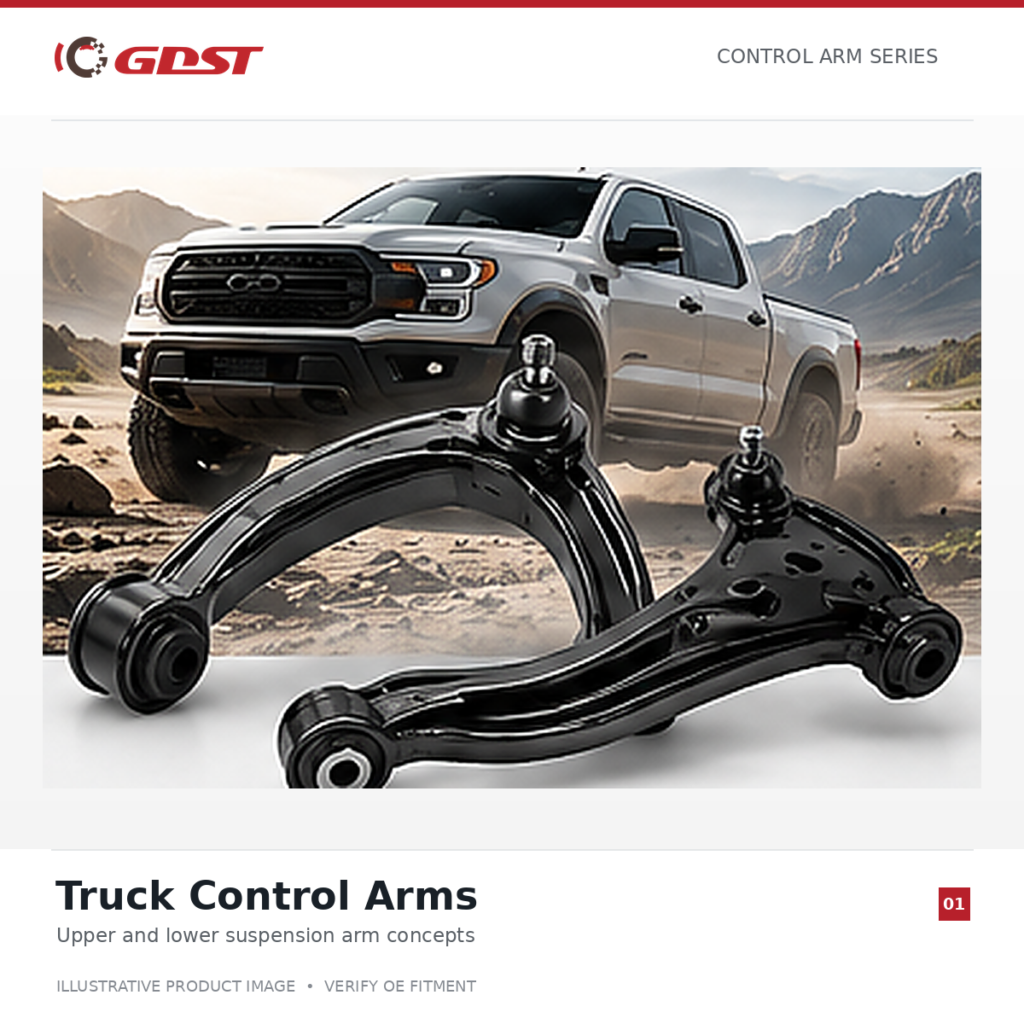
Truck Control Arms – Upper & Lower Suspension Arms for Pickup Trucks
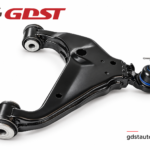
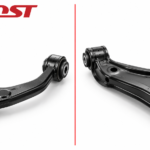
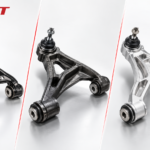
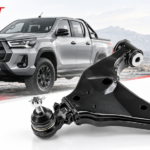
- MOQ
- 50pcs/Per Model
- Price
- $10-$30 per piece
- Warranty
- 1 Year From Receipt of Goods
- Delivery Time
- 45Days
- Customization
-
- Customized Logo
- Customized Packaging
- ODM/Sample Development
ISO9001 Certified
Fast Delivery
OEM/ODM
OE-Reference Matching | Documented Quality Inspection | OEM & Wholesale Supply
Wuhu GDST Auto Parts Co.,Ltd supplies upper and lower truck control arms for automotive aftermarket distributors, importers, wholesalers, and private-label brands worldwide.
Our product range includes OE-standard replacement control arms, vehicle-specific suspension arms, and complete control arm assemblies for supported pickup trucks, SUVs, and light commercial vehicles.
With manufacturing resources and a network of automotive parts production partners in China, GDST supports OE-reference matching, technical specification reviews, quality inspection, custom packaging, and international wholesale supply.
Our approach combines three important priorities: correct vehicle fitment, clearly defined product specifications, and documented quality verification.
Whether you are sourcing replacement upper control arms, front lower control arms, or multiple OE references for a regional aftermarket product line, our team can review your requirements and help identify suitable supply options.
|
OE No. |
Car Brand |
Car Model |
Position |
|
48068-0K090 |
Toyota |
HILUX VIII Pickup |
Lower Front, Right |
|
48069-0K090 |
Toyota |
HILUX VIII Pickup |
Lower, Front, Left |
|
45202-77A10 |
Suzuki |
CARRY |
Lower, Front, Left |
|
8-98005837-0 |
Isuzu |
D-MAX |
Upper, Front, Left |
|
8-94323-562-1 |
Isuzu |
TFR/TFS Pickup |
Upper, Front, Right |
|
545004269R |
Dacia |
LOGAN Pickup |
Lower, Front, Right |
|
8200688871 |
Renault |
Master |
Lower, Front, Left |
|
54501-2S686 |
Nissan |
PICK UP |
Lower, Front, Left |
|
MR916134 |
Mitsubishi |
L200 Pickup |
Lower Front, Right |
|
MR414939 |
Mitsubishi |
IO TR4 PAJERO |
Lower, Front, Left |
Request Truck Control Arm Catalog
Truck Control Arms for OE Replacement and Aftermarket Supply
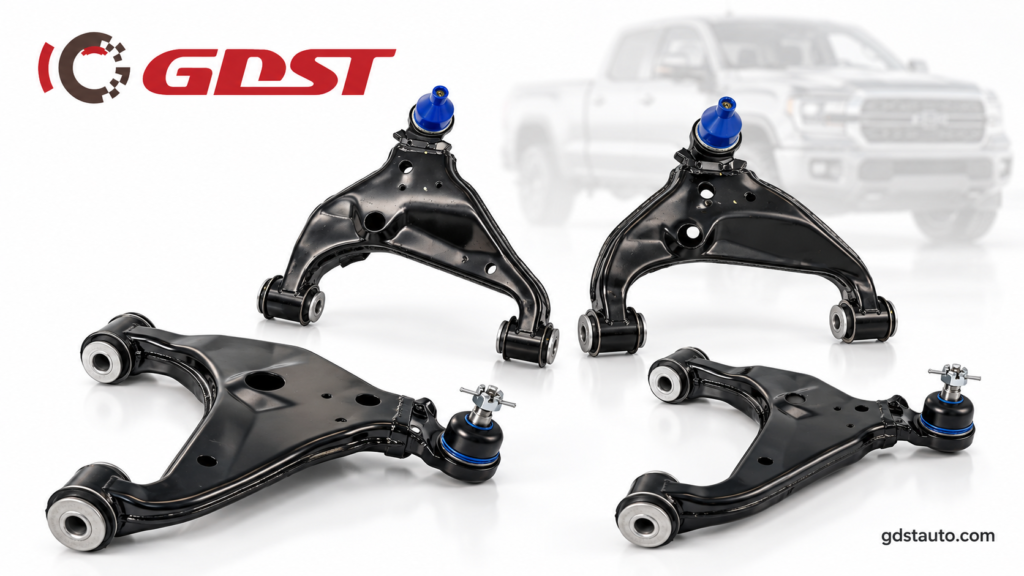
A truck control arm is a structural suspension component that helps locate and guide the movement of a wheel carrier, steering knuckle, or axle assembly relative to the vehicle structure.
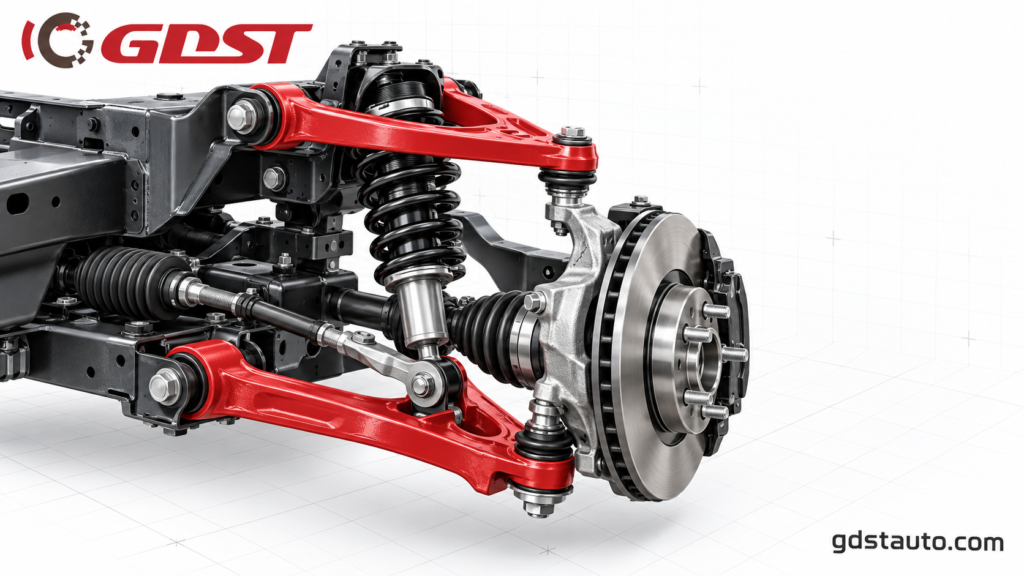
On many pickup trucks with independent front suspension, upper and lower control arms connect the frame to the steering knuckle through pivot points, bushings, and ball joints.
These components work together to guide wheel movement through the designed suspension travel and contribute to the vehicle’s intended wheel alignment and handling characteristics.
Research on double-wishbone suspension systems has shown that control arm geometry affects suspension kinematics, including wheel camber, track variation, and dynamic response. [1]
For replacement products, this makes correct mounting geometry and vehicle compatibility essential.
GDST Truck Control Arm Product Options
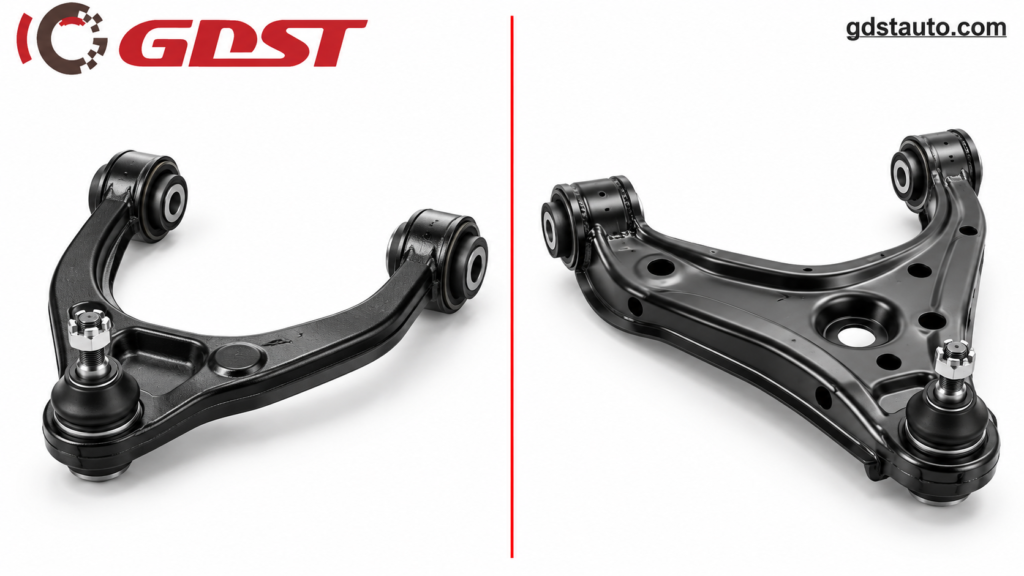
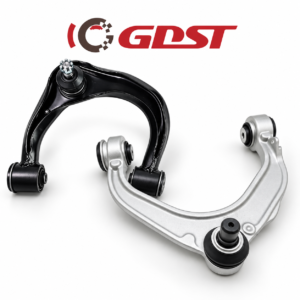
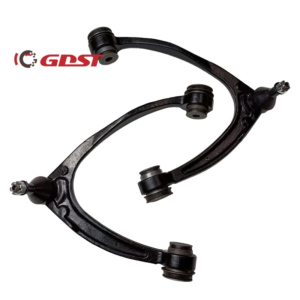
- Upper control arms for applicable independent suspension designs.
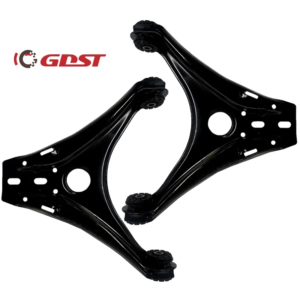
- Lower control arms for supported pickup truck and SUV applications.
- Complete control arm assemblies, with ball joints and bushings where specified.
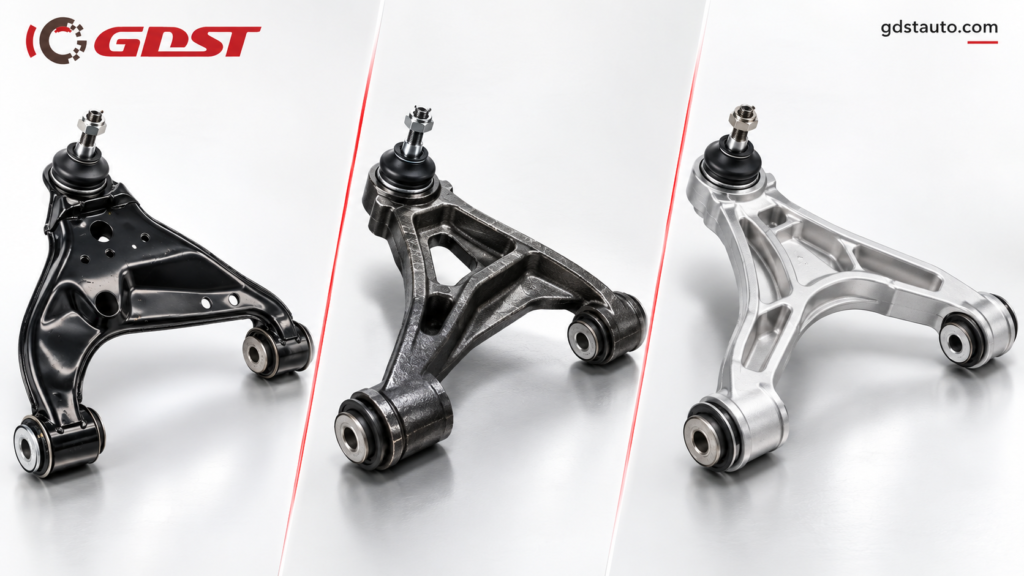
- Stamped steel control arms manufactured to vehicle-specific designs.
- Forged steel and aluminum control arms for supported applications.
- OE-reference-based sourcing and custom product development review.
Each control arm must be selected according to its corresponding vehicle application, OE reference, installation position, material requirements, and approved product drawing.
What Is a Control Arm on a Truck and How Does It Work?
A control arm on a truck connects the suspension system to the chassis or frame while allowing controlled relative movement between suspension components.
In an independent front suspension system, the control arm guides wheel travel through the designed suspension geometry.
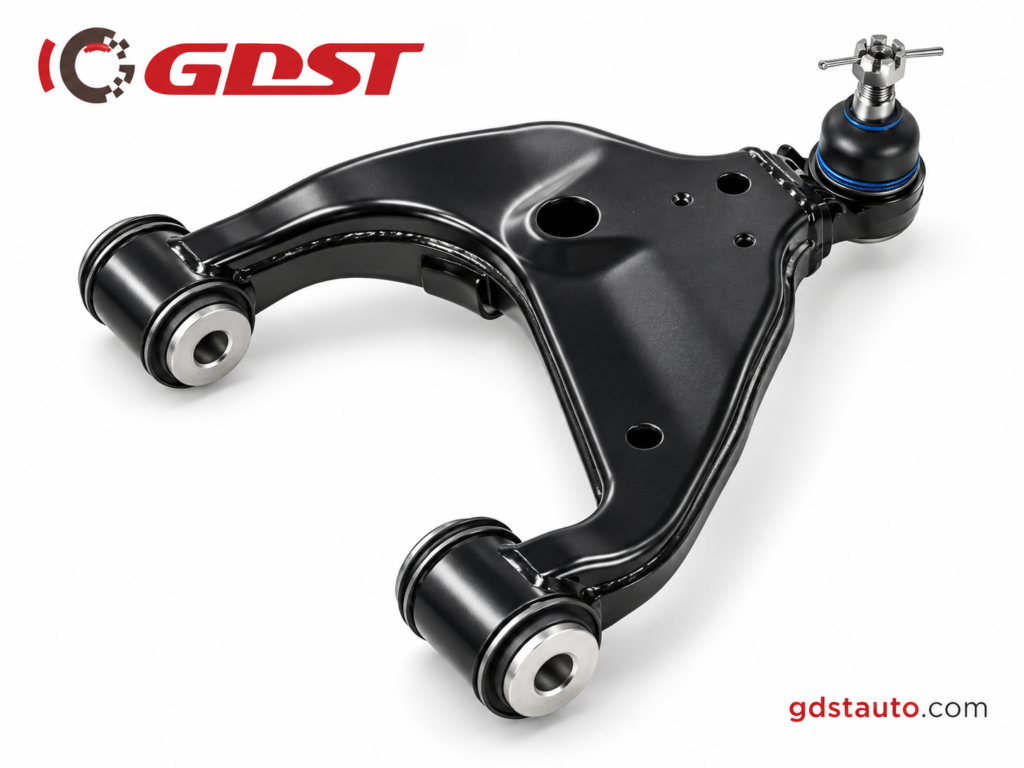
A typical control arm assembly may contain four functional elements:
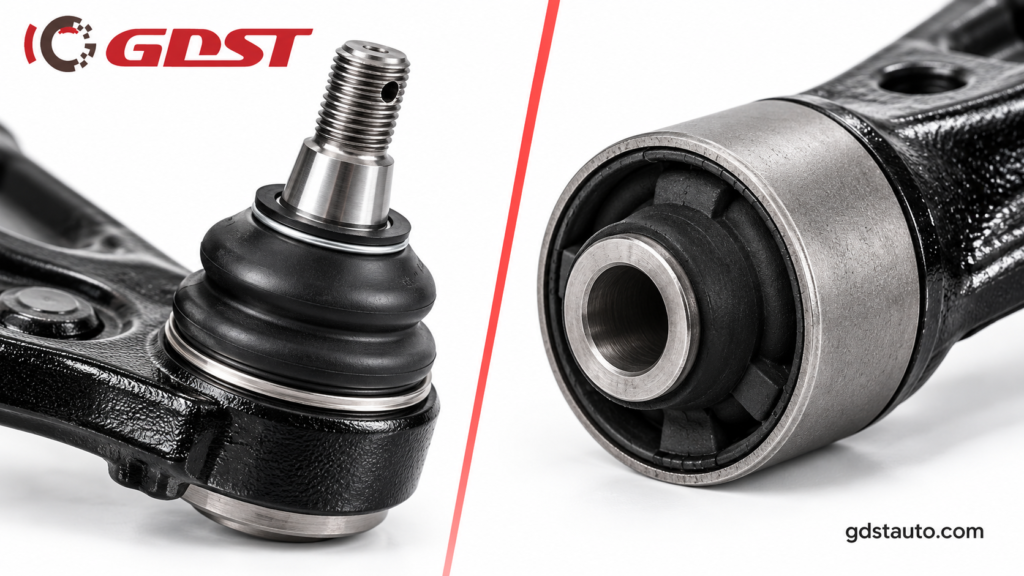
Control Arm Body
The main structural arm connects the suspension mounting points. Its shape, material, and geometry are determined by the vehicle’s suspension design and structural requirements.
Ball Joint
The ball joint provides an articulated connection between the control arm and steering knuckle, allowing the movements required for suspension operation and, where applicable, steering.
Control Arm Bushings
Bushings provide compliant mounting connections between the control arm and vehicle structure. Their stiffness and damping behavior influence how forces and vibrations are transmitted through the suspension.
Experimental research has demonstrated that rubber bushing dynamic stiffness depends on frequency, excitation amplitude, and preload. [5]
Mounting Features
Mounting holes, sleeves, fasteners, and connection surfaces establish the installed position of the control arm. Their dimensions must match the vehicle’s specified mounting requirements.
Importantly, control arms are not the same as shock absorbers or suspension springs. Springs primarily provide elastic support, shock absorbers dissipate energy through damping, and control arms guide the movement and positioning of suspension components.
Upper Control Arms for Pickup Trucks
The upper control arm on a truck is typically located above the lower suspension arm in a double-wishbone or similar independent suspension configuration.
It connects the upper part of the steering knuckle to the chassis or frame and helps determine the suspension’s intended movement and alignment geometry.
A conventional upper control arm assembly may include:
- A vehicle-specific structural arm.
- Frame-side mounting bushings.
- An outer ball joint or specified articulated connection.
- Application-specific mounting features.
For replacement applications, upper control arm design must be compatible with the OE mounting points and required joint articulation.
The correct upper arm is selected according to the vehicle make, model, production year, suspension configuration, left/right position, and OE part number.
Research into suspension linkage geometry confirms that changes in the positions and lengths of suspension links may affect wheel motion and dynamic behavior. [1]
GDST supports sourcing of upper control arms for verified vehicle applications and reviews nonstandard technical requirements separately.
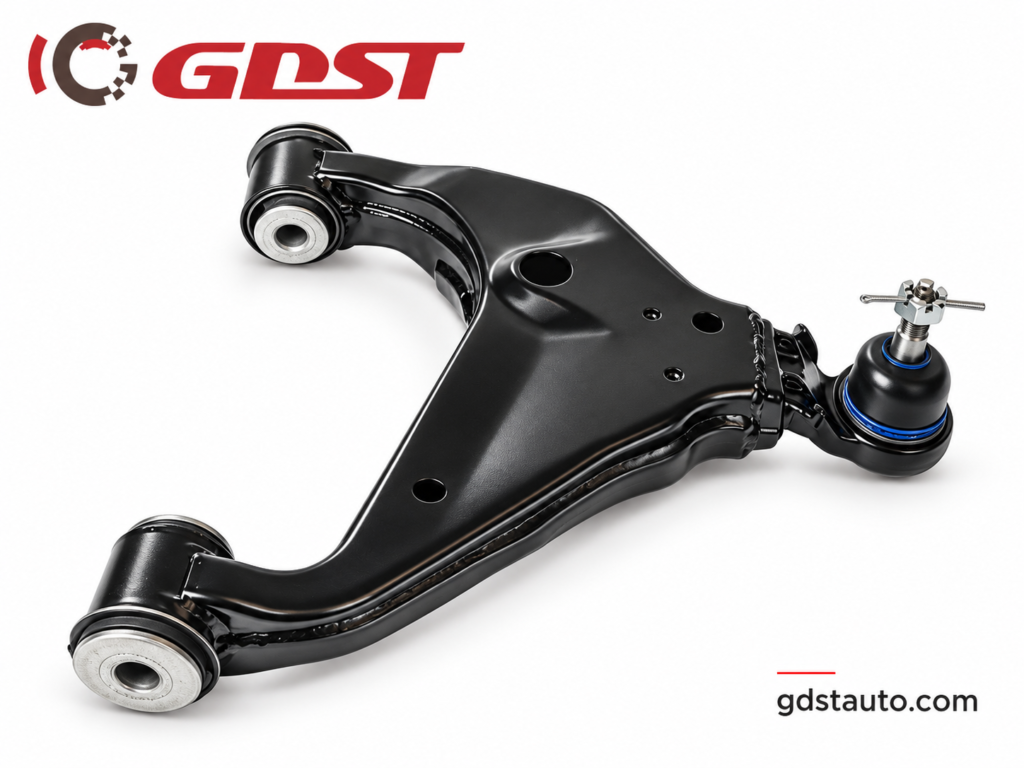
Lower Control Arms for Trucks
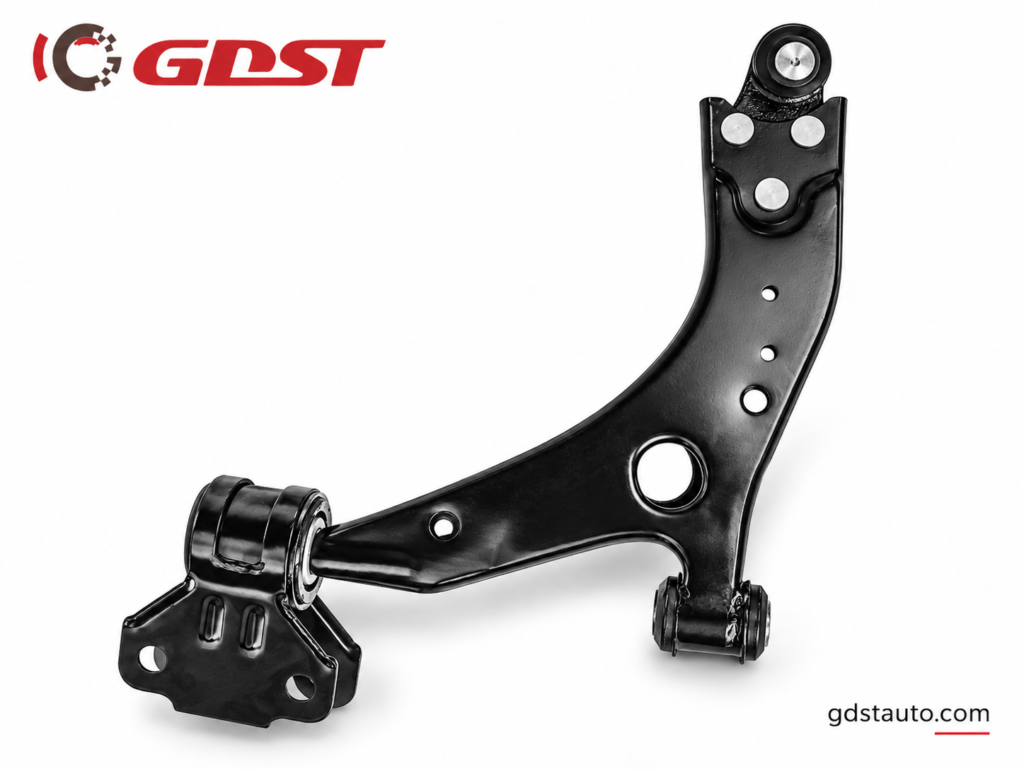
A lower control arm is generally positioned below the upper suspension pivot in vehicle designs that use both upper and lower arms.
Its principal role is to help locate and guide the lower portion of the wheel carrier or steering knuckle.
Depending on the suspension design, a lower control arm may also provide mounting points for a spring, damper, or stabilizer connection.
Because the loading arrangement varies between vehicles, lower control arms must be manufactured to the appropriate structural and geometric requirements.
Research on automotive lower control arms has examined the influence of material properties, geometric variation, and repeated loading on fatigue performance. [3]
These findings support the engineering importance of selecting appropriate materials and controlling critical dimensions. They do not establish the fatigue life of a specific GDST part.
GDST’s product offering includes lower control arm configurations for supported aftermarket applications, with assembly contents and technical requirements determined by the selected OE reference.
Upper vs. Lower Control Arms: Key Differences
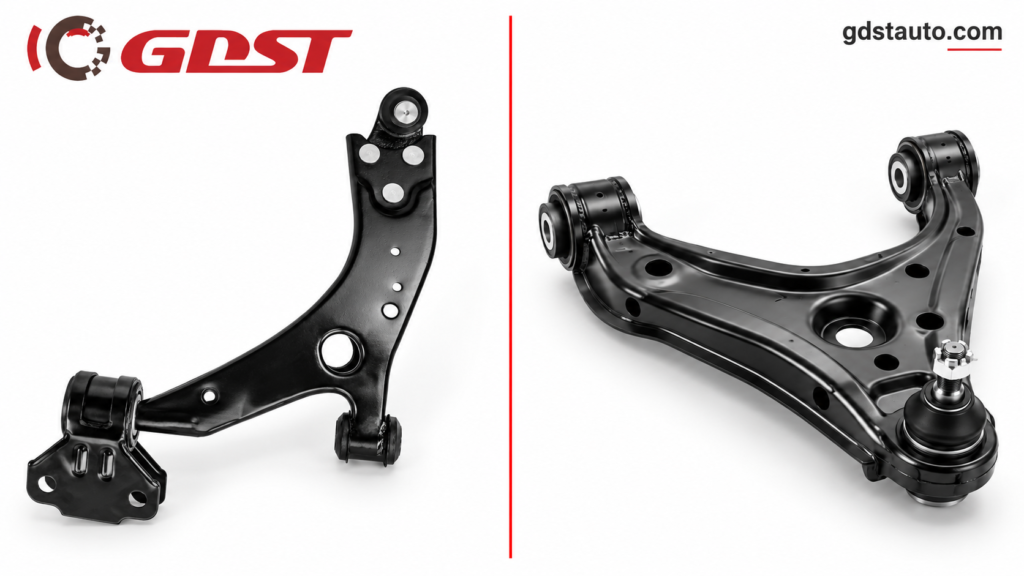
Upper and lower control arms are related components, but they are not interchangeable. Their functions, mounting arrangements, and design requirements differ.
|
Feature |
Upper Control Arm (UCA) |
Lower Control Arm (LCA) |
|
Typical position |
Upper suspension pivot |
Lower suspension pivot |
|
Primary function |
Locates and guides the upper portion of the wheel carrier |
Locates and guides the lower portion of the wheel carrier |
|
Typical connections |
Chassis/frame and upper steering knuckle |
Chassis/frame and lower steering knuckle |
|
Common components |
Structural arm, bushings, ball joint |
Structural arm, bushings, ball joint |
|
Spring or damper mounting |
Application-dependent |
May be included, depending on suspension design |
|
Technical selection |
OE geometry, joint articulation, mounting compatibility |
OE geometry, loading conditions, mounting compatibility |
|
Installation position |
Vehicle-specific, including left/right |
Vehicle-specific, including left/right |
Some trucks use suspension architectures without a conventional upper control arm. For example, certain strut-type independent suspension systems use lower control arms without upper wishbone arms.
The presence and configuration of an upper control arm must therefore be confirmed from the actual vehicle suspension layout.
Truck Control Arm Product Types and Materials
Control arms are manufactured in different structural forms to meet the requirements of their intended applications.
GDST’s broader control arm product range includes stamped steel, forged steel, aluminum, and complete assembly configurations.
|
Product Type |
Construction or Configuration |
Main Application Considerations |
|
Stamped Steel Control Arm |
Formed steel components, sometimes incorporating welded sections |
Material, formed geometry, weld quality, surface finish |
|
Forged Steel Control Arm |
Forged steel construction with application-specific machining |
Forging design, material properties, critical dimensions |
|
Aluminum Control Arm |
Aluminum construction according to the approved design |
Material grade, structural geometry, manufacturing process |
|
Upper Control Arm |
Vehicle-specific upper suspension arm |
Joint position, mounting geometry, articulation |
|
Lower Control Arm |
Vehicle-specific lower suspension arm |
Suspension loads, mounting dimensions, attachment points |
|
Complete Control Arm Assembly |
Structural arm with specified installed components |
Ball joint and bushing compatibility, assembly condition |
How Manufacturing Affects Control Arm Performance
Control arm performance depends on more than the nominal strength of the raw material.
In an automotive suspension component study, Kang and Kim examined stamping and welding effects using finite element analysis and fatigue testing. Their research showed that manufacturing-related thickness variation, residual stress, and weld geometry can influence fatigue performance. [4]
Additional research on welded transverse control arms used structural and notch stress methods alongside cyclic loading tests to evaluate fatigue behavior and identify critical failure locations. [11]
These studies illustrate why material selection, forming quality, welding conditions, and component-level validation should be considered together.
No single construction material or manufacturing method is universally superior for every truck control arm. The appropriate choice depends on the approved design and operating requirements.
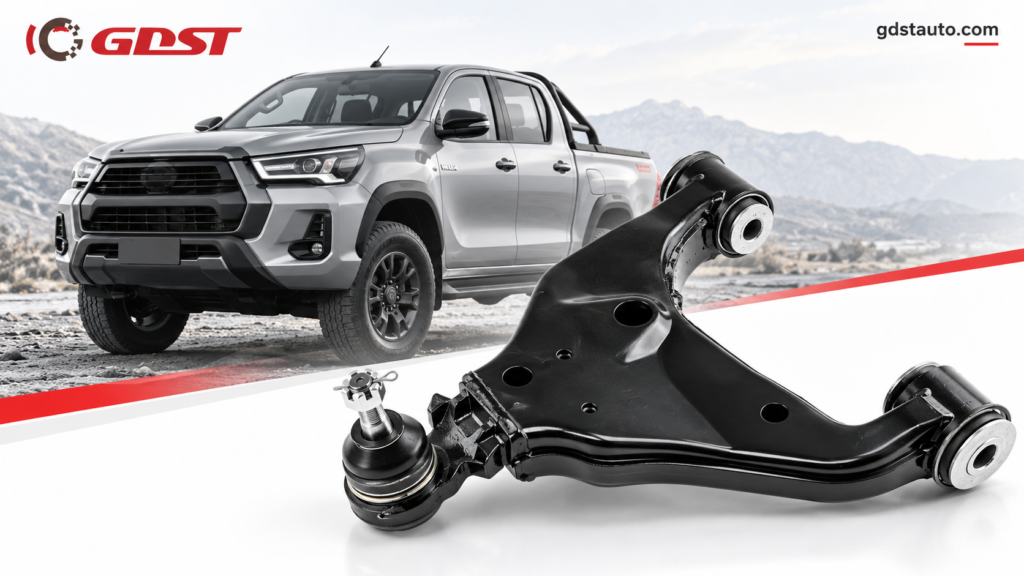
Documented Toyota Hilux Lower Control Arm Inspection Reference
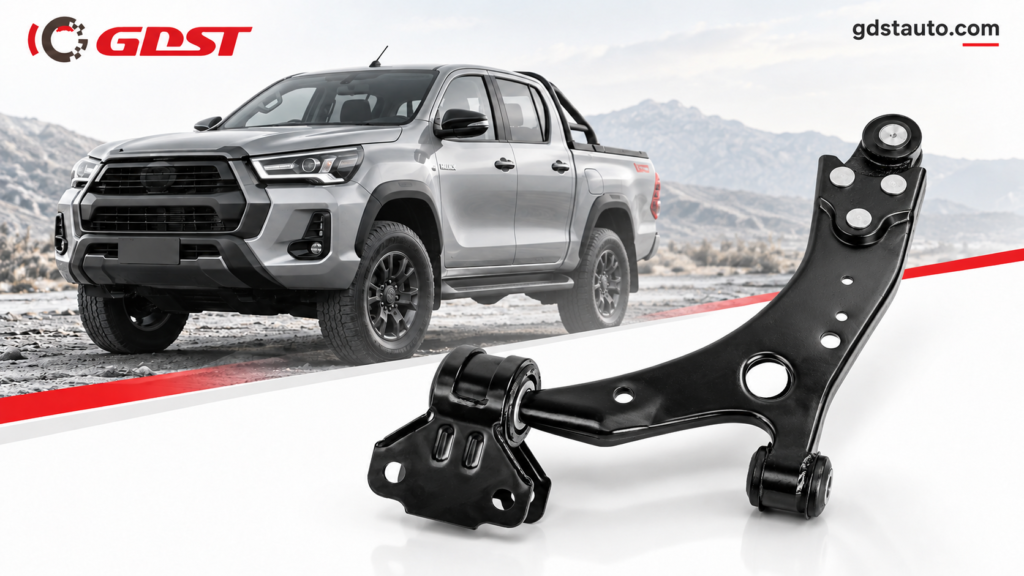
A supplied outgoing-inspection worksheet includes the control arm reference 48068/9-0K090.
External aftermarket and OE cross-reference catalogs associate the related part numbers with Toyota Hilux and Fortuner front lower suspension applications:
- 48068-0K090: Front lower right-hand control arm reference.
- 48069-0K090: Front lower left-hand control arm reference.
These cross-references provide a starting point for product identification. Exact compatibility must still be confirmed using vehicle year, chassis specification, and the appropriate parts catalog.
Example Outgoing-Inspection Record
|
Item |
Information Recorded |
|
Product |
Control arm |
|
Inspection reference |
48068/9-0K090 |
|
Related OE-reference family |
48068-0K090 / 48069-0K090 |
|
Potential application |
Toyota Hilux / Fortuner, subject to fitment verification |
|
Installation position |
Front lower, right / left |
|
Recorded quantity |
52 pairs |
|
Inspection categories |
Appearance, dust boot assembly, coating, ball joint connection, taper, bushing dimensions, packaging |
|
Recorded inspection results |
Four result columns marked OK for the applicable checks |
|
Report conclusion |
Inspected batch met the listed requirements and was approved for factory release |
The worksheet provides a documented inspection example for the stated reference.
It does not independently establish current product availability, the complete vehicle fitment range, long-term service life, or compliance with every possible customer performance specification.
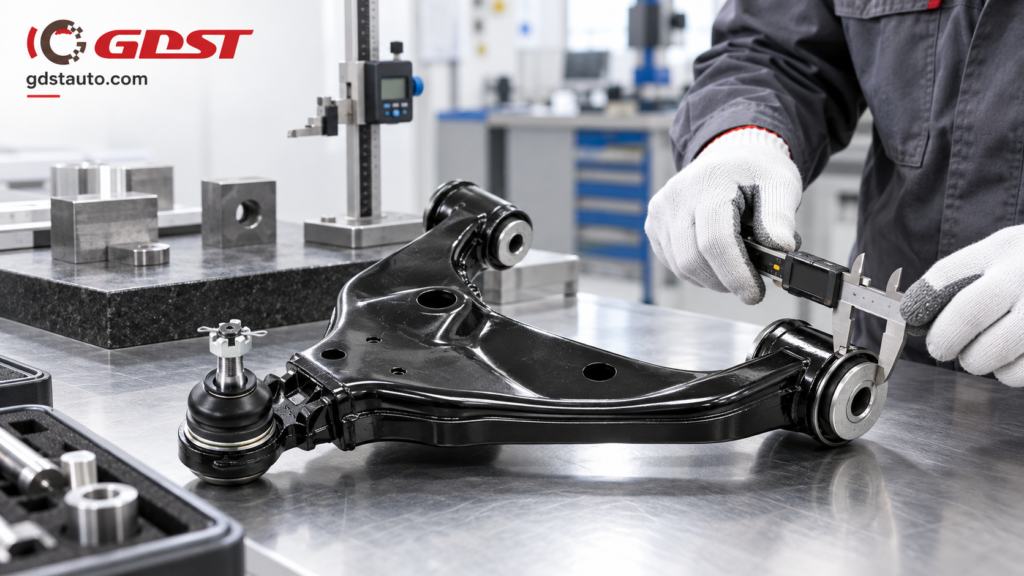
Technical Specifications and Dimensional Inspection
Truck control arms require accurately defined geometry and mounting dimensions.
Variations in suspension component dimensions and assembly positions can influence wheel alignment and vehicle behavior.
A study on front suspension geometric dimensioning and tolerancing investigated the effects of component and assembly variation on vehicle pull and alignment-related behavior. [2]
Research on lower control arm design has also demonstrated the importance of considering uncertainty in geometry and material parameters when predicting fatigue performance. [3]
These findings provide an engineering basis for using approved drawings and clearly defined inspection limits during control arm production and acceptance.
Inspection Specifications: Reference 48068/9-0K090
The following table is based on the supplied outgoing-inspection worksheet.
|
Inspection Item |
Specification or Requirement |
Recorded Result |
|
Product appearance |
No impact damage, rust, or specified visible defects |
OK in four result columns |
|
Dust boot assembly |
Correct installation, no visible damage |
OK in four result columns |
|
Surface treatment |
Black electrophoretic coating |
OK in four result columns |
|
Ball joint thread |
M16 × 1.5 |
OK in four result columns |
|
Ball joint taper |
Verification using a taper gauge |
OK in four result columns |
|
Small bushing inner diameter |
Ø16.5 ± 0.2 mm |
OK in four result columns |
|
Small bushing outer diameter |
Ø73 ± 0.2 mm |
OK in four result columns |
|
Large bushing inner diameter |
Ø16.5 ± 0.2 mm |
OK in four result columns |
|
Spacing between bushing outer ends |
448 ± 3 mm |
OK in four result columns |
|
Packaging |
Conformance with specified customer packaging requirements |
Packaging-related items checked |
Source: Supplied outgoing-inspection worksheet for reference 48068/9-0K090.
The worksheet reports inspection requirements and qualitative OK results rather than individual numerical measurements.
An additional worksheet entry lists Ø89.5 ± 0.2 mm under a repeated large-bushing inner-diameter label. That item is excluded from this public specification table pending confirmation of the intended measurement name.
The values in this table are specific to this inspection reference and should not be applied to other truck control arm models.
Product drawings, critical dimensions, inspection tolerances, and assembly requirements must be confirmed for each OE reference before production or shipment.
Control Arm Bushings and Ball Joints: Why Component Quality Matters
Control arm performance depends not only on the structural arm but also on the connecting components.
Ball Joint Compatibility
A ball joint must have the correct mounting dimensions, taper, thread, articulation characteristics, and retention requirements for its intended application.
A visual or dimensional check alone does not establish the full structural or durability performance of a ball joint.
Where required by the approved product specification, additional validation may include retention-force testing, articulation testing, wear evaluation, or durability testing.
Bushing Geometry and Dynamic Behavior
Suspension bushings provide compliant mounting connections and influence the transmission of forces and vibrations.
Xia and colleagues demonstrated that automotive rubber bushing dynamic stiffness varies with frequency, vibration amplitude, and preload. [5]
Kemna and colleagues further investigated how bushing geometry, elastomer compounds, thermal conditions, and operational loads influence long-term stiffness and damping characteristics. [6]
Their findings show why a bushing’s quality cannot be characterized only by its inner and outer diameters.
Depending on the application, appropriate bushing evaluation may include:
- Dimensional verification.
- Rubber hardness evaluation.
- Static and dynamic stiffness testing.
- Bonding or retention assessment.
- Environmental aging and durability testing.
The particular tests and acceptance criteria must be established for the product and customer requirements.
GDST’s supplied outgoing-inspection records provide evidence of certain assembly and dimensional checks; they do not establish that every dynamic or long-term bushing test listed above has been completed for reference 48068/9-0K090.
Incoming Steel Material Quality Verification
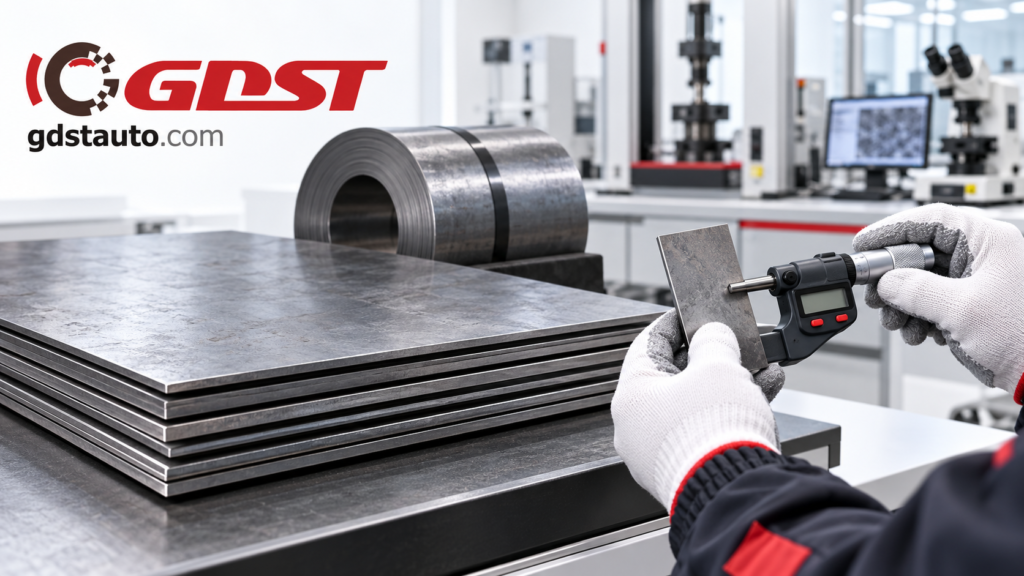
Steel material identification and mechanical-property verification can support manufacturing quality control when the material is used within a defined and traceable production process.
A historical raw material certificate supplied for review was issued by Maanshan Iron & Steel Co., Ltd. for a batch of SAPH400-P hot-rolled pickled steel.
The certificate lists coil and heat identification, chemical composition, mechanical test results, and the applicable material specification.
Example SAPH400-P Steel Mill Certificate
|
Parameter |
Documented Value |
|
Steel grade |
SAPH400-P |
|
Product form |
Hot-rolled pickled steel |
|
Sheet thickness |
2.50 mm |
|
Sheet width |
1,250 mm |
|
Reported yield strength |
301–303 MPa |
|
Reported tensile strength |
428–429 MPa |
|
Reported elongation |
40–41% |
|
180° bend test |
Passed for the four listed coils |
|
Material specification |
Q/MGB505-2017 |
|
Certificate shipment date |
January 3, 2021 |
Source: Supplied Maanshan Iron & Steel historical product quality certificate.
These values describe the tested steel coils in that certificate. They do not represent universal mechanical-property values for all SAPH400-P materials or all GDST control arm products.
The provided documentation does not establish a production traceability link between this steel batch and the inspected 48068/9-0K090 control arms.
Published research on suspension component fatigue demonstrates that material properties, manufacturing effects, and geometric characteristics can influence structural performance. [3][4]
For buyers who require specified materials, the steel grade, material certificate, heat or coil number, product drawing, and relevant production identification should be reviewed together.
Factory Quality Inspection Before Shipment
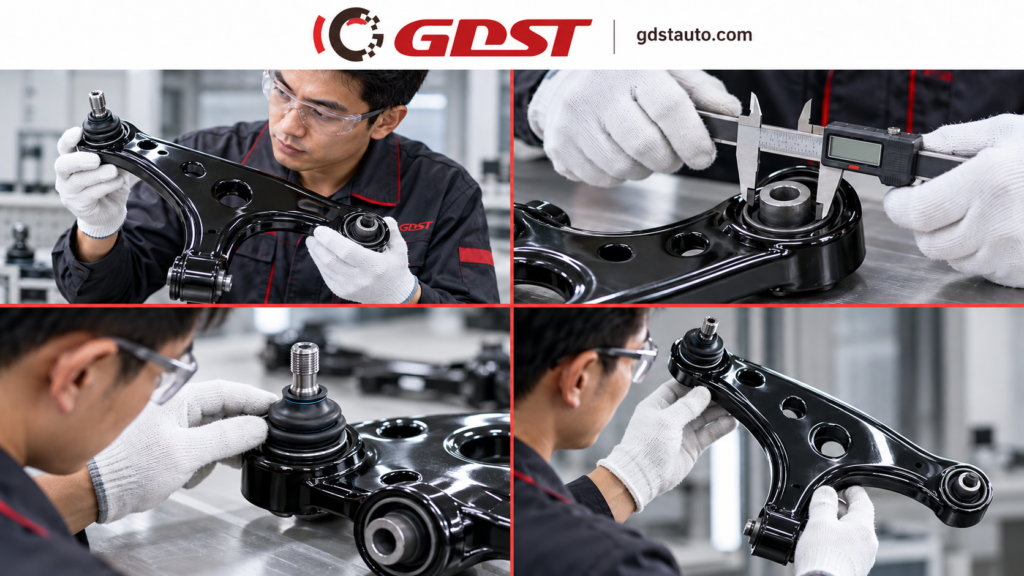
Control arms operate under repeated loads and must satisfy their specified structural, dimensional, and assembly requirements.
The supplied example inspection reports document outgoing checks for multiple automotive control arm references.
For the purposes of procurement review, the following inspection categories are particularly relevant.
Appearance and Assembly Inspection
The example worksheets include checks for visible damage, corrosion, dust boot condition, and component assembly.
Such checks help identify visible defects and confirm that specified assembly features are present and correctly installed.
Dimensional and Connection Inspection
Specified dimensions may be checked using calipers, gauges, height-measuring instruments, or other appropriate inspection equipment.
Depending on the product, these dimensions include ball joint threads, tapered connections, bushing diameters, and spacing between mounting features.
The accuracy required for any dimension is determined by the approved part drawing and its tolerance scheme.
Surface Treatment Inspection
The supplied outgoing-inspection records specify black electrophoretic coating for the documented references.
Electrodeposition coating is an established protective finishing technology used in automotive manufacturing.
Research on electrocoated steel has shown that coating coverage and protection at component edges are important considerations in corrosion performance. [7]
The presence of a black electrophoretic finish or an OK visual inspection result does not itself establish a particular salt spray resistance duration.
A quantified corrosion-resistance claim would require a corresponding test report identifying the test method, exposure conditions, acceptance criteria, and results.
Fatigue and Structural Validation
Suspension control arms are exposed to repeated loads over their service lives.
A 2024 research study reproduced component-level fatigue tests on a steel lower control arm through a high-cycle fatigue simulation framework, illustrating the importance of repeated-load analysis and component-level validation. [8]
Separate research on welded control arms also demonstrates the use of cyclic loading, strain measurements, and stress analysis to evaluate fatigue behavior. [11]
For a specific production control arm, fatigue performance should be established by an appropriate validated design analysis, test plan, or product-level test report.
The supplied outgoing-inspection worksheets do not provide fatigue life cycles or structural load-capacity ratings for the documented products.
Packaging and Identification
The supplied example reports also include packaging-related checks, including cartons, labels, shipping marks, and pallet requirements.
Correct packaging and product identification are especially important for distributors handling multiple left/right part numbers and OE references.
GDST can discuss additional inspection records, product verification requirements, and order-specific documentation with wholesale customers.
Pickup Truck Applications and OE Number Matching
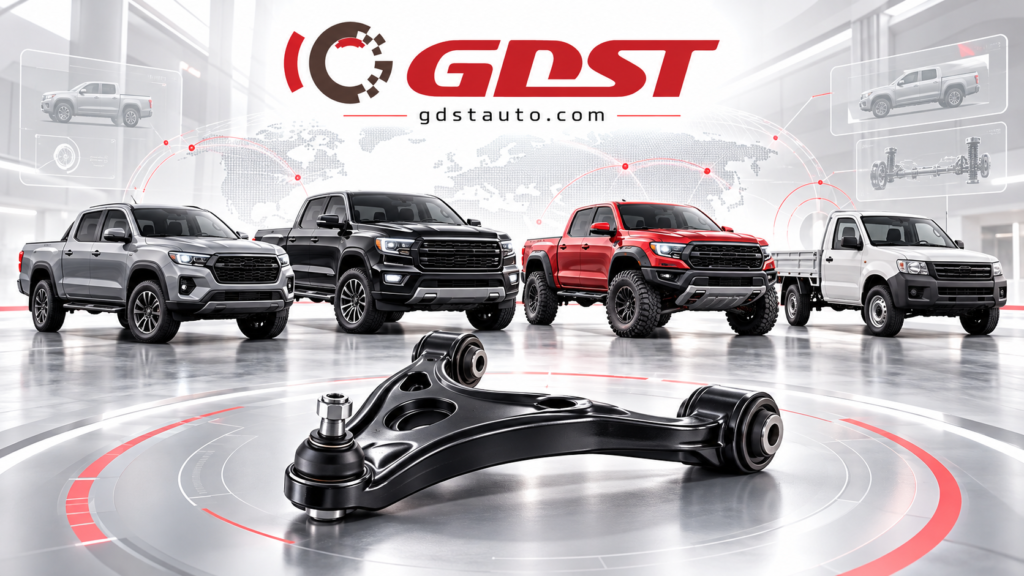
Control arms are not universal replacement parts.
Even vehicles from the same manufacturer may use different suspension configurations, mounting dimensions, ball joints, and control arm assemblies across model generations.
Suspension research shows that linkage geometry and dimensional variation affect the operation of the suspension system. [1][2]
For this reason, buyers should verify the correct part reference rather than relying on visual similarity alone.
GDST can review sourcing inquiries involving pickup truck applications from manufacturers such as Toyota, Ford, Chevrolet, GMC, Ram, and Nissan, subject to product availability and OE-reference verification.
The supplied inspection documentation for reference 48068/9-0K090 provides one historical example related to a Toyota Hilux/Fortuner lower control arm OE-reference family.
Information Required for Control Arm Matching
|
Information |
Why It Is Required |
|
Vehicle make |
Identifies the vehicle manufacturer |
|
Vehicle model |
Identifies the vehicle family |
|
Model year |
Helps distinguish different generations |
|
Chassis code or VIN details |
Supports more precise application identification |
|
Drivetrain and suspension design |
Helps determine suspension configuration |
|
OE part number |
Identifies the target replacement reference |
|
Installation position |
Upper/lower, front/rear, left/right |
|
Assembly contents |
Confirms bushings, ball joints, and other components |
|
Order quantity |
Supports availability checks and quotation |
For the most accurate quotation, provide the OE number list and applicable vehicle information together.
Control Arms for Lifted Trucks: Geometry and Compatibility
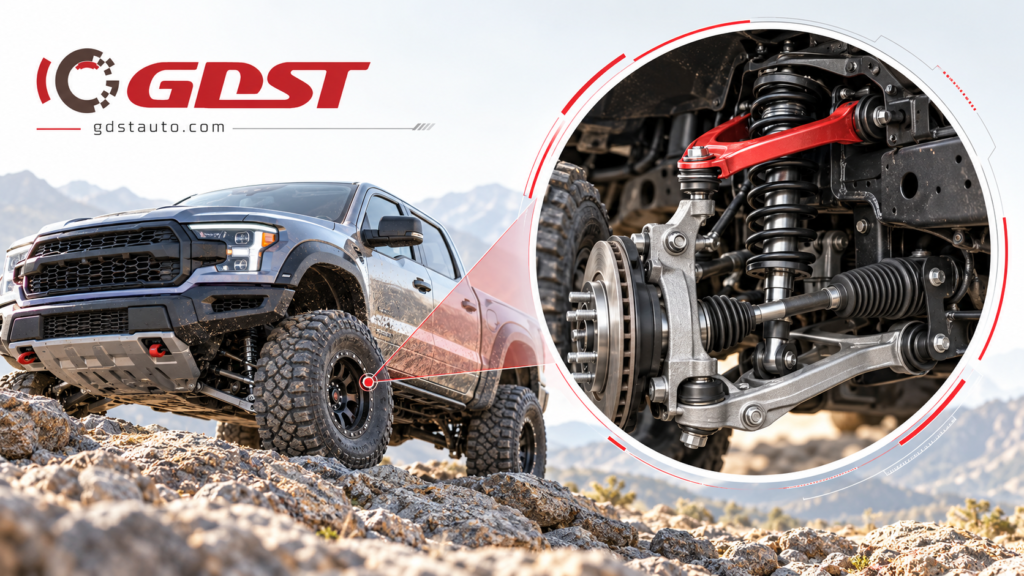
Lifted pickup trucks may have suspension operating conditions that differ from their original configuration.
Depending on the lift system, changes in suspension geometry may affect joint articulation, wheel alignment range, available travel, and component clearance.
Research on double-wishbone suspension mechanisms confirms that linkage geometry influences wheel kinematics and suspension response. [1]
This supports the engineering need to evaluate suspension modifications as a complete system.
However, not every lifted truck requires aftermarket upper control arms.
Some lift systems maintain appropriate suspension geometry through other design features. Others may require revised control arm geometry or additional component changes.
Important application questions include:
- What is the original suspension architecture?
- What type of suspension lift has been installed?
- Can the vehicle achieve the specified alignment values?
- Do the ball joints operate within their permitted articulation range?
- Is sufficient clearance maintained throughout suspension travel?
- Does the lift kit manufacturer require replacement control arms?
Standard OE-style replacement arms should not automatically be considered suitable for modified suspension systems.
Requests for adjustable, extended, tubular, or lift-corrected upper control arms should be assessed against the specific vehicle design and engineering requirements.
GDST can review drawings and technical inquiries to determine whether a custom development or sourcing solution is feasible.
Semi-Truck Control Arms and Heavy-Duty Suspension Applications
The phrase semi truck control arm may describe different types of suspension locating components, depending on the vehicle and the terminology used by the supplier.
Heavy-duty commercial vehicles use multiple suspension architectures, including rigid axle configurations, independent front suspension systems, and various air-suspension arrangements.
Research into heavy-truck dynamics has compared independent front suspension with rigid front axle designs, demonstrating that heavy commercial vehicles do not all use the same suspension architecture. [9]
A separate study of a heavy modular semitrailer documented an air suspension incorporating a control arm, an air bag, and a hydraulic shock absorber. [10]
That study concerns a semitrailer rather than the tractor’s front suspension, but it illustrates the broader use of control-arm terminology in heavy-duty applications.
Accordingly, a pickup truck A-arm should not be assumed interchangeable with a semi-truck torque rod, radius rod, suspension locating link, or another heavy-duty component.
When requesting a commercial truck suspension part, buyers should provide:
- Vehicle manufacturer and model.
- Model year and chassis identification.
- Axle or suspension manufacturer.
- Relevant OE part number.
- Component photographs and technical drawings.
- Required material and connection specifications.
GDST can review the available information to assess whether the requested component falls within its verified supply range or requires a separate sourcing evaluation.
OEM, ODM and Private Label Truck Control Arm Supply
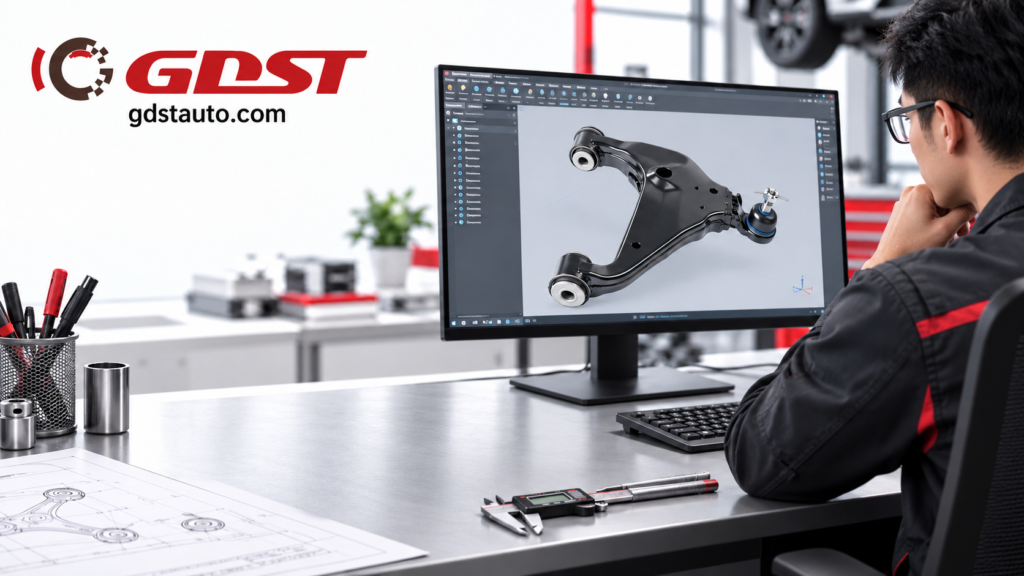
GDST supports international automotive aftermarket businesses that require consistent product identification, repeatable product specifications, and brand-specific supply arrangements.
Our OEM, ODM, and private-label services may include:
- OE-reference matching and product selection.
- Product development feasibility review.
- Customized cartons and labels.
- Customer brand or product identification marking.
- Multi-part-number order planning.
- Technical specification coordination.
- Inspection document review.
- Export packaging and shipping coordination.
For new control arm designs, the technical feasibility, tooling requirements, drawings, sample approval process, testing needs, and order conditions must be agreed upon before production.
The use of peer-reviewed engineering research helps explain why technical requirements matter. It does not substitute for the actual verification and approval of a new GDST product.
Why Choose GDST for Truck Control Arm Wholesale Supply?
GDST serves international automotive aftermarket customers through its automotive parts product range and manufacturing and supply network in China.
Our published control arm program covers more than 3,000 control arm references across multiple vehicle categories, including passenger cars, SUVs, and light-duty vehicles.
This is a category-wide figure and should not be interpreted as 3,000 pickup truck-specific references.
For wholesale buyers, we focus on three practical sourcing needs.
OE-Based Product Identification
Our team reviews OE references, vehicle details, and installation configurations to identify suitable sourcing options.
Clearly Defined Product and Inspection Requirements
Product specifications, quality requirements, packaging standards, and available inspection records can be reviewed as part of the purchasing process.
OEM Branding and International Supply Support
GDST works with aftermarket distributors and brands that require private-label products, commercial quotations, export packaging, and repeat purchasing support.
We aim to provide clear product identification and practical technical communication throughout the sourcing process.
Wholesale Ordering, Minimum Quantity and Lead Time
GDST’s published general control arm supply information lists:
|
Commercial Item |
General Reference Terms |
|
Typical MOQ |
50 pieces per model |
|
Indicative lead time |
Approximately 45 days |
|
OEM/private label |
Available for approved applications and orders |
|
General after-sales warranty |
One year after receipt, subject to agreed terms |
|
Product identification |
By OE number, vehicle application and product specifications |
|
Export service |
International aftermarket supply and packaging support |
The stated quantities and times are general reference terms, not guaranteed conditions for every truck control arm model.
Actual MOQ, pricing, production schedule, product availability, warranty scope, and documentation requirements are confirmed during quotation.
How to Request a Quote
- Send your OE part numbers or vehicle application list.
- Identify the required upper/lower position and left/right side.
- Specify the desired assembly contents.
- Provide estimated quantities for each reference.
- Include packaging, branding, and destination requirements.
- Identify any required material certificates or product-level testing documents.
GDST will review the requirements and confirm suitable products and quotation terms.
Signs of a Worn Truck Control Arm and When Replacement May Be Needed
Common reasons for inspecting a truck control arm assembly include visible structural damage, damaged ball joints, worn bushings, or abnormal suspension movement.
Potential vehicle symptoms may include:
- Knocking or clunking noises.
- Excessive movement at suspension joints.
- Changes in wheel alignment.
- Irregular tire wear.
- Steering looseness or instability.
- Visible bushing deterioration.
These symptoms are not unique to control arm failures. Other suspension, steering, tire, or wheel components may produce similar symptoms.
Published research shows that rubber suspension bushing properties can change with operating conditions and service history. [5][6]
A qualified technician should inspect the complete suspension system before determining the correct replacement action.
For distributors, it is also important to distinguish between complete control arm assemblies and applications where individual bushings or ball joints can be serviced separately.
Frequently Asked Questions About Truck Control Arms
What is a control arm on a truck?
A control arm is a suspension component that connects the vehicle structure to a steering knuckle, wheel carrier, or other suspension member. It helps guide suspension movement and maintain the intended suspension geometry.
What is an upper control arm on a truck?
An upper control arm is a suspension link located above the lower arm on vehicles with an applicable independent suspension configuration. It helps locate the upper part of the steering knuckle and guide wheel movement.
What is the difference between upper and lower control arms?
They connect different suspension pivot points. Their geometry, loading conditions, mounting positions, and ball joint configurations depend on the vehicle’s suspension design.
Do all trucks have upper control arms?
No. Trucks use different suspension configurations. Some independent suspension systems have upper and lower control arms, while others use strut-type, solid-axle, or different suspension arrangements.
Does control arm geometry affect wheel alignment?
Yes. Control arm mounting geometry and suspension link positions influence wheel motion and alignment characteristics. Published research has examined these relationships in double-wishbone and front-suspension tolerance models. [1][2]
What material is used for truck control arms?
Depending on the OE design, control arms may be manufactured from stamped steel, forged steel, aluminum, or other specified materials. Material type and grade must be confirmed for the selected part number.
Does GDST have inspection records for Toyota Hilux-related control arms?
A provided outgoing-inspection worksheet records reference 48068/9-0K090, associated through external OE catalogs with Toyota Hilux/Fortuner lower control arm references. The worksheet contains dimensional, coating, assembly, and packaging checks. Exact fitment and current supply availability require verification.
What dimensions are inspected on a truck control arm?
Depending on the product, inspection may cover ball joint threads, tapers, bushing dimensions, mounting features, and spacing between connection points. The applicable tolerances are determined by approved product drawings.
Does a dimensional inspection confirm fatigue life?
No. Dimensional conformity and fatigue resistance are separate engineering considerations. Fatigue life depends on material properties, geometry, manufacturing effects, and applied cyclic loads. [3][4][8]
Does black electrophoretic coating guarantee a specific corrosion-resistance rating?
No. The coating process can provide corrosion protection, but quantitative performance depends on the coating system, pretreatment, coverage, and relevant testing conditions. A specific corrosion-resistance rating requires supporting test results. [7]
Do lifted trucks always need aftermarket upper control arms?
No. Requirements depend on the vehicle suspension design, lift system, alignment range, joint articulation, and component clearance.
Are semi-truck control arms the same as pickup truck control arms?
No. Heavy-duty vehicles may use different types of axle-locating components and suspension structures. The correct part must be identified by its OE reference and actual suspension design.
Can GDST supply control arm assemblies with ball joints and bushings?
GDST’s broader product range includes complete control arm assemblies. The included components must be confirmed for each individual reference.
Can buyers request material certificates or quality inspection documents?
Yes. Buyers can specify documentation requirements when submitting an RFQ. GDST can confirm document availability and the relevant inspection or traceability requirements for the selected product and order.
Can GDST develop a new truck control arm from a sample or drawing?
GDST offers new product development support. Feasibility, tooling, product validation, and commercial requirements must be reviewed and agreed upon before production.
What is GDST’s minimum order quantity?
The general control arm program lists a typical MOQ of 50 pieces per model. Actual minimum quantities depend on the specific reference and order conditions.
Can GDST supply private-label truck control arms?
Yes. Customized identification, cartons, labels, and other branding services are available for approved products and orders.
Request a Truck Control Arm Catalog and Factory-Direct Quotation
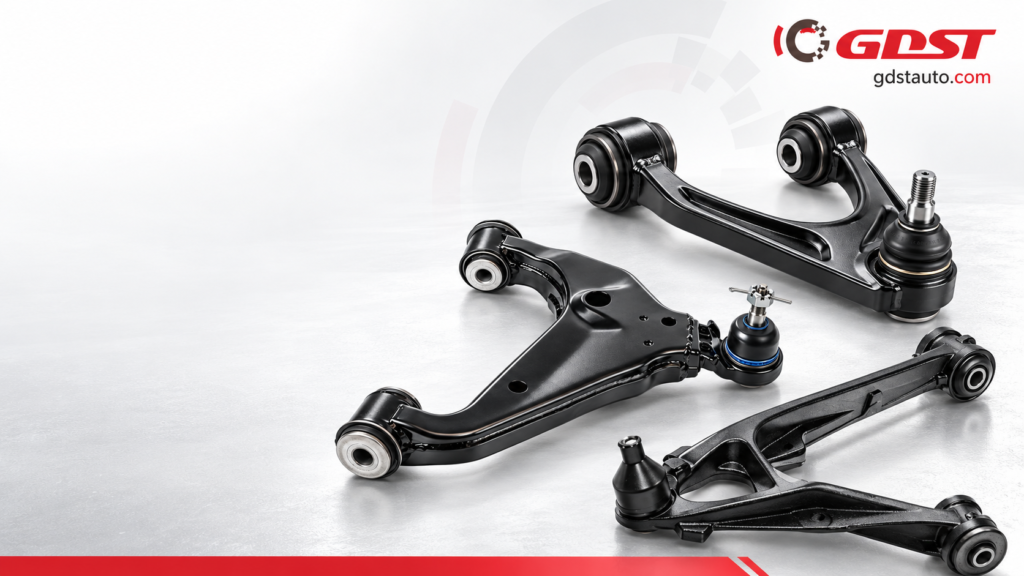
Looking for a reliable truck control arm sourcing partner for your automotive aftermarket business?
GDST can help you review upper and lower control arm requirements, identify matching OE references, and discuss wholesale supply and private-label projects.
Send us your:
- OE part numbers or vehicle application lists.
- Upper/lower and left/right requirements.
- Estimated order quantities.
- Material and technical requirements.
- Target market and destination country.
- Branding and packaging specifications.
- Required inspection or quality documentation.
Email: admin@gdstauto.com
WhatsApp: +86 185 5533 0281
GDST Auto Parts — Suspension and Steering Parts Supply for the Global Automotive Aftermarket.
Engineering Research References
The following academic papers support the general suspension engineering, material behavior, manufacturing, and testing principles discussed above.
These references are independent research publications. They do not represent certification, endorsement, or product testing performed for GDST.
[1] Balike, K. P., Rakheja, S., & Stiharu, I. (2011).
Development of kineto-dynamic quarter-car model for synthesis of a double wishbone suspension.
Vehicle System Dynamics, 49(1–2), 107–128.
Research relevance: Upper and lower control arm geometry, wheel camber, wheel-track variation, and suspension dynamic behavior.
[2] Kim, Y.-S., et al. (2009).
Transactions of the Korean Society of Mechanical Engineers A, 33(9), 903–912.
Research relevance: Effects of geometric dimensional variation and suspension tolerances on wheel alignment-related vehicle behavior.
[3] Abebe, M., & Koo, B. (2023).
Fatigue Life Uncertainty Quantification of Front Suspension Lower Control Arm Design.
Vehicles, 5(3), 859–875.
Research relevance: Material and geometric uncertainty, finite element modeling, and lower control arm fatigue-life prediction.
[4] Kang, W. J., & Kim, G. H. (2009).
Fatigue & Fracture of Engineering Materials & Structures, 32, 619–630.
Research relevance: Stamping, welding, residual stress, and their effects on automotive suspension-component fatigue performance.
[5] Xia, E., et al. (2021).
Applied Acoustics, 175, 107780.
Research relevance: Rubber bushing dynamic stiffness, preload dependency, vibration transmission, and vehicle NVH.
[6] Kemna, J., Edelmann, J., & Plöchl, M. (2018).
Polymer Testing, 65, 69–77.
Research relevance: Long-term effects of bushing design, rubber compounds, temperature, and operational loads.
[7] Electrochemical study of the corrosion behaviour at the edges of electrocoated steel. (2012).
Progress in Organic Coatings, 74(3), 453–460.
Research relevance: Cathodic electrodeposition coatings, edge coverage, and corrosion-performance evaluation.
[8] Gonçalves Junior, L. A., et al. (2024).
Engineering Structures, 311, 118198.
Research relevance: High-cycle fatigue, repeated-load durability testing, numerical fatigue simulation, and fatigue crack development.
[9] Yarmohamadi, H., & Berbyuk, V. (2013).
Kinematic and dynamic analysis of a heavy truck with individual front suspension.
Vehicle System Dynamics, 51(6), 877–905.
Research relevance: Independent front suspension and rigid-axle configurations in heavy commercial trucks.
[10] Koszalka, G., Hunicz, J., Rysak, A., & Litak, G. (2016).
Nonlinear vibration of semitrailer suspension: wavelet and multiscale entropy-based approaches.
Archive of Applied Mechanics, 86, 761–768.
Research relevance: Heavy semitrailer air suspension incorporating control arms, air springs, and hydraulic shock absorbers.
[11] Fatigue assessment of arc welded automotive components using local stress approaches: Application to a track control arm. (2012).
International Journal of Fatigue, 34(1), 57–64.
Research relevance: Fatigue testing of welded control arms, structural and notch stress approaches, crack initiation, and cyclic loading.
Product Evidence and Source Notes
The academic references above are supplemented by the following non-academic sources:
GDST Product Information
GDST Control Arm Product Range — General product types, company-published catalog coverage, MOQ, lead time, OEM services, and warranty information.
GDST Quality Documentation Supplied for Review
- Outgoing-inspection worksheet: 48068/9-0K090.
- Additional control arm inspection examples: 48066/7-29225, 48068/9-B1010, and 54524/5-VW000.
- Historical Maanshan Iron & Steel material quality certificate for SAPH400-P steel.
These documents support the specific reported inspection and material results only.
Toyota OE Cross-Reference Information
- 48068-0K090 — Hilux/Fortuner Front Lower Right Control Arm Reference
- 48069-0K090 — Hilux/Fortuner Front Lower Left Control Arm Reference
Exact GDST product availability and fitment must be confirmed through the applicable product catalog and technical review.
Quality Assurance
Every product undergoes rigorous testing and inspection to ensure reliability and performance
Material Inspection
Premium steel from certified suppliers with full traceability
Performance Testing
Fatigue, torque, and stress testing per OE standards
Dimensional Control
Tolerance control for precise OE fitment
Final Inspection
100% inspection before shipment