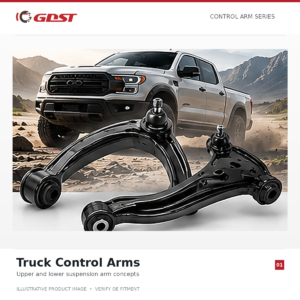
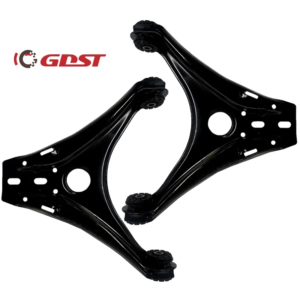
Rear Lower Control Arms for Automotive Aftermarket Replacement & Wholesale

Rear Lower Control Arms for Automotive Aftermarket Replacement & Wholesale
MOQ
50pcs/Per Model
Price
$10-$30
Warranty
1 Year From Receipt of Goods
Delivery Time
45-55 Days
Customization
  • Customized Logo
  • Customized Packaging
  • ODM/Sample Development

ISO9001 Certified

Fast Delivery

OEM/ODM
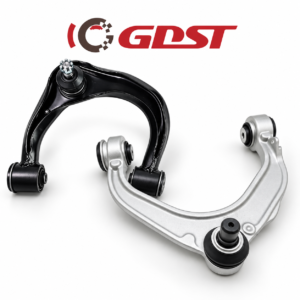
Rear Lower Control Arms for Automotive Aftermarket Replacement & Wholesale

Wuhu GDST Auto Parts Co.,Ltd manufactures control arms based on OE standards and customer specifications. We provide aftermarket replacement parts, new product development, and customized supply options.

GDST control arms are supplied to customers across several major markets, including North and South America, Europe, the Middle East, Southeast Asia, and Africa. Tell us your needs; we will give the right product by research it to your OE part number and specific vehicle model.

We offer a range of control arms for the vehicle aftermarket, with manufacturing and OEM/ODM capabilities to support different product and sourcing requirements.

Car Brand OEM NO.
MITSUBISHI MB910841
Toyota 48730-06120
Volkswagen 1K0505311AB
Ford 8W1Z-5A649-A
Honda 52350-TBA-A00
BMW 33326775683
Volkswagen 1K0505311AB
Volkswagen 1K0 501 529F

Download GDST Control Arms Catalog

What Is a Rear Lower Control Arm?

A rear lower control arm can support and locate the rear wheel assembly.A rear lower control arm is fitted to the lower rear suspension. It connects the wheel carrier to the subframe and affects how the rear wheel moves under different driving conditions.

Key functions include:

  • Helping maintain the intended rear suspension geometry.
  • Controlling wheel movement within the designed suspension range.
  • Supporting the transfer of forces between suspension components.
  • Working with other suspension links to maintain wheel positioning during driving.

In multi-link rear suspension systems, several links may work together to control wheel movement. The rear lower control arm is therefore one component of a larger suspension assembly.

For aftermarket replacement, the correct control arm must match the original mounting geometry, dimensions, installation position, and vehicle application.

For automotive parts distributors, accurate product identification helps reduce fitment errors and unnecessary replacement-part returns.

Rear Lower Control Arm Types and Position Identification

If you’ve worked with rear suspension parts, you’ll know that lower control arms come in quite a few shapes and designs.

The names used in aftermarket catalogs can also be confusing. Two parts may look alike but still have different fitments. The table below shows some of the descriptions commonly used in the market.

Product Name Description Identification Requirements
Rear Lower Control Arm General lower suspension arm installed at the rear axle OE number and vehicle application
Rear Lower Forward Control Arm Lower arm positioned toward the front of the rear suspension assembly Forward mounting position
Rear Lower Rearward Control Arm Lower arm positioned toward the rear of the suspension assembly Rearward mounting position
Rearward Lower Control Arm Alternative catalog wording for certain rearward-positioned lower suspension links OE reference and suspension layout
Rear Left Lower Control Arm Lower control arm designed for the left rear side Left-side mounting geometry
Rear Right Lower Control Arm Lower control arm designed for the right rear side Right-side mounting geometry
Rear Lower Center Control Arm A lower suspension link identified as center-positioned in certain vehicle applications Vehicle-specific OE reference

Important: Rear Lower Control Arm, Rear Lower Forward Control Arm, and Rear Lower Rearward Control Arm should not automatically be considered the same product.

GDST recommends confirming the OE number, vehicle model, production year, and original mounting configuration before ordering.

Rear Lower Control Arm Construction and Product Features

The construction of a rear lower control arm varies according to the original equipment design, vehicle application, material requirements, and suspension geometry.

A typical control arm may consist of several structural and connecting components.

  1. Structural Arm Body

The main body provides the structural connection between designated suspension mounting points. Its dimensions, shape, and material must correspond to the intended vehicle application.

  1. Mounting Brackets and Interfaces

Mounting holes, sleeves, brackets, and connecting interfaces determine how the arm attaches to the vehicle’s suspension system.

Dimensional accuracy is essential for correct installation and suspension geometry.

  1. Rubber Bushings

Depending on the OE design, rubber bushings may be installed at the mounting points to accommodate controlled suspension movement and help isolate vibration.

  1. Ball Joints and Connecting Components

Certain control arm assemblies incorporate ball joints or other articulated connections. Other designs use separate suspension links and joints.

The supplied configuration should match the original component specification.

  1. Surface Protection

Metal components require suitable surface protection according to their material, manufacturing process, and intended operating environment.

Specific coating systems and corrosion-resistance requirements should be confirmed for each product model.

Rear Lower Control Arm Applications and Vehicle Fitment

GDST’s wider control arm portfolio covers different vehicle applications across Japanese, Korean, American, and European automotive markets.

Our overall control arm product range includes more than 3,000 models. This figure represents the broader control arm portfolio, not exclusively rear lower control arms.

Specific rear lower control arm availability depends on the vehicle platform and verified OE references.

To identify the correct replacement component, buyers should provide the following information:

Fitment Information Required Details Purpose
Vehicle Make Toyota, Honda, Ford, BMW, Hyundai, etc. Identifies the vehicle manufacturer
Vehicle Model Specific model name Narrows down the application
Production Year Model year or year range Identifies the vehicle generation
Engine / Drivetrain Engine and drivetrain configuration Helps distinguish suspension variants
Installation Position Rear Lower / Rear Lower Forward / Rear Lower Rearward Identifies the suspension location
Installation Side Rear Left / Rear Right Confirms the correct side
OE Number Original equipment reference Supports fitment verification
Product Drawing / Sample Technical drawing or original component Supports dimensional comparison

Even vehicles with the same model name can use different suspension parts. The year of manufacture, drivetrain, and market version can all make a difference.

Don’t have the OE number? That’s not a problem. Send us the vehicle details, photos, drawings, or a sample, and our team can check which part you need and whether we can develop it.

Rear Lower Control Arm Specifications and Product Identification

For professional aftermarket sourcing, product specifications should be organized around the actual OE application rather than generalized dimensions.

The following information should be confirmed for each rear lower control arm model.

Specification Information to Confirm
Product Category Rear Lower Control Arm
OE Reference Number Application-specific OE number
Vehicle Application Make, model, production year and drivetrain
Installation Position Rear Lower / Rear Lower Forward / Rear Lower Rearward
Installation Side Left / Right
Material Confirmed material according to the product specification
Construction Stamped, forged, or other application-specific construction
Bushing Configuration With bushings / Without bushings
Ball Joint Configuration Included / Not included / Not applicable
Surface Treatment Specified coating or corrosion protection
Supply Configuration Single piece / Left-right pair / Complete set
Packaging Standard export packaging / Private-label packaging

Actual dimensions, material grades, hardness, load ratings, and other technical parameters must be verified against the applicable drawings and inspection records.

Different vehicle platforms require different control arm configurations. GDST does not apply one universal specification to every rear lower control arm model.

Raw Material Selection and Mechanical Properties

Material selection is an important consideration in the manufacturing of automotive suspension components.

For steel control arm applications, the raw material grade, chemical composition, mechanical properties, and dimensional requirements should be evaluated according to the relevant product design and manufacturing specification.

A supplier-issued material quality certificate reviewed for this project records a batch of SAPH400-P hot-rolled pickled steel sheet produced by Maanshan Iron & Steel Co., Ltd.

The certificate identifies Q/MGB505-2017 as the delivery standard and records the following material information.

Raw Material Specification Certificate Information
Steel Manufacturer Maanshan Iron & Steel Co., Ltd.
Steel Grade SAPH400-P
Product Type Hot-Rolled Pickled Steel Sheet
Supply Condition Hot Rolled
Delivery Standard Q/MGB505-2017
Sheet Thickness 2.50 mm
Sheet Width 1,250 mm
Recorded Heat Number 20208935

The certificate lists four coil numbers under the same heat number, with a combined recorded weight of 38.450 tonnes.

Raw Material Mechanical Properties

The material certificate records the following tensile and bending test results:

Test Item Recorded Result Test Description
Yield Strength 301–303 MPa Material resistance to yielding
Tensile Strength 428–429 MPa Maximum tensile stress recorded
Elongation 40–41% Percentage elongation in tensile testing
180° Bend Test Qualified Reported bend test result
Material Quality Grade Qualified Product Certificate classification

These values describe the tested raw steel material in the referenced certificate. They are not finished rear lower control arm test results and should not be interpreted as the tensile strength, load capacity, or fatigue performance of an assembled control arm.

Chemical Composition of the Reference Steel Material

The supplier certificate also records the following chemical composition values. The percentages below are calculated using the multiplier notation printed in the original certificate.

Chemical Element Recorded Composition
Carbon (C) 0.0709%
Silicon (Si) 0.0327%
Manganese (Mn) 0.79%
Phosphorus (P) 0.014%
Sulfur (S) 0.0054%
Acid-Soluble Aluminum (Als) 0.049%

The certificate does not provide numerical results for Nb, Ti, Cr, Cu, V, B, or N.

Material Documentation Note: These values apply only to the specific historical raw-material batch recorded in the supplier certificate dated January 3, 2021. They are reference material data, not universal specifications for every GDST control arm. Their use as evidence of material supplied for a particular GDST rear lower control arm requires confirmation through the relevant purchasing, incoming-material, and production-batch records.

Rear Lower Control Arm Replacement and Common Inspection Considerations

Rear lower control arms are exposed to repeated suspension movement, vibration, road impacts, and environmental conditions throughout vehicle operation.

Over time, certain components may require inspection and replacement.

Common inspection findings include:

  • Worn or cracked bushings:Rubber components may deteriorate or develop cracks after prolonged service.
  • Unusual suspension noise:Knocking or rattling may be associated with worn suspension connections, loose fasteners, or damaged components.
  • Visible deformation:A bent control arm may affect the original suspension geometry.
  • Corrosion:Severe corrosion can compromise the structural integrity of metal components.
  • Abnormal tire wear:Changes in suspension geometry may contribute to irregular tire wear, although other suspension or alignment problems can cause similar symptoms.
  • Excessive joint movement:Worn or damaged joints may affect suspension positioning.

These symptoms do not necessarily indicate a failed rear lower control arm. A qualified technician should inspect the complete suspension system before identifying the cause.

When selecting a replacement control arm, verify:

  1. OE reference and vehicle compatibility.
  2. Correct mounting dimensions and geometry.
  3. Bushing and joint configuration.
  4. Installation orientation and side.
  5. Fastener installation according to the vehicle manufacturer’s service instructions.
  6. Wheel alignment requirements following replacement.

Correctly identified replacement parts help aftermarket distributors reduce fitment-related returns and support customer satisfaction.

GDST Rear Lower Control Arm Manufacturing Process

Manufacturing processes for suspension control arms vary according to the product structure, material, and approved technical drawings.

For applicable steel control arm designs, production may involve the following operations:

  1. Raw Material Selection and Incoming Verification

Raw material grade, thickness, supplier documentation, and batch identification should be checked against the approved product requirements.

  1. Cutting and Forming

Raw materials are processed into the required shapes and dimensions according to the product design.

  1. Stamping and Component Processing

For stamped control arm designs, metal components are formed into their specified structural configurations.

  1. Precision Machining

Specified mounting holes, interfaces, and other critical dimensions are processed according to the technical drawing.

  1. Welding and Component Joining

Where required by the design, structural components are joined according to the applicable manufacturing specifications.

  1. Surface Treatment

Components receive the specified surface protection and finishing processes.

  1. Component Assembly

Bushings, sleeves, ball joints, and other connecting components are assembled when required by the product configuration.

  1. Final Inspection and Packaging

Before packing, we check the finished control arms for dimensions, appearance, and assembly details. The production process isn’t exactly the same for every model, as each design has its own requirements. Not every product uses the same processing operations.

Raw Material Quality Control and Finished Product Inspection

Raw material quality verification and finished control arm inspection are two different parts of product quality management.

A supplier-issued steel certificate provides information about the tested raw material, while the finished control arm requires additional inspections based on its actual construction and approved product specifications.

GDST’s material documentation review can be organized around the following quality considerations.

Quality Control Area Inspection Focus Supporting Documentation
Raw Material Identification Steel grade, material thickness, heat number and coil number Supplier material certificate
Chemical Composition Recorded material element content Chemical composition results
Tensile Properties Yield strength, tensile strength and elongation Material tensile test results
Bend Test Reported 180° bending performance Supplier bend test record
Dimensional Verification Critical mounting dimensions and hole positions Product drawing and dimensional inspection
Welding Inspection Weld appearance and applicable joint requirements Welding inspection records
Surface Treatment Coating condition and specified corrosion protection Coating and corrosion test records
Assembly Inspection Bushing, joint, sleeve and mounting configuration Finished-product inspection records

The uploaded SAPH400-P certificate supports the raw-material documentation items, including chemical composition, tensile properties, and bend testing for the recorded batch.

It does not provide finished-product dimensional, welding, fatigue, salt spray, ball joint pull-out, or assembly performance results. These items require separate product-specific inspection or test records before being claimed as completed GDST tests.

For professional aftermarket buyers, maintaining a clear distinction between raw material certification and finished-product inspection helps improve supplier transparency and quality documentation.

OEM, ODM and Private Label Rear Lower Control Arm Supply

GDST supports automotive aftermarket customers seeking replacement suspension components and customized sourcing solutions.

Our cooperation services include:

OE Reference-Based Development

Product requirements can be evaluated using OE numbers, original samples, and technical drawings.

Sample-Based Development

Original components can be submitted for engineering evaluation and manufacturing feasibility assessment.

Drawing-Based Production

Technical drawings can be reviewed to determine dimensional requirements, structural configurations, and production feasibility.

Private Label Packaging

Customized packaging solutions can include:

  • Customer brand logos.
  • Product labels and identification.
  • Customized packaging designs.
  • Outer carton markings.
  • Export packaging and shipping labels.

Multi-Category Sourcing

GDST’s wider control arm and suspension parts portfolio supports distributors developing multiple automotive aftermarket product categories.

Product development and customization requirements are reviewed according to the actual application, drawings, and order quantity.

Rear Lower Control Arm Wholesale Supply and Ordering

GDST works with automotive parts importers, wholesalers, distributors, and private-label brands seeking aftermarket suspension component suppliers in China.

The following commercial terms should be confirmed for the selected rear lower control arm model.

Commercial Item Reference Information
Overall Control Arm Portfolio 3,000+ models across the wider control arm range
MOQ 50 pcs per model, subject to product confirmation
Lead Time Confirmed according to product availability, order quantity and customization
Warranty 1 year after receiving goods, subject to agreed warranty terms
OEM / ODM Available subject to engineering and order requirements
Packaging Standard export packaging and customized private-label packaging

The 3,000+ model figure refers to the broader control arm portfolio, not exclusively rear lower control arms.

How to Start Your Rear Lower Control Arm Order

  1. Send Your Inquiry:Provide the OE number, vehicle information, product position, and required quantity.
  2. Product Verification:GDST reviews the application and checks available product references.
  3. Quotation:Receive pricing, MOQ, lead time, and packaging details.
  4. Order Confirmation:Confirm product specifications, quantity, payment terms, and packaging.
  5. Production:Production is arranged according to the agreed order terms.
  6. Inspection and Shipment:Products undergo applicable inspections before export.
  7. After-Sales Support:GDST provides communication and warranty support according to the agreed terms.

For mixed-model purchasing programs, GDST can review product requirements and discuss a suitable sourcing arrangement.

Frequently Asked Questions About Rear Lower Control Arms

  1. What is a rear lower control arm?

A rear lower control arm is a suspension component installed in the lower section of a vehicle’s rear suspension. It helps maintain suspension geometry and control wheel movement.

  1. Are rear lower control arms and rearward lower control arms the same?

Not necessarily. Rearward lower control arms refer to specific suspension positions in certain vehicle designs. OE numbers and mounting configurations should be checked before ordering.

  1. What is the difference between rear left and rear right lower control arms?

They are designed for different installation sides. Their mounting geometries may differ, so they should not be assumed interchangeable.

  1. How can I identify the correct rear lower control arm?

Provide the vehicle make, model, production year, drivetrain, installation position, and OE number. Original samples and drawings can also support identification.

  1. Does a rear lower control arm include bushings?

It depends on the product configuration. Some assemblies include pre-installed bushings, while others are supplied without them.

  1. What steel material is used for rear lower control arms?

Material selection depends on the specific product design and approved specifications. A supplier certificate reviewed for this project records SAPH400-P hot-rolled pickled sheet, but its applicability to a particular GDST product must be confirmed.

  1. Can GDST develop rear lower control arms based on samples or drawings?

GDST can evaluate sample-based and drawing-based development requests according to engineering requirements and manufacturing feasibility.

  1. What is the MOQ for rear lower control arms?

The current control arm supply reference lists an MOQ of 50 pieces per model. The actual MOQ should be confirmed for each rear lower control arm application.

  1. What is the production lead time?

Lead time depends on product availability, order quantity, customization, and production scheduling. The confirmed delivery schedule is provided with the quotation.

  1. Does GDST provide a warranty for rear lower control arms?

GDST’s published control arm warranty reference is one year after receiving goods, subject to the applicable warranty terms and claim arrangements.

Contact GDST for Rear Lower Control Arm Wholesale Supply

Looking for a dependable rear lower control arm supplier for your automotive aftermarket business?

GDST supports importers, wholesalers, distributors, and private-label brands with OE-reference-based sourcing, suspension parts development, manufacturing coordination, and export services.

Send us your OE numbers, vehicle applications, product drawings, or original samples. Our team can help evaluate product availability and prepare a quotation according to your purchasing requirements.

To receive a more accurate quotation, please provide:

  • OE number or reference part number.
  • Vehicle make, model, and production year.
  • Required installation position and side.
  • Required quantity per model.
  • Product configuration and packaging requirements.
  • Technical drawings or sample photographs, if available.

GDST – Your Automotive Suspension Parts Sourcing Partner.

Quality Assurance

Every product undergoes rigorous testing and inspection to ensure reliability and performance

Material Inspection

Premium steel from certified suppliers with full traceability

Performance Testing

Fatigue, torque, and stress testing per OE standards

Dimensional Control

Tolerance control for precise OE fitment

Final Inspection

100% inspection before shipment