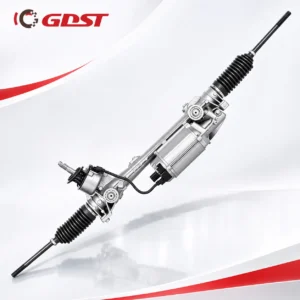
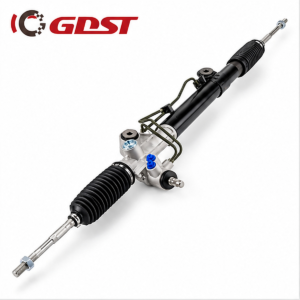
Manual Steering Rack Manufacturer for OEM Replacement & Aftermarket Supply

Manual Steering Rack Manufacturer for OEM Replacement & Aftermarket Supply
MOQ
30PCS
Price
$30-$100
Warranty
1 Year From Receipt of Goods
Delivery Time
45-55 Days
Customization
  • Customized Logo
  • Customized Packaging
  • ODM/Sample Development

ISO9001 Certified

Fast Delivery

OEM/ODM
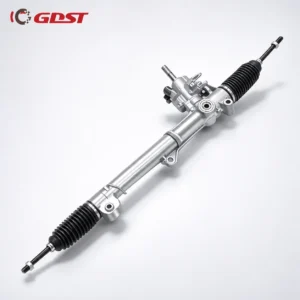
Wuhu GDST Auto Parts Co., Ltd supplies manual steering rack and pinion solutions for automotive aftermarket distributors, importers, wholesalers, and private-label brands. We support product sourcing, OE reference matching, sample-based development, and customized supply requirements. Share your part number, vehicle details, technical drawing, or existing sample so our team can review the application and available options.

OE No. Car Brand Vehicle Models
53040-SR3-A01 Honda 1992–1995 Honda Civic (EG)
53040-S04-A01 Honda 1996–2000 Honda Civic (EK)
45510-02420 Toyota Corolla 2019-
45510-12080 Toyota 1984–1987 Toyota Corolla (AE86)
191-419-063 Volkswagen 1985–1992 VW Golf Mk2
171-419-063 VW 1975–1984 VW Rabbit / Golf Mk1
45510-0D170 Toyota Yaris/Vios 2005-
4410A454 Mitsubishi Outlander

What Is a Manual Steering Rack?

A manual steering rack, also called a manual rack and pinion or non-power steering rack, is a mechanical assembly that transfers steering-wheel input to the front wheels without hydraulic or electric assistance. A pinion gear engages with the toothed rack bar. When the driver turns the steering wheel, the pinion rotates and moves the rack laterally. The rack movement is transferred through the tie rods to change the direction of the road wheels.

Unlike a hydraulic power steering rack, a manual steering rack does not use a hydraulic pump, fluid reservoir, or pressure lines. It also does not rely on an electric motor to provide steering assistance. The driver supplies the force required to turn the wheels.

Manual steering racks are found in selected passenger vehicles, classic cars, motorsport applications, and custom-built vehicles. They are also considered in some power-steering conversion projects. Suitability depends on the vehicle’s original steering design, front axle load, tire size, steering geometry, and intended use. A manual rack should not be selected solely because its overall length appears similar to the original unit.

Main Components of a Manual Rack and Pinion

A manual steering rack combines several mechanical components. Their dimensions and interfaces must work together to provide the required steering movement and fit the vehicle correctly.

  • Rack Bar: A toothed linear bar that moves from side to side as the pinion turns.
  • Pinion Gear and Shaft: Receives rotational input from the steering column and drives the rack bar.
  • Rack Housing: Supports and encloses the rack mechanism and provides the mounting interfaces.
  • Rack Guide or Yoke: Supports the rack bar and helps maintain the specified gear engagement, where used.
  • Preload Spring and Adjuster: Used in some designs to control engagement and internal clearance.
  • Bearings and Bushings: Support rotating or sliding components.
  • Rack Boots or Bellows: Protect exposed moving areas from dust, water, and road contaminants.
  • Inner Tie Rods: Connect the rack to the outer steering linkage when included in the assembly.

The component arrangement varies by design. A rack-only product may not include tie rods, boots, mounting brackets, or steering shaft adapters. Buyers should confirm the exact package contents rather than assume that every supplier’s term “complete rack” means the same thing.

Manual Steering Rack Types and Supply Configurations

Manual racks are designed around different vehicle platforms, steering geometries, and installation requirements. For aftermarket purchasing, the first step is to identify whether the requirement is a direct replacement, a vehicle-specific assembly, or a conversion solution.

Configuration Description Typical requirement
Standard manual rack Mechanical rack-and-pinion assembly for a defined application Replacement sourcing
Vehicle-specific manual rack Designed around particular mounting points and steering interfaces OE-style replacement
Application-specific rack Developed for a defined chassis or steering geometry Custom vehicles and motorsport
Narrowed or extended rack Modified overall dimensions for a particular installation Selected chassis projects
Rack with inner tie rods Rack supplied with specified inner tie rods More complete replacement supply
Manual conversion package Rack supplied with application-specific brackets or connection parts Power-steering conversion projects

Actual availability depends on the part number and application. GDST can review an existing reference or assess a sample-based development request. A standard manual rack should not be described as a complete conversion kit unless the required brackets, steering connections, and other installation parts are included and verified.

Typical Applications

Passenger Car Replacement: Some passenger vehicles were originally designed with non-power steering. Replacement requires matching the original rack dimensions, mounting points, pinion connection, tie rod interfaces, and steering position.

Classic and Vintage Vehicles: Older platforms may use mechanical steering systems. OE numbers, production year, chassis version, and left- or right-hand-drive configuration are important because specifications can vary within the same model range.

Motorsport and Racing: Selected racing vehicles use manual steering to simplify the steering arrangement or remove power-assisted components. Rack travel, steering ratio, mounting geometry, and linkage compatibility must be assessed together.

Custom-Built Vehicles and Modified Chassis: Hot rods, street machines, and custom chassis may require a particular rack length, mounting center distance, pinion position, or input shaft interface. Physical dimensions and drawings are especially useful for these projects.

Power-Steering Conversion Projects: Some owners consider replacing a power-assisted system with a manual arrangement. This is not a matter of simply removing the pump or draining the fluid. The rack, steering column, tie rods, mounting points, steering geometry, and vehicle suitability all require engineering review.

Manual Steering Rack vs. Power Steering Rack

Both manual and power-assisted systems can use rack-and-pinion mechanisms, but their assistance systems and internal designs are different.

Comparison Manual Steering Rack Hydraulic Power Steering Rack Electric Power Steering Rack
Steering assistance None; driver supplies steering force Hydraulic assistance Electric assistance
Hydraulic pump and fluid Not required Used in conventional hydraulic systems Not required
Electric assist motor Not required Not required in conventional hydraulic systems Used in the EPS system
Main selection factors Rack ratio, travel, vehicle load, tire size, interfaces Hydraulic compatibility and steering geometry Electrical compatibility, control system, and calibration
Driver effort Generally higher, especially at low speed Reduced by hydraulic assistance Reduced by electric assistance

A manual rack can simplify a steering system because it does not need the hydraulic or electric assistance components used by the corresponding power-assisted design. In a suitable conversion, removing an engine-driven hydraulic pump and its associated parts may also reduce accessory load and system weight. The actual result depends on the original vehicle and the components removed.

Manual steering also has limitations. Steering effort is usually higher during parking and other low-speed maneuvers. Wider tires, greater front axle load, steering geometry, and rack ratio can increase the effort required. A manual rack is therefore not automatically a better or safer replacement for a power steering rack. It must be selected for a vehicle and use case that are compatible with manual steering.

Technical Specifications to Check Before Ordering

A reliable fitment decision requires more than a vehicle name or a single overall-length measurement. GDST recommends checking the following information against the original part, technical drawing, or approved sample.

Parameter What to confirm Why it matters
OE number / part number Original and cross-reference numbers Identifies the intended application
Vehicle application Make, model, year, engine, and chassis Narrows down the correct version
Steering position LHD or RHD Confirms steering layout
Overall length Measurement points and total length Checks installation space
Mounting center distance Distance between mounting points Confirms chassis mounting
Rack travel Total linear movement Confirms steering movement range
Inner pivot distance Distance between inner tie rod pivot centers Affects steering linkage geometry
Steering ratio Ratio definition and stated value Describes steering response
Rack travel per pinion revolution Linear movement for one pinion revolution Helps characterize rack gearing
Input shaft Spline count, profile, diameter, and position Confirms steering column connection
Tie rod interfaces Thread size, pitch, joint type, and length Confirms linkage compatibility
Included components Rack only, inner tie rods, boots, brackets, or other parts Prevents package misunderstandings

Steering ratio and rack travel per pinion revolution are related, but they are not interchangeable specifications. Manufacturers may also state steering ratio using different conventions. Compare values only when the measurement definitions are the same. Do not infer a vehicle’s complete steering ratio from rack travel alone; steering arm geometry and other linkage dimensions also affect the overall system.

For modified vehicles, obtain the original rack dimensions and the proposed installation dimensions before selecting a product. A rack with similar length may still have different mounting centers, inner pivot locations, pinion angle, spline profile, or tie rod threads. Those differences can prevent installation or change steering geometry.

GDST Steering Rack Component Machining and Dimensional Inspection

The inspection records supplied by GDST include examples of rack bar, pinion shaft, and housing dimensional checks. These records show drawing-based inspection of selected steering rack components. The measurements below belong to the specific component drawings and inspection records identified; they are not universal specifications for every manual steering rack.

Rack Bar Inspection

One rack bar record, product code 2.002.8950, dated July 27, 2026, includes checks of overall length, bore diameters, internal thread, thread depth, concentricity, and surface finish.

The recorded overall length is 724.000 mm against a drawing requirement of 724 ±0.2 mm. The recorded bore dimensions include 17.060 mm against φ17 +0.2/0 mm and 14.680 mm against φ14.5 +0.2/0 mm. The record also lists an M16 × 1.5-6H internal thread and a minimum thread depth of 18.5 mm. The listed inspection items were judged qualified.

Pinion Shaft Inspection

A pinion shaft record, product code 2.001.8950, dated July 28, 2026, documents checks of shaft diameters, a dimensional distance, concentricity, and surface finish.

Examples include 11.990 mm against φ12 -0.011/0 mm, 25.000 mm against φ25 ±0.005 mm, and 24.960 mm against φ25 -0.03/-0.05 mm. A 13 mm drawing dimension was recorded as 12.960 mm. The listed inspection items were judged qualified.

Housing Inspection

A housing record, product code 2.003.8854, dated June 28, 2026, includes checks of the overall length, gear and rack bores, threaded features, and other drawing dimensions.

The overall length was recorded as 588.540 mm against 588.5 ±0.1 mm. Other recorded dimensions include 74.100 mm against 74 +0.2/0 mm, 87.070 mm against 87 +0.2/0 mm, and 89.020 mm against 89 +0.2/0 mm. The listed inspection items were judged qualified.

These examples can support a clear quality message: GDST uses product drawings and dimensional inspection records to check selected steering rack components. They should be presented as examples from specific inspected parts, not as proof that every model uses the same dimensions or tolerances. Before publishing them as evidence for a particular manual rack, confirm that the recorded component codes belong to the manual steering rack product family being promoted.

Gear Material and Heat Treatment Verification

Gear material and heat treatment influence the properties of gear components. GDST’s supplied metallographic report documents one 40Cr gear specimen that underwent tooth hardening.

Report Item Recorded Information
Component Gear
Material 40Cr
Process Tooth hardening
Magnification 500×
Required metallographic grade Grade 4–6
Recorded martensite grade Grade 4–5
Standard stated in report JB/T 9204-2008
Conclusion Qualified

The report records a qualified result for the tested specimen. It provides evidence that metallographic evaluation was carried out against the stated requirement. The report also states that the result applies only to the specimen tested. It must not be presented as certification of every gear, every production batch, or every manual steering rack model. Where this material and process are used, the applicable inspection plan and batch records should be confirmed.

Incoming Inspection of Rubber Mounting Components

For rack designs that use vulcanized rubber mounting components, hardness and dimensions can affect fit and mounting behavior. GDST’s supplied incoming inspection record covers a vulcanized mounting sleeve assembly identified as 20# NR, with a stated hardness requirement of Shore A 80 ±5.

The record shows an incoming lot quantity of 4,044 pieces, a sample quantity of four, and zero nonconforming samples. It also includes dimensional checks such as length, spacing, outer diameters, and inner diameter. The inspection conclusion is qualified.

This record is evidence of incoming inspection for the documented rubber component. It should only be associated with a manual steering rack listing if the component is confirmed as part of that model’s actual bill of materials. Do not imply that all manual racks use this rubber material or mounting design.

Manufacturing and Quality Control

Quality control should follow the product drawing, material specification, assembly configuration, and agreed inspection plan. Depending on the manual rack design, relevant checks may include:

  1. Incoming Inspection: Verify purchased or processed components against the applicable drawings and material requirements. Rubber parts may require hardness and dimensional checks where specified.
  2. Machining Inspection: Check critical lengths, diameters, bores, threads, mounting features, concentricity, and surface finish against approved drawings.
  3. Gear and Heat-Treatment Evaluation: Where specified, verify material and heat-treatment characteristics using the inspection method and acceptance criteria applicable to the component.
  4. Assembly Inspection: Confirm component identity, correct assembly, fastener condition, mounting interfaces, dust boot installation, and other model-specific requirements.
  5. Mechanical Functional Inspection: For a purely mechanical manual rack, the applicable test plan may include rack movement, travel, operating torque, gear engagement, backlash, smoothness, and visual condition.
  6. Final Inspection and Packing: Verify product identification, package configuration, quantity, and visible condition before shipment.

Inspection items and acceptance limits for each manual rack should be stated only when supported by its approved product drawing and inspection plan. Different models may require different inspection methods and technical criteria.

Why Source Manual Steering Racks from GDST?

GDST is a Chinese automotive parts supplier specializing in vehicle component research, development, manufacturing, and international aftermarket supply. The broader GDST steering rack portfolio covers more than 1,500 models across mechanical, hydraulic, and electric steering rack categories. This is the total steering rack portfolio, not a claim that more than 1,500 manual rack models are available.

For distributors, importers, wholesalers, and private-label brands, the current GDST steering rack program lists the following supply capabilities:

Supply Item GDST Information
Overall steering rack portfolio 1,500+ models across the product range
Product categories Mechanical, hydraulic, and electric steering racks
Standard MOQ 30 pieces per model
Standard lead time Approximately 50 days
Warranty 1 year, subject to applicable terms
Development Sample-based development evaluation
Private label Logo and product marking options
Packaging Color bags, color boxes, and labels
Supply format Assembled or disassembled options, subject to model

These are general steering rack program details. Manual rack model availability, actual MOQ, lead time, warranty coverage, packaging, and development feasibility must be confirmed for the selected part number and order. GDST can review OE references, drawings, and samples to help buyers assess product fitment before placing a bulk order.

How to Confirm the Correct Manual Steering Rack

To reduce the risk of an incorrect order, provide as much of the following information as possible:

  • OE number or existing aftermarket part number.
  • Vehicle make, model, production year, engine, and chassis version.
  • LHD or RHD configuration.
  • Clear photos of the existing rack from several angles.
  • Overall length, mounting center distance, rack travel, and pinion position, if available.
  • Input shaft spline details and tie rod thread specifications.
  • Required package contents, such as rack only or rack with inner tie rods.
  • Expected order quantity and any private-label requirements.

For a direct replacement, the OE number is a useful starting point, but it should be checked against the actual vehicle version and interfaces. For custom projects, a dimensioned drawing or physical sample is usually more useful than a general vehicle description. GDST can review the supplied information and confirm whether an existing reference appears suitable or whether further technical evaluation is required.

Rack Only or Complete Assembly?

Product descriptions are not always consistent between suppliers. Before comparing prices, confirm exactly what is included.

Supply Configuration Possible Contents Buyer Should Confirm
Rack only Main rack assembly Whether boots, tie rods, and brackets are excluded
Rack with inner tie rods Rack and specified inner tie rods Thread, length, and pivot compatibility
Complete rack assembly Rack and the components listed by the supplier Full itemized component list
Conversion package Rack plus application-specific installation parts Brackets, shaft adapters, joints, and vehicle compatibility

Do not assume that outer tie rods, mounting brackets, steering shaft adapters, or installation hardware are included. Ask for an itemized packing list or product drawing before approving the order.

OEM and ODM Development

Different markets and vehicle projects may require specific dimensions, interfaces, product markings, or packaging. GDST supports sample-based development evaluation for projects that cannot be matched directly to an existing reference.

Buyers can provide an original rack, component sample, technical drawing, or dimensional specification for review. The engineering team can assess the key interfaces and discuss development feasibility. Any proposed change to rack length, travel, mounting points, pinion connection, or tie rod interface must be technically reviewed because these features affect fitment and steering geometry.

For private-label programs, GDST can discuss logo marking, product identification, part number labels, color bags, and color boxes. Assembly or disassembled supply options may also be evaluated according to the product design and order requirements. Development scope, sample charges if applicable, MOQ, tooling requirements, and production lead time should be confirmed before the project starts.

Ordering Process

The sourcing process is designed to clarify the application and package configuration before mass production.

  1. Send the Requirement: Provide the OE number, vehicle details, photos, drawings, or sample.
  2. Review the Application: GDST checks available references and identifies information still needed for fitment confirmation.
  3. Confirm the Quotation: Review the part number, technical specification, included components, quantity, packaging, price, and estimated lead time.
  4. Evaluate a Sample if Required: Agree on the sample or development process before bulk production.
  5. Proceed with the Order: Production and applicable inspections follow the agreed specification and order requirements.
  6. Prepare Shipment: Confirm final quantities, packaging, shipping marks, and export arrangements.

Frequently Asked Questions

  1. Is a Manual Steering Rack the Same as a Mechanical Steering Rack?

Not always. “Mechanical steering” describes the mechanical steering mechanism broadly, while “manual steering rack” specifically means a rack without power assistance.

  1. Can I Use a Power Steering Rack Without Its Pump?

Do not assume so. Removing the pump or fluid does not convert a hydraulic rack into a properly designed manual rack. Internal resistance and compatibility must be evaluated.

  1. Is Manual Steering Suitable for Daily Driving?

It can be suitable for a vehicle designed or properly converted for manual steering. Steering effort is usually higher at low speeds, so vehicle weight, tires, and steering geometry matter.

  1. What Is a Quick-Ratio Manual Steering Rack?

A quick-ratio rack provides a quicker steering response under the stated ratio convention. Confirm the manufacturer’s ratio definition and rack travel rather than comparing the name alone.

  1. How Do I Identify the Correct Rack?

Start with the OE number, then confirm vehicle year, model, chassis, LHD/RHD, mounting dimensions, pinion connection, and tie rod interfaces. Photos or a sample can help resolve differences.

  1. Are Inner and Outer Tie Rods Included?

Not necessarily. Some products are rack-only; others include inner tie rods or additional parts. Confirm the itemized package contents before ordering.

  1. Does GDST Support OEM or ODM Development?

GDST can evaluate sample-based development using an existing rack, component sample, drawing, or dimensional specification. Feasibility and commercial terms are confirmed project by project.

  1. What Warranty Does GDST Provide?

The general steering rack program lists a one-year warranty, subject to the applicable terms. Confirm coverage and claim requirements with the quotation.

  1. What Quality Checks Can Apply to a Manual Steering Rack?

Depending on the design, checks may cover component dimensions, threads, concentricity, surface finish, gear material or heat treatment where specified, assembly, rack movement, operating torque, and backlash. The approved model-specific inspection plan determines the actual tests.

Contact GDST for Manual Steering Rack Supply

Whether you need replacement manual steering racks, OE reference matching, or a sample-based development project, GDST can review your requirements and discuss suitable supply options.

Send your part number, vehicle details, technical drawing, or existing sample. Confirm the required package configuration and expected quantity so the product, quotation, and delivery terms can be reviewed together.

Quality Assurance

Every product undergoes rigorous testing and inspection to ensure reliability and performance

Material Inspection

Premium steel from certified suppliers with full traceability

Performance Testing

Fatigue, torque, and stress testing per OE standards

Dimensional Control

Tolerance control for precise OE fitment

Final Inspection

100% inspection before shipment