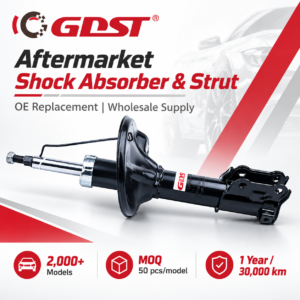
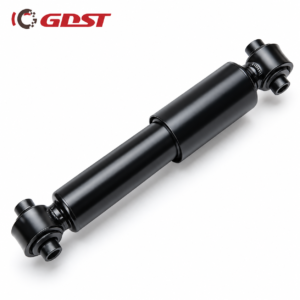
Light Truck Shock Absorbers for Wholesale & Private Label

Light Truck Shock Absorbers for Wholesale & Private Label
MOQ
50PCS
Price
$6 - $25
Warranty
1 Year From Receipt of Goods
Delivery Time
45-55 Days
Customization
  • Customized Logo
  • Customized Packaging
  • ODM/Sample Development

ISO9001 Certified

Fast Delivery

OEM/ODM
Looking for a reliable supplier of light truck shock absorbers for your automotive aftermarket business?

Wuhu GDST Auto Parts Co.,Ltd supports automotive parts distributors, importers, wholesalers, and private-label brands with shock absorber sourcing, product development, and application matching. Our wider shock absorber range covers multiple vehicle categories, with specific vehicle compatibility confirmed against the relevant part reference and technical requirements.

Whether you are sourcing replacement shocks for pickups, selected SUVs, or light commercial vehicles, our team can help review your target applications, identify relevant product specifications, and coordinate your quotation requirements.

  • Replacement shock absorber sourcing for confirmed vehicle applications
  • Model-specific damping-force technical data
  • OE reference and dimensional fitment assistance
  • Wholesale supply and private-label cooperation
  • Product documentation and quality requirements reviewed by application

Part Number

Application

55001903

BUICK ALLURE 2010

55002077

TOYOTA 4RUNNER 2003-2009

55004293

CHEVROLET MALIBU LIMITED 2016

55050002

CHRYSLER 300M 1999-2004

55001587

JEEP PATRIOT 2007-2010

55002423

FORD EDGE 2007-2008

55002422

JEEP WRANGLER 2007-2017

Download the GDST Shock Absorber Catalog

Light Truck Shock Absorbers for Different Vehicle Applications

Light truck shock absorbers must be selected according to the vehicle’s suspension design, intended use, mounting configuration, and required damping characteristics. The term “light truck” can also cover different vehicle categories in different markets, so the exact application should always be confirmed.

Pickup Trucks and Light-Duty Trucks

For pickups and light-duty trucks used on public roads, the replacement shock absorber should match the original mounting arrangement, required stroke, and vehicle-specific damping requirements.

For aftermarket sourcing, provide the vehicle make, model, model year, and OE reference number whenever possible. This helps reduce the risk of selecting a shock absorber that looks similar but does not fit the intended application.

SUVs and Light Commercial Vehicles

Some shock absorber applications overlap across pickup, SUV, and light commercial vehicle platforms, while others use different suspension configurations.

GDST can review the target vehicle information and available product references to determine whether a suitable application is covered. Compatibility should not be assumed based only on vehicle size or general product appearance.

Standard-Height Replacement and Lifted Applications

Standard-height replacement shocks and shocks designed for lifted vehicles should not be treated as interchangeable by default.

A lifted vehicle may require different extended and compressed lengths, working stroke, or mounting configurations. Before sourcing replacement shocks for a modified vehicle, provide the lift height and relevant suspension details so the application can be reviewed.

Choose the Right Light Truck Shock Absorber for Your Application

Different shock absorber designs serve different engineering and driving requirements. The most suitable choice depends on the original suspension design, the vehicle’s operating conditions, and the verified product specification.

Shock absorber type or feature

General characteristics

Selection considerations

Twin-tube shock absorber

Uses an inner working tube and an outer reserve tube.

Confirm OE reference, mounting configuration, and required damping characteristics.

Monotube shock absorber

Uses a single pressure tube; many gas-pressurized designs incorporate a separating piston.

Consider the intended application, dimensions, and vehicle compatibility.

Gas-charged shock absorber

Uses pressurized gas in applicable designs to help limit oil aeration.

Gas charging can be used with different shock constructions; confirm the actual model specification.

Adjustable shock absorber

Allows damping settings to be changed on models designed with adjustment capability.

Verify adjustment range, vehicle compatibility, and installation requirements.

Heavy-duty application shock

Designed around the requirements of a particular vehicle or operating application.

Check the actual specification rather than relying on the term “heavy-duty” alone.

These categories are not all mutually exclusive. For example, a gas-charged shock absorber may also use a twin-tube or monotube construction.

The technical data presented below relate to specific GDST part numbers. They should not be interpreted as confirmation that every listed model is suitable for every light truck application. Vehicle fitment and product construction must be verified against the applicable part reference.

Model-Specific Damping Force Data for GDST Shock Absorbers

GDST’s supplied shock absorber technical data sheets document model-specific damping-force specifications, including rebound force, compression force, stated test velocity, and specified minimum and maximum values.

The available document contains 17 part-number data sheets: 14 identified as front shock absorbers and three identified as rear shock absorbers. All list China as the origin.

Front Shock Absorber Damping Force Specifications

The following values are transcribed from the supplied GDST shock absorber technical data sheets, pages 1–14.

GDST Part Number

Test Velocity (m/s)

Rebound Force, Nominal ± Tolerance (N)

Rebound Range (N)

Compression Force, Nominal ± Tolerance (N)

Compression Range (N)

MF10366741

0.314

1000 ± 150

850–1150

640 ± 122.4

517.6–762.4

MF10366742

0.314

1000 ± 150

850–1150

640 ± 122.4

517.6–762.4

MF10242405

0.300

1100 ± 250

850–1350

550 ± 150

400–700

MF10242085

0.300

1100 ± 250

850–1350

550 ± 150

400–700

MF543027096R

0.314

940 ± 142.2

797.8–1082.2

515 ± 102.4

412.6–617.4

MF8200663654

0.314

780 ± 121.4

658.6–901.4

670 ± 127.2

542.8–797.2

MF543023532R

0.300

1225 ± 225

1000–1450

550 ± 150

400–700

MF543026656R

0.314

995 ± 149.35

845.65–1144.35

635 ± 121.6

513.4–756.6

MF6001550751

0.314

1015 ± 151.95

863.05–1166.95

460 ± 93.6

366.4–553.6

MF10419961

0.300

1100 ± 250

850–1350

550 ± 150

400–700

MF10419962

0.300

1100 ± 250

850–1350

550 ± 150

400–700

MF543024EA3A

0.300

1100 ± 250

850–1350

550 ± 150

400–700

MF543034EA3A

0.300

1100 ± 250

850–1350

550 ± 150

400–700

MF543025451R

0.300

1100 ± 250

850–1350

550 ± 150

400–700

Rear Shock Absorber Damping Force Specifications

The following values are transcribed from the supplied GDST shock absorber technical data sheets, pages 15–17.

GDST Part Number

Test Velocity (m/s)

Rebound Force, Nominal ± Tolerance (N)

Rebound Range (N)

Compression Force, Nominal ± Tolerance (N)

Compression Range (N)

MF8200953294

0.314

680 ± 108.4

571.6–788.4

480 ± 96.8

383.2–576.8

MF562100664R

0.314

1920 ± 269.6

1650.4–2189.6

520 ± 103.2

416.8–623.2

MF8200869345

0.300

1100 ± 250

850–1350

550 ± 150

400–700

How to Interpret the Damping Force Specifications

Rebound force describes the specified damping force associated with the shock absorber’s extension movement. Compression force describes the specified damping force associated with its compression movement.

The supplied data sheets state a test stroke of 30 mm for all 17 part numbers. The stated test velocity is either 0.300 m/s or 0.314 m/s, depending on the model.

These values are model-specific specifications, not a universal setting for all light truck shock absorbers. A higher rebound or compression force does not automatically indicate a better product; the appropriate damping characteristics depend on the vehicle, suspension design, and intended application.

The 30 mm test stroke stated in these sheets must not be confused with the shock absorber’s full working stroke or its fully extended and compressed lengths.

The stated force ranges are reproduced from the technical data sheets. The document does not provide a complete damping-force curve, individual measured results for production samples, or a named test standard. Further technical information should be requested when required for a particular purchasing or validation program.

Light Truck Shock Absorber Specifications and Fitment Data

Damping-force specifications are only one part of a complete shock absorber selection process. For a replacement program, the relevant dimensions, mounting interfaces, vehicle application, and other technical requirements must also be confirmed.

Specification

Information to confirm

Unit or reference

GDST part number

Unique product identification

Part number

OE or cross-reference number

Applicable original-equipment reference

OE number

Vehicle application

Make, model, model year, engine and drivetrain where relevant

Vehicle details

Installation position

Front or rear; left or right if applicable

Position

Shock construction

Twin-tube, monotube, or another documented design

Product-specific

Mounting configuration

Upper and lower mounting types and interface dimensions

Drawing or mm

Extended length

Length at the specified fully extended condition

mm

Compressed length

Length at the specified fully compressed condition

mm

Working stroke

Difference between the specified extended and compressed lengths

mm

Body or working-cylinder diameter

Diameter relevant to the documented design

mm

Piston rod diameter

Rod diameter for the selected model

mm

Damping-force specifications

Rebound and compression force at the stated test conditions

N and m/s

Performance records

Available technical data, test curves, or inspection records

Document-specific

Packaging

Standard or agreed private-label packaging

Order specification

Important: The attached technical data sheets provide damping-force specifications, but they do not include all the dimensional and vehicle application fields listed above. Actual values must be taken from the confirmed product drawings, application catalog, or other applicable technical records.

For lifted applications, the required compression and extension limits must also be reviewed against the vehicle’s suspension travel and mounting arrangement.

GDST Shock Absorber Technical Documentation and Quality Support

GDST provides model-specific shock absorber technical data for selected part numbers. The supplied technical sheets identify the product part number, installation position, origin, damping-force specifications, and specified minimum and maximum values.

Model-Level Technical Information

The current supplied document contains 17 individual data sheets. Each sheet identifies a specific GDST part number and its stated front or rear installation position.

This information can support initial technical review and purchasing discussions. For a particular light truck application, the part number must still be matched to the correct vehicle and installation requirements.

Damping-Force Specifications and Technical Records

The supplied sheets document rebound and compression force specifications at stated test conditions. These records give purchasing teams more specific information than a general product description alone.

Where a project requires additional verification, customers should specify the required test standard, acceptance criteria, test curves, dimensional drawings, or other technical documents during the inquiry stage.

The supplied document does not by itself establish independent third-party testing, full durability validation, or compliance with every market-specific requirement. Such claims should only be made when supported by the relevant records.

Product Quality and Documentation Requirements

GDST’s wider shock absorber business references established quality management systems. Current certificate validity, certificate holder, and applicable manufacturing scope should be confirmed before relying on a particular certification claim.

For each purchasing project, the applicable technical specifications, inspection requirements, warranty terms, and available product documentation should be agreed before order confirmation.

Wholesale, OEM and Private Label Shock Absorber Supply

For distributors and automotive brands, sourcing involves more than selecting an individual shock absorber. Model coverage, purchasing quantities, delivery planning, packaging requirements, and technical documentation should be reviewed together.

Purchasing item

Current published information or process

What to confirm

Standard MOQ

50 pieces per model on GDST’s general shock absorber page

Confirm the applicable MOQ for the selected model and order arrangement.

Standard lead time

50 days for container orders on GDST’s general shock absorber page

Confirm the schedule against model availability, order quantity, packaging, and shipment plan.

Warranty

One-year warranty stated on the current general shock absorber page

Confirm applicable warranty terms and coverage in the quotation.

Private label

OEM and private-label cooperation is offered

Confirm branding artwork, packaging requirements, and any packaging-specific MOQ.

Technical data

Model-specific damping-force data available for the 17 part numbers listed above

Confirm the target model’s fitment, technical records, and any additional documentation required.

The figures above are GDST’s published general shock absorber terms. They should be reconfirmed for the specific light truck product and order before being treated as binding commercial commitments.

How to Start a Private-Label Project

1. Share your target vehicle applications, OE references, and expected product mix.

2. Review the available model coverage and technical requirements with GDST.

3. Confirm the selected products, specifications, packaging artwork, and quality documentation.

4. Finalize the quotation, applicable MOQ, delivery schedule, and warranty terms.

5. Proceed with the agreed order and shipment arrangements.

For custom branding, provide the required logo files and packaging specifications so that feasibility and commercial conditions can be reviewed before production.

Information to Include in Your Light Truck Shock Absorber Inquiry

To help us respond accurately, please share as much of the following information as available.

Information needed

Why it helps

Vehicle make, model, and year

Establishes the target application.

Engine and drivetrain, where relevant

Helps distinguish vehicle configurations.

OE or existing part number

Supports cross-reference checking.

Front or rear installation position

Identifies the required product position.

Product photographs or dimensional drawings

Helps review mounting and dimensional details when reference numbers are unavailable.

Standard-height or lifted configuration

Helps identify additional stroke and fitment requirements.

Required quantity and target market

Supports quotation and supply planning.

Private-label or packaging requirements

Allows branding and packaging needs to be assessed.

Required technical documents

Helps identify whether damping-force specifications, test curves, drawings, or other records are needed.

If you do not have every detail, send the information you have. Our team can review the available references and identify which additional information is needed.

Frequently Asked Questions About Light Truck Shock Absorbers

1. What vehicles can GDST supply light truck shock absorbers for?

GDST’s wider shock absorber range covers multiple vehicle categories, including pickups, SUVs, and commercial vehicle applications. Specific light truck fitment must be confirmed using the vehicle details, OE reference, or relevant product specifications.

2. Can GDST provide damping-force technical data?

Yes. The supplied technical document contains 17 model-specific data sheets, identifying 14 front shock absorber part numbers and three rear shock absorber part numbers. The sheets specify rebound and compression force values, test conditions, and corresponding minimum and maximum values.

3. What do rebound force and compression force mean?

Rebound force relates to the damping force associated with extension movement, while compression force relates to damping during compression movement. The correct values depend on the particular shock absorber design and intended vehicle application.

4. What test conditions are stated in the available technical data?

The supplied data sheets state a test stroke of 30 mm for all 17 part numbers. The stated test velocity is 0.300 m/s or 0.314 m/s, depending on the model. These conditions should be read together with the relevant part number and specified force values.

5. Do the supplied damping-force data confirm that a shock absorber fits my truck?

No. Damping-force data describe specified force characteristics, but they do not independently establish vehicle compatibility. Fitment must be confirmed using the OE reference, vehicle details, mounting interfaces, dimensions, and other applicable requirements.

6. Are twin-tube and monotube shock absorbers interchangeable?

Not automatically. They may differ in construction, operating characteristics, dimensions, and application requirements. The correct replacement should be selected according to the vehicle’s original specification and the verified product reference.

7. Can I use standard replacement shocks on a lifted truck?

Not automatically. Lift height and suspension geometry can change the required extended length, compressed length, and working stroke. The replacement shock should be selected for the actual modified suspension configuration.

8. What is the MOQ for GDST shock absorbers?

GDST’s current general shock absorber page lists a standard MOQ of 50 pieces per model. The applicable MOQ for a specific light truck model or custom order should be confirmed in the quotation.

9. What is the typical lead time?

GDST’s general shock absorber page lists a standard lead time of 50 days for container orders. The confirmed schedule depends on the selected models, order quantity, packaging requirements, and production arrangement.

10. Does GDST support private-label shock absorbers?

Yes. GDST offers OEM and private-label cooperation for its shock absorber business. Share your branding and packaging requirements so that the applicable specifications, feasibility, and commercial conditions can be reviewed.

11. What warranty and quality documents are available?

GDST’s current general shock absorber information states a one-year warranty and references quality management systems. The applicable warranty terms, current certificate scope, and available inspection or test documents should be confirmed for the selected product and order.

Request a Quote for Light Truck Shock Absorbers

Whether you are expanding an aftermarket product range, sourcing replacement parts for a defined vehicle list, or developing a private-label program, GDST can review your requirements and help identify the relevant product references.

Send us your target vehicle applications, OE numbers, estimated quantities, and packaging requirements. You can also specify the GDST part numbers for which you require damping-force data or other technical documentation.

Our team will review the available information and confirm the next steps for product matching and quotation.

Quality Assurance

Every product undergoes rigorous testing and inspection to ensure reliability and performance

Material Inspection

Premium steel from certified suppliers with full traceability

Performance Testing

Fatigue, torque, and stress testing per OE standards

Dimensional Control

Tolerance control for precise OE fitment

Final Inspection

100% inspection before shipment