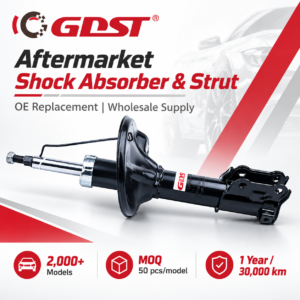
Hydraulic Shock Absorber for Cars | OE Replacement Supplier – GDST

Hydraulic Shock Absorber for Cars | OE Replacement Supplier – GDST
MOQ
50pcs/Per Model
Price
$6 - $25
Warranty
1 Year From Receipt of Goods
Delivery Time
45-55 Days
Customization
  • Customized Logo
  • Customized Packaging
  • ODM/Sample Development

ISO9001 Certified

Fast Delivery

OEM/ODM
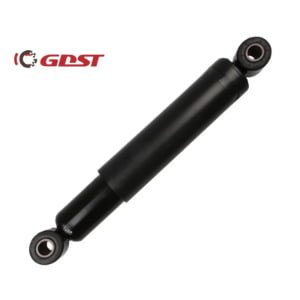
Would you like a professional automotive hydraulic shock absorber supplier to help you with your automotive aftermarket business?

Wuhu GDST Auto Parts Co., Ltd. manufactures high-quality vehicle shock absorbers. Our shock absorbers apply to many popular American, Japanese, European, and Korean vehicle models, meeting the needs of markets in various countries.

GDST has over 2,000 shock absorber models and can provide support for specific vehicle models’ damping specifications as well as OEM and private-label products.

We make our shocks with reliable hydraulic damping and solid parts, keeping a close eye on production so they work the way they should.

If you need front or rear shocks, want to print your own logo for an aftermarket brand, or just need good OE replacements, GDST can help you out.

  • 2,000+ shock absorber model references
  • Model-specific rebound and compression force specifications
  • Front and rear shock absorber applications
  • MOQ: 50 pcs per model
  • Standard lead time: 50 days for container orders
  • OEM branding and customized packaging available
  • 1-year / 30,000 km warranty under applicable warranty terms
Vehicle Application Position OE Number
Toyota Corolla Front Right 48510-02470
Toyota Camry Rear 48530-8Z054
Honda Accord Front Right 51611-TVA-L91
Honda Civic Rear 52611-S80-A02
VW Golf / Jetta (MQB Platform) Front 5Q0413023
BMW 3 Series (E90 / F30) Rear 33522283990
Mercedes-Benz C-Class (W204) Front Left 2043200130
Ford F-150 Pickup Rear FL3Z-18125-A
Audi A4 (B8) Rear 8K0513035A
Mazda 3 (BM/BN) Front Right B45A-34-700A

Download GDST Shock Absorber Catalog

Hydraulic Shock Absorber for Cars

As one of the most important suspension parts, hydraulic shock absorbers adjust the flow of hydraulic fluid through internal valves, allowing the springs to rebound smoothly.

When a vehicle travels over uneven roads, its suspension springs compress and rebound. Without proper damping, these movements can cause excessive body oscillation and reduce vehicle stability and driving comfort.

That’s where hydraulic shocks come in. They force oil through tiny internal holes, creating the exact friction needed to stop that bouncing instantly.

Main Features:

  • No more endless spring bouncing.
  • No more tires slipping or losing touch with the ground.
  • No more heavy body roll or front-diving when braking and steering.
  • Just effortless handling for you and a relaxing ride for your family.
  • Fights off repetitive shaking and rattles from rough roads.

For aftermarket replacement applications, the correct shock absorber must match the vehicle’s original suspension configuration, mounting dimensions, and damping requirements.

How Does a Hydraulic Shock Absorber Work?

A hydraulic shock absorber converts suspension movement energy into heat through controlled hydraulic fluid flow.

Its damping performance depends on piston movement, hydraulic oil characteristics, and the internal valve design.

Compression Stroke

When a vehicle wheel encounters a road bump, the suspension compresses and pushes the shock absorber inward.

The piston moves inside the working cylinder, forcing hydraulic oil through calibrated valve passages. The resistance to oil flow generates damping force and controls the compression movement.

Rebound Stroke

After compression, the suspension spring begins to extend and pushes the shock absorber outward.

The piston moves in the opposite direction, forcing hydraulic oil through the rebound valve system. This resistance controls the speed at which the suspension returns toward its original position.

Continuous Damping Control

Compression and rebound movements occur repeatedly during driving.

By regulating hydraulic oil flow in both directions, the shock absorber helps control suspension oscillation and maintain predictable vehicle behavior.

Damping force is influenced by piston velocity, valve characteristics, hydraulic oil viscosity, and the specific shock absorber design.

Types of Hydraulic Shock Absorbers for Cars

Automotive shock absorbers are available in different structural configurations and damping technologies.

The main structural designs include twin-tube and mono-tube shock absorbers.

Twin-Tube Hydraulic Shock Absorbers

Twin-tube shock absorbers use two concentric cylinders:

  • An inner working cylinder containing the piston and hydraulic oil.
  • An outer reserve cylinder providing additional space for displaced hydraulic oil.

A base valve regulates oil movement between the working cylinder and reserve chamber.

Twin-tube designs are widely used in OE-style replacement applications and can accommodate different vehicle suspension configurations.

Mono-Tube Hydraulic Shock Absorbers

Mono-tube shock absorbers use a single pressure tube containing the working piston.

In gas-pressurized designs, a floating or separating piston divides the hydraulic oil chamber from the pressurized gas chamber.

This construction helps manage internal pressure and reduce hydraulic oil foaming.

The appropriate structural design must match the vehicle’s original suspension requirements.

Conventional Oil-Filled vs. Gas-Charged Hydraulic Shock Absorbers

Gas-charged shock absorbers also use hydraulic oil to generate damping force. Pressurized gas, commonly nitrogen, is incorporated into selected designs to help reduce oil foaming and maintain internal pressure.

Comparison Conventional Oil-Filled Design Gas-Charged Hydraulic Design
Damping medium Hydraulic oil Hydraulic oil
Gas pressurization Not necessarily gas-pressurized Uses pressurized gas
Damping mechanism Hydraulic oil flow through valves Hydraulic oil flow through valves
Main consideration Oil viscosity and valve calibration Oil flow, valve calibration, and gas pressure
Product selection Original vehicle specification Original vehicle specification

These technologies should not be treated as completely separate damping principles. Both rely on hydraulic oil to generate damping force.

The specific construction and gas configuration of each GDST part number should be confirmed according to its product specification.

Main Components of an Automotive Hydraulic Shock Absorber

A hydraulic shock absorber consists of several precision components working together to regulate hydraulic oil flow and control suspension movement.

Component Main Function
Piston Assembly Controls hydraulic oil flow and generates damping resistance
Working Cylinder Houses the piston and hydraulic oil
Reserve Cylinder Provides additional oil storage space in twin-tube designs
Piston Rod Transfers suspension movement to the piston
Oil Seal Prevents hydraulic oil leakage around the piston rod
Valve System Regulates oil flow during compression and rebound
Mounting Brackets Connects the shock absorber to suspension components
Dust Boot Protects the piston rod from road contaminants
Bump Stop Helps limit excessive suspension compression

Component materials and configurations vary according to the shock absorber model.

GDST Hydraulic Shock Absorber Technical Specifications

Different vehicle applications require different damping force characteristics.

GDST maintains model-specific rebound and compression force specifications for selected automotive shock absorber references.

Our factory technical data covers the following parameters:

Technical Parameter Available Information
Product Category Automotive shock absorbers
Installation Position Front and rear
Damping Mechanism Model-dependent hydraulic damping configuration
Test Stroke 30 mm
Test Velocity 0.300 m/s or 0.314 m/s, depending on model
Rebound Force Model-specific nominal value and tolerance
Compression Force Model-specific nominal value and tolerance
Force Unit Newton (N)
Origin China

The following model references have documented damping force specifications in GDST’s current technical data records.

Front Shock Absorber Models

GDST Part Number Test Velocity (m/s) Rebound Force (N) Compression Force (N)
MF10366741 0.314 1000 ± 150 640 ± 122.4
MF10366742 0.314 1000 ± 150 640 ± 122.4
MF10242405 0.300 1100 ± 250 550 ± 150
MF10242085 0.300 1100 ± 250 550 ± 150
MF543027096R 0.314 940 ± 142.2 515 ± 102.4
MF8200663654 0.314 780 ± 121.4 670 ± 127.2
MF543023532R 0.300 1225 ± 225 550 ± 150
MF543026656R 0.314 995 ± 149.35 635 ± 121.6
MF6001550751 0.314 1015 ± 151.95 460 ± 93.6
MF10419961 0.300 1100 ± 250 550 ± 150
MF10419962 0.300 1100 ± 250 550 ± 150
MF543024EA3A 0.300 1100 ± 250 550 ± 150
MF543034EA3A 0.300 1100 ± 250 550 ± 150
MF543025451R 0.300 1100 ± 250 550 ± 150

Rear Shock Absorber Models

GDST Part Number Test Velocity (m/s) Rebound Force (N) Compression Force (N)
MF8200953294 0.314 680 ± 108.4 480 ± 96.8
MF562100664R 0.314 1920 ± 269.6 520 ± 103.2
MF8200869345 0.300 1100 ± 250 550 ± 150

Important technical notes:

  • All 17 references have a specified damping force test stroke of 30 mm.
  • Test velocity is either 0.300 m/s or 0.314 m/s, depending on the model.
  • The ± values indicate the nominal force tolerance stated in the factory technical data.
  • Actual minimum and maximum limits are specified in the corresponding technical records.
  • These references represent selected models with available technical data, not the complete GDST shock absorber catalog.

For example, MF10366741 has a nominal rebound force of 1000 N with an allowable range of 850–1150 N. Its nominal compression force is 640 N, with an allowable range of 517.6–762.4 N.

These specifications help customers review model-specific damping requirements when evaluating replacement shock absorbers.

How to Identify the Correct Hydraulic Shock Absorber for Your Car

Correct product identification is important because shock absorbers with similar external appearances may have different mounting dimensions, damping characteristics, and vehicle applications.

GDST supports product matching using the following information:

Required Information Example / Description Purpose
OE Number Original equipment reference Identifies the corresponding replacement application
Vehicle Make Toyota, Honda, Nissan, Ford, etc. Identifies the vehicle brand
Vehicle Model Specific vehicle model Narrows down the application
Model Year Vehicle manufacturing year Distinguishes application variations
Engine / Version Engine displacement or vehicle trim Helps identify different configurations
Installation Position Front or rear Confirms the required product position
Existing Product Number Current shock absorber reference Helps identify a matching replacement
Product Photograph Existing shock absorber photograph Supports external structure and mounting verification

The GDST part numbers listed in the technical specification section are product references, not a substitute for OE cross-reference numbers.

If you have an OE number, vehicle information, or an existing product sample, send it to our team for verification.

GDST Hydraulic Shock Absorber Quality Control

Damping force consistency is an important consideration when evaluating automotive shock absorbers.

GDST maintains model-specific damping force technical data covering rebound and compression characteristics under defined test conditions.

Our available technical records include:

Inspection Parameter Information Documented
Product Identification GDST part number
Installation Position Front or rear
Test Stroke 30 mm
Test Velocity 0.300 m/s or 0.314 m/s
Rebound Force Nominal force and tolerance
Compression Force Nominal force and tolerance
Allowable Force Range Minimum and maximum values

These parameters provide technical references for evaluating individual shock absorber models.

For additional quality evaluation, customers can request confirmation of the applicable dimensional inspection, material verification, performance testing, and other quality documentation for their selected products.

The scope of each inspection should be confirmed according to the product model and available factory records.

OEM Hydraulic Shock Absorbers and Private Label Services

GDST supports automotive aftermarket brands, importers, and distributors with customized shock absorber branding and packaging solutions.

Customized Product Branding

  • Customized GDST or customer logos.
  • OE reference number marking.
  • Customized product identification.
  • Selected product color customization.

Customized Packaging

  • Private-label product boxes.
  • Customized carton designs.
  • Brand identification labels.
  • Customized shipping marks.

Product Development Support

GDST offer custom product services. If you’re building your own aftermarket brand, GDST is here to help. We’ll make sure you find the right products, match the correct OE numbers, and get the exact parts you need.

Once we know what you’re looking for and the order size, we can talk details about OEM and custom options.

Why Choose GDST as Your Hydraulic Shock Absorber Supplier?

1. Extensive Product References

GDST has developed more than 2,000 shock absorber model references covering selected Japanese, Korean, European, American, and German vehicle applications.

2. Model-Specific Technical Data

Our technical records include rebound and compression damping force specifications for selected shock absorber models, helping customers review product parameters before ordering.

3. Flexible Minimum Order Quantity

Our standard MOQ is 50 pieces per model, supporting distributors who want to develop new product references and expand their aftermarket inventory.

4. Quality Control and Testing

GDST’s shock absorber quality control process includes material inspection, dimensional inspection, damping force testing, and other product evaluation procedures.

Additional test documentation can be discussed according to specific product requirements.

5. OEM and Private Label Support

We support customized product branding, logo printing, product identification, and packaging solutions for aftermarket businesses.

6. Export-Oriented Supply Support

GDST provides product matching, quotation, order coordination, packaging, and export support for international automotive aftermarket customers.

7. After-Sales Warranty

Our warranty is valid for one year after receipt of the goods. If you encounter any issues, please feel free to contact our team at any time—we will resolve the issue immediately to ensure you can sell with confidence.

Hydraulic Shock Absorber Wholesale Supply and Ordering Conditions

At GDST, our standard purchasing conditions are designed to support customers developing and replenishing their shock absorber product ranges.

Purchasing Item GDST Supply Conditions
Product Range Selected automotive shock absorbers
Model References 2,000+ model references
Minimum Order Quantity 50 pcs per model
Standard Lead Time 50 days for container orders after order confirmation
OEM / Private Label Available
Customized Packaging Available
Sample Evaluation Subject to product availability and confirmed sample terms
Warranty 1 year / 30,000 km under applicable warranty terms

How to Place Your Shock Absorber Order

  1. Send Your Requirements: Provide OE numbers, GDST part numbers, vehicle applications, and required quantities.
  2. Product Matching: Our team checks available product references and application information.
  3. Quotation Confirmation: Receive pricing, MOQ, lead time, and packaging details.
  4. Order Confirmation: Confirm product specifications and commercial terms.
  5. Production and Inspection: Products follow the applicable manufacturing and quality control procedures.
  6. Packing and Shipment: Finished products are inspected, packed, and prepared for export.

Frequently Asked Questions About Hydraulic Shock Absorbers for Cars

1. What Is a Hydraulic Shock Absorber for Cars?

A hydraulic shock absorber is a suspension component that controls spring oscillation by forcing hydraulic oil through internal valves, generating resistance during compression and rebound.

2. What Is the Difference Between Hydraulic and Gas-Charged Shock Absorbers?

Both use hydraulic oil for damping. Gas-charged designs additionally use pressurized gas, commonly nitrogen, to help reduce oil foaming and maintain internal pressure.

3. What Is the Difference Between Twin-Tube and Mono-Tube Shock Absorbers?

Twin-tube designs use an inner working cylinder and an outer reserve cylinder. Mono-tube designs use a single pressure tube and typically a separating piston in gas-pressurized configurations.

4. What Does a 30 mm Test Stroke Mean?

It refers to the stroke used during the damping force test. It does not represent the shock absorber’s complete working stroke or total travel.

5. What Is the Difference Between 0.300 m/s and 0.314 m/s Test Velocity?

These are two different test velocities specified for different GDST models. Damping force values should be evaluated under their corresponding test conditions.

6. Does GDST Have Technical Data for Individual Shock Absorber Models?

Yes. GDST has model-specific technical data for selected references, including rebound force, compression force, test stroke, and test velocity.

7. What Vehicles Do GDST Shock Absorbers Cover?

GDST’s catalog includes selected Japanese, Korean, European, American, and German vehicle applications, covering passenger cars, SUVs, pickups, and commercial vehicles. Exact fitment requires model verification.

8. What Is the MOQ for GDST Hydraulic Shock Absorbers?

Our standard MOQ is 50 pieces per model.

9. What Is the Standard Production Lead Time?

The standard lead time is approximately 50 days for container orders after order confirmation.

10. Does GDST Support OEM Orders and Warranty Services?

Yes. GDST supports customized branding and packaging, with a 1-year / 30,000 km warranty under applicable warranty terms.

Source Your Hydraulic Shock Absorbers with GDST

Looking for a dependable hydraulic shock absorber supplier for your automotive aftermarket business?

Whether you need OE replacement references, model-specific damping force information, bulk shock absorber orders, or private-label products, GDST can support your sourcing requirements.

Send us your OE numbers, GDST part numbers, vehicle applications, and estimated order quantities.

Our team will help identify suitable products and provide a quotation based on your requirements.

Quality Assurance

Every product undergoes rigorous testing and inspection to ensure reliability and performance

Material Inspection

Premium steel from certified suppliers with full traceability

Performance Testing

Fatigue, torque, and stress testing per OE standards

Dimensional Control

Tolerance control for precise OE fitment

Final Inspection

100% inspection before shipment