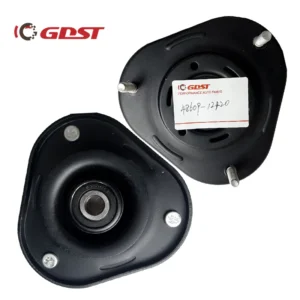
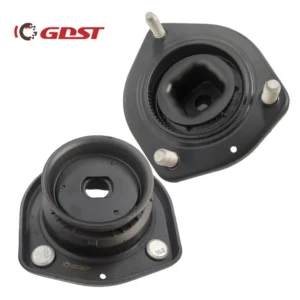
Custom Strut Mounts for Automotive OEM & Aftermarket Applications

Custom Strut Mounts for Automotive OEM & Aftermarket Applications
MOQ
50PCS
Price
$2-$5
Warranty
1 Year From Receipt of Goods
Delivery Time
45-55 Days
Customization
  • Customized Logo
  • Customized Packaging
  • ODM/Sample Development

ISO9001 Certified

Fast Delivery

OEM/ODM
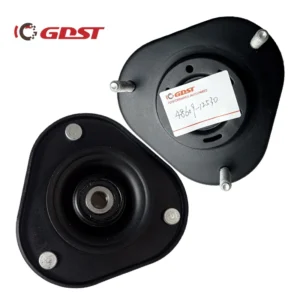
GDST manufactures automotive strut mounts for aftermarket distributors, wholesalers, automotive brands, and OEM-related projects.

Whether you need to reproduce an existing strut mount, modify mounting dimensions, or develop a new product configuration, we support customized projects based on original samples, OE references and engineering drawings.

Our strut mount manufacturing capabilities cover rubber compounding, metal component preparation, rubber-to-metal bonding, molding, vulcanization, assembly and product inspection.

We also support private labeling, customized product identification, and branded packaging to help international automotive parts businesses develop their own suspension product lines.

From product evaluation and sample development to mass production and export supply, GDST provides practical solutions for customized automotive strut mount requirements.

Have a strut mount sample, technical drawing, or OE reference? Contact GDST to discuss your project.

OEM NO Fit For Position
54320-8H320 Nissan Rear
51726-SWA-A00 Honda Front
MB518798 Mitsubishi Front
96549921 Daewoo, Opel Front
54610-2D100 Hyundai Front
54610-B3000 Hyundai Front
503854 Peugeot Front
7700 426 450 Renault Front
8V51 3K155 BA Ford Front
7E0 412 331 vw, Audi Front

Custom Strut Mount Types and Configurations

Automotive strut mounts connect the suspension assembly to the vehicle body. They help support suspension loads, isolate road vibration and accommodate the movement required by different suspension designs.

Depending on the vehicle application, strut mounts may incorporate different rubber elements, metal support structures, mounting interfaces and bearing configurations.

Front Strut Mounts

Front strut mounts are commonly used in MacPherson suspension systems. They support the upper end of the strut assembly and help isolate vibration transmitted from the suspension to the vehicle body.

Many front applications incorporate a bearing to accommodate steering rotation.

Custom development may involve mounting dimensions, bearing configurations, rubber characteristics and metal support structures.

Rear Strut Mounts

Rear strut mounts support the upper suspension assembly and help reduce vibration and noise transmission into the vehicle body.

Many conventional rear applications use rubber-to-metal construction without an integrated steering bearing, although the actual configuration depends on the vehicle design.

Customization may involve mounting geometry, overall height, rubber structure and connection interfaces.

Rubber-to-Metal Strut Mount Assemblies

Rubber-to-metal construction combines an elastic rubber element with metal support components.

The rubber helps isolate vibration and accommodate controlled movement, while the metal components provide the required mounting interfaces and structural support.

The final construction depends on the original application and approved engineering specifications.

Strut Mount Type Typical Construction Main Customization Considerations
Front Strut Mount Rubber, metal, and bearing where required Mounting dimensions, bearing configuration
Rear Strut Mount Rubber and metal components Overall height, mounting geometry
Rubber-to-Metal Mount Bonded rubber and metal structure Rubber properties, metal configuration
Bearing-Equipped Mount Rubber-metal assembly with bearing Bearing dimensions and assembly
Custom Replacement Mount Application-specific construction OE reference, sample, and drawing

What Can Be Customized in a Strut Mount?

Different automotive aftermarket programs require different product specifications. GDST evaluates customization requirements according to the original component design, available samples and engineering drawings.

  1. Dimensions and Mounting Geometry

Custom dimensional requirements may include:

  • Inner and outer diameters.
  • Overall height.
  • Mounting hole diameter and spacing.
  • Center opening dimensions.
  • Metal core dimensions.
  • Mounting footprint and installation interfaces.

Critical dimensions are confirmed against approved product drawings and product-specific tolerances.

  1. Rubber Compound and Hardness

The rubber element contributes to vibration isolation, elastic support, and load transfer.

Depending on the application, customization may involve:

  • Rubber compound selection.
  • Target Shore A hardness.
  • Elasticity and compression characteristics.
  • Compression set requirements.
  • Environmental and aging resistance.

Rubber specifications are evaluated according to the intended application rather than hardness alone.

  1. Metal Core and Mounting Structure

Metal components provide structural support and connection interfaces.

Potential customization areas include:

  • Metal core geometry.
  • Mounting plate dimensions.
  • Bracket configuration.
  • Metal thickness and material grade.
  • Surface treatment and corrosion protection.

The final metal specifications depend on the approved drawing and application requirements.

  1. Bearing and Assembly Configuration

Some strut mount applications require integrated bearings, while others use simpler rubber-to-metal assemblies.

Bearing size, mounting position, assembly orientation, and connection requirements can be evaluated for applicable designs.

  1. Branding and Packaging

For private-label aftermarket programs, GDST supports:

  • Customized logo and OE number printing.
  • Product identification labels.
  • Custom-color plastic bags.
  • Branded color boxes.
  • Customized carton markings.

These options help distributors and automotive brands establish their own product identity.

Strut Mount Materials and Construction Options

The material combination of a strut mount affects its structural characteristics, vibration isolation and long-term performance.

GDST’s existing strut mount product range includes rubber, metal and bearing-equipped configurations. Material and component selection depends on the specific product reference.

Component Material / Construction Main Function
Rubber Core High-grade natural rubber (NR), according to product design Vibration isolation and elastic support
Metal Skeleton & Base High-strength steel plate or aluminum casting, depending on design Structural support
Bolts & Fasteners Grade 10.9 steel where specified Secure connection
Flat Bearing Assembly Bearing steel, lubricating grease and engineering plastic components Steering rotation
Dust Cover PP/PA engineering plastic or weather-resistant rubber Environmental protection

Not every strut mount contains all the components listed above.

For customized projects, the material specifications, component configuration and manufacturing process are confirmed according to the original design and approved technical requirements.

Custom Strut Mount Specifications

Accurate technical information helps reduce development time and improves quotation accuracy.

The following table outlines the specifications that customers should provide when requesting customized strut mounts.

Specification Required Information
Product Position Front / Rear
Vehicle Application Make, model, year and engine
OE Reference Original part number
Inner Diameter Required dimensions and tolerances
Outer Diameter Required dimensions and tolerances
Overall Height Required assembled height
Mounting Holes Diameter, spacing and position
Rubber Hardness Target Shore A, if specified
Metal Structure Material, thickness and geometry
Bearing Configuration With bearing / Without bearing
Surface Treatment Required metal finish
Packaging Bulk / Individual / Private Label

Not every parameter must be available at the initial inquiry stage.

If you only have an original product sample or OE number, GDST can first evaluate the available information and discuss the additional technical details required for development.

OEM & ODM Custom Strut Mount Development Process

GDST supports customized strut mount development based on physical samples, OE references and engineering drawings.

Step 1: Submit Your Requirements

Send your original strut mount sample, OE reference, technical drawing or product specifications.

Include the intended vehicle application, estimated order quantity and any special requirements.

Step 2: Technical Review and Feasibility Assessment

Our team reviews the product structure, dimensions, mounting interfaces, material requirements and manufacturing feasibility.

Step 3: Specification and Tooling Confirmation

The required product dimensions, material configuration, tooling requirements and inspection criteria are discussed and confirmed.

New mold development may be necessary for certain customized rubber and metal configurations.

Step 4: Sample Development

Samples are produced according to the approved specifications and agreed manufacturing process.

Step 5: Sample Inspection and Approval

Samples are checked against the approved drawings and inspection requirements before bulk production.

Step 6: Mass Production and Shipment

After sample approval and order confirmation, production is arranged according to the confirmed specifications, packaging requirements and delivery schedule.

GDST Strut Mount Manufacturing Facility

GDST provides automotive strut mount manufacturing and OEM/ODM supply support through its dedicated strut mount manufacturing facility.

With experienced workers, established production processes and multiple production lines, we support aftermarket customers with standard replacement products and customized strut mount projects.

Manufacturing Facility Overview

Manufacturing Information GDST Strut Mount Facility
Established Year 2017
Employees 60+
Workshop Area 3,000㎡
Monthly Production Capacity 70,000+ pcs
Production Lines 6+
Quality Management IATF 16949 Certified Factory

Our current product portfolio includes more than 2,000 strut mount models covering major global vehicle applications.

The facility’s manufacturing resources support rubber-to-metal automotive components, including strut mounts, with production arrangements based on product requirements and order specifications.

Strut Mount Manufacturing Process

Consistent manufacturing processes are essential for rubber-to-metal automotive suspension components.

GDST’s strut mount manufacturing process covers the following key stages.

  1. Raw Material Preparation and Metal Pre-Treatment

Rubber compounds and metal components are prepared according to approved product specifications.

Metal cores and brackets are stamped, welded, and processed as required.

Bonding surfaces undergo preparation procedures such as degreasing, sandblasting, and controlled adhesive application to support reliable rubber-to-metal adhesion.

  1. Mold Pre-Heating and Preparation

Molds are pre-heated according to validated production conditions before rubber molding begins.

Proper mold preparation supports consistent product formation, clean demolding, and dimensional stability.

  1. Precision Vulcanization and Rubber-to-Metal Bonding

Rubber molding and vulcanization are controlled through three important process parameters:

  • Temperature.
  • Pressure.
  • Curing time.

Controlled vulcanization supports the required rubber properties and bonding between rubber and metal components.

  1. Cooling and Demolding

Products undergo controlled cooling after vulcanization.

Careful demolding helps protect the bonded surfaces, edges, threads and functional areas.

  1. Post-Processing and Assembly

Excess rubber is removed through trimming and deflashing.

Bearings, bolts, sleeves, and other hardware are assembled according to the specific product configuration.

  1. Final Inspection and Packaging

Finished products undergo inspection according to approved product drawings and quality requirements before export packaging.

Strut Mount Dimensional Inspection and Quality Verification

Accurate dimensions are essential for proper strut mount installation and vehicle fitment.

GDST conducts product-specific dimensional inspections against approved engineering drawings and inspection specifications.

Depending on the product design, inspection points may include inner diameters, outer diameters, overall height, mounting dimensions and other functional interfaces.

For dimensional verification, vernier calipers are used to measure specified features and compare the results against corresponding drawing tolerances.

Example of Actual Strut Mount Dimensional Inspection

A representative outgoing inspection record dated September 27, 2026, documents five sampled pieces for each listed dimensional inspection item.

The inspection covers two inner-diameter features, two outer-diameter features and overall height.

The following results are taken from the corrected inspection record.

Inspection Item Drawing Specification Sample 1 Sample 2 Sample 3 Sample 4 Sample 5
Inner Diameter 1 22.3 ± 0.5 mm 22.70 22.58 22.74 22.66 22.80
Outer Diameter 1 63.5 ± 1 mm 63.70 63.58 63.84 63.88 63.84
Outer Diameter 2 86 ± 1 mm 86.94 86.90 86.86 86.94 86.72
Inner Diameter 2 54 ± 1 mm 54.66 54.74 54.90 54.62 54.88
Overall Height 41 ± 1 mm 41.70 41.82 41.82 41.76 41.80

Inspection Result

All five sampled pieces met the specified dimensional tolerances across the five measured features.

The inspection used vernier calipers, with a sampling quantity of five pieces for each dimensional inspection item.

Visual Appearance Inspection

In addition to dimensional measurement, the inspection record includes visual checks for:

  • Visible rubber damage.
  • Paint peeling.
  • Surface appearance.

All five recorded samples were marked OK for the specified visual inspection.

Sampling and Reinspection Procedure

Inspection items, sampling quantities, and acceptance criteria are defined according to the applicable product inspection plan.

The inspection procedure also specifies that if a nonconforming item is identified during sampling inspection, the affected inspection item is subject to full reinspection.

This approach helps identify dimensional or appearance issues before shipment while maintaining traceable inspection records.

Additional Product-Specific Quality Tests

Depending on the strut mount design and agreed quality requirements, additional checks may include:

Quality Test Inspection Focus / Test Condition
Rubber Hardness Test Shore A hardness
Compression Set Test Rubber recovery after compression; 70°C × 24h where specified
Fatigue Life Test Resistance to repeated loading; simulated 100,000 impact cycles where specified
Dynamic Stiffness Test Rubber vibration-control characteristics
High & Low Temperature Cycling Environmental performance; -40°C to 80°C where specified
Salt Spray Corrosion Test Corrosion resistance of metal components
Bolt Torque Verification Fastener tightening requirements
Bearing Rotation Test Bearing rotation smoothness and assembly performance

The applicable test methods and acceptance criteria depend on the product configuration and inspection plan. These tests are not necessarily performed on every model or every shipment.

This product-specific inspection approach helps GDST maintain dimensional consistency and verify customized strut mounts against their approved engineering requirements.

Custom Strut Mount Applications

GDST supports strut mount supply and customization for global automotive aftermarket applications.

Our existing product portfolio covers more than 2,000 strut mount models, including Japanese, Korean, European, American, German and other vehicle platforms.

Typical customer requirements include:

  • Front suspension replacement programs.
  • Rear suspension replacement programs.
  • OE-based aftermarket strut mount development.
  • Replacement parts for difficult-to-source applications.
  • Modified mounting dimensions.
  • Private-label suspension product development.
  • Sample-based product reproduction.

For specialized racing components such as adjustable camber plates, solid aluminum top mounts, coilover towers and structural strut tower reinforcement plates, separate technical drawings and engineering evaluations are required.

These components have different construction and engineering requirements from conventional rubber-to-metal suspension strut mounts.

OEM Customization and Private Label Services

GDST supports automotive aftermarket brands, distributors and wholesalers with customized product identification and packaging.

Customized Logo and OE Number Printing

Product logos and identification information can be customized according to approved artwork and branding requirements.

Custom Color Labels

Product labels can be developed with customer logos, part numbers and market-specific product information.

Custom Plastic Bags

Customized plastic bags help maintain consistent product identification and presentation.

Branded Color Boxes

We support customized color-box packaging featuring customer logos and product information.

Whether you already have packaging artwork or only a company logo, our team can discuss suitable packaging arrangements.

Why Choose GDST for Custom Strut Mounts?

Dedicated Strut Mount Manufacturing Resources

Our strut mount facility has more than 60 employees, over six production lines, and a listed monthly production capacity exceeding 70,000 pieces.

More Than 2,000 Existing Strut Mount Models

Our current product portfolio covers a wide range of aftermarket vehicle applications, helping distributors expand their product selections.

Sample-Based and Drawing-Based Development

We evaluate customization requirements using original samples, OE references, and engineering drawings.

Established Rubber-to-Metal Manufacturing Processes

Our manufacturing process covers rubber preparation, metal pre-treatment, vulcanization, bonding, assembly, and inspection.

Product-Specific Quality Inspection

We perform dimensional measurements, appearance inspections, and other applicable quality checks according to product specifications and inspection plans.

OEM and Private-Label Support

We offer customized logos, OE number printing, labels, plastic bags, and branded color boxes for aftermarket programs.

International Wholesale Supply

We work with importers, distributors, wholesalers, and automotive aftermarket brands, supporting bulk purchasing and export arrangements.

Custom Strut Mount Wholesale Supply and Ordering Information

GDST supports international bulk orders and customized aftermarket product programs.

Item Supply Information
Product Range Automotive front and rear strut mounts
Customization Sample-based and drawing-based development
OEM / ODM Available, subject to technical evaluation
Private Label Logo, labels, bags and color-box packaging
MOQ Confirmed according to product design and tooling
Standard Production Lead Time Approximately 45 days, subject to order confirmation
Custom Development Lead Time Confirmed after technical review and sample approval
Warranty One-year quality warranty under confirmed terms
Shipping International export shipment

Custom tooling, material requirements, and sample approval may affect the final production schedule.

For an accurate quotation, please provide:

  • OE reference or product sample.
  • Technical drawing, if available.
  • Required product specifications.
  • Estimated order quantity.
  • Target vehicle applications.
  • Branding and packaging requirements.

Contact GDST to discuss your customized strut mount requirements and receive a project-specific quotation.

Frequently Asked Questions About Custom Strut Mounts

  1. Can GDST manufacture strut mounts based on existing samples?

Yes. We can evaluate original samples and discuss reproduction or specification adjustments according to manufacturing feasibility.

  1. Can I customize the dimensions of a strut mount?

Yes. Inner diameters, outer diameters, overall height, mounting holes, and other critical dimensions can be evaluated according to your technical drawings or original samples.

  1. Can GDST customize rubber hardness?

Rubber compound and hardness requirements can be discussed according to the intended application and approved product specifications.

  1. Can I customize a strut mount with or without a bearing?

Bearing configurations depend on the original suspension design. We can evaluate the required assembly configuration based on your sample, OE reference or drawing.

  1. What information is required to start a custom strut mount project?

An OE reference, physical sample, or engineering drawing is helpful. Please also provide the target vehicle application, required quantity and any special technical requirements.

  1. What is the MOQ for customized strut mounts?

MOQ depends on the product structure, existing tooling, new mold requirements, and order quantity. Please contact us for project-specific confirmation.

  1. How long does custom strut mount production take?

Standard production orders generally require approximately 45 days. Customized projects may require additional time for engineering evaluation, tooling and sample approval.

  1. Does GDST provide private-label packaging?

Yes. We support customized logos, OE number printing, labels, plastic bags, and branded color boxes for automotive aftermarket customers.

  1. Can GDST develop discontinued or difficult-to-source strut mounts?

We can evaluate development requests based on available samples, OE references, and technical drawings. Manufacturing feasibility is confirmed after product evaluation.

  1. Does GDST provide quality inspection reports?

Yes. Product-specific inspection records can be provided according to the applicable product and order requirements. Inspection items, sampling quantities and acceptance criteria are based on approved product specifications.

Quality Assurance

Every product undergoes rigorous testing and inspection to ensure reliability and performance

Material Inspection

Premium steel from certified suppliers with full traceability

Performance Testing

Fatigue, torque, and stress testing per OE standards

Dimensional Control

Tolerance control for precise OE fitment

Final Inspection

100% inspection before shipment