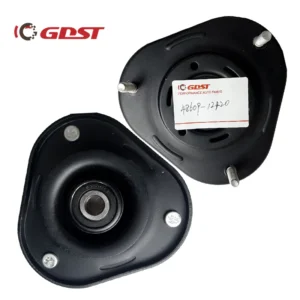
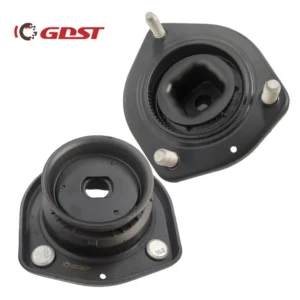
Aftermarket Strut Mounts for OE Replacement & Wholesale Supply

Aftermarket Strut Mounts for OE Replacement & Wholesale Supply
MOQ
50PCS
Price
$2-$5
Warranty
1 Year From Receipt of Goods
Delivery Time
45-55 Days
Customization
  • Customized Logo
  • Customized Packaging
  • ODM/Sample Development

ISO9001 Certified

Fast Delivery

OEM/ODM
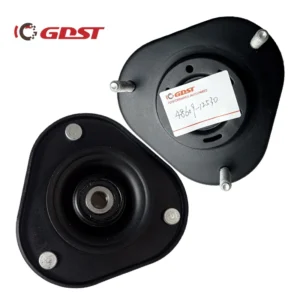
Wuhu GDST Auto Parts Co., Ltd supplies aftermarket strut mounts for automotive parts distributors, importers, wholesalers, and private-label brands. Our aftermarket suspension strut mounts are sourced and developed for vehicle-specific replacement applications, with attention to mounting dimensions, rubber components, metal structures, and OE reference compatibility.

Whether you are sourcing front strut mounts, rear suspension mounts, or complete mounting kits, GDST supports product identification and sourcing based on OE numbers, vehicle applications, technical drawings, and physical samples.

With product-specific inspection records, flexible sourcing support, and experience in automotive aftermarket supply, we help international buyers develop and maintain their suspension replacement product ranges.

Looking for a reliable aftermarket strut mount supplier? Send us your OE numbers, vehicle applications, or product samples to discuss available options.

OEM NO Fit For Position
8V51-3K155 Ford Front
2H0 412 331 VW, Audi Front
XR858419 LandRover Front
1334230 Ford Front
7701 207 678 Renault Front
5038G6 Peugeot Front
33506771737 BMW Rear
48609-42030 Toyota Front
MB808306 Mitsubishi Front

Aftermarket Suspension Strut Mounts for OE-Based Replacement Programs

A strut mount connects the upper end of a suspension strut assembly to the vehicle body. It helps support the suspension structure while isolating road vibration and noise through its elastomeric components.

In many MacPherson strut applications, the front upper mount also incorporates a bearing or bearing plate to support strut rotation during steering. Other suspension designs use different mounting arrangements depending on the vehicle’s construction.

For aftermarket replacement programs, a suitable strut mount must match the original mounting interface, dimensions, and suspension configuration. A visually similar part is not necessarily interchangeable.

GDST supports aftermarket strut mount sourcing for customers who need:

  • OE-reference-based replacement products.
  • Front and rear suspension mounting solutions, subject to available applications.
  • Vehicle-specific mounting dimensions and configurations.
  • Bearing-equipped or non-bearing designs, where applicable.
  • Product identification for wholesale distribution.
  • Custom sourcing and private-label supply options.

Types of Aftermarket Strut Mounts Available

Strut mounts differ in mounting position, construction, and bearing configuration. Selecting the correct design requires checking the original suspension arrangement rather than relying on product names alone.

Product Type Main Features Typical Application
Front Strut Mount Upper mounting structure connecting the strut assembly to the vehicle body Front suspension
Front Strut Mount with Bearing Incorporates a bearing or bearing plate where required by the original design Steering-related front strut applications
Rear Strut / Shock Mount Supports the upper mounting point of the rear shock or strut assembly Rear suspension
Mounting Kit May include a mount, bearing, insulators, or specified installation hardware Vehicle-specific replacement programs

The exact configuration varies by OE application. Not every front mount includes a bearing, and rear shock mounts may have different designs from front strut mounts.

Front Strut Mounts

Front strut mounts connect the upper strut assembly to the vehicle body. Their design must accommodate the required mounting loads while helping isolate vibration and noise.

For applications using MacPherson strut suspension, some front mounts incorporate a bearing to support rotational movement during steering. Bearing type, mounting height, and stud configuration must match the original application.

Rear Strut and Shock Mounts

Rear mounting components support the upper end of the rear shock absorber or strut assembly. Depending on the vehicle design, they may use rubber bushings, metal mounting plates, or integrated mounting structures.

The correct replacement should be selected according to the original rear suspension layout and OE reference.

Strut Mounts with Bearings and Mounting Kits

Some replacement applications require a separate bearing or a complete mounting kit rather than a mount-only product.

Before purchasing, confirm whether the required product includes:

  • Strut mount only.
  • Strut mount with bearing.
  • Mount with spring insulator.
  • Complete mounting kit with specified hardware.

This distinction helps distributors avoid incorrect product descriptions and incomplete replacement packages.

Strut Mount Construction and Key Components

Strut mounts generally combine elastomeric isolation elements with metal supporting structures. Some designs also incorporate bearings or additional mounting hardware.

The exact construction depends on the vehicle application and original equipment design.

Rubber Isolation Components

Rubber components help absorb suspension vibration and reduce the transmission of road noise into the vehicle body. Their formulation, hardness, geometry, and condition influence product performance.

Rubber hardness should be selected according to the intended application. A harder compound does not automatically provide better durability or ride comfort.

Metal Supporting Components

Metal plates, housings, or reinforcement components provide structural support and maintain the required mounting geometry.

Material selection, surface finish, and mounting interface dimensions are important considerations when evaluating replacement parts.

Bearing Assembly

Where the original design requires a bearing, it supports the rotational movement of the strut assembly during steering.

Bearing configuration, dimensions, and installation position must be checked against the corresponding OE application.

Mounting Studs and Hardware

Stud quantity, thread size, stud length, and mounting-hole positions affect installation compatibility. These details should be verified for each part number.

OE Reference Matching and Vehicle Fitment Support

Correct vehicle fitment is one of the most important factors when sourcing aftermarket strut mounts.

Different vehicles may use different mounting dimensions, rubber configurations, bearing designs, and installation structures, even when they belong to the same model family.

GDST supports product identification using OE reference numbers, vehicle information, drawings, and physical samples.

To help identify the correct replacement, we recommend providing the following information:

Identification Item Required Information Why It Matters
OE Number Original equipment part number Helps identify the corresponding replacement
Vehicle Make Toyota, Honda, Ford, BMW, etc. Establishes vehicle manufacturer
Vehicle Model Specific model and platform Narrows down the application
Model Year Production year or year range Identifies generation differences
Suspension Position Front / Rear Confirms installation location
Side Left / Right / Both, if applicable Identifies side-specific configurations
Suspension Version Standard, sport, or other configuration Avoids incorrect interchange
Product Sample Physical reference or photographs Helps verify dimensions and construction

How GDST Supports OE Matching

  1. Review the OE number, vehicle information, or supplied sample.
  2. Check available product references and mounting configurations.
  3. Compare critical dimensions, stud positions, and bearing requirements.
  4. Confirm the corresponding product identification and supply details before ordering.

OE cross-reference information is an identification tool, not automatic proof of interchangeability. Final compatibility should be confirmed against the vehicle application and original component specifications.

Technical Specifications for Aftermarket Strut Mounts

Accurate specifications help automotive parts buyers compare products, verify installation compatibility, and organize their product catalogs.

GDST can identify and confirm relevant technical details according to the specific part number and product configuration.

Specification Description Verification Method
GDST Part Number Customer-facing product identification Product catalog
OE Reference Number Corresponding OE number Cross-reference verification
Product Position Front / Rear OE application
Bearing Configuration With bearing / Without bearing Product structure verification
Mounting Material Specified rubber and metal materials Material specification
Mounting Hole Quantity Number of mounting holes Dimensional inspection
Stud Quantity Number of mounting studs Visual and dimensional inspection
Stud Thread Size Thread specification Thread gauge or drawing
Stud Length Effective mounting stud length Dimensional measurement
Overall Dimensions Height, width, diameter, and other critical dimensions Drawing and measurement
Package Contents Mount, bearing, insulator, or hardware Product configuration verification

Not every specification applies to every strut mount design. Technical values should be confirmed for each product rather than treated as universal specifications.

Dimensional Inspection Reference

Actual finished-product inspection records provide additional reference for dimensional quality control.

A documented strut mount inspection dated September 27, 2026, included five sampled pieces for each dimensional item. Measurements were taken using a vernier caliper and compared against the corresponding drawing requirements.

Inspection Item Drawing Requirement Sample 1 Sample 2 Sample 3 Sample 4 Sample 5
Inner Diameter 1 22.3 ± 0.5 mm 22.70 22.58 22.74 22.66 22.80
Outer Diameter 1 63.5 ± 1.0 mm 63.70 63.58 63.84 63.88 63.84
Outer Diameter 2 86 ± 1.0 mm 86.94 86.90 86.86 86.94 86.72
Inner Diameter 2 54 ± 1.0 mm 54.66 54.74 54.90 54.62 54.88
Height 41 ± 1.0 mm 41.70 41.82 41.82 41.76 41.80

All five recorded dimensional items were within their respective drawing tolerances.

Quality Control for Aftermarket Strut Mounts

Product quality depends on appropriate material specifications, dimensional accuracy, acceptable appearance, and compliance with the approved product drawing.

GDST coordinates product-specific quality inspection according to the applicable specifications and agreed inspection requirements.

Raw Material Quality Documentation

Rubber raw material quality is an important consideration in rubber component manufacturing. Supporting supplier documentation can help verify the specifications of relevant raw materials.

An archived supplier-issued quality report for an N330 rubber carbon black lot, sampled on October 17, 2022 and reported on October 19, 2022, references GB/T 3778-2011.

The report records the following primary inspection results:

Inspection Item GB/T 3778-2011 Requirement Recorded Result Report Judgment
Impurities None None Qualified
Iodine Adsorption (g/kg) 82 ± 6 83 Qualified
Oil Absorption (10⁻⁵ m³/kg) 102 ± 6 103 Qualified
CTAB Surface Area (10³ m²/kg) 73–85 82 Qualified
Heating Loss (%) ≤ 2.0 0.2 Qualified
Stress at 300% Elongation (MPa) -0.5 ± 1.5 -0.2 Qualified
45 μm Sieve Residue (mg/kg) ≤ 1,000 54 Qualified

All seven primary inspection items were marked qualified in the report.

These results document the tested N330 carbon black material lot. They are supporting upstream raw material records, not direct measurements of the finished rubber compound or proof of the mechanical properties of every strut mount.

The available documentation does not establish a batch-level link between this 2022 carbon black lot and the finished strut mount sampled in September 2026. Material records should therefore be evaluated according to the applicable product and batch documentation.

Finished Product Dimensional Inspection

Dimensional inspection is used to verify critical mounting measurements against approved product drawings.

The documented finished-product inspection included:

  • Five sampled pieces for each dimensional item.
  • Five dimensional inspection items.
  • Vernier caliper measurements.
  • Comparison against drawing specifications.
  • Recorded measurements for all five samples.

All recorded dimensional measurements met the corresponding drawing tolerances.

Appearance Inspection

The finished-product inspection also included visual checks against the following appearance requirements:

Inspection Item Acceptance Criteria Inspection Method Recorded Result
Rubber Appearance No visible rubber deterioration or damage Visual inspection 5 samples passed
Paint Finish No visible paint peeling Visual inspection 5 samples passed

All five sampled pieces were recorded as OK for the specified appearance requirements.

Inspection Conclusion

The finished-product inspection report recorded the sampled product as qualified and approved for shipment.

This record provides practical evidence of dimensional and appearance inspection for the inspected product. It should not be interpreted as a 100% inspection certificate or proof that every unit in every production batch has undergone the same measurements.

Additional Product-Specific Inspection Requirements

Depending on the product design and agreed specifications, additional inspection requirements can be defined for relevant dimensions, mounting interfaces and components.

Rubber hardness, rubber-to-metal bonding strength, bearing performance, material certifications and durability testing should only be claimed where supporting test records are available.

OEM, ODM and Private Label Strut Mount Solutions

For automotive aftermarket brands and distributors developing their own product lines, GDST supports product sourcing and customization based on specific application requirements.

Our cooperation can start with an existing OE reference, a physical sample, a technical drawing, or a defined product specification.

OE-Based Product Development

Provide an original part number or physical sample for product identification and compatibility review.

Drawing-Based Customization

Submit technical drawings showing mounting dimensions, structural requirements, and material specifications for feasibility assessment.

Sample-Based Development

Physical samples can help clarify mounting geometry, component configuration, and critical dimensional requirements before bulk production.

Private Label and Packaging

Product identification labels, branded packaging, and export carton requirements can be discussed according to the project and confirmed order quantity.

Product Range Development

For customers building an aftermarket suspension catalog, GDST can discuss multiple part numbers and vehicle applications within one sourcing program.

All customization projects are subject to technical feasibility, sample approval, minimum order requirements, and confirmed commercial terms.

Wholesale Strut Mount Supply for Distributors and Importers

GDST works with international automotive parts buyers who need dependable aftermarket suspension component sourcing for wholesale distribution and private-label programs.

Our supply support is designed for:

  • Automotive parts importers and wholesalers.
  • Suspension parts distributors.
  • Aftermarket brands and private-label businesses.
  • Automotive parts retailers and purchasing groups.
  • Regional automotive replacement parts suppliers.

Wholesale Purchasing Information

Item Supply Information
Product Range Aftermarket strut mounts for confirmed applications
Product Identification GDST Part Number and OE Reference, where available
MOQ Confirmed according to product model and order requirements
Lead Time Confirmed according to quantity, availability, and customization
Packaging Standard or private-label packaging, subject to agreement
Warranty One-year warranty under applicable GDST warranty terms
Export Support Product identification, quotation, and export order coordination

For repeat orders, buyers can organize products by GDST part number and approved specifications to help maintain consistent purchasing requirements.

For mixed-SKU orders, provide your product list and estimated quantities so the available sourcing options can be reviewed.

How to Request an Aftermarket Strut Mount Quote

To help GDST identify the right aftermarket suspension strut mount for your business, please provide as much of the following information as possible:

  1. OE Number or Reference Part Number: The original part number or an existing aftermarket reference.
  2. Vehicle Application: Make, model, year, and suspension version.
  3. Product Position: Front or rear, including left or right where applicable.
  4. Product Configuration: Mount only, bearing-equipped mount, or complete mounting kit.
  5. Estimated Order Quantity: Initial order quantity and expected repeat demand.
  6. Customization Requirements: Technical drawing, physical sample, logo or packaging specifications.

Our team can review the information, identify potential matching products, and discuss the corresponding quotation and supply conditions.

Frequently Asked Questions About Aftermarket Strut Mounts

  1. What is an aftermarket strut mount?

An aftermarket strut mount is a replacement component connecting the upper suspension strut assembly to the vehicle body. It helps support the suspension structure and isolate vibration and noise.

  1. Are aftermarket strut mounts compatible with OE applications?

They can be developed for OE replacement applications. Compatibility should be verified through OE numbers, vehicle fitment, and critical mounting dimensions.

  1. Do all front strut mounts include bearings?

No. Bearing configuration depends on the original suspension design. Some front mounts include bearings, while others use different mounting arrangements.

  1. What is the difference between a strut mount and a strut bearing?

A strut mount provides the upper mounting and isolation structure. A strut bearing supports rotational movement in applications that require it. They may be integrated or supplied separately.

  1. Can I replace a strut mount without replacing the entire strut?

Yes, if the strut remains serviceable and the vehicle repair procedure permits separate replacement. The assembly must be removed and the coil spring safely compressed where required.

  1. Should front strut mounts be replaced in pairs?

Inspect both sides. Replacing them in pairs can help maintain consistent condition, but the decision should depend on their actual condition and the vehicle manufacturer’s recommendations.

  1. Does replacing a strut mount require wheel alignment?

Not always. Inspect suspension geometry after replacement and perform alignment when required by the manufacturer’s procedure or when disassembly affects alignment settings.

  1. What dimensional inspections are performed on strut mounts?

Inspection requirements depend on the product drawing. A documented GDST finished-product inspection includes five dimensional items measured with a vernier caliper using five sampled pieces, with all recorded readings meeting the specified drawing tolerances.

  1. Can GDST provide raw material quality documentation?

Supporting supplier-issued raw material records may be available for applicable sourcing programs. Their relevance depends on the material specifications and available product or batch documentation.

  1. Does GDST support private-label strut mount orders?

Yes. Private-label packaging and product identification can be discussed according to project requirements and confirmed order quantities.

Looking for an aftermarket strut mount supplier for your next purchasing program?

Contact GDST with your OE numbers, vehicle applications, or product samples. Our team can help review the required configurations and discuss wholesale supply options.

Quality Assurance

Every product undergoes rigorous testing and inspection to ensure reliability and performance

Material Inspection

Premium steel from certified suppliers with full traceability

Performance Testing

Fatigue, torque, and stress testing per OE standards

Dimensional Control

Tolerance control for precise OE fitment

Final Inspection

100% inspection before shipment