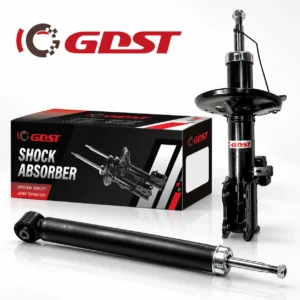
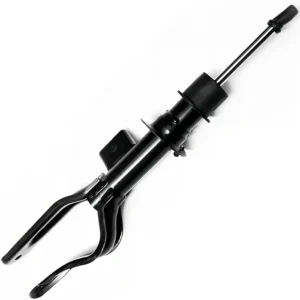
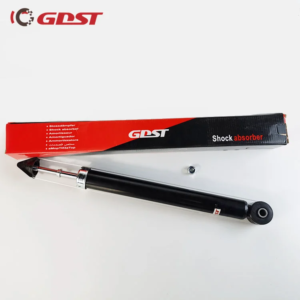
Aftermarket Shock Absorbers & Struts for Cars, SUVs & Trucks
- MOQ
- 50PCS
- Price
- $6 - $25
- Warranty
- 1 Year From Receipt of Goods
- Delivery Time
- 45-55 Days
- Customization
-
- Customized Logo
- Customized Packaging
- ODM/Sample Development
ISO9001 Certified
Fast Delivery
OEM/ODM
OE Replacement Shocks | Truck & 4×4 Applications | OEM/ODM & Wholesale Supply
Looking for aftermarket shock absorbers for your automotive parts business? Wuhu GDST Auto Parts Co.,Ltd supplies replacement shocks and struts for passenger cars, SUVs, pickups, and selected light- and medium-duty truck applications.
With over 2,000 shock absorber models in our published product range, we support aftermarket importers, wholesalers, distributors, and private-label brands seeking application-specific replacement parts, product identification support, and international supply.
Our product program includes twin-tube, monotube, hydraulic, gas-charged, and selected strut configurations. For buyers evaluating technical specifications, GDST also maintains part-number-specific documentation describing nominal rebound and compression damping forces under defined test conditions.
Whether you are sourcing conventional aftermarket shocks, developing a replacement parts catalog, or evaluating specialized shocks for 4×4 vehicles, our team can help review your product requirements and available references.
GDST Aftermarket Shock Absorber Supply Highlights
- 2,000+ shock absorber models across the published product program
- Replacement shocks, struts, and selected complete strut assemblies
- Application-specific damping force specifications for documented references
- Product identification and OE cross-reference review
- OEM/ODM branding and private-label packaging support
- Standard wholesale MOQ of 50 pcs per model for regular shock absorber orders
- Quality inspection, technical documentation, and export coordination support
Recommended Products
|
OEM |
Application |
Position |
|
84741580 |
CADILLAC ESCALADE 2021-2023 |
Front |
|
84741585 |
CHEVROLET SILVERADO 1500 2021-2023 |
Rear |
|
20953567 |
CADILLAC SRX 2011-2016 |
Rear-RH |
|
20953566 |
SAAB 9-4X 2011 |
Rear-LH |
|
68253205AA |
JEEP GRAND CHEROKEE 2016-2020 |
Front-LH |
|
4877147AH |
RAM 1500 2015-2018 |
Front |
|
15195074 |
BUICK RAINIER 2004-2007 |
Front |
|
3963894 |
FORD EXPLORER 1991-2001 |
Rear |
[Download the GDST Shock Absorber Catalog 2026]
Aftermarket Shock Absorbers for OE Replacement and Performance Applications
Aftermarket shock absorbers are suspension damping components supplied through the automotive replacement parts market rather than exclusively through the original vehicle manufacturer’s parts channel.
Some are developed to meet the requirements of specific original suspension applications. Others are designed with different damping characteristics for selected driving, utility, or off-road requirements.
A shock absorber controls suspension motion through hydraulic damping, converting part of the suspension’s mechanical energy into heat. Properly selected damping helps regulate excessive suspension oscillation and contributes to controlled vehicle body movement.
For aftermarket businesses, choosing the correct replacement involves more than matching external appearance.
Product selection should consider mounting dimensions, vehicle application, suspension configuration, operating travel, and damping force requirements.
GDST supports the sourcing of application-specific products for several aftermarket requirements:
- OE-Style Replacement: Products selected for compatible standard suspension configurations.
- Passenger Car and SUV Replacement: Shocks and struts for applicable everyday-driving requirements.
- Truck and Pickup Replacement: Products for selected utility, commercial, and pickup applications.
- Performance-Oriented Applications: Selected suspension products intended for different damping and handling requirements.
- 4×4 and Lifted Vehicle Applications: Specialized off-road products requiring additional suspension compatibility checks.
Damping characteristics and performance suitability must be evaluated for the specific application. A higher damping force does not automatically indicate a better shock absorber.
Explore Our Aftermarket Shocks and Struts Product Range
GDST offers several shock absorber constructions and replacement configurations to address different vehicle and market requirements.
|
Product Type |
Technical Characteristics |
Typical Applications |
|
Twin-Tube Hydraulic Shocks |
Hydraulic damping system with an inner working tube and outer reserve tube |
Selected OE replacement applications |
|
Gas-Charged Twin-Tube Shocks |
Twin-tube hydraulic damping with gas pressurization to help control aeration |
Cars, SUVs, and compatible pickups |
|
Monotube Shock Absorbers |
Single pressure tube with a working piston and gas-separated chamber in conventional designs |
Selected replacement and performance applications |
|
Aftermarket Suspension Struts |
Damping units with an additional structural role in the suspension |
Compatible strut-type suspension systems |
|
Complete Strut Assemblies |
Application-specific assemblies incorporating a strut and associated components |
Selected car and SUV applications |
|
Truck and 4×4 Shock Absorbers |
Application-specific suspension dampers, including selected adjustable designs |
Pickups, SUVs, and off-road vehicles |
Product construction and availability vary by part number. The model-specific damping force records presented below do not, by themselves, establish whether a particular reference is twin-tube, monotube, gas-charged, or suitable for an off-road conversion.
For individual product recommendations, please provide the applicable OE reference or vehicle details.
OE Replacement vs Performance Aftermarket Shocks: How to Select
Aftermarket customers may be seeking an OE-style replacement, a change in ride-control characteristics, or a solution for a particular vehicle use.
These requirements should be considered separately.
|
Selection Factor |
OE-Style Replacement |
Performance-Oriented Shocks |
Truck and Off-Road Shocks |
|
Primary purpose |
Replace an existing component in its approved application |
Achieve a defined damping or handling target |
Match selected utility or modified suspension requirements |
|
Main selection criteria |
OE reference, vehicle fitment, mounting dimensions |
Fitment, damping targets, operating conditions |
Vehicle configuration, travel, load conditions, and terrain |
|
Required technical data |
Dimensions and application-specific damping requirements |
Damping characteristics across relevant operating conditions |
Extended/compressed lengths, mounting geometry, and damping characteristics |
|
Important limitation |
Fitment should not be inferred from appearance |
Higher force does not guarantee better performance |
Shock replacement does not increase rated payload or towing capacity |
A product with greater rebound force at one test velocity is not automatically superior to another product. Different suspension systems require different damping characteristics.
The correct comparison should be based on compatible applications and comparable test conditions.
Aftermarket Shocks and Struts: What Is the Difference?
Shock absorbers and struts both provide suspension damping, but they serve different functions within the vehicle suspension system.
Conventional Shock Absorbers
A standalone shock absorber primarily controls suspension movement. In typical applications, the spring supports the vehicle’s static weight while the shock absorber regulates oscillation.
Suspension Struts
A strut provides damping while also serving a structural function in the applicable suspension design. It may incorporate spring mounting features and participate in wheel-location geometry.
Complete Strut Assemblies
A complete strut assembly combines application-specific components that may include the damper, spring, upper mount, bearing, protective boot, and bump stop.
The supplied assembly contents depend on the selected part number.
GDST supports suitable replacement shocks, struts, and selected complete strut assemblies for compatible vehicle applications.
Aftermarket Truck Shocks for Pickups, SUVs and Utility Vehicles
Aftermarket shocks for trucks must be selected according to the vehicle’s suspension design and intended operating conditions.
Pickups and utility vehicles may experience changing loads, towing activity, repeated road irregularities, and mixed highway and off-road use. These conditions affect the desired suspension behavior.
Daily-Driving Truck Replacement
For standard-height pickups and SUVs, appropriate replacement shocks should match the required mounting geometry, operating travel, and application-specific damping requirements.
Utility and Variable-Load Applications
Vehicles used for work may experience changes in payload distribution and driving conditions. Suitable damping characteristics should be selected in conjunction with the spring, axle, and suspension configuration.
Towing Applications
Shock absorbers influence suspension motion but do not independently determine a vehicle’s approved towing capacity or payload rating.
Mixed On-Road and Off-Road Applications
Shock selection should consider installation geometry, available travel, expected operating conditions, and product durability requirements.
GDST supports sourcing for compatible pickup and SUV platforms. Exact availability must be checked against the selected vehicle generation, axle configuration, and part number.
Aftermarket Shocks for Lifted Trucks and 4×4 Vehicles
Aftermarket shocks for lifted trucks require careful assessment of suspension geometry and available travel.
Lift height alone is not sufficient to determine the correct shock absorber.
A suspension modification may change the shock’s installed position, available compression travel, droop travel, and clearance around adjacent components.
Before selecting a shock absorber, the following details should be reviewed:
|
Parameter |
Why It Matters |
|
Vehicle model, year, and suspension variant |
Identifies the original vehicle configuration |
|
Lift height and lift-kit design |
Helps explain changes to suspension geometry |
|
Extended shock length |
Must accommodate the intended suspension extension |
|
Compressed shock length |
Must be compatible with the suspension’s compression limit |
|
Shock operating stroke |
Must suit the installation geometry and required movement |
|
Upper and lower mounting dimensions |
Must match the installation interfaces |
|
Bump-stop and limit-strap arrangements |
Help determine safe suspension travel limits |
|
Operating conditions |
Support the selection of appropriate damping characteristics |
Important Technical Distinction
A 30 mm test stroke used for damping force characterization must not be confused with the shock absorber’s maximum physical travel.
The GDST technical data records presented on this page provide damping force specifications under stated test conditions. They do not establish lift-kit compatibility, full extension length, compressed length, or total usable travel.
For specialized 4×4 applications, GDST offers a separate off-road product range with selected adjustable and remote-reservoir configurations.
Explore GDST Off-Road Shock Absorbers
Shock Absorber Technical Specifications and Fitment Requirements
Reliable aftermarket part selection requires two different types of technical information: dimensional fitment data and damping performance data.
A product may satisfy a specified damping force requirement while still being unsuitable for a vehicle because of different mounting dimensions or suspension travel.
The following specifications should be considered during technical review:
|
Technical Parameter |
Function in Product Selection |
Documentation Status |
|
Part Number |
Identifies the product reference |
Available for the 17 documented MF references |
|
Installation Position |
Identifies front or rear installation |
Available for the documented references |
|
Test Stroke |
Defines the stated stroke used for damping characterization |
30 mm in the attached technical data |
|
Test Velocity |
Defines the stated velocity associated with the damping force values |
0.300 or 0.314 m/s |
|
Nominal Rebound Force |
Specifies the target rebound damping force |
Available in N for each documented reference |
|
Nominal Compression Force |
Specifies the target compression damping force |
Available in N for each documented reference |
|
Minimum/Maximum Force |
Indicates the force limits listed in the technical data |
Available for each documented reference |
|
OE Cross-Reference |
Supports original part identification |
Requires separate confirmation |
|
Vehicle Make/Model/Year |
Supports application-specific selection |
Requires fitment catalog verification |
|
Extended Length |
Helps verify extension compatibility |
Not provided in the attached technical data |
|
Compressed Length |
Helps verify compression compatibility |
Not provided in the attached technical data |
|
Mounting Type and Dimensions |
Determines mechanical installation compatibility |
Requires model-specific drawings |
|
Shock Construction |
Identifies twin-tube, monotube, and other designs |
Must be confirmed by product reference |
The availability of a damping force specification does not establish complete vehicle interchangeability.
GDST buyers should confirm the required mounting dimensions and vehicle application data before ordering.
Model-Specific Damping Force Specifications
GDST has provided technical data sheets for 17 shock absorber references, including front and rear applications.
These documents specify nominal rebound and compression forces, associated tolerances, and the test conditions under which the values are stated.
All 17 references use a 30 mm test stroke, with specified velocities of either 0.300 m/s or 0.314 m/s.
Selected GDST Technical Reference Data
|
Part Number |
Position |
Test Velocity (m/s) |
Rebound Force (N) |
Compression Force (N) |
|
MF10366741 |
Front |
0.314 |
1000 ± 150 |
640 ± 122.4 |
|
MF10366742 |
Front |
0.314 |
1000 ± 150 |
640 ± 122.4 |
|
MF10242405 |
Front |
0.300 |
1100 ± 250 |
550 ± 150 |
|
MF10242085 |
Front |
0.300 |
1100 ± 250 |
550 ± 150 |
|
MF543027096R |
Front |
0.314 |
940 ± 142.2 |
515 ± 102.4 |
|
MF8200663654 |
Front |
0.314 |
780 ± 121.4 |
670 ± 127.2 |
|
MF543023532R |
Front |
0.300 |
1225 ± 225 |
550 ± 150 |
|
MF543026656R |
Front |
0.314 |
995 ± 149.35 |
635 ± 121.6 |
|
MF6001550751 |
Front |
0.314 |
1015 ± 151.95 |
460 ± 93.6 |
|
MF10419961 |
Front |
0.300 |
1100 ± 250 |
550 ± 150 |
|
MF10419962 |
Front |
0.300 |
1100 ± 250 |
550 ± 150 |
|
MF543024EA3A |
Front |
0.300 |
1100 ± 250 |
550 ± 150 |
|
MF543034EA3A |
Front |
0.300 |
1100 ± 250 |
550 ± 150 |
|
MF543025451R |
Front |
0.300 |
1100 ± 250 |
550 ± 150 |
|
MF8200953294 |
Rear |
0.314 |
680 ± 108.4 |
480 ± 96.8 |
|
MF562100664R |
Rear |
0.314 |
1920 ± 269.6 |
520 ± 103.2 |
|
MF8200869345 |
Rear |
0.300 |
1100 ± 250 |
550 ± 150 |
Source: GDST-issued Shock Absorber Technical Data, 17 reference sheets compiled in November 2025.
Technical clarification: The values above represent specified nominal forces and tolerances, not individual specimen measurement results. The listed test stroke must not be interpreted as the complete mechanical stroke of the shock absorber. Vehicle fitment, OE interchangeability, and design construction must be verified separately.
What This Data Offers Buyers
These specifications provide a documented starting point for reviewing the intended damping force characteristics of particular product references.
Buyers can use the information to discuss target forces, test conditions, allowable ranges, and technical requirements with GDST before sample evaluation or bulk purchasing.
For custom or application-specific projects, additional dimensional, fitment, and performance verification may be required.
How to Interpret Damping Force Specifications
Damping force values are meaningful only when they are connected to the relevant test conditions.
A force value expressed in newtons does not fully describe how a shock absorber behaves across its entire operating speed range.
The test velocity, test stroke, temperature, damping direction, and test procedure should all be considered when comparing technical data.
Example: MF10366741 Front Shock Absorber
GDST’s technical reference for MF10366741 provides the following nominal values at a specified velocity of 0.314 m/s and a test stroke of 30 mm.
|
Parameter |
Nominal Force |
Listed Minimum |
Listed Maximum |
|
Rebound |
1000 N |
850 N |
1150 N |
|
Compression |
640 N |
517.6 N |
762.4 N |
This indicates the nominal targets and documented specification limits for the stated conditions.
It does not show the actual measured force of an individual production unit.
Example: MF562100664R Rear Shock Absorber
At the same documented test velocity and test stroke, MF562100664R has a nominal rebound specification of 1920 N and a nominal compression specification of 520 N.
Its listed rebound limits are 1650.4–2189.6 N, and its compression limits are 416.8–623.2 N.
The difference between these references illustrates why damping force specifications must be evaluated in relation to the intended suspension application.
The higher nominal rebound value of one reference does not establish greater quality, overall performance, or suitability for another vehicle.
What Additional Performance Records May Be Needed?
For more detailed engineering validation, buyers may request the applicable actual test measurements, force–velocity curves, force–displacement curves, operating temperature data, and relevant inspection records, subject to availability.
A complete technical assessment may also require dimensional drawings, material specifications, durability data, and an agreed acceptance procedure.
Vehicle Applications and OE Number Cross-Reference Support
Correct vehicle fitment remains essential when sourcing aftermarket shock absorbers.
GDST’s published shock absorber range serves passenger cars, SUVs, pickups, and selected commercial vehicle applications across multiple international vehicle markets.
The MF references listed above are product identifiers recorded in GDST technical documentation. They should not be treated as verified original equipment cross-references without further catalog confirmation.
For product matching, we recommend submitting:
- OE number or existing product reference
- Vehicle manufacturer, model, year, and market
- Front or rear installation position
- Suspension configuration and special equipment
- Left/right installation requirements, where applicable
- Quantity and destination market
Vehicle Fitment Verification
Production-year differences, suspension variants, electronic damping options, and regional configurations may affect interchangeability.
For electronically controlled or active suspension systems, compatibility with the vehicle’s control architecture must be reviewed separately.
OE Reference Verification
A matching product number or similar design does not independently establish complete OE interchangeability.
GDST can review your reference list and discuss available application information before quotation.
Shock Absorber Manufacturing and Quality Control
Shock absorber quality depends on manufacturing controls, component consistency, and testing appropriate to the product design.
Important considerations include piston-rod finish, cylinder quality, valving components, seal integrity, mounting dimensions, damping characteristics, and assembly processes.
GDST’s published manufacturing information describes multiple inspection and evaluation capabilities, including dimensional measurement, material analysis, damping performance testing, tensile testing, durability evaluation, temperature testing, and corrosion testing.
These activities address different aspects of product quality and should not be confused with one another.
Damping Force Specification and Verification
For the 17 documented references, GDST technical data sheets define nominal rebound and compression force specifications under stated test conditions.
Such documents can provide a basis for comparison with actual test measurements.
However, the technical sheets themselves do not establish that each production unit was measured, accepted, or tested across multiple operating velocities.
Dimensional and Component Inspection
Product drawings and dimensional inspection records can help verify critical dimensions, including mounting interfaces, rod geometry, and installation lengths.
These checks are essential because correct damping performance alone does not guarantee vehicle fitment.
Durability and Environmental Testing
Durability, fatigue, temperature, and corrosion tests evaluate different characteristics from a basic damping force specification.
Relevant results should be supported by the applicable test methods and product-specific records.
Quality Documentation for B2B Buyers
|
Documentation Type |
Purpose |
Evidence Required |
|
Technical Data Sheet |
Defines intended product specifications |
Part-specific nominal values and tolerances |
|
Dimensional Inspection Record |
Documents conformity to required dimensions |
Actual dimensions and applicable limits |
|
Damping Test Record |
Documents measured damping behavior |
Test conditions, measured results, and acceptance criteria |
|
Durability Test Report |
Evaluates performance under repeated test cycles |
Defined cycle conditions and recorded results |
|
Quality Management Certificate |
Documents certified management system scope |
Valid certificate identifying the certified organization and facility |
GDST’s website describes quality management practices associated with ISO 9001 and IATF 16949 requirements. Customers requiring certification evidence should verify the certificate scope, covered production facilities, and validity before relying on those claims for supplier qualification.
OEM/ODM and Private Label Aftermarket Shock Absorbers
GDST supports automotive aftermarket distributors and private-label businesses seeking customized product branding and coordinated wholesale supply.
Our services may include product labels, packaging artwork, carton identification, and application-specific product development discussions.
Private Label Branding
Logo application and branded product identification can be arranged for eligible orders according to approved specifications.
Custom Packaging
Brand boxes, outer cartons, and shipment labels can be developed according to agreed packaging requirements.
Product Specification Discussions
Buyers with specific vehicle or damping requirements can submit product references and technical specifications for feasibility review.
Existing damping force technical data may serve as reference information during these discussions, but it does not replace application validation or development testing.
Wholesale Product Range Planning
Distributors can submit OE lists, target applications, and volume estimates to support market-specific catalog development.
Wholesale Supply, MOQ, Lead Time and Warranty
GDST works with importers, wholesalers, distributors, and aftermarket brands looking for repeatable automotive parts supply.
|
Commercial Item |
Published GDST Reference |
|
Shock Absorber Range |
2,000+ models |
|
Standard MOQ |
50 pcs per model for regular shock absorber orders |
|
Standard Container Lead Time |
Approximately 50 days, subject to order confirmation |
|
Standard Shock Absorber Warranty |
1 year / 30,000 km for eligible products under normal operating conditions |
|
Private Label |
Customized branding and packaging support |
|
Product Identification |
Part-number and application review |
|
Technical Information |
Model-specific documentation according to availability |
|
Special Off-Road Products |
Separate MOQ, lead-time, and product conditions |
|
Export Coordination |
International order and shipment support |
These commercial terms are based on GDST’s published product information. Actual terms depend on the relevant product, order quantity, destination market, customization requirements, and agreed sales conditions.
How to Request an Aftermarket Shock Absorber Quote
GDST recommends beginning each wholesale inquiry with accurate product identification.
Step 1 — Submit Your Product References
Send OE numbers, existing part numbers, vehicle applications, or technical drawings.
Step 2 — Confirm the Product Requirements
Identify whether you need standard replacement shocks, struts, complete assemblies, truck shocks, or specialized off-road products.
Step 3 — Review Fitment and Technical Data
Discuss vehicle compatibility, mounting dimensions, and available damping force specifications.
Step 4 — Confirm Commercial Details
Provide the requested quantities, destination market, branding requirements, and packaging instructions.
Step 5 — Review Samples and Order Terms
Where applicable, discuss sample evaluation, technical verification, quality requirements, and approved commercial arrangements before production.
FAQ About Aftermarket Shock Absorbers and Struts
Are aftermarket shock absorbers the same as OEM shocks?
Not necessarily. Aftermarket products may be developed for OE-style replacement or for different suspension performance requirements. Suitability depends on fitment, dimensions, damping characteristics, and product validation.
What is the difference between aftermarket shocks and struts?
A conventional shock absorber primarily provides damping. A suspension strut also serves a structural function in the applicable suspension system. They are not automatically interchangeable.
Can aftermarket shocks improve ride comfort or handling?
Properly selected shocks can change ride-control characteristics, but improvements depend on the vehicle, suspension configuration, damping specification, and driving conditions. Higher damping force does not automatically mean better comfort or handling.
What do rebound and compression damping force mean?
Rebound damping force refers to resistance during shock extension, while compression damping force refers to resistance during shock compression. Both vary according to product design and operating conditions.
Does a higher rebound force mean a better shock absorber?
No. Different vehicles require different damping characteristics. A higher force at one test velocity cannot establish overall superiority or suitability for another vehicle.
What does the 30 mm test stroke in GDST technical data mean?
It is the stated test stroke associated with the damping force specifications. It does not represent the shock absorber’s total available mechanical travel or full extension-to-compression length.
Are the damping force figures actual test results?
The published examples reproduce nominal target forces and tolerance ranges from GDST technical data sheets. They are not presented as individual specimen measurements or independent laboratory certification results.
Can GDST provide additional damping test information?
Customers can request relevant technical documents and discuss the availability of actual measurement records or additional testing for a specific product or development project.
Can standard aftermarket shocks be used on lifted trucks?
Not without confirming compatibility. Suspension modifications can change shock operating position, available travel, and mounting geometry. The correct product should be selected using the actual suspension configuration and relevant measurements.
How can I find a GDST shock absorber using an OE number?
Submit the OE reference and the vehicle’s make, model, year, and relevant suspension details. GDST can review available cross-reference and application information before confirming a suitable product.
Does GDST supply complete strut assemblies?
Yes. Selected complete strut assemblies are included in GDST’s published product program. Availability and included components depend on the specific application.
Can I order private-label aftermarket shocks?
Yes. GDST supports eligible private-label and OEM/ODM projects, including logo application, product identification, and packaging customization.
What is the minimum wholesale order?
The published standard MOQ for regular shock absorber orders is 50 pieces per model. Specialized products and customized projects may have different ordering requirements.
What warranty is available?
GDST publishes a 1-year / 30,000 km warranty for eligible standard shock absorber products under normal operating conditions. Exact coverage is subject to the agreed warranty terms.
Source Aftermarket Shock Absorbers from GDST
Whether you need OE-style replacement shocks, aftermarket struts, truck suspension components, or selected specialized 4×4 products, GDST can help you review suitable supply options.
Our team supports product reference identification, specification discussions, private-label packaging, wholesale quotations, and international order coordination.
To Get Started, Send Us:
- Product or OE reference numbers
- Vehicle application details
- Required quantities
- Destination country
- Branding or packaging requirements
- Technical drawings or special suspension requirements, if applicable
Contact: admin@gdstauto.com
GDST Auto Parts — Aftermarket Shock Absorbers, Struts & Suspension Supply
Related Products
Explore more suspension and steering parts from GDST.
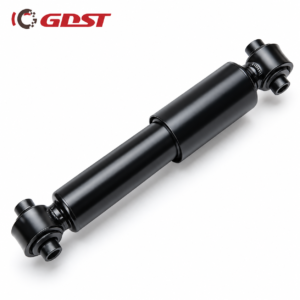
OE: 104436300F 104436304B 118836300E
104436300F 104436304B 118836300E Shock Absorber For Tesla
View Product →
OE: MR316240 MR319243 MR510063 MR554465
Best-Selling MR316240 Shock Absorber for Mitsubishi
View Product →Quality Assurance
Every product undergoes rigorous testing and inspection to ensure reliability and performance
Material Inspection
Premium steel from certified suppliers with full traceability
Performance Testing
Fatigue, torque, and stress testing per OE standards
Dimensional Control
Tolerance control for precise OE fitment
Final Inspection
100% inspection before shipment
Request Detail Quote
Tell us your requirements and our sales team will get back to you.
Product: Aftermarket Shock Absorbers & Struts for Cars, SUVs & Trucks