
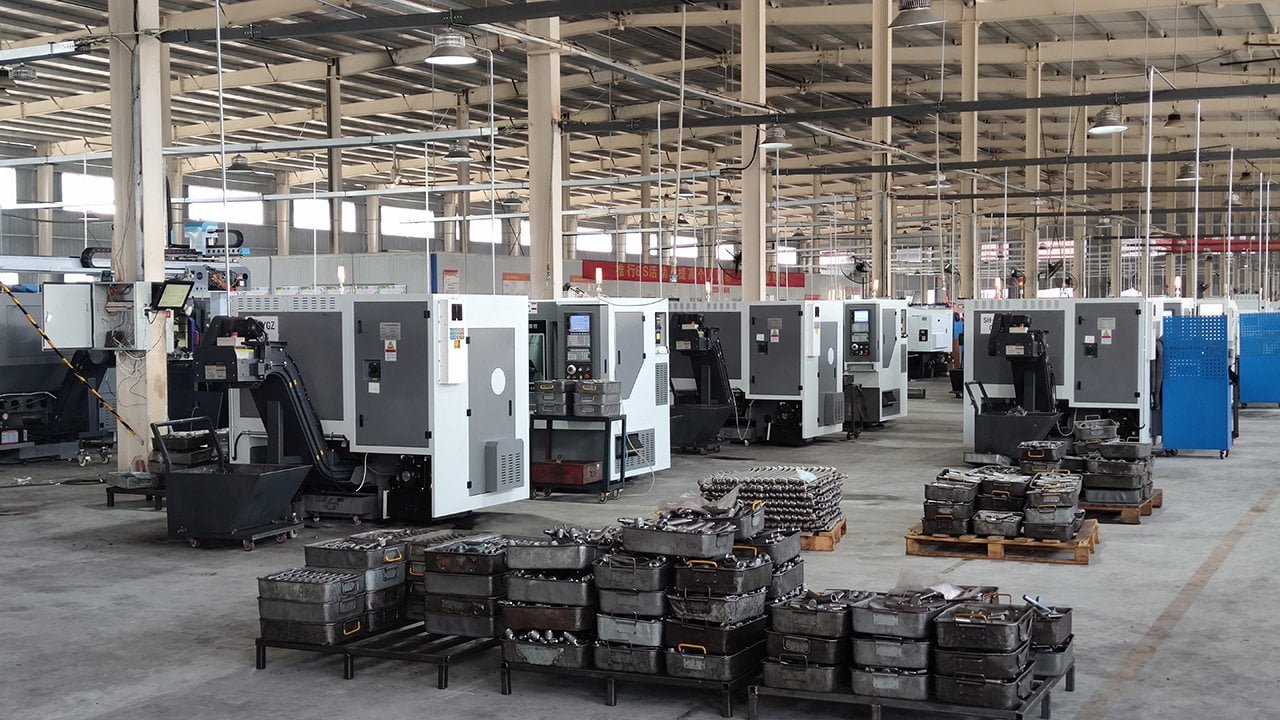
Executive Summary: Not sure whether to buy OEM vs aftermarket steering rack for your business? This guide breaks down the real differences in quality, price, availability, and warranty. Learn when OEM is necessary, when a high-quality aftermarket rack makes more sense, and how to find OE-grade suppliers like GDST that help you save 30–50% without sacrificing reliability.
If you are a procurement manager, workshop owner, or distributor, you’ve probably faced this question more than once:
- “Should I buy an expensive OEM steering rack, or take a chance on a cheaper aftermarket part?”
Your customers want reliability. But they also want competitive prices. And the truth is, OEM and aftermarket are not just two fixed categories.
Some aftermarket racks fail in six months. Others last just as long as OEM – at half the price. The key is knowing what separates good aftermarket from bad aftermarket.
In this guide, we’ll walk you through a practical comparison so you can make sourcing decisions that protect your bottom line and your reputation.
- If you are new to steering racks, you may want to start with our basic guide: What is a steering rack.
OEM vs Aftermarket Steering Rack – Definitions at a Glance
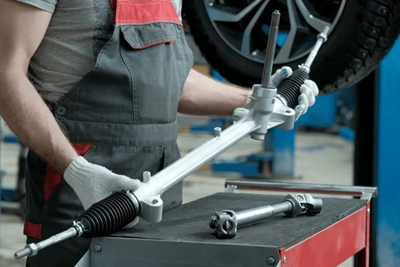
Before comparing, let’s make sure we’re clear on the terms.
| Feature | OEM Steering Rack | Aftermarket Steering Rack |
|---|---|---|
| What it means | Made by the car brand’s approved supplier, sold through dealers with original logo & part number | Made by independent manufacturers, sold without car brand logo |
| Price | High – often 2 to 3 times more expensive | Low to mid – huge range depending on supplier |
| Quality | Consistent, always meets OE specs | Varies widely – from dangerous junk to true OE-grade |
| Availability | Limited to dealer network; older models may be discontinued | Wide – many distributors and direct factories |
| Customization | None | Possible with good suppliers (branding, packaging, small changes) |
| Warranty | Standard (1–2 years) but claims go through dealers | Varies – reliable suppliers offer 1 year + direct support |
The table above shows the potential of aftermarket – but only if you choose the right manufacturer.
5 Key Factors to Compare (OEM vs Aftermarket)
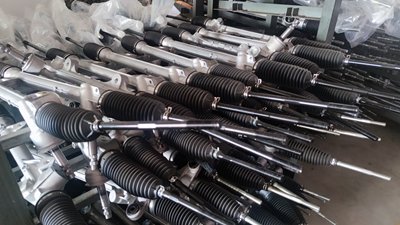
Let’s go deeper. Here are the five things that really matter to B2B buyers.
2.1 Quality & Materials
- OEM: Uses exact steel grades (e.g., 45# steel, 40Cr), precise heat treatment (induction hardening with controlled depth), and tight tolerances (runout ≤0.05-0.08mm). Every rack is tested.
- High-quality aftermarket: Can match or even exceed OEM specs. Look for IATF 16949 certification, CNC machining, and final inspection reports. For example, GDST controls runout within ≤0.05mm – tighter than many OEMs.
- Low-quality aftermarket: Uses cheap steel, skips heat treatment, and has loose tolerances. These racks often fail within 3–6 months. A 2023 industry report found that over 60% of early steering rack failures come from low-cost, no-certificate suppliers.
If you’re wondering how long a high-quality steering rack lasts, read: How long does a steering rack last?
2.2 Cost & Total Value
- OEM: High upfront cost. But you pay for brand, dealer markup, and logistics.
- Aftermarket: A factory-direct OE-quality rack can be 30–50% cheaper than OEM – with the same performance.
But don’t just look at the price tag. Think about cost per mile or cost per year. A cheap $ 50 rack that fails in 6 months is more expensive than a $ 120 rack that lasts 5 years.
Smart buyer formula: Value = (Quality + Lifespan) ÷ Price
2.3 Availability & Lead Time
- OEM: For current models, okay. But for vehicles over 7-8 years old, OEM parts often become “discontinued” or take weeks to backorder.
- Aftermarket: Good manufacturers keep popular racks in stock. Standard production time is around 30 days. And if you have an emergency order, a responsive supplier can prioritize your shipment.
This matters when your workshop has a customer waiting or your fleet truck is off the road. Downtime costs money.
2.4 Warranty & After-Sales Support
- OEM: Warranty exists, but the claims process can be slow. You need to go through the dealer, provide proof, and wait for approval.
- Aftermarket: With a trusted supplier like GDST, you get a 1-year warranty + lifetime technical support. Claims go directly to the factory – faster resolution, less paperwork.
Ask potential suppliers: “How do you handle warranty claims?” If they hesitate, walk away.
2.5 Customization
- OEM: Zero customization. You get exactly what the car brand designed.
- Aftermarket: This is where factory-direct suppliers shine. Need custom inner tie rod lengths for a special fleet vehicle? Want your own logo on the box? Require a specific grease or boot material? A good manufacturer can do that.
For B2B buyers building their own brand, customization is a game-changer.
When to Choose OEM – And When to Switch to Aftermarket
There is no single right answer. It depends on your situation.
Choose OEM when:
- The vehicle is still under factory warranty, and the owner insists on original parts.
- You are dealing with a luxury or exotic car brand where buyers are very brand-sensitive.
- The model is extremely rare, and no reliable aftermarket alternative exists.
Choose high-quality aftermarket when:
- You need to control costs without sacrificing reliability.
- OEM parts are backordered or discontinued (common for vehicles 10+ years old).
- You aim to build your brand through custom packaging.
- Your customers care about value, not just the name on the box.
Real-world example: A European fleet operator switched from OEM to GDST steering racks for their 50 delivery trucks. They saved 38% per rack and saw zero failures in the first 18 months. The OEM racks they used before had a 7% failure rate within one year.
If you are planning to replace steering racks in bulk, our installation guide will help: How to replace a steering rack.
How to Verify If an Aftermarket Supplier Offers True OE Quality
Not all aftermarket suppliers are equal. Use this checklist to separate the real professionals from the cheap resellers.
Certification & Standards
- Does the factory hold IATF 16949 or at least ISO 9001?
- Do their products clearly state compliance with SAE or OEM specifications?
Material Traceability
- Can they provide steel grade certificates?
- Do they use standard engineering steels like 45# steel, 40Cr, or equivalent?
Process Control
- Do they perform heat treatment (induction hardening)? What is the hardened layer depth?
- What is their CNC machining tolerance? (Good ones say ≤±0.01mm.)
End-of-Line Testing
- Does every rack go through a final bench test for smoothness and noise?
- Do they test for runout and seal pressure?
Warranty & Support
- Is the warranty clearly stated (e.g., 1 year)?
- Is the claim process direct with the factory, not a third party?
If you are still comparing hydraulic vs electric racks for your application, read our detailed breakdown: Hydraulic vs Electric Steering Rack.
When a supplier answers all these questions clearly and provides documents, you have found a reliable partner.
Why GDST Offers OE Quality at Aftermarket Value
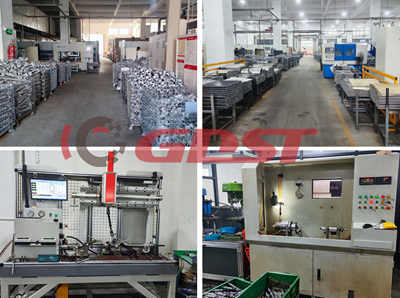
At GDST, we don’t believe you should have to choose between high quality and fair price.
We are a factory-direct manufacturer of steering racks, and everything we do is built around OE standards.
| What Matters | GDST Capability |
|---|---|
| Certification | IATF 16949 certified. Full compliance with international standards. |
| Material | Premium steel with full traceability. No “mystery metal.” |
| Machining accuracy | CNC controlled within ±0.01mm. Runout ≤0.05mm. |
| Heat treatment | Induction hardening with controlled depth for long life. |
| Testing | 100% final bench test. Seal pressure test. Runout check. |
| Warranty | 1-year warranty + lifetime technical support. |
| Customization | Product & packaging customization available. |
| Lead time | 30 days standard. Emergency orders handled separately. |
| Support | 24/7 sales team. No waiting for office hours. |
- To understand the engineering behind our racks, you can start here: How does a steering rack work.
You don’t have to overpay for an OEM badge. And you don’t have to gamble with cheap, unreliable racks. GDST delivers OE-grade steering racks at factory-direct prices.
Ready to test the difference?
We welcome sample orders. Test one of our racks side by side with your current supplier – OEM or aftermarket. See the fit, feel the smoothness, and check the data.
Conclusion
The OEM vs aftermarket debate often misses the point. The real question is not where the rack comes from, but how well it is made.
A low-quality OEM-equivalent rack is still low quality. And a high-quality aftermarket rack from a certified, experienced manufacturer can match OEM performance at a much better price.
As a B2B buyer, your job is to find suppliers who combine OE-grade materials, precision manufacturing, and honest service. That’s exactly what GDST is built to provide.
Have a specific application or volume in mind? Send us a message – our engineers will answer within 24 hours.
Related Steering Rack Guides
To build a more professional content matrix and understand the full scope of the industry, we recommend exploring these related guides:
- Steering Rack Price Guide (2026): Factory Direct vs. Wholesale Trends
- Hydraulic vs Electric Steering Rack: Future-Proofing Your Stock
- How Long Does a Steering Rack Last? Comparing OE vs. Aftermarket Durability
- Common Steering Rack Problems: A Wholesaler’s Troubleshooting Guide
FAQ – OEM vs Aftermarket Steering Rack
It depends on the manufacturer. Some aftermarket racks are made with low-grade materials and no quality control. But high-quality aftermarket suppliers, especially those with IATF 16949 certification and strict testing, can match or even exceed OEM standards at a much lower price.
You are paying for the car brand’s logo, dealer markup, logistics, and warranty overhead. OEM racks are not necessarily made from better materials. Many are produced by the same tier-1 suppliers that also sell to the aftermarket.
In most regions, including the US and EU, using a quality aftermarket part does not void your warranty unless the part directly causes the failure. Check your local laws, but generally you are safe with OE-grade replacements.
Use the checklist in Part 4 of this guide. Look for certifications (IATF 16949), material traceability, heat treatment capability, final testing, and a clear warranty policy. A reliable supplier answers these questions without hiding behind vague promises.