
If you’ve ever driven your car and heard strange noises coming from the front or rear suspension, chances are the control arms are involved. The control arms play a crucial role in keeping your vehicle’s suspension system in good working order. But when they start to make noise, it could be a sign that something’s wrong. In this article, we’ll explore what causes control arm noise when driving, how to identify it, and what you can do to fix it.
What is Control Arm Noise
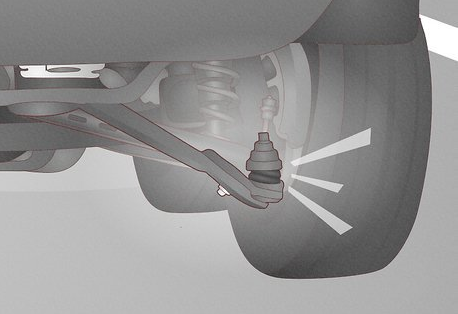
Control arm noise refers to the sounds that come from the suspension system, particularly from the control arms. These noises can range from a soft squeak to loud thumping or clanking sounds.
Control arms connect your vehicle’s wheels to the frame, allowing the wheels to move up and down while keeping the vehicle stable. When they become worn out, damaged, or loose, they can produce various noises. It’s important to pay attention to these sounds, as they can indicate potential issues with your suspension system that might compromise your safety and driving comfort.
Common Types of Control Arm Noises:
| Noise Type | Possible Cause |
|---|---|
| Squeaking/Creaking | Worn bushings or loose bolts |
| Thumping/Clunking | Damaged control arm or ball joint |
| Grinding | Worn-out or rusted metal parts |
| Rattling | Loose control arm or suspension components |
(For more details on symptoms, check out our article on Symptoms of a Bad Control Arm.)
Common Causes of Control Arm Noise
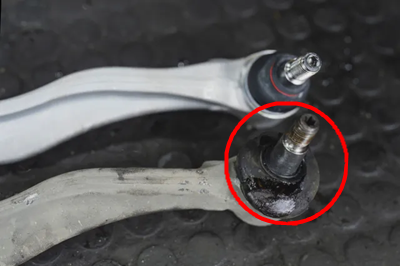
Several issues can cause control arms to make noise. Here are the most common ones:
1. Wear and Tear
Over time, the components of your control arm, such as bushings and ball joints, can wear down. When this happens, the control arm may no longer function smoothly, resulting in noise when driving over bumps or making turns.
2. Damaged Bushings
The rubber bushings in the control arm help absorb shock and reduce friction. When these bushings deteriorate, you’ll likely hear squeaking or creaking sounds. This is a common issue, especially in older vehicles or those that have experienced rough driving conditions.
3. Loose or Damaged Ball Joints
Ball joints are the pivot points that connect the control arm to the wheel assembly. If a ball joint becomes loose or worn, it can cause thumping or clunking noises, especially when turning or going over uneven surfaces.
4. Other Suspension Problems
In some cases, the noise may not be coming from the control arm itself but from other parts of the suspension system. For instance, shocks or struts that are worn out or improperly installed can create similar noises.
5. Improper Installation or Low-Quality Parts
If the control arms were not installed correctly or the vehicle has aftermarket parts that are not up to standard, it could result in loose parts and unwanted noise.
If you’re unsure about the cause, it’s best to consult a professional mechanic who can perform a thorough inspection.
(For more about control arm issues, check out What Causes Control Arms to Go Bad?.)
How to Diagnose Control Arm Noise
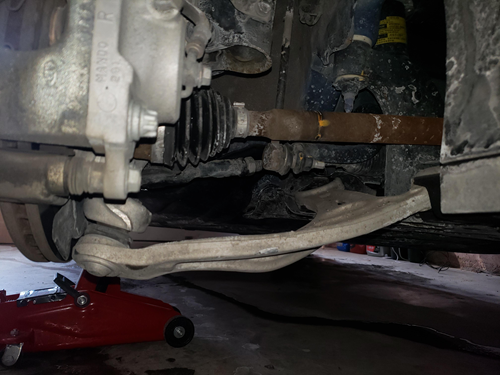
Diagnosing control arm noise involves paying attention to the specific symptoms you’re experiencing and conducting a few basic tests.
1. Driving Test
Start by driving the car in different conditions. Pay attention to the noise when you make turns, go over bumps, or brake. If the noise gets louder or changes depending on the road surface, the control arms are likely to blame.
2. Visual Inspection
Look for any obvious signs of damage. Check if the control arm is bent, cracked, or if the ball joints or bushings look worn. It’s also important to check for any loose bolts or rusted components.
3. Jack Up the Vehicle
Lift the car using a jack and inspect the suspension. Wiggle the wheels by hand to check for any play in the control arm. If the wheel moves excessively, it could mean that the control arm or its components are worn out.
If you’re unable to identify the problem yourself, seeking professional help is highly recommended.
(For more on control arm lifespan, check out Control Arm Lifespan.)
How to Fix Control Arm Noise
If you’ve diagnosed that the control arms are the source of the noise, here’s how to address the issue:
- Replace Worn Parts
If the bushings or ball joints are damaged, replacing them may solve the problem. You can either replace the damaged parts individually or replace the entire control arm assembly if the damage is extensive.
- Install High-Quality Control Arms
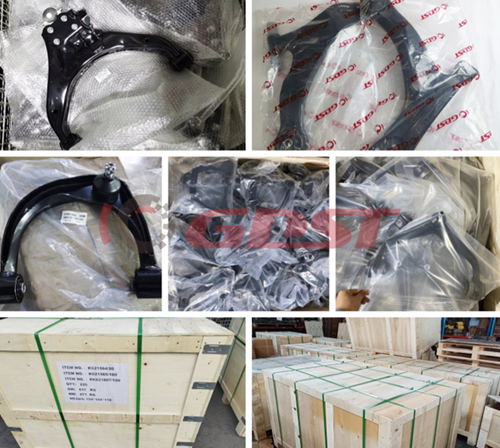
If you need to replace the control arms, make sure you choose high-quality, OE (original equipment) standard parts. Low-quality control arms are more likely to cause further issues and may not last as long as high-quality options.
At GDST, we offer control arms that meet or exceed OE quality standards. Our parts are factory-direct, customizable, and come with a one-year warranty for your peace of mind.
(If you need more details, check out How Much Does Control Arm Replacement Cost?.)
- Regular Maintenance
Regularly inspecting your suspension system can help you catch issues before they become serious. Checking the control arms, ball joints, and bushings during routine maintenance will ensure your vehicle runs smoothly and quietly.
- Seek Professional Help
If you are not confident in diagnosing or fixing the issue yourself, it’s always best to take your vehicle to a qualified mechanic. They can properly inspect the control arm and suspension system and make any necessary repairs.
When Should You Replace Control Arms?
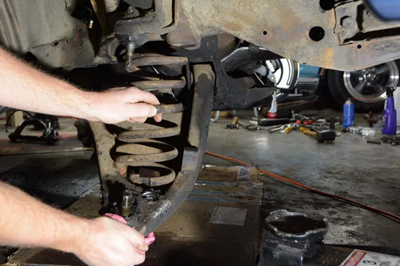
Replacing control arms depends on the severity of the wear and the symptoms you’re experiencing. If you notice any of the following, it’s time to consider replacement:
- Continuous or worsening noise from the suspension
- Poor handling or steering control
- Excessive vibrations while driving
- Visible damage to the control arm or related parts
If any of these signs are present, don’t wait too long to replace the control arms. Ignoring the issue can lead to more expensive repairs down the road and potentially dangerous driving conditions.
(For more information on driving with damaged control arms, check out Can You Drive with a Bad Control Arm?.)
FAQ: Frequently Asked Questions
The cost to fix control arm noise can vary depending on the extent of the damage and whether you need to replace individual components or the entire control arm assembly. In general, replacing bushings or ball joints can be relatively affordable, while replacing the whole control arm could be more expensive. The average cost for control arm replacement can range from $300 to $700, including parts and labor.
While greasing the bushings may temporarily reduce the squeaking or creaking noise, it’s not a permanent solution. Grease can help reduce friction, but if the bushings are worn or damaged, the noise will likely return. If the bushings are significantly worn, replacement is the best long-term solution.
In colder weather, rubber components like bushings and seals become stiffer as temperatures drop. This makes the material less flexible, which can increase friction and cause more noise when the control arm moves. Additionally, moisture and road salt can contribute to the degradation of rubber parts, further increasing noise.
Conclusion
Hearing noise from your control arms while driving is a red flag that shouldn’t be ignored. Whether it’s a squeaky sound, a deep thump, or a clunking noise, it often signals that something in your suspension system needs attention. Catching and addressing the problem early can save you from expensive repairs and prevent further damage to your vehicle.🛠️
At GDST Auto Parts, we’re dedicated to providing top-quality, high-strength control arms that meet or exceed industry standards. If you’re noticing any unusual sounds coming from your suspension, it might be time for a replacement. Our control arms are built to last, customizable to fit your needs, and backed by a one-year warranty for your peace of mind.
Want to learn more about suspension control arms? Explore our Complete Control Arm Guide for everything you need to know.
Related Control Arm Guides
If you’re looking to explore more about control arms and suspension systems, we’ve put together some additional resources that might be helpful:💡
- How to Replace a Control Arm? – Need help with replacing your control arm? This guide provides simple steps and essential tools for the job.
- What Is the Function of a Control Arm in a Car? – Dive deeper into the important role control arms play in your vehicle’s suspension and how they help with stability and safety.
- Where Is the Control Arm Located? – Find out where exactly the control arm sits in your vehicle and how it interacts with other suspension components.
- What Happens If a Control Arm Breaks? – Learn about the potential dangers of driving with a broken control arm and why quick action is necessary.
- Symptoms of a Bad Control Arm – Discover how to spot the warning signs of a damaged control arm and avoid costly repairs later.
- What Causes Control Arms to Go Bad? – Learn about the main factors that contribute to control arm failure and how to extend their lifespan.