When you look under the rear of a high-performance SUV, a heavy-duty truck, or even a classic pickup, you’ll likely see a massive metal beam stretching forward from the axle to the frame. That is the trailing arm.
But what are trailing arms, and why are they preferred over standard linkages in certain setups? Whether you are restoring a C10 trailing arm suspension or maintaining a modern trailing link suspension system, understanding how this trailing suspension operates is vital for vehicle stability. In this guide, we’ll analyze what a trailing arm does and how to spot a bent trailing arm before it ruins your ride.
What is a Trailing Arm and What Does it Do?
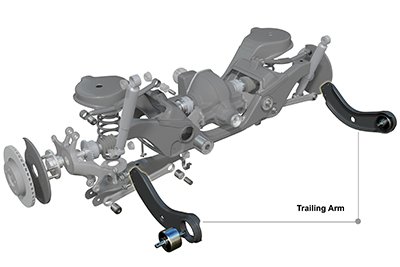
In simple terms, a trailing arm is a suspension link that connects the axle to the chassis, with the pivot point located in front of the axle. This is why it’s called “trailing”—the axle “trails” behind the mounting point.
What do trailing arms do?
The primary job of a rear trailing arm suspension is to handle longitudinal forces. When you hit the gas or slam on the brakes, the axle wants to move forward or backward. The trailing arm acts as a rigid anchor, keeping the axle in its proper place while allowing it to swing up and down to absorb bumps.
Trailing Arm vs. Control Arm: Understanding the Difference
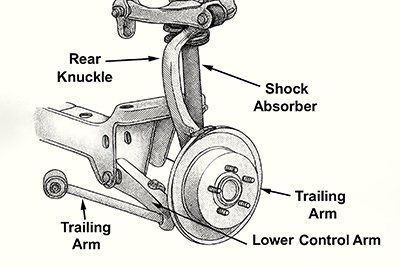
One of the most frequent questions we get at the factory is: “Which suspension is a trailing arm?” and how does it differ from a control arm?
Control Arms (Lateral Control): Usually run perpendicular (side-to-side) to the car. They focus on keeping the wheels vertical and managing camber.
Trailing Arms (Longitudinal Control): Run parallel (front-to-back) to the car. They focus on managing the “push and pull” of the wheels during acceleration and braking.
In a modern trailing link rear suspension, these two often work together. The trailing arm handles the fore-aft position, while the control arms handle the side-to-side alignment.
Visualizing the System: The Trailing Arm Diagram
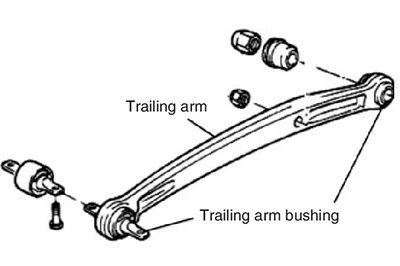
To understand the trailing link suspension system, you need to look at the connection points. A standard trailing arm suspension diagram includes:
- The Trailing Arm: The main structural beam.
- The Trailing Arm Bracket: The heavy-duty mount where the arm meets the chassis.
- The Bushings: The rubber isolators that allow the arm to pivot.
Popular Applications: From C10 Trucks to Honda Talon
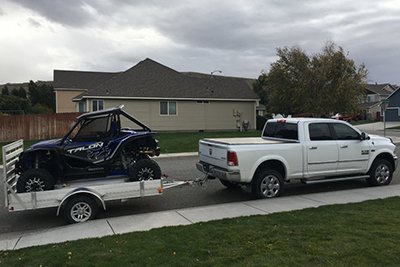
Different vehicles use trailing arms suspension for different reasons:
- Classic Trucks: The C10 trailing arm suspension is legendary for its ability to provide a smooth ride while hauling heavy loads.
- Off-Roaders: Performance UTVs like the Honda Talon trailing arms setup allow for massive suspension travel, which is essential for desert racing.
- Modern Sedans: Many Honda and Toyota models use a trailing link rear suspension to balance interior cabin space with precise handling.
Signs of a Bad or Bent Trailing Arm
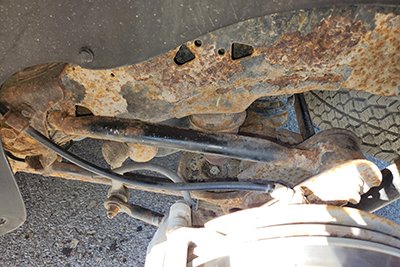
Because the suspension trailing arm is located under the rear part of car, it is highly susceptible to road debris, rust, and curb strikes. A bent trailing arm is a serious safety issue. Look for:
- The Car “Dog-Tracks”: The rear wheels don’t follow the front wheels in a straight line.
- Loud Clunking: Usually a sign that the trailing arm bracket or its internal bushing has completely collapsed.
- Uneven Tire Wear: If the trail arm car setup is bent even by a few millimeters, it will ruin your rear tires in weeks.
Popular OEM Reference for Trailing Arms
To help our wholesale partners, GDST stocks high-demand rear trailing arms for various global models. Here are a few top-movers:
| Vehicle Model | Application | Typical OEM Number |
| Toyota Corolla | Rear Suspension | 48780-12050 |
| Honda Civic | Rear Trailing Arm | 52370-SNA-A06 |
| Nissan Altima | Rear Suspension Link | 55501-JN00A |
| Ford Focus | Trailing Arm Assembly | 1061668 |
Why Source Your Trailing Arms from GDST?
As a specialized manufacturer, WUHU GDST Auto Parts understands that a trailing arm isn’t just a piece of metal—it’s a safety component.
- Forged Strength: We use high-tensile steel to ensure our rear trailing arm suspension units never become a bent trailing arm under normal load.
- Factory-Direct Pricing: Stop paying middleman markups for car trailing arm parts.
- Inventory Depth: From trailing arm rear suspension kits for sedans to heavy-duty trailer arm components, we cover it all.
Tired of low-quality linkages and long lead times? Request a Wholesale Quote & Full Suspension Catalog Today!