Choosing between a torsion bar suspension and a coil spring setup is a fundamental decision in vehicle suspension systems design. While coil springs are the most common suspension system parts for passenger cars, torsion bars offer unique space-saving advantages for trucks and SUVs. This guide breaks down the suspension anatomy of both systems, provides a suspension part diagram overview, and compares the durability of all parts of suspension involved.
Torsion Bar vs. Coil Spring: Anatomy Comparison
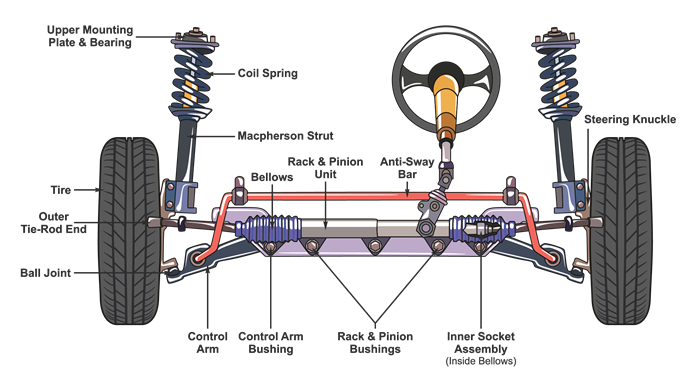
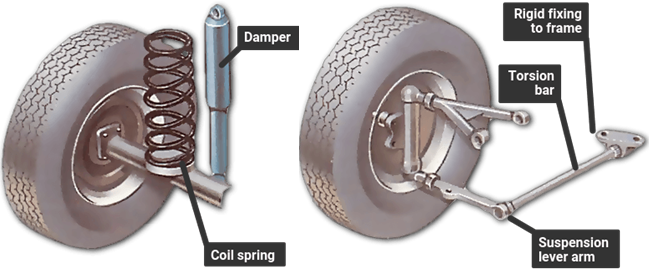
To understand the core difference, we must look at the suspension system diagram. Both systems serve the same purpose—absorbing road impact—but their suspension anatomy is fundamentally different.
- Torsion Bar Suspension: Instead of a vertical spring, this auto suspension system uses a steel bar that resists twisting (torsion). One end is fixed to the chassis, and the other to the lower control arm.
- Coil Spring Suspension: This is the most recognized part of a car shock assembly. It uses a helical spring that compresses and expands vertically, a standard in modern vehicle suspension systems.
Structural Differences in Suspension Systems
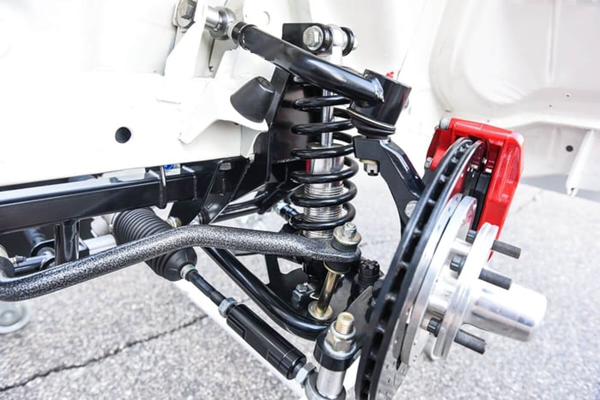
Instead of a general suspension parts list, let’s look at how the specific suspension components change based on the spring type.
Space Efficiency and Packaging
The torsion bar suspension is incredibly compact. Because the bar runs longitudinally along the chassis, it frees up space in the front car suspension diagram for heavy-duty drive axles. In contrast, a coil spring requires significant vertical clearance, often integrated into the components of a strut assembly.
Stress Points on Auto Bushings
In a torsion bar setup, the auto suspension bushings at the pivot points experience high rotational torque. In a coil spring setup, the stress is more vertical, often centered on the strut mount and vehicle bushings.
Diagnostic Guide: Signs of System Failure
Identifying a broken suspension part early is critical for road safety. Below is a quick diagnostic reference:
| (Symptoms) | Torsion Bar Suspension | Coil Spring Suspension |
| Ride Height | Sagging: Due to bar fatigue or loose adjustment bolts. | Sudden Drop: Usually indicates a broken suspension part. |
| Noises | Squeaking: Often from high-torque auto suspension bushings. | Clunking: Snapped spring or loss of elasticity. |
| Handling | Vague Steering: Bushing wear affects bar positioning. | Bouncing: Spring failure overloads car shock parts. |
| Root Cause | Bushings & Keys: The bar rarely breaks, but auto bushings wear. | Rust & Fatigue: Coil springs can snap due to corrosion. |
Performance: Torsion Bar Suspension vs. Coil Spring
| Feature | Torsion Bar Setup | Coil Spring Setup |
| Mechanical Action | Twisting (Torsion) | Compression/Extension |
| Space Required | Longitudinal (Low Profile) | Vertical (Tower required) |
| Adjustability | Easy (Via Torsion Key) | Difficult (Requires spring swap) |
| Typical Use Case | Off-road SUVs, Pick-up Trucks | Sedans, Performance Cars |
Manufacturing Excellence: GDST Material Standards
As a direct manufacturer, we know that a broken suspension part is often the result of poor metallurgy.
- Torsion Bars: We use high-tensile 60Si2MnA spring steel, shot-peened to increase fatigue life and prevent “sagging.”
- Coil Springs: Our springs undergo cold-coiling and electrophoretic coating to prevent the rust that leads to a broken suspension part.
- High-Durometer Bushings: GDST auto suspension bushings use reinforced natural rubber to handle the 30% higher torque found in torsion bar pivot points.
GDST Factory-Grade Solutions
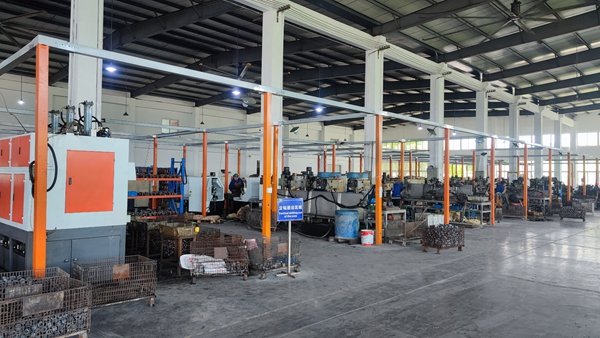
As a direct manufacturer, GDST Auto Parts produces suspension components optimized for both energy-storage methods.
- High-Torque Bushings: Our auto suspension bushings for torsion systems are reinforced to handle constant rotational stress.
- OEM-Spec Control Arms: We provide lower control arms designed to interface perfectly with both torsion keys and coil seats.
- Global Supply: Whether you need parts of a vehicle suspension for heavy trucks or passenger cars, our factory-direct pricing ensures a competitive car bushing price.
💡 Pro Tip: If your client is adjusting their torsion bar height, remind them that this changes the resting angle of the vehicle bushings. Pre-loading the bushings incorrectly can lead to premature failure.
FAQ: Torsion and Coil Spring Issues
Can I see the car suspension parts with a picture guide for both?
Yes! Our suspension part diagram catalog features car suspension parts names with pictures for both torsion and coil spring assemblies.
Which system is more prone to a “broken suspension part”?
Coil springs can occasionally snap due to rust or extreme fatigue. Torsion bars are more likely to “sag” over time but rarely break completely.
Can I swap a torsion bar suspension for a coil spring setup?
While technically possible, it requires a complete redesign of the suspension anatomy. Torsion bar frames lack the “spring towers” needed for coil springs. If you are looking to improve ride quality, it is more cost-effective to replace worn auto suspension bushings and upgrade your car shock parts rather than attempting a full system conversion.
Why do torsion bars stay “level” longer than coil springs?
Torsion bars are made of high-grade spring steel that resists “sagging” better than some low-quality coil springs. However, if you notice a broken suspension part or a lean in the vehicle, it’s often not the bar itself but a stripped torsion key or a perished lower control arm bushing that has failed under rotational torque.