The ability to continue driving with bad control arm bushing depends on how severe the wear is. While a car may remain mobile for a few hundred miles with minor cracks, driving more than 500–1,000 miles with torn bushings is highly dangerous. It leads to erratic steering, rapid tire wear, and potential suspension collapse. Replacement is recommended immediately if you hear metal-on-metal clunking.
This guide provides a bushing lifespan table for different vehicle types, identifies bad bushings symptoms, and outlines when it becomes dangerous to drive with bad bushings.
How Long Do Control Arm Bushings Actually Last?
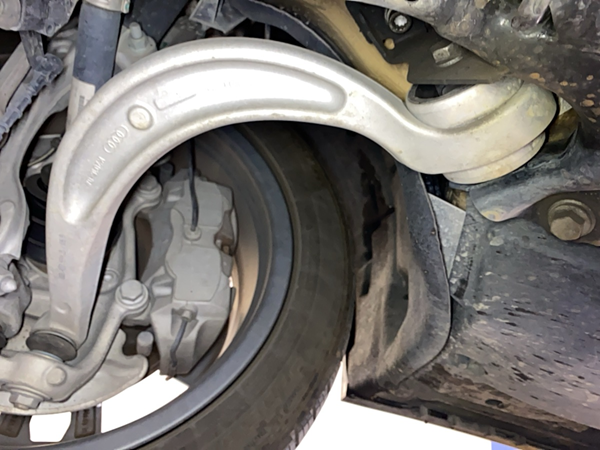
Before addressing the failure, it is essential to know the expected service life. Bad bushings often stem from exceeding these typical thresholds.
| Vehicle Type | Average Lifespan | Driving Conditions |
| Sedans / City Cars | 80,000 – 100,000 Miles | Smooth pavement, daily commuting |
| Heavy-Duty Trucks | 50,000 – 70,000 Miles | Towing, hauling, high-stress loads |
| 4×4 / Off-Road Vehicles | 30,000 – 50,000 Miles | Dirt, mud, extreme suspension travel |
| Performance Cars | 40,000 – 60,000 Miles | High-speed cornering, heat cycles |
Pro Tip: In regions with extreme salt or heat, even high-quality auto front-end parts may see their lifespan reduced by 20%.
Why Is It Dangerous to Drive with Bad Bushings?
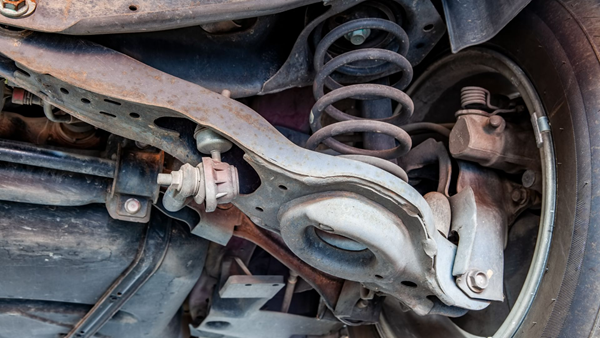
Safety is the top priority. Control arm bushings act as the “hinges” in your vehicle’s suspension system. When these parts fail, the following issues can arise:
- Unpredictable Braking: During heavy braking, the control arm can shift, causing the vehicle to pull to one side.
- Loss of Steering Control: The stability of your steering system depends on firm pivot points. Worn bushings can make the steering feel imprecise or loose.
- Secondary Damage: A damaged bushing can strain other components, such as ball joints, tie rod ends, and shock absorbers, leading to more costly repairs.
Diagnostic & Replacement Guide for Bad Bushings
How to Spot Bad Bushings Symptoms
To help you understand the urgency, refer to this Control Arm Bushing Failure Scale:
| Condition | Symptoms | Risk Level | Recommendation |
| Minor Cracking | Slight vibration, no noise | Low | Replace within 3,000-5,000 miles. |
| Worn Control Arm Bushing | Steering wanders, mild clunking | Medium | Schedule repair within 500-1,000 miles. |
| Torn Control Arm Bushing | Clunking noises, heavy vibrations | High | Repair as soon as possible; avoid highways. |
| Control Arm Bushings Torn/Gone | Metal-on-metal sounds, unstable braking | Extreme | Dangerous to drive; replace immediately. |
Don’t wait for a total failure. If you notice these signs of bad bushings, inspect your front end of a car immediately:
- Clunking Noises: Squeaking over speed bumps; A distinct metal “thud” when going over speed bumps or potholes.
- Steering Wander: The vehicle drifts to the left or right without driver input.
- Vibrating Steering Wheel: This occurs as the torn control arm bushings fail to dampen road vibrations.
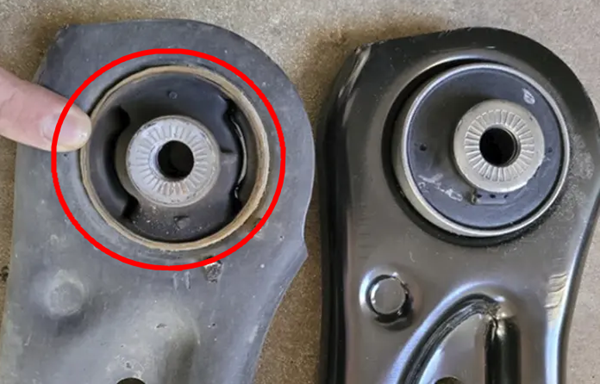
- Visual Damage: Upon inspection, you can see the rubber is cracked, oil-soaked, or the physical control arm bushings torn away from the metal housing.
Bushing vs. Full Control Arm Replacement
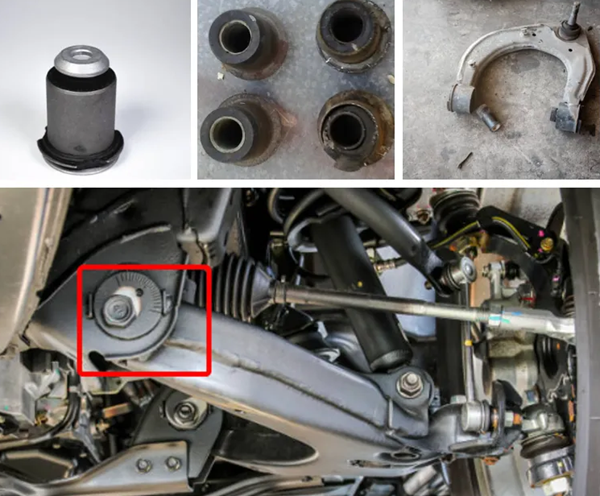
For many wholesalers and repair shops, the question is whether to replace the bushing or the whole arm.
| Strategy | Cost | Labor | Best For |
| Bushing Only | Low ($20 – $50) | High (Requires Press) | Budget-conscious DIYers |
| Complete Control Arm | Medium ($80 – $200) | Low (Bolt-on) | Professional repair shops / Fleet owners |
Wholesale Strategy: Most experts recommend replacing the full control arm assembly. It ensures all front suspension components are fresh and significantly reduces the labor time compared to pressing out a single worn control arm bushing.
Why OE-Quality Control Arm Bushing Replacement Matters
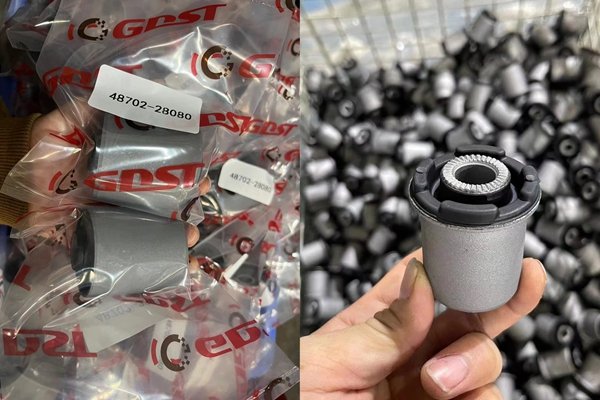
For wholesalers and distributors in the control arm bushing business, offering OE-quality bushings ensures stable vehicle performance, enhances safety, and reduces the need for frequent replacements by customers. This helps you build long-term customer trust and satisfaction.
Wholesaler Note: High return rates often stem from low-quality rubber that cracks within months. However, GDST Auto Parts specializes in high-durability rubber compounds that withstand extreme weather and road stress. Boost your profit margins by sourcing directly from the source. No middlemen, no hidden fees. We are more than just a supplier; we are a direct manufacturer with our own factory.
FAQ: Control Arm Bushing
Can I drive with torn control arm bushings if I only go short distances?
While it is possible for a day or two, even short trips with control arm bushings torn will rapidly destroy your tires. The cost of two new tires far exceeds the cost of a bushing.
How do I know if my lower control arm bushing is torn specifically?
You will likely feel a “kick” in the floorboard during acceleration or braking. Visual inspection of the lower control arm will show that the rubber bushing is off-center or leaking fluid (if hydraulic).
Can I replace only the lower control arm bushing that is torn on one side?
Technically, yes, but it is highly discouraged. Suspension parts wear at a similar rate. If the lower control arm bushing is torn on the left, the right side is likely under high stress and nearing failure. Replacing them in pairs ensures balanced handling and prevents the vehicle from pulling to one side.
What happens if my lower control arm bushing is torn?
A lower control arm bushing torn will cause a “kick” or “thud” during acceleration and make the vehicle feel unstable at highway speeds.