A ball joint plays an essential role in a ball joint vehicle suspension system, serving as the connection that allows the wheels and suspension to move together smoothly. Many drivers ask, “How long can you drive on a bad ball joint?” The safest answer is: you shouldn’t continue driving at all. Once a ball joint begins to fail, it creates a serious safety hazard and may eventually result in a sudden loss of steering control.
What is a Ball Joint on a Car?
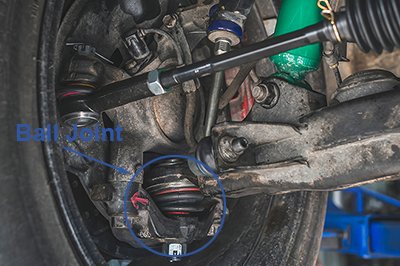
A ball joint on a car functions like a human hip joint. It consists of a bearing stud and socket enclosed in a casing, allowing the suspension to move up and down while the wheels turn. Most modern ball joints in cars or ball joints in trucks are categorized into two types:
- Lower Ball Joint: Typically carries the weight of the vehicle and wears out faster.
- Upper Ball Joint: Usually serves as a follower joint for steering precision.
In many cases, the lower ball joint is integrated into a control arm and ball joint assembly, meaning they are replaced together for better performance.
Common Symptoms of Bad Ball Joints
Recognizing the symptoms of bad ball joints at an early stage can help you avoid serious suspension damage and unsafe driving conditions. When ball joints begin to wear, they usually give clear warning signs.
Bad Ball Joint Noise
One of the first indicators of a worn ball joint is unusual sound from the front suspension. You may hear knocking, clunking, or popping when driving over rough roads or making turns. This bad ball joint noise happens because the internal components have developed excess clearance, allowing the ball stud to move abnormally inside its housing.
Steering Instability or Vibration
As wear increases, the steering may no longer feel precise. The vehicle might wander slightly, require constant correction, or produce vibration through the steering wheel. Loose ball joints reduce alignment stability and affect overall handling performance.
Irregular Ball Joint Tire Wear
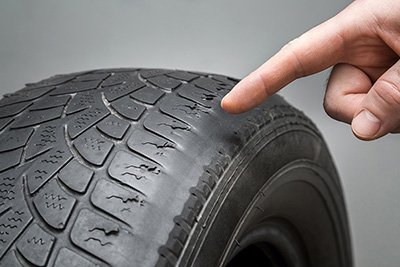
Another common warning sign is uneven tread wear. When a ball joint becomes loose, it can disturb proper wheel alignment, leading to noticeable ball joint tire wear. This often appears as feathered edges or excessive wear on the inside or outside of the front tires.
Can You Continue Driving on Bad Ball Joints?
Driving on bad ball joints puts both the driver and the vehicle at serious risk. Even if the car still seems drivable, a severely worn joint can separate without warning.
If a ball joint fails while the vehicle is in motion:
- The affected wheel may tilt sharply inward or outward.
- Steering control can be lost instantly.
- Suspension components, brake hoses, and nearby parts may suffer extensive damage when the vehicle drops.
Many drivers ask, “How long can you drive on a bad ball joint?” The safest answer is: you should not delay repairs. Once clunking sounds or looseness appear, inspection and replacement should be arranged as soon as possible to prevent sudden failure.
Ball Joint Replacement Cost Guide
Understanding how much to replace ball joints helps you budget for maintenance.
| Service Type | Estimated Cost (Parts + Labor) |
| Single Ball Joint Replacement | $150 – $350 |
| Lower Ball Joint Replacement | $200 – $450 |
| Control Arm and Ball Joint Assembly | $350 – $700 |
Note: Ball joint replacement cost varies depending on whether it is a balljoint for a luxury sedan or a heavy-duty ball joints truck.
Global Terminology: Ball Joints in Spanish
For our international partners, ball joints are known as “rótulas”.
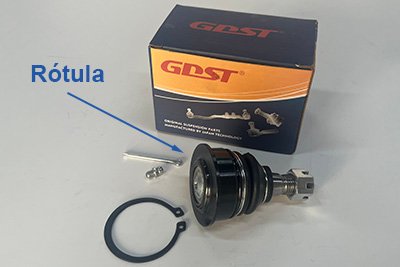
- Ball joints in Spanish: Rótulas de suspensión or Rótulas de dirección.
- Lower ball joint: Rótula inferior.
Summary FAQ for Quick Diagnosis
It is a spherical bearing that connects control arms to steering knuckles, allowing for multi-axis movement.
Expect to pay between $150 and $450 depending on the vehicle make and model.
Clunking noises, steering vibration, and uneven tire wear.