
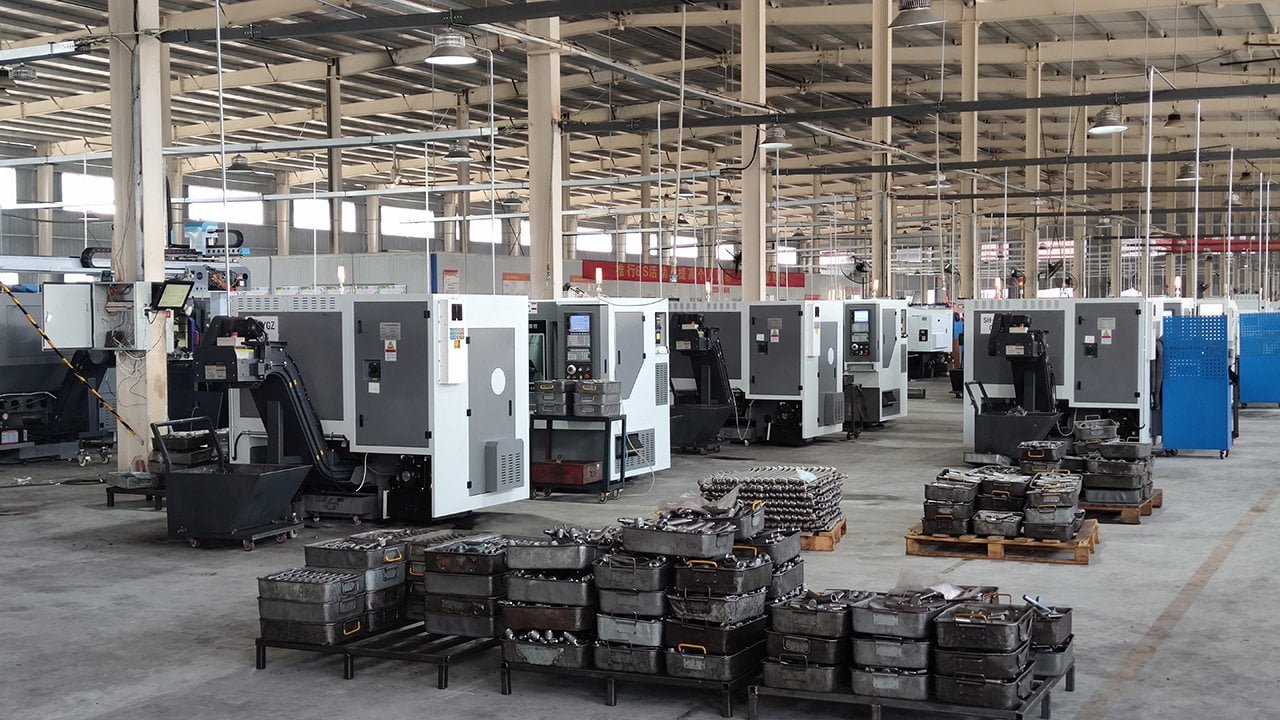
Rack end failure usually starts with a mismatch between the part and the vehicle, then gets worse through contamination and poor material balance. The problem is not always a bad part. Based on our returned-part analysis and production experience, many reported failures are related to incorrect fitment, damaged boots, or unsuitable material specifications.
Rack end failure is most often caused by three overlapping issues: wrong application, boot and grease contamination, and an unsuitable material balance between hardness and toughness. In our returned-part inspections, we have seen many “defective” rack ends fail because they were installed on the wrong vehicle variant, left unprotected after boot damage, or over-hardened to the point of brittle cracking.
If you buy rack ends in bulk, the real question is not just “what failed?” It is “what system broke down before the claim reached me?” That shift matters because it helps me reduce warranty risk, avoid repeat complaints, and choose a supplier based on fitment control, boot design, and testing consistency.
What Is Rack End Failure?
When We talk about rack end failure, We are not only talking about a complete break. We also mean looseness, play, noise, torn boots, thread damage, and early wear. Those symptoms often show up before the part fully fails. If We catch them early, We can usually trace the cause back to fitment, contamination, or load mismatch.
Rack end failure means the steering rack end can no longer hold accurate, stable, and safe steering movement.1 It may show as play in the ball joint, damaged threads, torn dust boots, or even cracking at the stud neck. In many cases, the part fails gradually, not suddenly.
From our side of the business, this matters because a buyer may blame the supplier when the root cause sits elsewhere. We have seen returned rack ends that looked “bad” at first glance, but the wear pattern told a different story. Some were installed on a trim level with a different steering geometry. Some lost grease because the boot split in harsh weather. Some failed because the part was too hard and could not absorb shock loads from rough roads.
Why Does the Failure Often Look like a Manufacturing Defect?
Because the visible damage is usually on the rack end itself. A torn boot, a loose stud, or a cracked neck looks like a part problem. But the part may only be the first component to show stress. The real trigger may be a wrong application, poor installation, or a bad operating environment.
What We Check First in Returned Parts
- Vehicle application and trim level
- Boot condition and grease condition
- Stud neck, thread root, and socket wear
- Signs of water, dust, or salt entry
- Installation marks and torque-related damage
What Causes Rack End Failure Before the Part Even Leaves the Box?
The biggest mistake We see is assuming that part number matching is enough. It is not. Two vehicles can share the same model name and still use different rack ends because of year range, drivetrain, steering system, or suspension package.2 That is where many warranty claims begin.
The most common pre-installation cause of rack end failure is misapplication.3 A rack end can look correct by catalog number yet still be wrong for the exact vehicle variant, and that mismatch often leads to looseness, thread pullout, or abnormal wear soon after installation.
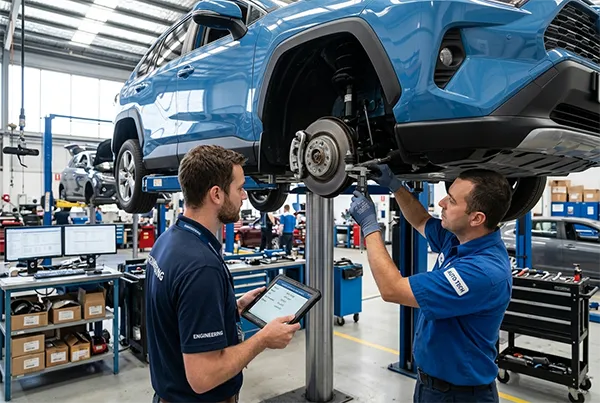
I have personally seen returned parts that were not actually failed in the material sense. They were simply installed on the wrong vehicle configuration. That is why We always ask buyers to verify more than a part number. We want them to check steering type, thread size, cone geometry, and side-specific details.
What Should You Verify Before Placing a PO?
Check the application beyond the catalog listing
- Model year range
- Engine and drivetrain variant
- Left-hand or right-hand side
- Steering rack type
- Thread diameter and pitch
- Cone angle and stud length
Watch for these common misapplication signals
- The locknut does not seat correctly
- The taper feels loose or too tight
- The steering wheel centers poorly after installation
- The part shows unusual early play with little mileage
- The thread engagement is shorter than expected
Why Misapplication Creates Fast Failure
A wrong fit may still be forced into place. That can stress the thread root, overload the ball socket, or cause the stud to work at the wrong angle. Over time, the part loosens and the buyer sees a “quality problem.” In reality, the part was never matched to the load path it had to carry.
In our returned-part reviews, misapplication is one of the most common patterns behind “mystery” failure claims.
For B2B buyers, this is where supplier support matters. We value suppliers who can confirm OE cross-reference logic, side application, and vehicle variant matching. A cheaper part is not cheaper if it creates repeated claims.
Why Does Dust Boot Failure Cause Rack End Failure?
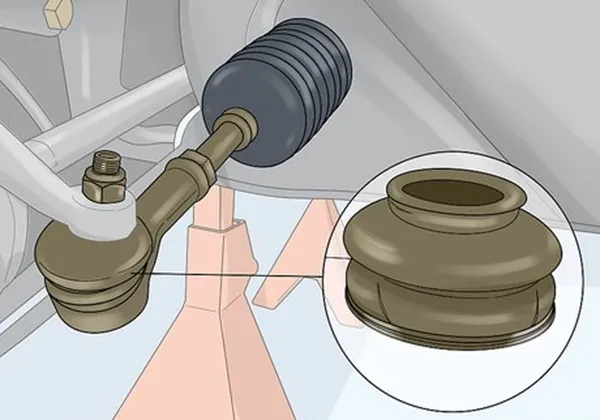
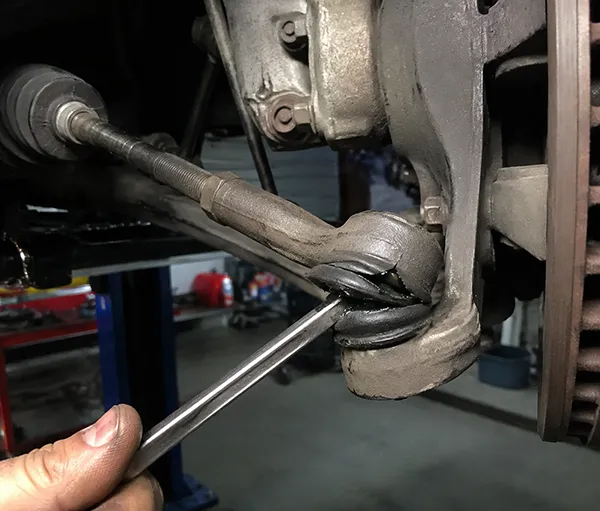
This is the silent killer. The boot is small, inexpensive, and easy to ignore. But once it tears, the internal joint loses its protection. Water, grit, and road salt enter the socket, and wear accelerates fast. We have seen many rack ends blamed for poor material when the real issue was boot failure.
Dust boot failure causes rack end failure because it allows contamination into the ball joint.4 Once dirt and moisture enter, the grease breaks down, corrosion starts, and internal play grows quickly. In salt-belt markets and wet climates, boot material and seal design can decide service life.5
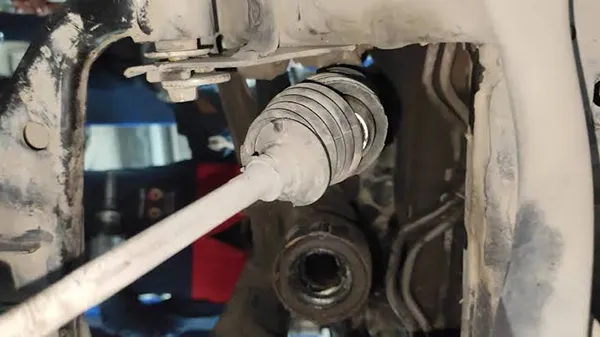
In our inspections, the damaged boot often tells the whole story. The grease may be dry, dark, or washed out. The ball stud may show rust marks. The socket may feel rough even if the outer housing looks fine. This is why We tell you not to evaluate a rack end only by the metal parts.
Why Boot Material Matters
We usually ask about:
- NBR rubber for general oil resistance
- CR rubber for better weathering and ozone resistance in harsher environments
We are not saying one material is perfect for every market. We are saying the boot choice should match the climate and duty cycle. In dry inland regions, a basic boot may last longer. In wet, salty, or high-ozone environments, a stronger boot spec often pays back through lower warranty exposure.
What Else Affects Boot Life?
- Road salt exposure
- Suspension travel
- Off-road dust and mud
- Grease compatibility
- Boot wall thickness and retention design
- Installation damage during assembly
What We Recommend Buyers Ask Suppliers
- What rubber compound is used for the boot?
- What grease type is filled at assembly?
- Has the boot been tested for ozone and salt exposure?
- Does the design prevent boot twist during steering travel?
These are simple questions, but they often separate a low-claim program from a high-claim one.
Why Does Hardness Sometimes Make Rack End Failure Worse?
Many buyers still believe harder means better. That idea is risky. A rack end needs a balance of hardness and toughness. If the part is made too hard, it may resist wear at first, but it can crack under shock load. We have seen this in returned parts with fractures near the stud neck or thread root.
Hardness alone does not prevent rack end failure. If the material is over-hardened, the part can become brittle and crack under normal steering shock.6 A useful rack end needs enough toughness to absorb road impact while still keeping wear under control.
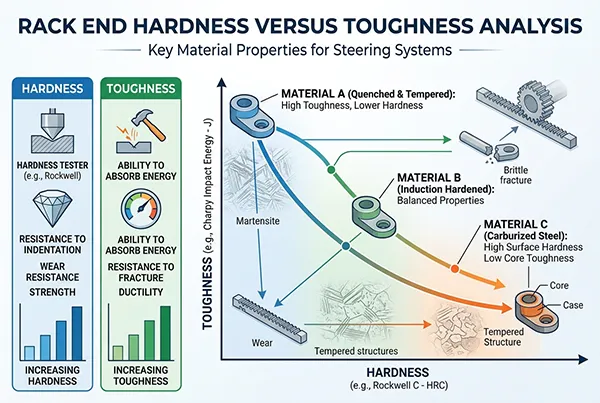
This is where We have to speak carefully. We are not claiming to run a university metallurgy lab. We are speaking from what we have observed in production feedback, QC records, and returned-part disassembly. In those cases, brittle failures often followed a spec that pushed hardness too far without enough margin for impact loading.
Why This Matters by Vehicle Type
A passenger car on smooth roads does not face the same loads as a light truck, off-road vehicle, or heavy-duty application. A part that performs well in one market may fail early in another. That is why We never judge a rack end spec in isolation. We ask what vehicle it is for, how it is used, and where it is sold.
Rack End Failure vs. Steering Rack Failure
This confusion creates expensive false claims. A noisy front end or loose steering feel does not always mean the steering rack is bad. Often, the rack end is worn, the boot is torn, or the joint is contaminated. If We diagnose the wrong component, We waste time, money, and customer trust.
Rack end failure is often mistaken for steering rack failure because both can cause steering play, noise, or poor response. A simple pre-check can separate a worn rack end from a deeper steering rack issue before a warranty claim is filed.
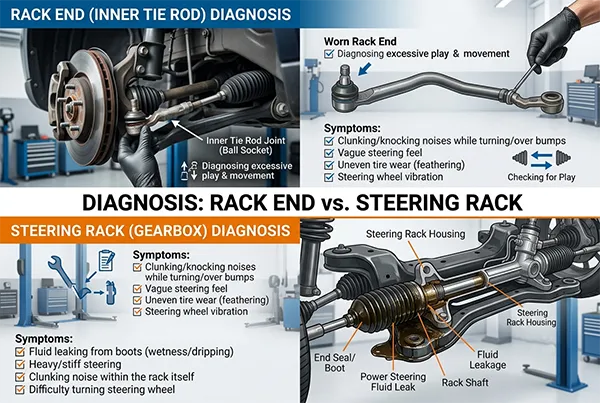
What We Look for in the Shop
If the outer joint is loose but the rack body is stable, We suspect the rack end first. If the inner movement or rack housing shows abnormal play, We look deeper into the steering rack assembly. That distinction matters because the claim path changes.
Why this Protects Both Buyer and Supplier
- The buyer avoids unnecessary returns
- The distributor avoids freight loss
- The manufacturer gets better failure data
- The end customer gets a correct repair faster
From my experience, a simple inspection step saves more money than a long dispute ever does.
How Should We Evaluate Rack End Fitness Before My Next PO?
We recommend a three-part evaluation framework. We use this framework because it reflects what actually drives failure in the field, not just what looks good on paper.
To evaluate rack end fitness, We check three things: correct application, environmental protection, and material balance. If any one of those is weak, the rack end may fail early even if the price looks attractive.
-
1) Application fit We verify exact vehicle usage, not just broad catalog match. We want side, year, steering type, and thread data confirmed.
-
2) Environmental protection In our evaluation process, we consider boot material, grease fill, and resistance to ozone, water, dust, and salt exposure to match each market’s operating conditions.
-
3) Material balance We want enough hardness for wear resistance, but enough toughness to survive shock loads.
A Simple Buyer Comparison Table
| Check point | Good sign | Risk signal |
|---|---|---|
| Fitment | OE-style cross-reference and variant confirmation | “Should fit most models” |
| Boot | Clear rubber spec and sealing detail | No boot material data |
| Grease | Defined grease fill and protection plan | No grease information |
| Material | Balanced hardness/toughness approach | Only hardness is promoted |
| Testing | Pull-out, torque, salt spray, fatigue | Only visual inspection |
Frequently Asked Questions
Can rack end failure happen suddenly?
Yes, but sudden failure is often the end of a longer process. In many cases, the part already had looseness, boot damage, or contamination. I usually see a gradual wear pattern before the final failure happens.
How can I tell if the rack end or steering rack is bad?
I check for play at the wheel, then inspect the boot and outer joint first. If the movement comes from the outer joint, the rack end is the likely issue. If the rack body itself moves, I look deeper into the steering rack.
Does a harder rack end last longer?
Not always. Too much hardness can make the part brittle. I prefer a balanced spec that keeps wear under control without creating crack risk at the stud neck or thread root.
What boot material is better for harsh climates?
For harsher weather and ozone exposure, CR rubber often performs better than a basic general-purpose boot. For some markets, NBR can still be suitable. I always match the boot to the operating environment.
Why do some new rack ends fail early?
Early failure often comes from wrong application, poor boot sealing, contamination, or a bad match between material spec and vehicle load. I do not assume the part is defective until I verify fitment and installation conditions.
Conclusion
Rack end failure is rarely a single-cause problem. In my experience, the real drivers are misapplication, boot and grease contamination, and a material spec that does not match the job. If We want fewer claims, We must evaluate rack end fitness, not just price. We need correct fitment, proper environmental protection, and balanced durability. If you are sourcing rack ends for your market, I invite you to talk with GDST Auto Parts about OE-style fitment support, OEM/ODM options, and stable production for your application.
"19VAC30-70-110. Steering and suspension. - Virginia Law", https://law.lis.virginia.gov/admincode/title19/agency30/chapter70/section110/. Vehicle safety and service references describe tie rods and related steering linkage components as transmitting steering motion to the wheels; excessive play or failure in these joints can degrade steering precision and vehicle control. Evidence role: definition; source type: government. Supports: Authoritative automotive safety or educational sources should explain that tie rods/rack ends transmit steering input and that excessive play or failure can impair steering control.. ↩
"NAU SAE BAJA 2024-2025 – Drivetrain Team Design Report 2", https://www.ceias.nau.edu/capstone/projects/ME/2025/F24toSp25_Baja25/presentations/Report%202.pdf. OEM parts cataloging and service documentation commonly distinguish steering components by model year, engine or drivetrain, steering gear type, and suspension package, indicating that visually similar vehicles may require different linkage parts. Evidence role: general_support; source type: institution. Supports: Sources should show that automotive parts fitment varies across model years and equipment variants, including steering-related parts.. Scope note: The source may demonstrate fitment variation in manufacturer documentation without directly discussing rack-end failure. ↩
"The Unconscionably Short Warranty - Insight @ Dickinson Law", https://insight.dickinsonlaw.psu.edu/cgi/viewcontent.cgi?article=1496&context=fac_works. Aftermarket service and claims literature notes that incorrect part application and fitment errors are recurring causes of premature failure and warranty disputes, particularly when multiple vehicle variants share similar model names but differ in steering or suspension specifications. Evidence role: expert_consensus; source type: research. Supports: Sources should support that incorrect application or fitment is a common cause of early failure and warranty returns in aftermarket vehicle parts, especially where vehicle variants differ by year, drivetrain, or suspension.. Scope note: Evidence may address aftermarket automotive components generally rather than rack ends specifically. ↩
"How to Tell if Ball Joints Are Bad Without Breaking the Bank", https://staging.southernwv.edu/how-to-tell-if-ball-joints-are-bad/. Tribology and joint-design literature states that protective boots or seals are used to retain grease and prevent the ingress of water and particulates; once the seal is compromised, corrosion and abrasive wear can increase rapidly in the articulating joint. Evidence role: mechanism; source type: paper. Supports: Technical sources should explain that protective boots retain lubricant and exclude contaminants, and that seal failure accelerates abrasive wear and corrosion in joints.. ↩
"Measuring Corrosion on Vehicles, in Real-Time, Using Digital ...", https://pmc.ncbi.nlm.nih.gov/articles/PMC9105723/. Materials and corrosion studies indicate that exposure to road salt, moisture, and weathering can degrade sealing systems and accelerate corrosion in protected joints, making seal material and design important factors in service life. Evidence role: general_support; source type: research. Supports: Sources should support that road salt, moisture, and weathering can shorten the life of protective boots and seals, affecting the durability of enclosed joints.. Scope note: The evidence may address seals and elastomers broadly rather than rack-end boots alone. ↩
"Size scaling of strength and toughness for 3D printed polymer ...", https://docs.lib.purdue.edu/cgi/viewcontent.cgi?article=2014&context=open_access_theses. Materials science references note that hardening treatments can increase wear resistance while reducing toughness, and that over-hardened steel components may become more vulnerable to brittle cracking under impact or shock loads. Evidence role: mechanism; source type: education. Supports: Sources should explain that increased hardness in steels can be accompanied by reduced toughness, raising susceptibility to brittle fracture under impact or shock loading.. ↩