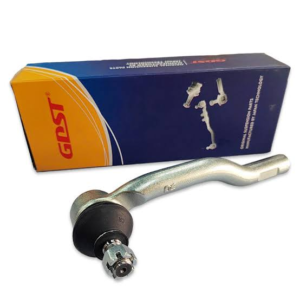
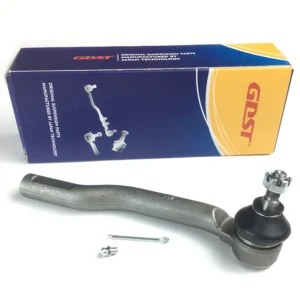
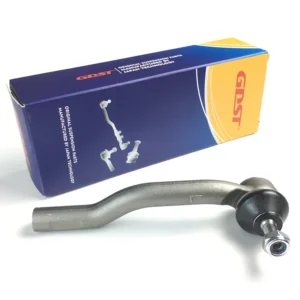
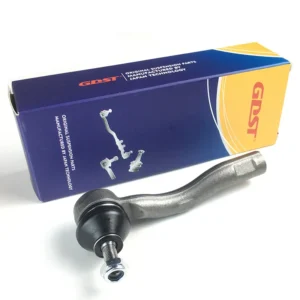
Aftermarket Tie Rod End Manufacturer for Global Automotive Parts Distributors

Aftermarket Tie Rod End Manufacturer for Global Automotive Parts Distributors
MOQ
100PCS
Price
$2-$5
Warranty
1 Year From Receipt of Goods
Delivery Time
45-55 Days
Customization
  • Customized Logo
  • Customized Packaging
  • ODM/Sample Development

ISO9001 Certified

Fast Delivery

OEM/ODM

Aftermarket Steering Components | OE-Reference Matching | OEM & Private-Label Supply

Looking for an aftermarket tie rod end supplier for your automotive parts distribution business? Wuhu GDST Auto Parts Co.,Ltd supplies aftermarket steering and suspension components for passenger cars, SUVs, and selected commercial vehicle applications.

Our tie rod end range covers Japanese, Korean, American, and European vehicle applications. We support automotive parts distributors, wholesalers, importers, and private-label brands with catalog products, OE-reference matching, and new-model development inquiries.

Whether you need existing replacement models or want to develop a sourcing program under your own brand, GDST can help you review product requirements and identify suitable solutions for your target market.

CAR BRAND

OEM NO.

TOYOTA

45470-09180

TOYOTA

45460-09280

TOYOTA

45460-09210

TOYOTA

45047-29225

KIA

0K011-32-280

DAEWOO

96261379

FORD

96FX3289AA

FORD

F2UZ3A130B

DODGE

52039000

Download GDST Tie Rod End Catalog

Our Aftermarket Tie Rod End Product Range

Tie rod ends are steering linkage components that allow controlled joint movement while transmitting steering force. For aftermarket replacement, the correct product must match the intended vehicle application, mounting interfaces, thread specifications, and installation position.

GDST’s published catalog covers selected applications across Japanese, Korean, American, and European vehicles. Available models can be reviewed against OE references, product drawings, or original samples.

Our sourcing scope includes:

  • Outer tie rod ends for selected automotive applications.
  • OE-reference replacement models.
  • Product matching based on vehicle and dimensional information.
  • New-model development inquiries based on samples or drawings.
  • OEM/ODM and private-label sourcing programs, subject to agreed requirements.

Product availability and application compatibility should be confirmed at the individual model level.

Tie Rod End Specifications and Reference Models

When evaluating aftermarket tie rod ends, buyers should verify more than the product’s external appearance. Important parameters may include ball stud thread, knurling diameter, overall dimensions, assembly height, joint articulation, and installation interfaces.

The following models are represented in GDST’s available delivery inspection records. The inspection records provide evidence of model-specific checks and can help initiate a technical review.

Selected Models with Inspection Records

Part number

Recorded production date

Recorded lot quantity

Sampling quantity

12475478 (K6541)

Nov. 28, 2025

144

30

2S61-3395-AB

Nov. 25, 2025

100

30

K-8433

Nov. 25, 2025

50

10

K-80028

Nov. 25, 2025

46

10

K-8607

Nov. 28, 2025

50

10

K-8388

Nov. 25, 2025

50

10

K500262

Nov. 25, 2025

50

10

K500232

Nov. 25, 2025

100

20

54503-31600

Nov. 28, 2025

150

30

K8695

Nov. 25, 2025

100

30

Note: These are historical production-lot records, not current inventory figures, standard order quantities, or minimum order quantities. The sampling quantities shown are those recorded in the corresponding inspection documents.

Key Specifications to Confirm Before Ordering

Specification

Purpose

Recommended verification

OE reference number

Helps identify the intended replacement application

Original part number and applicable cross-reference

Ball stud thread

Confirms thread compatibility

Diameter, pitch, thread class, and direction

Knurling diameter

Helps verify the relevant mounting interface

Approved drawing or model-specific inspection specification

Maximum outer diameter

Helps confirm dimensional clearance and compatibility

Defined measurement point and approved dimensional tolerance

Assembly height

Helps confirm the assembled geometry

Reference drawing and agreed measurement method

Joint articulation

Helps verify the required angular movement

Model-specific technical specification and acceptance criteria

Surface treatment

Identifies the required corrosion-protection finish

Approved process specification and relevant test evidence

The available inspection records contain individual dimensions for several models. However, certain entries require technical clarification before they can be published as approved product specifications. Please request the current model-specific drawing or confirmed specification when evaluating a replacement part.

Product Construction and Technical Features

A tie rod end’s performance depends on the design and manufacture of its joint, mounting interfaces, and protective components. For aftermarket sourcing, the relevant construction and acceptance requirements should be defined for each model.

Ball Stud and Mounting Interface

The ball stud provides the movable connection within the joint. Thread dimensions, mounting geometry, surface condition, and material properties are relevant to fitment and joint performance.

Buyers should confirm the thread configuration, mounting dimensions, and applicable technical requirements against the intended application.

Ball Socket and Joint Movement

The ball socket supports articulation during steering movement. Different designs may use different bearing materials, lubrication arrangements, and preload characteristics.

Joint movement and torque requirements should be evaluated against the specification applicable to the individual model rather than assumed to be identical across the product range.

Dust Boot and Rubber Components

Where applicable, the dust boot helps protect the joint against external contamination and helps retain lubricant.

Rubber formulation, hardness, sealing geometry, and resistance to environmental exposure are important considerations. These properties should be verified using the relevant component specifications and material or product-level test reports.

Surface Treatment

Surface treatment helps protect applicable metal surfaces against corrosion. The appropriate treatment may vary by product design and customer requirements.

GDST’s available inspection records include upper-cover surface-treatment checks. The recorded treatment descriptions are not identical across all models, so the exact finish should be confirmed against the relevant model specification.

Dimensional Accuracy

Thread dimensions, mounting interfaces, and assembly geometry must match the intended application. A visually similar part is not necessarily interchangeable.

For new-model development, GDST can review samples, drawings, OE references, and agreed dimensional requirements to assess feasibility and support product matching.

Vehicle Applications and OE Reference Matching

GDST’s published tie rod end range covers selected Japanese, Korean, American, and European vehicle applications.

To reduce the risk of incorrect replacement selection, buyers should provide the OE number whenever possible. Vehicle make, model, year, installation position, and relevant technical information can also help identify the correct product.

How to Confirm the Correct Model

  1. Submit the OE reference number or existing part number.
  2. Provide vehicle make, model, year, and installation position.
  3. Share drawings, dimensions, photographs, or a sample if the reference number is unavailable.
  4. Confirm the proposed replacement specifications before approving the order.

Application group

Information required for matching

Japanese vehicles

Vehicle details, OE number, installation position

Korean vehicles

Vehicle details, OE number, relevant dimensions

American vehicles

Vehicle configuration, OE number, mounting specifications

European vehicles

OE number, vehicle details, thread and mounting requirements

SUVs and off-road vehicles

Vehicle platform, installation position, OE reference

Commercial vehicles

Vehicle details, part number, applicable technical requirements

These categories describe the intended scope of the product range, not a guarantee of compatibility with every vehicle or model year. Request the current application catalog for confirmation.

Quality Control for Aftermarket Tie Rod Ends

Reliable aftermarket sourcing requires documented inspection criteria, model-specific acceptance requirements, and records that can be reviewed when needed.

GDST’s available delivery inspection records cover ten tie rod end models produced in November 2025. The records identify the production lot quantity and sampling quantity and include checks for appearance, characteristic dimensions, upper-cover condition, accessories, hardness, swing torque, articulation angle, and packaging.

Inspection Areas Documented in Available Records

Inspection area

Recorded inspection content

Purchasing relevance

Appearance

Visual inspection against the drawing

Helps identify visible defects and drawing discrepancies

Critical dimensions

Thread, diameter, knurling, and assembly-height checks, depending on model

Supports dimensional verification

Hardness

Recorded against a stated HRC 28–32 requirement

Provides model-specific hardness inspection evidence

Swing torque

Recorded against model-specific ranges

Helps evaluate joint movement characteristics

Articulation angle

Recorded for the applicable model

Requires verification against the approved acceptance criteria

Upper cover

Surface-treatment or finish description

Helps confirm the specified finish

Accessories

Checked against order requirements

Supports order completeness

Packaging

Checked against order requirements

Helps confirm packaging condition and appearance

Selected Recorded Hardness and Swing-Torque Results

The following values are transcribed from the available delivery inspection records. They represent the stated requirements and observed values for the recorded lots, not universal specifications for every tie rod end.

Part number

Recorded hardness requirement

Recorded hardness result

Swing-torque requirement

Recorded result

12475478 (K6541)

HRC 28–32

HRC 30

7–9 N·m

8.3 N·m

2S61-3395-AB

HRC 28–32

HRC 29

6–8 N·m

7.4 N·m

K-8433

HRC 28–32

HRC 30

8–10 N·m

9.2 N·m

K-80028

HRC 28–32

HRC 30

7–9 N·m

8.3 N·m

K-8607

HRC 28–32

HRC 30

7–9 N·m

8.3 N·m

K-8388

HRC 28–32

HRC 29

7–9 N·m

8.4 N·m

K500262

HRC 28–32

HRC 29

8–10 N·m

9.3 N·m

K500232

HRC 28–32

HRC 29

8–10 N·m

9.2 N·m

54503-31600

HRC 28–32

HRC 29

6–8 N·m

7.2 N·m

K8695

HRC 28–32

HRC 30

8–10 N·m

9.2 N·m

Note: The values above describe historical inspection records for the listed models and lots. They do not establish the performance of all future production lots. Certain dimensional and articulation-angle entries require further review against the approved specifications before being used as public acceptance claims.

Request Model-Specific Quality Documentation

For supplier qualification, buyers can request relevant inspection records for the models under consideration.

Depending on the model and available documentation, supporting materials may include dimensional inspection records, applicable material information, test reports, and relevant quality-system certificates.

Please specify the required model numbers and documents so that the appropriate records can be reviewed.

Raw-Material Documentation for Applicable Rubber Components

Raw-material documentation can provide additional information about the materials used in automotive components. However, raw-material properties and finished-component performance are different types of evidence.

An available supplier report from Yunnan Yunwei Feihu Chemical Co., Ltd. records test results for N330 carbon black used for rubber applications. The report is dated October 19, 2022, and references GB/T 3778-2011.

Selected N330 Carbon Black Test Results

Test item

Requirement stated in the report

Recorded result

Impurities

None

None

Iodine absorption number

82 ± 6 g/kg

83 g/kg

Oil absorption value

102 ± 6 × 10⁻⁵ m³/kg

103 × 10⁻⁵ m³/kg

CTAB specific surface area

73–85 × 10³ m²/kg

82 × 10³ m²/kg

Heating loss

≤ 2.0%

0.2%

45 μm sieve residue

≤ 1,000 mg/kg

54 mg/kg

Ash content

≤ 0.7%

0.1%

Fines content

≤ 10%

2%

Tinting strength

96–112%

101%

500 μm sieve residue

≤ 10 mg/kg

0 mg/kg

Note: These values are transcribed from the historical supplier report. The report records the listed results as qualified against the stated requirements. This document concerns a particular N330 carbon black sample and does not independently demonstrate the performance of a finished rubber component.

How Raw-Material Records Support Supplier Evaluation

Where the relevant material grade and batch can be traced to a specified rubber component, upstream raw-material records may form part of the material documentation package.

For a tie rod end dust boot or another rubber component, additional evidence may be needed to verify the actual compound formulation and finished-part requirements. Depending on the specification, this may include rubber hardness, tensile strength, elongation, aging resistance, ozone resistance, compression set, or other applicable tests.

The availability and scope of these tests must be confirmed for the specific component. Raw-material data should not be used as a substitute for finished-component validation.

OEM, ODM and Private-Label Tie Rod End Supply

GDST supports sourcing programs for customers seeking existing catalog products, new-model development, or private-label supply.

Existing Catalog Products

Submit your part numbers, OE references, target quantities, and destination market. GDST can review the available models and confirm quotation details based on the agreed requirements.

New-Model Development

For models not currently available in the catalog, development feasibility can be evaluated using an original sample, technical drawing, or agreed specifications.

The process may include requirement review, feasibility assessment, sample evaluation, confirmation of technical criteria, and agreement on production and packaging requirements.

Development costs, sample arrangements, and lead times should be confirmed for each project.

Private-Label and Packaging Customization

GDST supports OEM/ODM and private-label sourcing programs. Branding, labels, and packaging requirements can be discussed according to the selected product, order quantities, and customization scope.

Information Required for a Quotation

Information

Details

Product references

OE numbers, existing part numbers, or samples

Vehicle applications

Make, model, year, and installation position

Quantity

Estimated quantity per model and total order

Destination market

Country or region

Technical requirements

Drawings, dimensions, material requirements, and applicable standards

Branding and packaging

Logo, labels, artwork, and packaging specifications

Why Source Aftermarket Tie Rod Ends from GDST?

When selecting a supplier, distributors and wholesalers need to evaluate application coverage, technical compatibility, inspection documentation, and the supplier’s ability to support their sourcing program.

GDST’s published company and product information identifies the following areas of support:

  • A catalog covering selected Japanese, Korean, American, and European vehicle applications.
  • Existing product references and model-specific dimensional information.
  • Available delivery inspection records for selected tie rod end models.
  • Technical review for OE-reference matching and new-model inquiries.
  • OEM/ODM and private-label sourcing support.
  • Quality-system credentials identified in the company’s published information, subject to verification of current validity and applicable scope.

Our aim is to help customers assess suitable replacement products, review the available technical documentation, and develop sourcing programs based on their actual requirements.

Request a Quote for Aftermarket Tie Rod Ends

Looking for aftermarket tie rod ends for your distribution business?

Send GDST your required part numbers, OE references, vehicle application list, or product samples. Our team can review the available catalog, help clarify technical requirements, and discuss suitable sourcing or private-label options.

To help us prepare a more accurate quotation, please include:

  • Company name and contact email.
  • OE numbers or required model list.
  • Estimated quantity per model.
  • Destination country or region.
  • Technical, quality-documentation, and packaging requirements.

Frequently Asked Questions About Aftermarket Tie Rod Ends

What is an aftermarket tie rod end?

An aftermarket tie rod end is a replacement steering component supplied outside the vehicle manufacturer’s original parts channel. It must match the intended application and relevant technical requirements.

Does GDST supply tie rod ends for different vehicle brands?

GDST’s published catalog covers selected Japanese, Korean, American, and European applications. Exact compatibility should be confirmed at the part-number level.

How can I confirm the correct replacement model?

Provide the OE reference number, vehicle make and model, year, and installation position. Drawings, dimensions, or original samples can support further verification.

What specifications should I check?

Important parameters may include thread diameter and pitch, thread direction, knurling diameter, assembly height, mounting dimensions, joint articulation, and the specified surface treatment.

What quality inspection records are available?

Available delivery inspection records cover items such as appearance, dimensions, hardness, swing torque, articulation angle, accessories, and packaging for selected models. The applicable documents should be confirmed for each part number.

Do the inspection records prove that every future production lot will have identical results?

No. The available reports document specific production lots and sampling quantities. Subsequent production should be evaluated using the applicable specifications and relevant inspection records.

Does GDST have raw-material documentation for rubber-related materials?

An upstream supplier report for N330 carbon black is available. Its relevance to a specific tie rod end rubber component must be confirmed through material and batch traceability before the document is used as evidence for that product.

Does a carbon black report prove that a dust boot is resistant to oil, ozone, or aging?

No. A carbon black report characterizes the tested raw material against the stated requirements. Finished rubber-component properties require appropriate material or component-level test evidence.

Can GDST develop new models or supply products under my brand?

GDST can review new-model development and private-label requests based on samples, drawings, OE references, and agreed requirements. Feasibility, costs, quantities, and lead times must be confirmed for each project.

How can I request a quotation?

Submit your company details, model list, OE references, target quantities, destination market, and any special requirements through the GDST inquiry form. The team can then review the request and confirm the next steps.

Contact GDST to discuss aftermarket tie rod end sourcing, request available inspection documentation, or explore private-label supply.

Email: admin@gdstauto.com

WhatsApp: +86 185 5533 0281

Quality Assurance

Every product undergoes rigorous testing and inspection to ensure reliability and performance

Material Inspection

Premium steel from certified suppliers with full traceability

Performance Testing

Fatigue, torque, and stress testing per OE standards

Dimensional Control

Tolerance control for precise OE fitment

Final Inspection

100% inspection before shipment