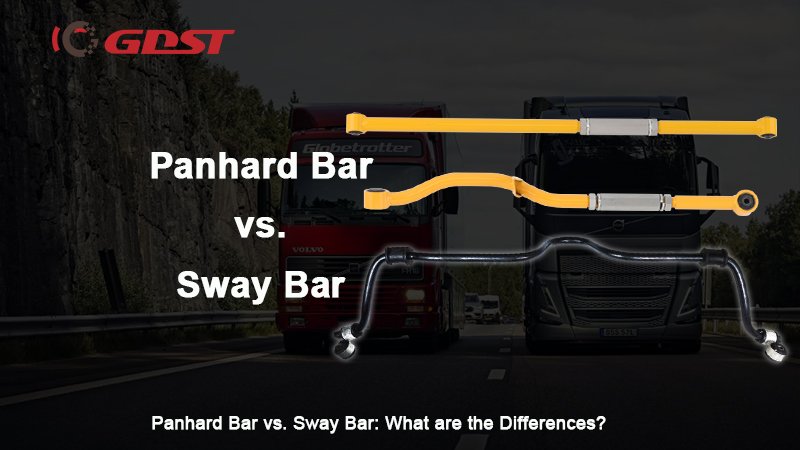
If you look under the rear of a truck, SUV, or a classic car with a solid axle, you’ll see several metal bars crossing the chassis. Two of the most frequently confused components are the Panhard bar and the sway bar.
While they may look like simple metal rods, they perform completely different roles in your suspension system. Understanding the Panhard bar vs. sway bar debate is important for anyone looking to improve vehicle stability or source the right parts for their business.
What is a Panhard Bar? (The Axle Centering Tool)
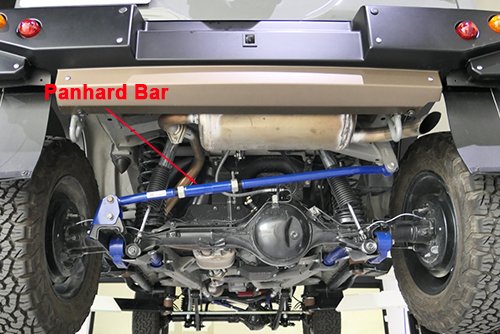
A Panhard bar (also known as a Panhard rod or track bar) is a suspension link that provides lateral (side-to-side) location of the axle.
- How it works: It connects one end of the axle to the chassis on the opposite side of the vehicle.
- Primary Function: Its only job is to prevent the axle from moving left or right under the car. Without a Panhard bar, your rear axle would “wander,” making the car feel unstable and impossible to align.
What is the purpose of a panhard rod in vehicle suspension?
Imagine your rear axle is held in place by coil springs. Springs are great at going up and down, but they are terrible at stopping the axle from sliding left and right. This side-to-side movement is called “lateral shift.”
The Panhard rod (or track bar) is a rigid link that connects the axle to the chassis diagonally. Its sole mission is to keep the axle centered. Without it, every time you turn, your axle would try to slide out from under the car.
Can a damaged panhard suspension affect vehicle handling?
Absolutely. If the bar is bent or the bushings are shot, you’ll experience “Dog-Tracking”—where the rear of the car doesn’t follow the front in a straight line. You’ll feel a terrifying “wandering” sensation at highway speeds, especially when passing large trucks.
What is a Sway Bar? (The Body Roll Controller)
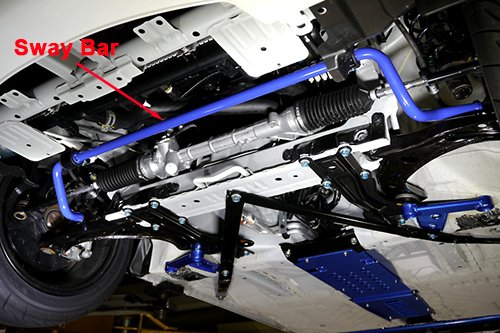
A sway bar (also known as an anti-roll bar or stabilizer bar) is designed to reduce the body roll of a vehicle during fast cornering or over road irregularities.
- How it works: It is a U-shaped metal bar that connects opposite (left/right) wheels together through sway bar end links.
- Primary Function: It acts as a torsion spring. When you turn a corner, the bar resists the leaning force, keeping the vehicle flatter on the road and improving tire grip.
What does a sway bar actually do?
Unlike the Panhard bar, the sway bar (or stabilizer bar) is actually a torsion spring. It’s a U-shaped bar that connects the left wheel to the right wheel.
When you take a sharp turn, centrifugal force makes the car lean (body roll). The sway bar “twists” to resist this lean, pushing the inside wheel down and pulling the outside wheel up to keep the car level.
Expert Note: The sway bar doesn’t center your axle; it only manages how much your car “tips” in the corners.
Panhard Bar vs. Sway Bar: 5 Key Differences
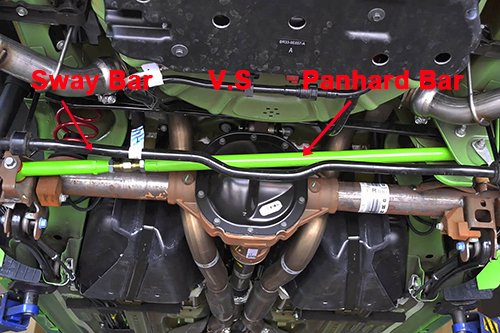
To help you choose the right replacement parts, we’ve summarized the core differences below:
| Feature | Panhard Bar (Track Bar) | Sway Bar (Stabilizer Bar) |
| Main Goal | Stops Lateral (side-to-side) axle movement. | Reduces Body Roll (leaning) in corners. |
| Installation | Connected diagonally from axle to frame. | Connected horizontally across the suspension. |
| Movement | Pivots in an arc to keep the axle centered. | Twists to transfer force between wheels. |
| Vehicle Type | Found on solid axle vehicles (Trucks, Jeeps). | Found on almost all modern vehicles. |
| Failure Signs | “Dog-tracking” or rear-end wandering. | Excessive leaning or clunking from end links. |
How to Choose the Right Panhard Bar for Your Car
Choosing a bar isn’t just about finding one that fits; it’s about the geometry.
- Fixed vs. Adjustable: If your vehicle is at stock height, a fixed panhard rod is fine. However, if you have lifted your truck, the fixed bar will pull your axle to one side. You must choose an adjustable panhard bar to re-center the axle.
- Material Strength: Look for seamless heavy-wall tubing. A cheap, thin bar will flex under load, defeating the whole purpose of the panhard suspension.
- Bushing Quality: This is where GDST excels. We use high-durometer synthetic rubber that offers the stiffness of polyurethane without the annoying squeaking.
FAQ
Not all rods are created equal. You will find:
Straight Bars: Common for most street applications.
Bent/Bent-Style Bars: Specifically designed to clear differential covers or exhaust pipes.
Heavy-Duty Off-Road Bars: Built with 1.5-inch (or larger) diameter tubing to survive rock crawling and extreme articulation.
Never. A panhard rod is part of a “team.” It works alongside control arms (which handle front-to-back movement) and shocks (which handle bounce). If you upgrade your Panhard bar but leave worn-out control arm bushings, you will still have a sloppy ride.