If you’ve ever asked for control arm quotations from multiple suppliers, you’ve probably seen this:
- one supplier quotes $18
- another quotes $32
- another goes above $50
At first glance, it feels confusing — even frustrating.
Are some suppliers overcharging?
Or are others cutting corners?
In reality, control arm pricing is not random.
👉 It follows a pattern — once you understand it, comparing quotes becomes much easier.
This guide breaks it down from a practical buyer’s perspective:
- what control arms actually cost in different markets
- why prices vary so much
- and how to compare supplier quotes without making costly mistakes
If you’re still in the early sourcing stage, you may also want to review our Control Arm Procurement Guide to understand the full process.
How Much Does a Control Arm Cost?
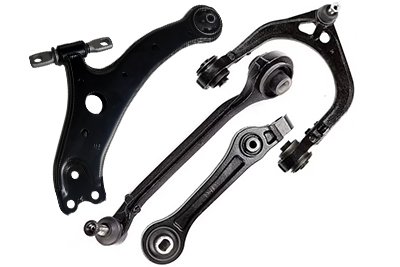
Control arm prices vary depending on where and how you buy:
- Retail (USA / local auto parts stores): typically $100 – $300 per piece
- Online platforms (Amazon, eBay): around $60 – $200 depending on brand and configuration
- Wholesale (China suppliers): usually $8 – $30 depending on OE number, material, and quantity
For buyers who are personal use, you can check our guide on control arm replacement cost to know the details.
👉 For bulk buyers, the final price mainly depends on:
- OE numbers
- order quantity
- supplier quality level
Control Arm Prices in Different Markets and Channels
Understanding price differences across markets helps you set realistic expectations before negotiating with suppliers.
Retail Prices (USA / Local Stores)
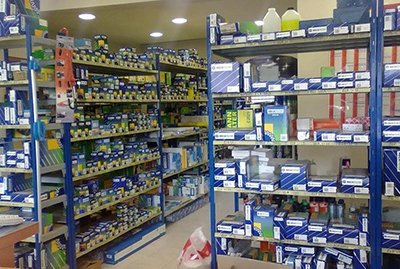
In local auto parts stores, control arms are usually sold at the highest price level: $100 – $300 per piece
This is because the price includes:
- brand markup
- distribution costs
- warehousing and retail overhead
👉 For buyers, retail pricing is useful as a reference point —
it shows what your customers are willing to pay.
Online Platforms (Amazon, eBay, etc.)

Online platforms show a wide range of prices: $60 – $200 per piece
You’ll find:
- very cheap listings
- mid-range products
- premium branded options
But there’s a catch:
👉 not all listings are directly comparable
Some include:
- complete assemblies (with ball joints and bushings)
Others are: - partial components
This is why prices vary significantly even for “similar” products.
Wholesale Prices (China Suppliers)
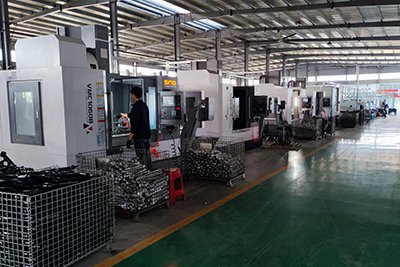
This is where most importers focus.
Wholesale prices are significantly lower because:
- there are fewer intermediaries
- pricing is closer to production cost
Typical range:
👉 $8 – $30 per control arm (depending on specs and volume)
But here’s the key:
👉 price differences at this level are mostly driven by OE No. and quality, not just supplier margin.
Distributor / Importer Pricing
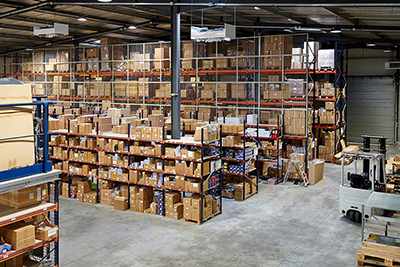
Between factory and retail, distributors operate in the middle.
Their pricing depends on:
- purchase volume
- market positioning
- brand strategy
👉 This is where your business sits — and where pricing decisions matter most.
Why Control Arm Prices Vary So Much
Once you move past surface-level comparisons, price differences become easier to understand.
Configuration Differences (Most Common Reason)
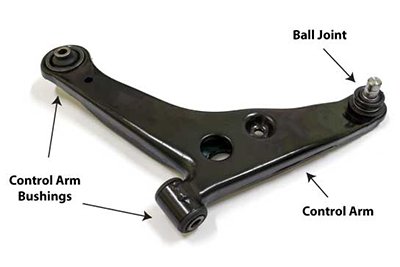
This is the biggest factor — and the one most buyers overlook.
For the same OE number, some suppliers may quote: complete control arms (with ball joint and bushings)
Others may quote: only the bare arm
👉 This alone can create a significant price gap.
Material (Steel vs Aluminum)
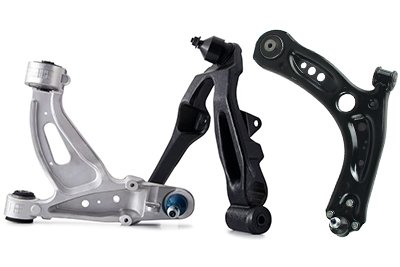
Material choice directly affects cost.
- Steel control arms
- more cost-effective
- widely used
- Aluminum control arms
- lighter
- more expensive
👉 The right choice depends on your market — not just price.
Manufacturing Process
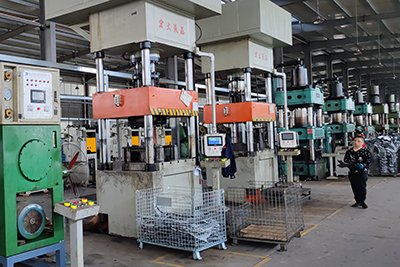
Different production methods lead to different costs:
- forged → stronger, higher cost
- cast → more economical
👉 Most buyers don’t need the highest spec — they need the right spec.
Quality Level and Durability
Not all control arms are built to the same standard.
Differences may include:
- material grade
- bushing quality
- assembly precision
👉 Lower-cost products often come with higher long-term risk (returns, complaints).
Brand and Packaging
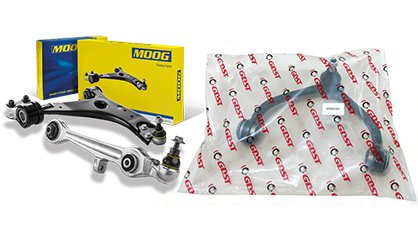
Branded products or customized packaging will increase cost.
For some markets, branding adds value.
For others, it’s unnecessary.
How Order Quantity Affects Control Arm Price
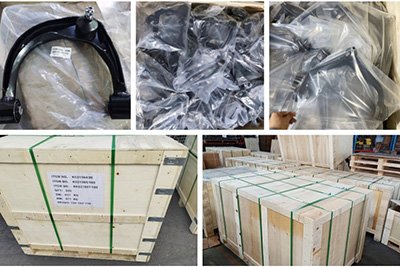
Price is not just about the product — it’s also about how you order.
Small Orders vs Bulk Orders
In general:
- small quantity → higher unit price
- large quantity → better pricing
This is because:
- production becomes more efficient
- raw material costs can be optimized
Why MOQ Exists
Minimum order quantities are not arbitrary.
They are based on:
- production efficiency
- cost control
👉 Understanding this helps you negotiate more effectively.
Smart Strategy: Don’t Just Increase Quantity Blindly
A common mistake is ordering more just to get a lower price.
But this can lead to:
- slow-moving inventory
- cash flow pressure
👉 A better approach:
- focus on fast-selling models
- test before scaling
How to Compare Supplier Prices Correctly
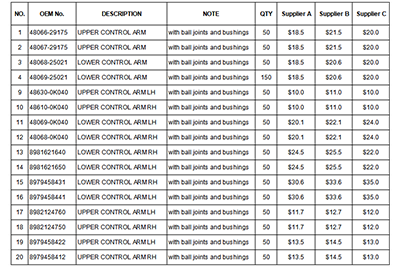
This is where most buyers either gain control — or make mistakes.
Always Use OE Numbers
The OE number is the foundation of accurate pricing.
👉 One OE number = one specific control arm
Without it:
- quotes are based on assumptions
- risk of mismatch increases
Align Control Arm Assemblies Before Comparing
Even with the same OE number, always confirm:
- with or without ball joint
- with or without bushings
- material type
👉 If this is not aligned, you are not comparing the same product.
Same Specs = Meaningful Comparison
Experienced buyers follow a simple rule:
👉 Same OE + same accessories + same material = comparable price
Anything else is guesswork.
How to Reduce Cost Without Sacrificing Quality
Reducing cost is not about pushing price down — it’s about making smarter decisions.
Focus on Best-Selling Models
Higher volume on key models gives you:
- better pricing leverage
- more stable supply
Work with Stable Suppliers
Changing suppliers frequently may reduce short-term cost, but often creates:
- inconsistency
- hidden risks
👉 Stability often saves more money over time.
Avoid Over-Specification
Not every market needs premium products.
👉 Don’t pay for features your customers don’t require.
Conclusion: Price Is Not Just a Number
Control arm pricing is not just about “cheap” or “expensive.”
It’s about:
- what is included
- how it is made
- how consistent it is over time
👉 The goal is not to find the lowest price —
it’s to find the best value for your market.
Frequently Asked Questions
Retail prices on local markets: $100 – $300 per piece; Online platforms (Amazon, eBay): around $60 – $200 per piece; Wholesale prices (China suppliers): usually $8 – $30/pc. All depend on OE number, brand, material, and quantity.
Because of differences in OE numbers, materials, brands, manufacturing processes, and quality levels.
Make sure all suppliers quote the same OE number, accessories, and material — otherwise prices are not comparable.
Not always, but lower prices usually involve trade-offs in materials, components, or consistency.