
If you’ve been in the suspension parts business for a few years, you already know one thing — control arms are not a “hot trend product,” but they are always selling.
What has changed in the last five years is not whether control arms sell, but where the demand is growing, what type of products are moving faster, and how buyers are adjusting their sourcing strategies.
This article is not about theory. It’s written to help wholesalers, importers, and distributors answer three real questions:
- Which markets are worth focusing on?
- What type of control arms should you stock?
- How should you choose the right supplier?
Let’s go straight into it.
Global Market Overview (2020–2025)
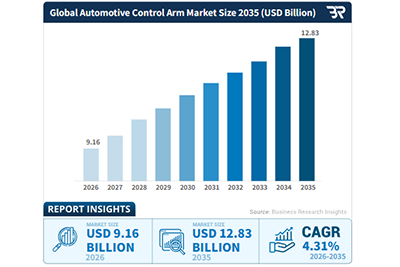
The global control arm market has shown steady growth over the past five years, driven by increasing vehicle ownership and aging car fleets. Demand varies significantly by region, with North America and Europe focusing on high-quality and durable control arms, while Latin America, Africa, and Southeast Asia prioritize cost-effective solutions.
In North America, demand is stable with higher margins, especially for corrosion-resistant and heavy-duty control arms. South America and Southeast Asia are experiencing rapid growth, driven by expanding vehicle populations and strong aftermarket demand. The Middle East market requires reinforced control arms due to extreme environmental conditions, while Africa presents long-term potential with increasing demand for affordable replacement parts.
Material trends show that steel control arms dominate in volume due to cost advantages, while aluminum control arms are gaining popularity in developed markets due to lightweight and performance benefits. Overall, the aftermarket segment continues to offer the most significant opportunities for wholesalers and distributors.
Buyers should adjust sourcing strategies based on regional demand, balancing price, quality, and product positioning to maximize long-term profitability.
North America: Stable Demand, Higher Profit Margins

The North American market remains one of the most attractive regions, but it’s also one of the most demanding.
What’s happening:
- Large number of SUVs and pickup trucks
- Older vehicles are staying on the road longer
- Strong aftermarket ecosystem
What buyers care about:
- Durability over price
- Corrosion resistance (snow, salt conditions)
- Reliable fitment
You’ll also notice something important — customers here are willing to pay more for fewer problems.
Another growing niche is: Off-road and performance control arms (lift kits, heavy-duty upgrades)
If you’re targeting North America:
- Avoid ultra-low-cost products
- Focus on consistent quality + stable supply
- Packaging and branding matter more than you think
South America: Price-Driven but High Volume

South America has been one of the fastest-growing markets in the past five years.
Market characteristics:
- Rapid increase in vehicle ownership
- High demand for replacement parts
- Strong focus on affordability
In this region, buyers are very practical.
What matters most:
- Competitive pricing
- Flexible MOQ
- Fast delivery
Competitive pricing helps you win the first order, but consistent quality is what keeps customers ordering again.
- Offer mid-range products, not the cheapest
- Focus on popular models (Toyota, Chevrolet, Volkswagen)
- Build long-term relationships — customers here tend to stay loyal
Middle East: Extreme Conditions, Strong Demand

The Middle East is a very specific market — and many suppliers underestimate it.
Key challenges:
- High temperatures
- Sand and dust
- Heavy vehicle usage
This leads to: Faster wear of bushings and ball joints
What buyers look for:
- Reinforced control arms
- Heat-resistant rubber components
- Strong structural performance
Practical advice:
- Standard products may not be enough
- Offer heavy-duty or reinforced versions
- Japanese vehicle parts (Toyota, Nissan) dominate demand
Africa: Price-Sensitive but Full of Potential

Africa is not a single market — but overall, it shares some common traits.
Market situation:
- Large number of used vehicles
- Limited local manufacturing
- Growing aftermarket demand
Buyer behavior:
- Extremely price-sensitive
- Often buying in smaller batches
But here’s the opportunity: Less competition compared to mature markets
Practical advice:
- Focus on basic, durable products
- Avoid over-specification
- Offer combined suspension parts (control arm + ball joint kits)
Europe: High Standards, Higher Entry Barriers

Europe is not easy — but it can be rewarding if you enter correctly.
Market trends:
- Strict quality and certification requirements
- Growing demand for lightweight components
- Increasing EV adoption
What buyers expect:
- OE-level quality
- Certifications and compliance
- Stable long-term supply
Suggestion:
- Not suitable for low-end products
- Aluminum control arms are gaining traction
- Trust and reputation matter more than price
Southeast Asia: Fast Growth, Flexible Market
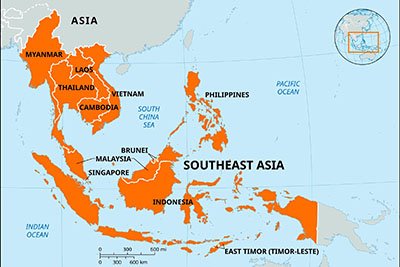
Southeast Asia is one of the most promising regions right now.
Market drivers:
- Rapid urbanization
- Strong growth in vehicle ownership
- Dominance of Japanese car brands
Buyer preferences:
- Wide product coverage (many models)
- Competitive pricing
- Fast-moving inventory
Suggestion:
- Focus on Japanese models (Toyota, Honda)
- Offer broad SKU coverage
- Be ready for frequent repeat orders
Material Trends: Steel vs Aluminum
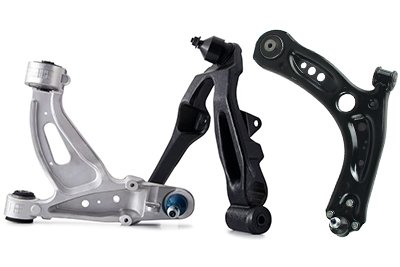
This is something more buyers are paying attention to.
Steel control arms:
- Lower cost
- Strong and reliable
- Preferred in developing markets
Aluminum control arms:
- Lightweight
- Better for performance and fuel efficiency
- Growing demand in Europe and North America
The trend is clear: Steel dominates volume, and aluminum is growing in value.
OEM vs Aftermarket: Where Is the Real Opportunity?
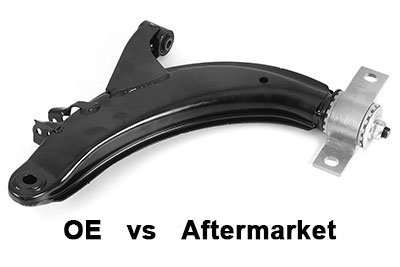
For most buyers reading this, you are not OEM suppliers — and that’s actually good news.
Why the aftermarket is growing:
- Vehicles are staying on the road longer
- Replacement cycles are increasing
- Independent repair shops are expanding
The reality: The aftermarket is where most business opportunities are today.
Practical advice:
- Focus on high-demand replacement models
- Avoid over-investing in slow-moving SKUs
- Balance price and quality carefully
How You Should Adjust Strategy

Based on all these regional trends, here’s a simple way to think about your sourcing:
If you want higher margins:
- Focus on North America / Europe
- Sell premium or specialized products
If you want volume:
- Focus on Latin America / Africa / Southeast Asia
- Optimize pricing and supply chain
If you want long-term stability:
- Build relationships, not just transactions
- Work with suppliers who understand different markets
Final Thoughts
The control arm business hasn’t changed dramatically — but the way buyers approach sourcing has.
The biggest difference today is: Successful buyers are not just purchasing products — they are selecting the right products for the right markets.
If you understand regional demand, material trends, and customer expectations, control arms can still be a very stable and profitable category.
FAQ of Control Arm Market Trend
The control arm market is experiencing steady global growth, mainly driven by rising vehicle ownership and increasing demand for aftermarket replacement parts. Key trends include regional demand differences, material upgrades, and a shift toward long-term sourcing strategies.
Stable global growth with consistent aftermarket demand;
North America & Europe focus on quality and durability;
South America & Africa are price-driven, high-volume markets;
Middle East demands heavy-duty and heat-resistant control arms;
Southeast Asia shows fast growth with strong Japanese car demand;
Steel control arms dominate volume; aluminum is growing in premium markets;
Aftermarket sector offers the biggest opportunity for buyers.
High-margin markets: North America, Europe;
High-growth markets: Latin America, Southeast Asia;
Emerging markets: Africa;
Specialized demand: Middle East (extreme conditions).
Yes. The aftermarket segment is currently the most profitable and accessible channel for control arm buyers. As vehicles remain in use longer, replacement demand continues to grow, creating stable and repeat business opportunities for wholesalers and distributors.