Executive Summary: A power steering rack system helps drivers turn the wheels with less effort. This guide explains hydraulic, electric (EPS), and electro-hydraulic (EHPS) systems. Learn how each type works, which parts matter most for quality, and how to choose the right steering rack for your B2B customers.
Introduction – Why You Need to Understand This System
If you buy or sell steering racks, you already know that “power steering” is not just one thing. Some vehicles use hydraulic fluid. Others use an electric motor. And a few use a mix of both.
Why does this matter to you? Because ordering the wrong type means returns, refunds, and unhappy workshop customers.
This guide walks you through the three main power steering rack systems. You will learn how they work, what usually breaks, and what to check before placing your next bulk order.
If you need a quick comparison of hydraulic vs electric, read our article: [Hydraulic vs Electric Steering Rack].
Three Types of Power Steering Rack Systems
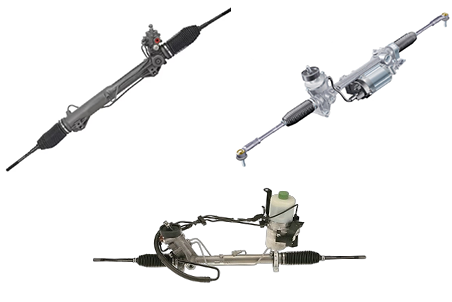
Let us start with the big picture. Most power steering racks fall into one of three categories.
| Type | How It Works | Common In | Pros | Cons | Best For Your Inventory |
|---|---|---|---|---|---|
| Hydraulic (HPS) | Engine‑driven pump pushes fluid | Older cars, trucks, heavy vehicles | Low cost, simple repair, very strong | Uses engine power, can leak | Fleets with older vehicles |
| Electric (EPS) | Electric motor + computer (ECU) | Most cars from 2010 onward, all EVs | Saves fuel, no leaks, works with lane‑keep assist | Electronics can fail, costs more to fix | Distributors serving modern cars |
| Electro‑hydraulic (EHPS) | Electric pump pushes hydraulic fluid | Some performance cars, heavy EVs | Hydraulic feel without engine drag | Complex, expensive, rare | Niche only – contact supplier |
The trend is clear: EPS is growing fast. But hydraulic racks will stay around for many years, especially for trucks and older passenger cars.
For a deeper dive into EPS, see our full guide: [Comprehensive Guide to Electric Power Steering (EPS) Racks].
Core Components – What a B2B Buyer Should Inspect
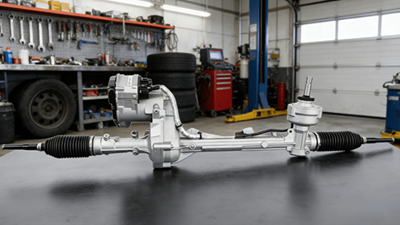
When you receive a batch of steering racks, you cannot test every single unit on a car. But you can ask the right questions about the parts inside.
Here are the key components and what to check.
Rack Bar (The Toothed Steel Bar)
This is the heart of the rack. It turns the steering wheel’s rotation into side‑to‑side movement.
What to ask: What steel grade do you use? Do you heat-treat the teeth? Are you able to provide a hardness test report?
Pinion Gear
This gear connects to the steering column and moves the rack bar.
Make sure to ask: what’s the allowed backlash? Good suppliers keep it below 0.05mm.
Valve Body (for hydraulic racks)
It directs fluid flow to the left or right side of the rack.
What to ask: Do you pressure test every valve body? At what pressure?
Electric Motor and ECU (for EPS)
The motor provides the assist. The ECU decides both the timing and the amount.
What to ask: Is the motor brushless? Is the ECU pre‑programmed for specific OE numbers? Is it flashable for different cars?
Seals and Boots
They keep dirt out and fluid (or grease) in.
What to ask: What brand of seals do you use (e.g., NOK, SKF)? Are leak tests performed before shipment?
To understand the basic movement of a steering rack, start here: [What is a steering rack].
How a Power Steering Rack System Works
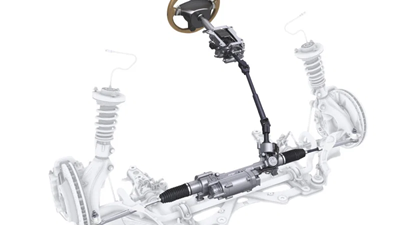
You do not need to be an engineer. Here is the simple version for each type.
Hydraulic (HPS)
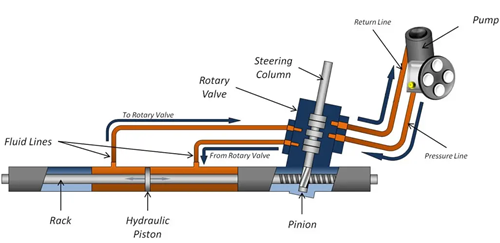
Your engine spins a pump. The pump pushes high‑pressure fluid into the rack. When you turn the steering wheel, a valve opens and sends fluid to one side of the rack. The fluid pushes the rack, helping you move the wheels. No fluid pressure? Very hard to turn.
Electric (EPS)
A small computer (ECU) reads a sensor on the steering column. The sensor measures how hard and how fast you are turning. The ECU then tells an electric motor to push the rack. The motor only runs when you turn. That is why EPS saves fuel.
Electro‑hydraulic (EHPS)
An electric motor runs a hydraulic pump. The pump sends fluid to the rack just like a normal hydraulic system. But because the pump is electric, it does not steal engine power. This gives you the strong feel of hydraulic with the efficiency of electric.
Want to go deeper into the basic mechanics? Read: [How does a steering rack work].
How to Spot a Good Steering Rack
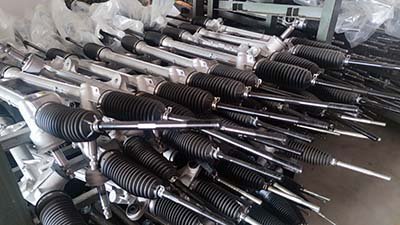
Here are the specific numbers and tests you should ask for. Real suppliers will have answers. Resellers will not.
| Quality Indicator | What a Good Supplier Can Show You |
|---|---|
| Steel material | Mill certificate showing 45# steel or 40Cr |
| Heat treatment | Induction hardening, depth ≥1.0mm, surface hardness HRC 50‑55 |
| Runout (straightness) | ≤0.08mm (better: ≤0.05mm) |
| Tooth pitch error | ≤±0.018mm per meter |
| Final testing | 100% bench test – smoothness, noise, assist level |
| Seal pressure test | Hydraulic rack: 120 bar for 10 seconds, no drop |
| EPS sensor calibration | Record of torque sensor calibration before packing |
If a supplier cannot provide these, you are taking a gamble. Some cheap racks work fine. Many do not. The warranty returns will hurt your margin and your reputation.
Lifespan expectation: A quality power steering rack should last 5 years or 80,000‑150,000 miles depending on type and usage. See our analysis: [How long does a steering rack last].
Which Type Should You Stock?
Your customer base decides what you should buy. Use this table to guide your inventory choices
| Your Customer’s Typical Vehicles | Recommended Type | Why |
|---|---|---|
| Cars older than 2010 | Hydraulic | Huge number still on the road. Owners want affordable repairs. |
| Cars from 2010‑2020 | EPS (programmable) | Most of these left the factory with EPS. Demand is rising. |
| Electric vehicles (EV) and hybrids | EPS (pure electric) | No engine to drive a hydraulic pump. EPS is the only option. |
| Light commercial vans (recent models) | EPS or EHPS | Check the original spec. Many new vans use EPS. |
| Heavy trucks (over 5 tons) | Hydraulic (integral) | Hydraulic is still standard for high steering forces. |
| Performance / sporty cars | EPS (tuned) or EHPS | Depends on brand and year. Ask for OE number matching. |
Still not sure? Send your OE list to a reliable supplier. A good one will match each number to the correct type.
Once you have chosen the right rack, our installation guide covers the key steps: [How to replace a steering rack].
Not sure which type fits your customer’s vehicles? GDST’s team can help you match OE numbers to our compatible models. Send us your list – we reply within 24 hours.
What They Tell You About Supplier Quality
Every rack will eventually wear out. But early failures are almost always a supplier problem.
| Failure Pattern | Likely Root Cause | What to Check with Your Supplier |
|---|---|---|
| Hydraulic leak within 3‑6 months | Cheap seals or porous casting | Seal brand? Pressure test results? |
| EPS intermittent assist / warning light | ECU mismatch or bad torque sensor | ECU pre‑programmed? Calibration record? |
| Clunking or knocking noise (any type) | Excessive backlash or soft rack teeth | Backlash tolerance report? Hardness data? |
| Hard steering only one direction (hydraulic) | Valve body defect or internal damage | Bench test report before shipping? |
| Uneven tire wear soon after installation | Crooked rack bar (excessive runout) | Runout measurement from final inspection? |
Remember: Most early failures are not bad luck. They are poor manufacturing or wrong specification. A good supplier will share test data. A bad supplier will hide behind “we have good quality” with no proof.
For a full diagnostic checklist, see our article: [steering rack problems].
Related Steering Rack Guides
Here are more articles to help you become a steering rack expert:
- [OEM vs Aftermarket Steering Rack]
- [Manual vs Power Steering Rack]
- [Steering Rack Price Guide (2026)]
- [Hydraulic vs Electric Steering Rack]
- [How long does a steering rack last]
Frequently Asked Questions (B2B Focus)
People often use the terms interchangeably. But a steering rack is specifically the rack‑and‑pinion type. Steering gear is a broader term that also includes recirculating ball systems. Most modern vehicles use rack‑and‑pinion.
Almost never. EPS requires an electric motor, an ECU, a different wiring harness, and often a different steering column. The cost and labor are not worth it. Always replace with the original system type.
Ask the supplier for a cross‑reference list of OE part numbers. Some EPS racks can be reprogrammed for different cars. But you need to verify before bulk ordering – otherwise you will get returns.
GDST offers a 1‑year warranty and lifetime technical support on all our steering racks – hydraulic, EPS, and custom orders. The warranty covers manufacturing defects, not damage from wrong installation.
Generally, EPS racks cost 20 to 40 percent more because of the electronics. But over the life of the vehicle, EPS may be cheaper because there is no fluid, no pump, and no belt to replace. Consider total cost, not just upfront price.
Why GDST – Factory‑Direct Power Steering Racks for Global B2B Buyers
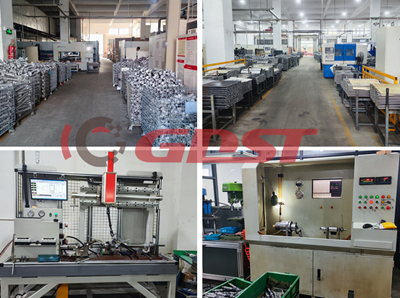
GDST Auto Parts is a professional steering rack manufacturer. We have supplied steering racks to customers in more than 100+ countries.
We produce all three types: hydraulic racks, EPS racks, and custom electro‑hydraulic (EHPS) units on request.
Here is what makes us different:
- IATF 16949 certified – automotive industry gold standard
- CNC precision – runout ≤0.05mm, tooth error ≤±0.018mm/m
- 100% final testing – every rack runs on a bench before packing
- Seal pressure test for hydraulic racks (120 bar, 10 seconds)
- EPS sensor calibration was recorded per unit
- 1‑year warranty + lifetime technical support
- Customization – product and packaging to your brand
- 40-60‑day standard lead time – emergency orders handled separately
- 24/7 sales team – no waiting for office hours
Ready to source reliable power steering racks?
You do not have to guess. Request a sample order, test our quality, and compare side by side with your current supplier.
Let us help you reduce warranty claims and grow your steering rack business.