
A control arm connects several key components of the vehicle’s suspension system, including the steering knuckle, vehicle frame or subframe, ball joint, and bushings. These connections help manage the movement and stability of the vehicle, contributing to safe handling and smooth driving.
By understanding these connections, you’ll gain insight into how the suspension system works to maintain proper wheel alignment and ensure the vehicle remains stable during driving.
Learn more about the function of control arms →
Main Components Connected to a Control Arm
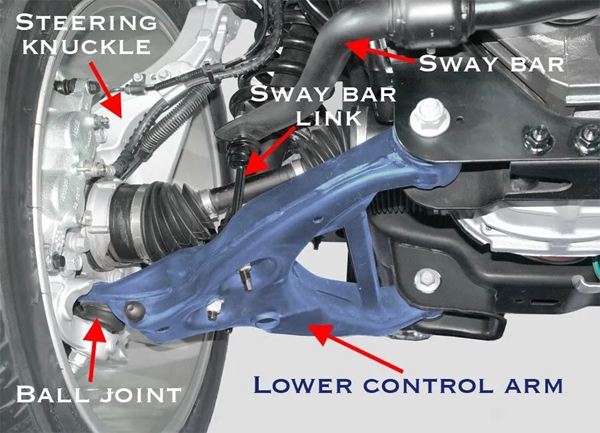
Steering Knuckle
The steering knuckle connects to the control arm and is essential for allowing the wheels to turn. It plays a crucial role in the vehicle’s steering system, ensuring smooth and precise movement when turning.
Vehicle Frame or Subframe
A control arm attaches to the vehicle’s frame or subframe, providing structural stability. This connection helps absorb and distribute forces when the vehicle encounters bumps or uneven surfaces, keeping the ride smooth and stable.
Ball Joint
The ball joint allows the control arm to move vertically and rotate, offering flexibility during suspension travel. This movement is key to maintaining vehicle stability, especially when driving on rough or uneven roads.
A failed ball joint connection can cause the wheel to collapse outward (known as a ‘separated joint’), which is a leading cause of suspension-related road accidents.
Bushings
Bushings help reduce vibrations and noise by cushioning the control arm connections. They also absorb shocks, maintaining the alignment of the suspension system and enhancing overall ride comfort.
Table: Key Components Connected to the Control Arm
| Component | Role in Suspension System | Common Professional Materials | Why Material Matters |
| Steering Knuckle | The pivot point for wheel rotation and steering. | Ductile Iron / Forged Aluminum | High tensile strength to prevent snapping under impact. |
| Vehicle Frame | Provides the main structural anchor point. | Stamped Steel / Cast Aluminum | Lightweight aluminum reduces “unsprung weight” for better handling. |
| Ball Joint | Enables 360° rotational and vertical movement. | Heat-Treated Forged Steel | Prevents “joint separation” and ensures smooth steering pivot. |
| Bushings | Cushions the connection and absorbs road shock. | Natural Rubber / Polyurethane | Natural rubber offers the best balance of comfort and noise reduction (NVH). |
How These Connections Work Together
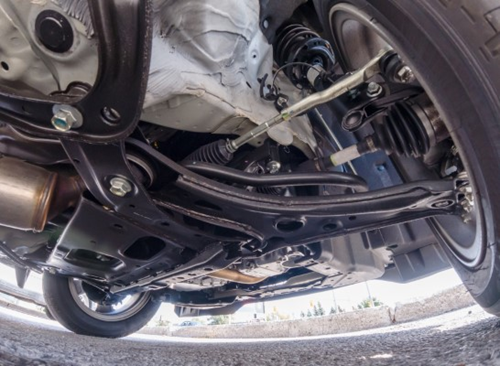
The control arm’s components work together to provide stability and comfort.
- Vertical Movement: The control arm allows for vertical wheel movement, absorbing road shocks.
- Steering Coordination: The ball joint and steering knuckle ensure the wheels steer smoothly.
- Overall Stability: All connections help maintain the vehicle’s alignment and improve handling.
Learn more about how control arms work →
Upper vs Lower Control Arm Connections
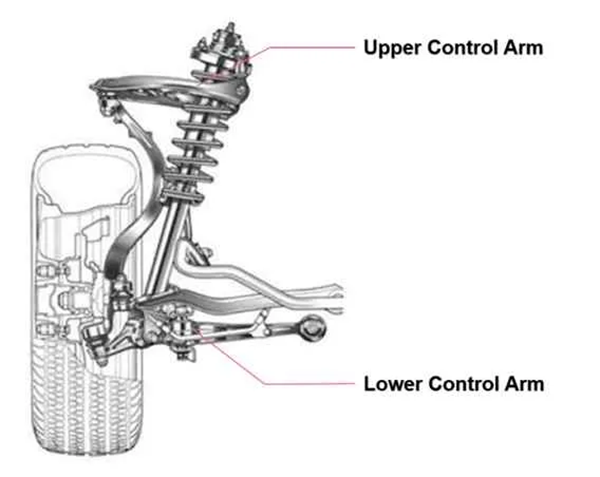
In suspension systems like the double-wishbone, the upper and lower arms work together but handle different forces.
- Lower Control Arm (The Load-Bearer):
The lower arm is larger because it carries the vehicle’s weight. It connects to the bottom of the steering knuckle and usually supports the coil spring or shock absorber. Because it bears the most load, its connection points (bushings and ball joints) are the first to wear out. - Upper Control Arm (The Alignment Stabilizer):
The upper arm is typically smaller and connects to the top of the steering knuckle. Its primary job isn’t carrying weight, but maintaining wheel alignment (Camber). If this connection becomes loose, your steering will feel “vague” or “drifting” at high speeds.
The Main Difference:
The lower arm handles the heavy lifting and road shocks, while the upper arm ensures the wheels stay perfectly vertical for precise steering.
Learn more about lower control arms →
Why These Connections Matter
The connections of the control arm are critical for vehicle stability, performance, and safety:
- Driving Performance: Proper control arm connections ensure smooth handling and ride comfort.
- Tire Wear: Misaligned control arms can lead to uneven tire wear, affecting both tire life and safety.
- Vehicle Stability: Loose or damaged connections can reduce vehicle stability, especially during sharp turns or quick stops.
Learn more about symptoms of control arm issues →
Common Issues Related to Control Arm Connections
Common issues that can arise with control arm connections include:
- Worn Bushings: These can cause vibrations and noise, reducing ride quality.
- Loose Ball Joints: Loose ball joints affect steering and cause handling issues.
- Noise: Unusual noises, such as clunking, can indicate damaged control arm components.
Learn when to replace control arm components →
Conclusion
The control arm connects several key suspension components that play an essential role in vehicle stability and performance. By understanding what a control arm connects to and how these components work together, you can better appreciate the importance of maintaining a healthy suspension system.
For a complete overview of suspension control arms, check our Complete Control Arm Guide.
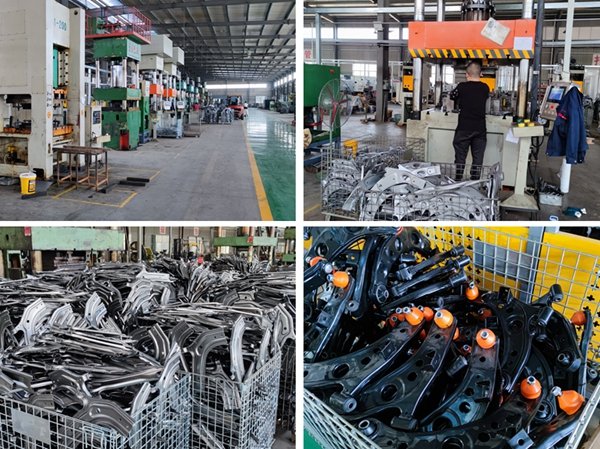
At GDST Auto Parts, we prioritize the precision of every connection point. Our control arms undergo rigorous salt-spray and fatigue testing to ensure the bushing-to-chassis and ball joint-to-knuckle interfaces exceed OE standards.
Related Control Arm Guides
If you found this guide helpful, explore our other expert resources to deepen your understanding of control arms:
- Core Suspension Knowledge
- [What is a Control Arm?] – A foundational look at the component that defines your vehicle’s handling.
- [What Is an Upper Control Arm?] – Deep dive into the specific role and geometry of the upper suspension link.
- Maintenance & Diagnostics
- [Symptoms of a Bad Control Arm] – Learn to identify the 5 warning signs of suspension failure before they become dangerous.
- [How Long Do Control Arms Last?] – Understand the factors that affect the lifespan of your bushings and ball joints.
- Cost & Replacement Guides
- [Control Arm Replacement Cost] – A complete breakdown of parts and labor expenses for a standard replacement.
- [Upper Control Arm Replacement Cost] – Specific pricing guide for upper arm repairs and assembly.
- [Lower Control Arm Replacement Cost] – Budgeting for lower control arm parts, known for carrying the most load.
- Sourcing & Manufacturing
- [Top Control Arm Manufacturers in China] – How to identify reliable, OE-spec suppliers for your wholesale or retail business.
FAQ For Control Arm
Yes, it’s generally recommended to replace the control arms in pairs (both the left and right sides) to ensure balanced handling and stability. Replacing only one control arm can lead to uneven wear and potential suspension issues.
On average, control arms should be replaced every 70,000 to 100,000 miles. However, if you drive on rough terrain or in salt-heavy coastal areas, connection points like bushings and ball joints may fail as early as 50,000 miles due to accelerated corrosion.
Yes, a damaged control arm can lead to steering instability, causing difficulty in turning and reduced handling performance.
Control arm failure is often caused by worn bushings, damaged ball joints, or excessive corrosion from road debris and weather conditions.
Worn control arms often lead to abnormal tire wear, poor handling, and unusual noises like clunking sounds when driving.