This professional guide provides a deep dive into the front suspension system. It covers the core front suspension parts list, explores the architectural differences between FWD and 4×4 suspension diagrams, and identifies the primary signs of a bad center link and other component failures. You will find a Quick Diagnostic Guide for troubleshooting, an overview of market maintenance costs, and expert manufacturing insights to optimize inventory and reduce returns.
In the automotive aftermarket, understanding the front suspension system is more than just knowing technical names—it’s about recognizing quality, predicting market demand, and ensuring road safety. As a professional wholesaler or distributor, your clients rely on you to provide reliable front suspension parts that withstand the rigors of daily driving.
At GDST, with over 20 years of manufacturing expertise, we’ve developed this comprehensive guide to help you master the complexities of the front end of a car and optimize your inventory for maximum profitability.
Understanding the Primary Front Suspension Components
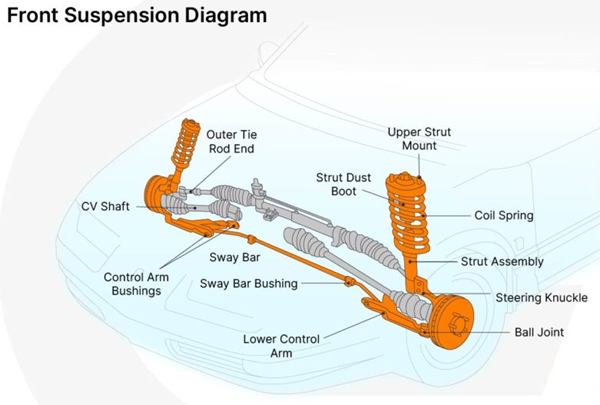
The front wheel parts of a car work in harmony to provide steering control and shock absorption. For any automobile front suspension, the core components include:
- Control Arms and ball joints: The skeletal structure connecting the wheel hub to the chassis.
- Shock Absorbers and Struts: The dampening heart. Note that parts of a shock focus on vibration, while strut assembly components also provide structural support.
- Steering Center Link & Tie Rods: These vital components transfer your steering commands to the wheels, making sure your turns are smooth and controlled.
- Sway Bar & Links: Essential for maintaining stability during sharp turns.
Whether you are looking at a car front suspension diagram or a heavy-duty truck front suspension diagram, these parts form the foundation of vehicle safety.
Front Suspension Systems for Different Vehicles
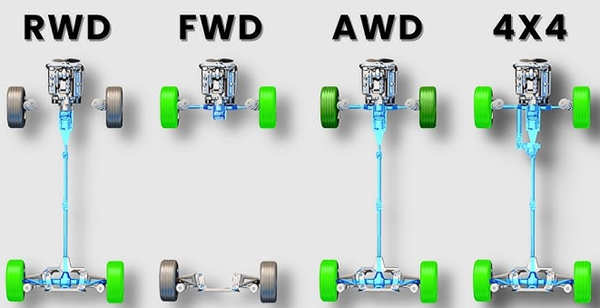
Not all front ends are created equal. Depending on the drivetrain and vehicle purpose, the front suspension system architecture changes significantly. Understanding these differences is key for wholesalers to manage regional stock.
FWD vs. 4×4 Front Suspension
- FWD Suspension: Common in sedans and compact SUVs. It typically uses a space-saving MacPherson strut design integrated with CV axles to drive the front wheels.
- 4×4 Front Suspension: Built for rugged terrain. These systems are much more robust, featuring reinforced suspension components of a car and additional clearance for the front differential and transfer case linkages.
Truck vs. Automobile Front Suspension
- Front End Parts on a Truck: Designed for heavy-duty hauling. A truck front suspension diagram often reveals larger control arms, heavy-duty torsion bars, and specialized front suspension of a truck bushings to handle extreme vertical loads.
- Automobile Front Suspension: Prioritizes ride comfort and precision. It focuses on lightweight front wheel parts of a car to improve fuel efficiency and steering response in urban driving conditions.
Which Front Suspension Parts Go Wrong First?
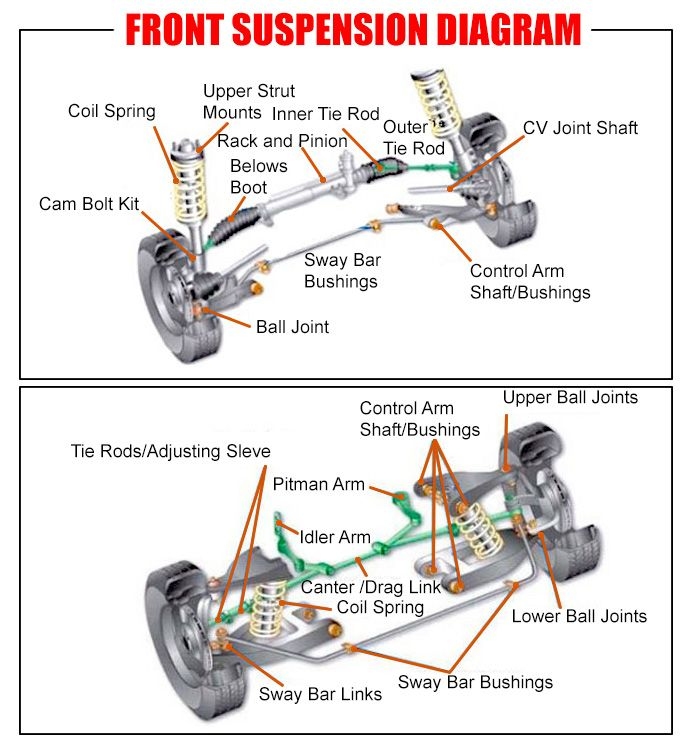
The various components of the front suspension do not wear at the same rate. Knowing the failure sequence allows wholesalers to predict which items will have the highest turnover:
- Rubber bushings and dust covers: These components are most prone to damage first. Once a boot tears, grease escapes, and contaminants enter, leading to the rapid destruction of metal joints.
- Ball joints and tie rod ends: These critical pivot points typically begin showing signs of wear, such as abnormal noises or looseness, after 50,000 to 80,000 miles of driving.
- Shocks & Struts: Gradual hydraulic degradation often goes unnoticed until the vehicle begins to bounce excessively.
- Control Arms: These are durable but often replaced because the integrated bushings or ball joints have failed.
A Quick Diagnostic Guide: Symptoms vs. Suspect Parts
Use this table to help your retail or garage clients quickly identify the necessary front suspension components based on vehicle behavior.
| Symptom | Suspect Part | Severity |
| Clunking noise over bumps | Ball Joints or Control Arm Bushings | High (Safety Risk) |
| Vehicle pulling to one side | Steering Center Link or Tie Rods | Medium (Tire Wear) |
| Excessive body roll in corners | Sway Bar Links or Stabilizer Bar | Medium |
| Bouncing after hitting a dip | Shock Absorbers or Strut Assembly | High (Handling Risk) |
| Steering wheel vibration | Inner/Outer Tie Rods | High |
How Much Do Front Suspension Parts Cost to Replace?
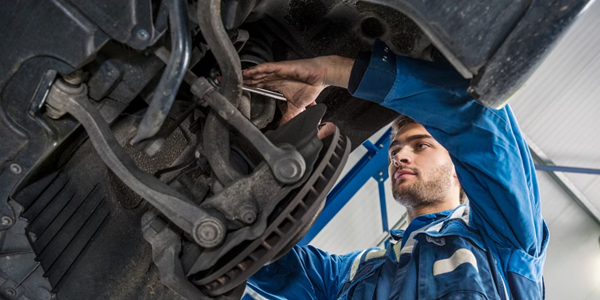
Understanding the financial side of front suspension of a car repair helps wholesalers and distributors position their pricing and stock levels competitively.
- Component Level: Individual high-wear suspension parts like ball joints typically retail between $20 – $100. However, the labor cost often doubles or triples this amount.
- System Level: Replacing a full strut assembly or a set of control arms can cost a vehicle owner between $600 – $1,200 in a professional shop.
- The Wholesale Advantage: As a direct car suspension part manufacturer with our own factory, GDST Auto Parts offers premium OE-standard aftermarket suspension parts at competitive factory-direct pricing, ensuring high quality without the middleman markup. Additionally, we support your brand growth by offering customized packaging solutions, providing a one-stop shop experience where superior performance meets exceptional value.
FAQ for Front Suspension Parts
Is it difficult to install a strut assembly?
Replacing individual strut assembly components can be dangerous due to the compressed spring. This is why we recommend wholesalers stock complete strut assemblies; they are safer, faster to install, and more popular among modern repair shops.
What are the main parts of a front suspension system?
The core parts of a front suspension include control arms, ball joints, shock absorbers and struts, tie rod ends, and the steering center link. These components work together to manage steering and absorb road impacts.
What is the lifespan of typical front suspension parts?
Generally, high-quality front suspension parts last between 50,000 to 100,000 miles. However, heavy-duty use or harsh road conditions can shorten this. For wholesalers, stocking parts with OE-standard durability like GDST’s ensures lower return rates and higher customer satisfaction.
What are the “hidden” suspension components that often get overlooked?
While everyone focuses on shocks, the Sway Bar Bushings and Idler Arms are often the silent culprits of front-end noise. When ordering a front suspension parts list, experienced wholesalers always include these small but high-turnover suspension components of a car to provide a complete solution for their clients.
Looking to stock a reliable front suspension parts list? GDST offers factory-direct pricing on premium front-end components. From fwd suspension diagrams to 4×4 front suspension needs, we have you covered.