

Ball joints may be small, but they play a huge role in your vehicle’s performance, handling, and safety. These crucial components are part of your car’s suspension system, connecting the chassis to the wheels. Without them, steering, suspension, and overall stability would be severely compromised. In this article, we’ll show what ball joints do, why they are essential, and how they contribute to a smoother, safer ride.
Where Are Ball Joints Located
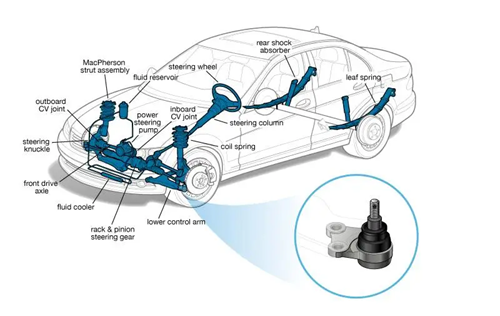
Ball joints are found at the intersection of your car’s suspension system and steering system. They allow the suspension to move up and down while also permitting the wheels to pivot for steering.
- Upper Ball Joint:
The upper ball joint is typically located at the top of the control arm, connecting it to the steering knuckle. Its primary function is to enable the wheels to turn during cornering while supporting the vehicle’s weight. - Lower Ball Joint:
The lower ball joint sits at the bottom of the control arm, connecting it to the steering knuckle. It also plays a vital role in steering and handling.
Both ball joints are essential for the vehicle’s suspension and steering systems, ensuring that the wheels move correctly, providing comfort, and allowing for smooth handling.
What Do Ball Joints Do for Your Vehicle
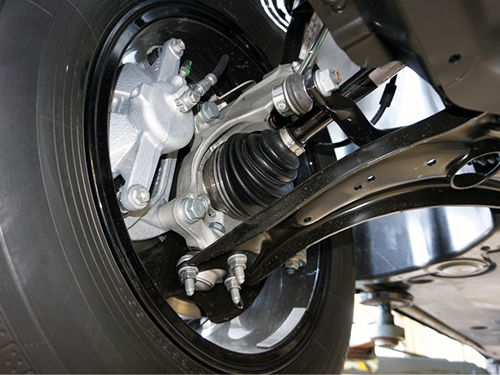
Ball joints are essential for several key functions in your vehicle, including steering, suspension, and load distribution. Let’s introduce their main roles:
Allow Flexible Steering
When you turn the steering wheel, the force is passed through the steering rack and tie rods to the wheels. The ball joints enable this movement by allowing the wheels to pivot.
The steering knuckle, connected to the ball joints, turns when the steering wheel is rotated, allowing the wheels to move left or right.
Key point: Ball joints are subjected to significant pressure and friction during steering. They need to be durable and smooth to ensure precise handling.
Absorb Shocks and Maintain Wheel Movement
Your vehicle’s suspension moves up and down when you drive over bumps, potholes, or uneven roads. Ball joints act as hinges between the control arms and steering knuckles, allowing the wheels to move vertically without throwing off the vehicle’s alignment.
Key point: By maintaining proper tire contact with the road, ball joints help with traction and stability, especially on rough or uneven surfaces.
Support Weight and Positioning of the Vehicle
In some suspension designs, like the MacPherson strut system, the ball joints help bear part of the vehicle’s weight. They transfer this weight to the wheels, letting the suspension handle and distribute the load. Ball joints also serve a crucial role in ensuring the correct positioning of suspension components, such as maintaining the camber angle of the front wheels. This ensures the wheels stay aligned, keeping the vehicle stable during acceleration, braking, and turns.
Key point: Ball joints help the car maintain stability, especially when carrying heavy loads or at higher speeds.
Maintain Vehicle Stability
Ball joints are crucial for keeping the wheels aligned with the vehicle’s body and suspension. This is important during turns, bumps, or braking.
If the ball joints are worn out, the vehicle may start to pull to one side or wander while driving. This can make the car harder to control, especially on uneven roads or when steering.
Key point: Well-functioning ball joints ensure smooth handling, minimize vibrations, and make the ride more comfortable and safe.
Protect Other Suspension Components
A ball joint helps protect other parts of the suspension system by ensuring proper alignment and preventing excessive wear. If the ball joint fails or wears out, other suspension components like the control arms, tie rods, and steering racks can be damaged due to misalignment or additional stress.
Key point: Maintaining the ball joint prevents costly damage to other parts of your car’s suspension system, saving you money on repairs and keeping the vehicle functioning properly.
Why Are Ball Joints So Important
When ball joints are in good condition, they directly impact the vehicle’s handling, stability, and tire wear:
If Ball Joints Are Working Properly:
- Precise Steering: The vehicle responds quickly and accurately to steering inputs, ensuring smooth control.
- Stable Cornering: The car handles well during turns, maintaining balance and reducing the risk of losing control.
- Smooth Ride: The suspension absorbs road impacts effectively, providing a comfortable driving experience.
- Even Tire Wear: Well-maintained ball joints help keep the wheels aligned, preventing uneven tire wear (commonly known as “eating tires”).
If Ball Joints Fail:
- Steering Becomes Loose or Unresponsive: You’ll notice a vague, imprecise feel when turning the steering wheel, making it harder to control the car.
- Abnormal Noises: A worn-out ball joint can cause creaking or “clunking” sounds, especially when driving over bumps or rough roads.
- Misaligned Wheels: A damaged ball joint can lead to improper wheel alignment, causing uneven tire wear (eating tires) and affecting overall handling.
- Worst-case Situation: In extreme cases, a failed ball joint can completely detach, causing the wheel to lose control and potentially leading to a serious accident. This is the core safety function of ball joints—they serve as the vehicle’s safety baseline.
Conclusion
Ball joints are fundamental to your vehicle’s steering and suspension systems, directly affecting handling, safety, and comfort. When functioning properly, they ensure precise steering, smooth driving, and even tire wear. However, when they fail, the effects can be dangerous, leading to poor handling, uneven tire wear, and even the risk of losing control.
Timely inspection and replacement of the ball joint is key to avoiding costly repairs and ensuring your vehicle performs at its best. Keep your ball joint in good condition, and you’ll enjoy a safer, more enjoyable driving experience for years to come.