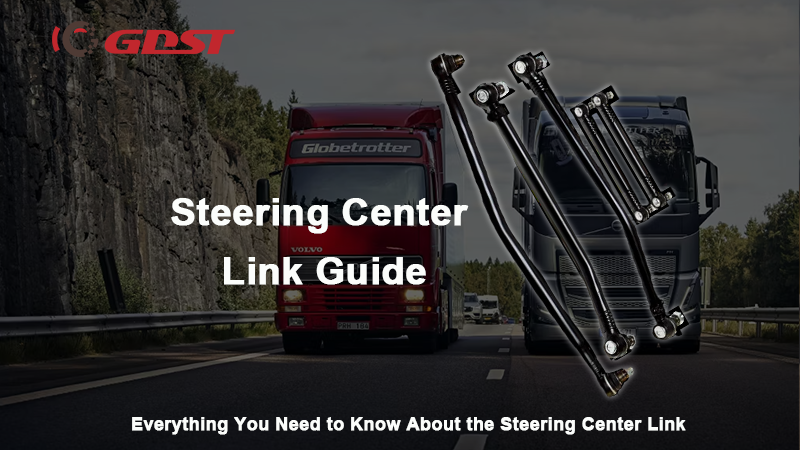
A center link on a car, also known as a steering center link, is a vital component of the steering linkage on a car. It connects the steering gear to the wheels via tie rods, ensuring synchronized movement. If you experience steering play or uneven tire wear, it often indicates a center link car problem that requires immediate inspection for road safety.
In the steering business, most of our daily conversations revolve around tie rods. However, for those of us dealing with heavy-duty trucks, classic fleets, or SUVs, the suspension center link is where the real technical (and commercial) focus lies.
If tie rods are the hands that turn the wheels, the center link is the “backbone” that keeps the entire steering system synchronized. It’s a specific part for a specific market—primarily found in older vehicle architectures and heavy-duty applications. Let’s look at the signs of failure and why this component remains a critical inventory item for professional steering specialists.
What is a Center Link on a Car?
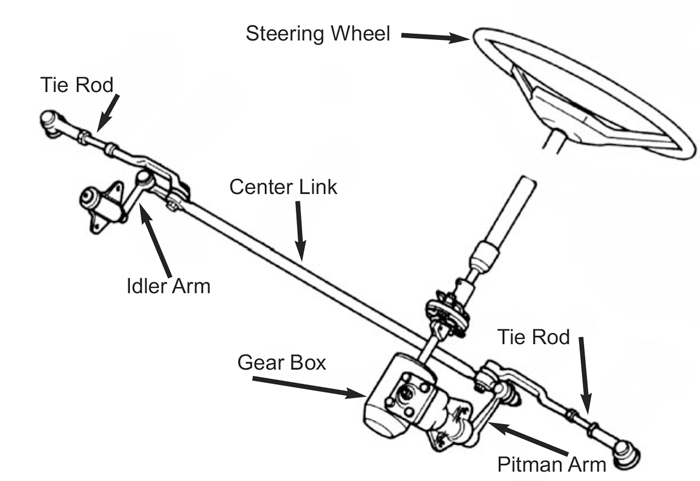
The center link on a car is a solid steel rod that serves as the backbone of the “parallelogram” steering system. Unlike rack-and-pinion systems, vehicles with recirculating ball steering rely on a center link to transmit motion from the steering box to the left and right wheels simultaneously.
As a primary part of the linkage on a car, the center link is connected to the Pitman arm (driven by the steering box) on one end and the Idler arm (for support) on the other.
The Role of the Steering Center Link
The center link is the “backbone” of the parallelogram steering system, acting as the primary bridge between the steering gear and the wheels. To help you understand its critical function, here is a breakdown of its primary roles:
| Core Function | Primary Connection | Key Benefit |
| Motion Transfer | Pitman Arm & Tie Rods | Translates steering torque to wheel movement. |
| Synchronization | Left & Right Steering Knuckles | Ensures both wheels turn at identical angles. |
| Pivot Support | Idler Arm | Maintains steering geometry and height. |
| Load Bearing | Chassis Linkage | Absorbs road shocks and cornering stress. |
4 Common Signs of a Bad Center Link
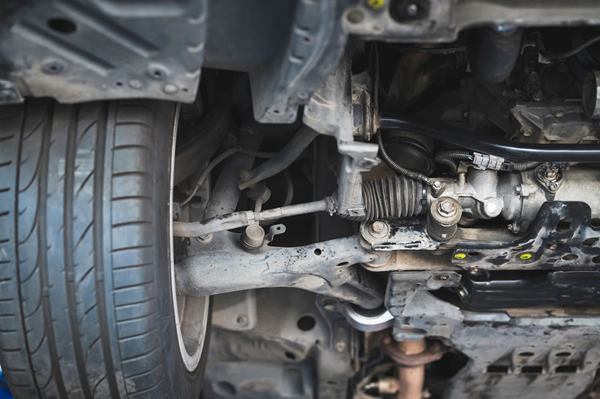
Identifying a center link car problem early can save you from expensive repairs. Watch out for these four Bad center link symptoms:
- Steering Wheel Play: If the steering feels “loose” or has a large dead zone, the joints on the steering center link may be worn.
- Uneven Tire Wear: A failing linkage on a car disrupts the wheel alignment, causing the inner or outer edges of your tires to wear down prematurely.
- Vehicle Pulling: If your car drifts to one side while driving straight, it often points to a bent or worn center link steering component.
- Clunking Noises: Metal-on-metal knocking sounds when turning the wheel are classic signs of a bad center link.
Center Link vs Drag Link Difference
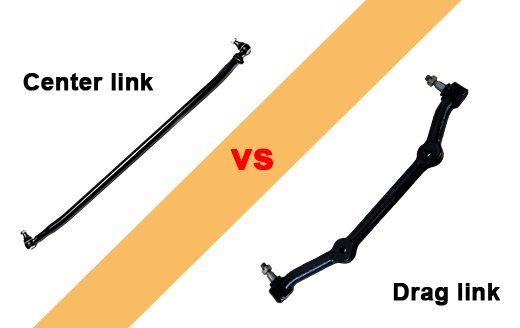
Many people search for the suspension center link on a car and confuse these two parts. This table clarifies the differences:
| Feature | Center Link | Drag Link |
| Vehicle Type | Passenger cars, SUVs, and light trucks. | Heavy-duty trucks and solid-axle vehicles. |
| Suspension | Independent Front Suspension (IFS). | Dependent (Solid Axle) Suspension. |
| Primary Goal | Synchronizing left and right wheels. | Connecting the steering box to the knuckle. |
If it’s a Jeep or a heavy truck, look for a drag link; if it’s a classic Chevy or a Silverado, check the center link.
How to Diagnose a Worn Steering Center Link?
If you suspect a center link car problem, follow this quick 5-step professional inspection:
- Step 1: Visual Check – Inspect the rubber boots for tears or grease leaks; any damage means the steering center link joints will fail soon.
- Step 2: Dry Park Test – Have an assistant turn the wheel while the car is on the ground; look for any “popping” or delayed movement in the linkage of the car.
- Step 3: Wheel Shake Test – Jack up the car and shake the front wheel at 3 and 9 o’clock; any horizontal “play” confirms the steering center link is loose.
- Step 4: Leverage Test – Use a pry bar to check for vertical movement between the center link steering bar and the Pitman arm; there should be zero play.
- Step 5: Idler Arm Sync – Check if the idler arm is sagging or moving excessively, as it directly supports the alignment of the steering center link.
What Makes a High-Quality Steering Center Link?
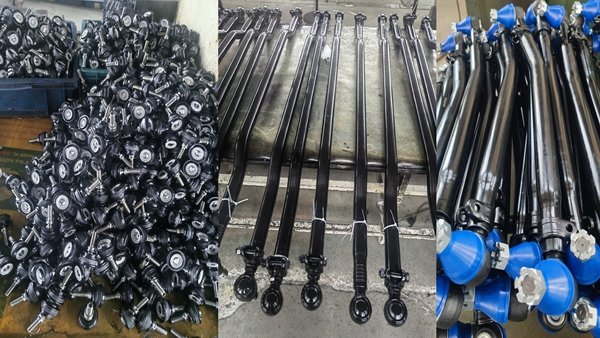
For a distributor, the difference between a high-profit part and a costly return lies in the engineering. Here is what to look for:
- Forged Steel (40Cr/45#): It’s important to ensure that the steering center link is made from forged steel rather than cast steel. Forged steel offers the strength and structural integrity required for heavy-duty truck applications.
- Heat Treatment: A professional-grade center link on a car must undergo heat treatment to increase the hardness and fatigue life of the ball studs.
- Post-Installation Alignment: Always advise your clients that a professional wheel alignment is mandatory after replacing any linkage on a car. This ensures the new part performs to its full potential.
- Inventory Focus: Prioritize stock for high-demand models like the Silverado, Sierra, and classic F-Series trucks, where these systems are most prevalent.
Why Choose GDST for Your Center Link Replacement?
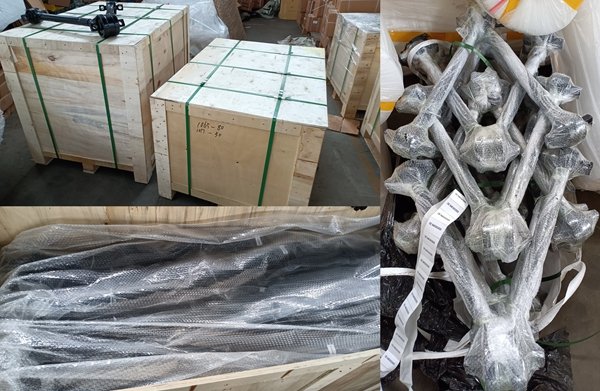
Understanding these symptoms is the first step, but having a reliable source for replacements is what keeps your business moving. As a dedicated center link manufacturer with over 20 years of experience, GDST auto parts offers OE-standard steering center links directly from our own center link factory.
We combine premium quality with competitive pricing, ensuring your margins stay healthy. Whether you need a stable supply, flexible MOQs, or custom product and packaging options, our team is ready to support your inventory needs. GDST Auto Parts has the steering parts you need.
Contact GDST today for a professional quote, and let’s strengthen your steering line together.
FAQ: About Center Links
Q: Can I drive with a bad steering center link?
A: It is not recommended. A failing center link steering bar can lead to a total loss of steering control, posing a significant safety risk.
Q: How much does it cost to replace a center link on a car?
A: Costs vary by vehicle model, but timely replacement of the linkage on a car is always cheaper than replacing tires ruined by bad alignment.
Q: Are center links and tie rods the same?
A: No. The steering center link is the main bar that connects to the tie rods, which then connect to the wheel hubs.